
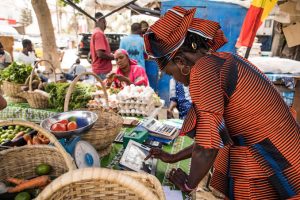
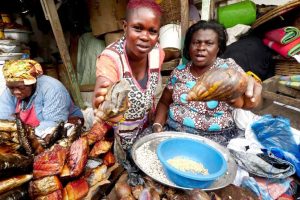

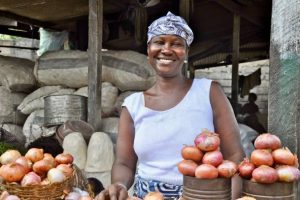




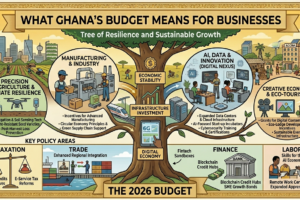
Ghana’s economy is undergoing a remarkable transformation. Inflation has fallen from a peak of over 50 percent in 2022 to approximately 3.3 percent as of February 2026, the cedi has appreciated significantly, and gross international reserves stand at US$13.8 billion . Yet for business owners, falling inflation has not translated into falling costs—prices are simply rising less aggressively . This disconnect between macroeconomic indicators and daily business reality encapsulates the challenge of building resilience in Ghana today.
Resilience is not about surviving a single shock. It is about building enterprises that can withstand repeated disruptions—currency volatility, policy shifts, supply chain interruptions, and evolving consumer behaviour. It requires structure, discipline, and strategic foresight.
The Structural Foundation: Why Resilience Begins with Systems
The Failure of Good Intentions
A recurring observation from those who work closely with SMEs is that many businesses fail not suddenly, but structurally over time . As one banking executive put it, “SMEs do not fail suddenly; they fail structurally over time. Sustainable businesses are built on systems, not just effort” .
📢 GET DETAILED ARTICLES + JOBS
Join THSB's WhatsApp Channel and never miss a post or opportunity.
This insight is supported by banking sector data. As of April 2025, Ghana’s non-performing loan (NPL) ratio stood at 23.6 percent, with private sector borrowers—predominantly SMEs—accounting for more than 93 percent of distressed credit. Even as NPLs declined to 18.9 percent by December 2025, the underlying structural vulnerabilities remained . Poor record-keeping, weak governance structures, limited financial planning, and inconsistent cash flows continue to undermine creditworthiness .
The Structure Mandate
Stanbic Bank’s 2026 SME Clinic in Tamale, themed “From Survival to Scale: Building SMEs that Endure,” emphasised a critical distinction: many businesses remain constrained not by external conditions, but by weak internal systems and limited access to the right knowledge . We see businesses deeply connected to real economic activity—agriculture, trade, logistics—but often constrained by structure, systems, and access to support” .
The prescription is clear: formalisation and good governance are no longer optional. They are critical for accessing funding and scaling operations . Data-driven transparency allows financial institutions to better understand risk and price credit more appropriately .
The Cost of Informality
SMEs account for approximately 92 percent of all businesses in Ghana, contribute an estimated 70 percent of GDP, and provide around 85 percent of manufacturing employment . Yet a significant number still operate informally, limiting their access to government support, financial services, and digital tools . This informality is not merely a compliance issue—it is a structural vulnerability that prevents businesses from accessing the very resources that could help them become more resilient.
Building Resilience: Six Strategic Imperatives
1. Cost Optimisation and Operational Efficiency
In an environment where inflation has slowed but prices remain high, cost consciousness is a survival necessity. Dr Richmond Atuahene, Director of Salman Partners and Financial Consult Ltd, has emphasised that “businesses that are able to effectively and efficiently implement their cost-conscious plans would be able to compete even in the midst of crisis” .
Key strategies include:
Audit and streamline operations: Identify inefficiencies in logistics, procurement, and production. Consider shared transportation models, optimised delivery routes, and relocation closer to key markets to reduce distance-related costs .
Negotiate supply chains: Many businesses are discovering that even when headline inflation falls, supplier costs remain elevated due to currency risks. Ghana imports more than 40 percent of its goods, and a weaker cedi raises the price of these goods in local currency . Active supply chain negotiation is essential.
Adopt technology solutions: Simple technology can drive efficiency. Digital tools for accounting, inventory management, and sales tracking improve transparency and support better decision-making .
2. Revenue Diversification and Strategic Partnerships
Reliance on a single revenue stream is a vulnerability. Dr Atuahene advises businesses to “think about expanding, adding the service of the product” and to consider strategic collaboration . In Africa, we don’t like strategic collaboration or strategic partnership,” he observed. What you’re having, Chinese will be producing at a cheaper rate and would be importing into Ghana” .
Strategic partnerships: Collaboration with other businesses, whether through joint ventures, co-marketing, or shared infrastructure, can expand market reach and reduce costs . Businesses are urged to travel to other countries to see where their competitive advantage lies and look for those they could collaborate with .
Value chain integration: The Ghana Venture Capital and Private Equity Association has identified “lack of integration into value chains” as a key impediment to SME growth . Businesses that position themselves within broader value chains achieve greater revenue stability.
Export readiness: For businesses with the capacity, international expansion offers new revenue streams. SMEs in the service sector are more likely to expand abroad, whereas manufacturing SMEs may face greater challenges due to stringent international regulatory requirements .
3. Financial Capability and Risk Management
Financial discipline: The Deloitte Senior Manager, Peter Nii Charway, has urged SMEs to “improve financial discipline, maintain proper records, and align their operations” with growth sectors . This is not just about compliance—it is about investment readiness.
Hedging against currency volatility: Research on 589 Ghanaian SMEs demonstrated that exchange-rate fluctuations exert a negative and statistically significant drag on import-export performance. However, hedging instruments—including forwards, options, swaps, and netting—were found to enhance trade performance directly while moderating the exchange-rate effect . At high hedging intensity, adverse impacts of volatility can be neutralised or reversed, enabling firms to convert currency swings into competitive advantage .
Insurance as a safety net: Ghana’s insurance penetration rate remains at approximately 1 percent of GDP, significantly below the African average of 3 percent and the global average of 6 percent . This represents a substantial protection gap. Products like Hollard Ghana’s Asomdwee MSME insurance provide protection against disability, critical illness, fire, burglary, and liability claims, helping businesses recover from unexpected events . As one industry executive noted, “risk mitigation solutions such as insurance act as a catalyst for enterprise growth. When small business owners operate with a guaranteed financial safety net, they can navigate market volatility and invest in expansion with greater confidence” .
4. Digital Transformation
The COVID-19 pandemic demonstrated the importance of digital capability. IT service businesses intensified their online presence to leverage opportunities, while other sectors struggled . As Ghana’s economic recovery opens new avenues, digital adoption is not optional—it is foundational.
Digital platforms and e-commerce: The MSME Digital Gateway provides business advisory support, access to finance information, capacity-building tools, and an e-commerce marketplace. Businesses that leverage these platforms can reach customers beyond their immediate geography.
Data-driven decision-making: Accurate records and digital tools enable better financial planning and investment readiness. Banks increasingly rely on data to assess creditworthiness .
5. Market Orientation and Customer Centricity
Research on Ghanaian SMEs has revealed that sustainability capabilities alone are not sufficient for international expansion or resilience . Market orientation—understanding and responding to actual market demands—is critical .
SMEs should “develop capabilities tailored to the regulatory environment of their target markets, aligning these efforts with specific market demands” . Conducting market analysis prior to entry helps understand these demands, ensuring that business strategies align with real market needs .
In the current consumer environment, where real incomes have not kept up with prices, businesses must focus on:
-
Value-for-money offerings: Segment your market and provide cost-effective versions of your products
-
Customer loyalty: Move beyond one-off sales. Introduce payment options such as mobile money instalments, loyalty discounts, and referral programmes
-
Rebuilding trust: Tell your company’s story. Explain prices. Provide consistent quality. Create experiences, not just products
6. Business Incubators and Support Systems
Business incubators are emerging as a practical response to SME credit risk and capability gaps. By focusing on enterprise development, incubators help address the root causes of SME weakness :
-
Strengthening financial capability: Through structured training in bookkeeping, cash flow management, and compliance
-
Supporting credit readiness: Guiding entrepreneurs through business diagnostics and developing bankable plans
-
Contributing to revenue stability: Facilitating market access, supplier linkages, and export readiness
-
Post-financing support: Monitoring business performance and identifying early signs of distress
The Stanbic Business Incubator is one example, designed to “stand in the gap and help businesses become more structured, more bankable, and ultimately more sustainable” .
The Role of Bricolage: Creative Resource Use
Academic research on SMEs in resource-constrained environments has identified a critical capability for resilience: bricolage—the effective use of a firm’s existing resources .
Bricolage was found to moderate the relationship between sustainability capabilities and market orientation, meaning that SMEs that creatively leverage available resources can better adapt to market demands and stakeholder expectations regarding sustainability . By creatively leveraging available resources, SMEs can enhance their ability to adapt to market demands and stakeholder expectations <span class=””>. Bricolage enables firms to innovate and optimise their processes, thereby improving their market orientation .
For Ghanaian entrepreneurs, this means that resource constraints—while real—need not be insurmountable barriers. The ability to use what is available creatively, to combine resources in novel ways, and to find solutions within existing constraints is itself a competitive advantage.
The Macroeconomic Tailwind
Ghana’s improving economic outlook provides an enabling environment for business resilience. Key indicators include:
-
Inflation: Down from 23.8 percent at the end of 2024 to 3.3 percent in February 2026
-
Cedi appreciation: Approximately 40.7 percent against the US dollar
-
GDP growth: 6.1 percent average in the first three quarters of 2025; economy surpassing US$100 billion
-
Gross international reserves: US$13.8 billion, representing 5.7 months of import cover
-
Fiscal deficit: Narrowed to 3.1 percent, below the projected 3.8 percent
-
Public debt: Fell from 61.8 percent to 45.3 percent of GDP
These developments, driven by fiscal consolidation, monetary tightening, debt restructuring reforms, and strong reserves accumulation, are “critical in restoring investor confidence and creating a more predictable environment for businesses” .
However, as Dr Andrews Ayiku notes, “falling inflation is excellent news, as it implies the economy is stabilising and confidence can begin to return. However, it is not an automatic solution. As a business owner, you must be vigilant, nimble and adaptable” .
THSB Conclusion
Building resilient enterprises in Ghana requires a shift from reaction to preparation, from survival to structure. It demands cost consciousness without complacency, revenue diversification without distraction, financial discipline without rigidity, and customer centricity without losing sight of operational fundamentals.
The businesses that will succeed over the next 12 months are those that are “strategic, data-driven and customer-centred” . They are the ones that have moved beyond “doing things the usual way to doing things the right way” .
As Ghana’s economy stabilises, the opportunity for resilient enterprises has never been greater. But the window of opportunity will not remain open indefinitely. Now is the time to build structure, master cash flow, adopt digital tools, and position for the growth that lies ahead.
Quick Facts Box
| Element | Detail |
|---|---|
| SMEs as % of Businesses | ~92% |
| SME Contribution to GDP | ~70% |
| SME Manufacturing Employment | ~85% |
| Inflation (Peak 2022) | >50% |
| Inflation (Feb 2026) | ~3.3% |
| Cedi Appreciation (2025-26) | ~40.7% vs USD |
| GDP Growth (2025) | ~6.1% average |
| Gross International Reserves | US$13.8 billion |
| NPL Ratio (April 2025) | 23.6% |
| NPL Ratio (Dec 2025) | 18.9% |
| Insurance Penetration (Ghana) | ~1% GDP |
| Insurance Penetration (Africa Avg) | ~3% GDP |
| Insurance Penetration (Global Avg) | ~6% GDP |
FREQUENTLY ASKED QUESTIONS
1. What does it mean to build a resilient enterprise in Ghana?
Building a resilient enterprise means creating a business that can withstand repeated disruptions—currency volatility, policy shifts, supply chain interruptions, and evolving consumer behaviour. It requires structure, financial discipline, revenue diversification, and strategic foresight rather than just survival-focused operations .
2. Why do many SMEs fail despite having good business ideas?
Research and banking sector data indicate that many SMEs fail structurally over time, not suddenly. Poor record-keeping, weak governance structures, limited financial planning, and inconsistent cash flows undermine creditworthiness and operational sustainability . As one expert observed, “SMEs do not fail suddenly; they fail structurally over time” .
3. How can I make my business more cost-conscious?
Key strategies include: auditing and streamlining operations, optimising logistics and supply chains, renegotiating supplier contracts, adopting simple technology solutions, and implementing shared transportation models where possible . The goal is to understand your costs thoroughly so that you can compete even in challenging conditions .
4. What role does insurance play in business resilience?
Insurance provides a financial safety net that helps businesses recover from unexpected events like fire, burglary, liability claims, and illness. Ghana’s insurance penetration rate is only 1% of GDP, significantly below the African average of 3%, leaving many businesses unprotected . Products like Hollard’s Asomdwee MSME insurance offer customised protection .
5. How can I access financing for my SME?
Improving financial records, formalising operations, and building governance structures are essential first steps—banks need data to assess risk . Business incubators help prepare SMEs for financing through business diagnostics and bankable plans . Cash flow-based lending and digital transaction assessments are emerging alternatives to traditional collateral-based lending .
6. What is the “24-Hour Economy” policy and how can SMEs benefit?
Ghana’s economic reset leans heavily on the 24-Hour Economy policy to drive productivity. SMEs are urged to align their operations with government priority areas and focus on enterprise quality, financial system adaptation, and efficient capital allocation . This represents a shift toward performance-based incentives.
7. How does currency volatility affect businesses and what can I do about it?
Research shows exchange-rate fluctuations negatively affect SME import-export performance . Hedging instruments—forwards, options, swaps, and netting—can moderate these effects, enabling firms to convert currency swings into competitive advantage . This is increasingly important given Ghana’s import dependence .
8. What is market orientation and why does it matter?
Market orientation is the ability to understand and respond to actual market demands. Research on Ghanaian SMEs found that sustainability capabilities alone are not sufficient for international expansion—they must be mediated by market orientation . SMEs should conduct market analysis before entry to understand specific demands .
9. How can business incubators help my SME?
Business incubators address root causes of SME weakness by strengthening financial capability, supporting credit readiness, contributing to revenue stability, and providing post-financing support . The Stanbic Business Incubator helps businesses become “more structured, more bankable, and ultimately more sustainable” .
10. How does Ghana’s improving economy affect SMEs?
Ghana’s economy is stabilising with inflation down to ~3.3%, the cedi appreciating, and GDP growth at 6.1% . However, falling inflation does not automatically reduce costs—prices are rising less aggressively, not falling . Businesses must remain vigilant and adaptable, using the improved environment as an opportunity to build structure and position for growth
Source: The High Street Business
Disclaimer: Some content on The High Street Business may be aggregated, summarized, or edited from third-party sources for informational purposes. Images and media are used under fair use or royalty-free licenses. The High Street Business is a subsidiary of SamBoad Publishing under SamBoad Business Group Ltd, registered in Ghana since 2014.
For concerns or inquiries, please visit our Privacy Policy or Contact Page.

Samuel Kwame Boadu is a Ghanaian entrepreneur, writer, and digital consultant passionate about creating impactful stories and business solutions. He is the Founder & CEO of SamBoad Business Group Ltd, a dynamic company with subsidiaries in digital marketing, logistics, publishing, and risk management.