
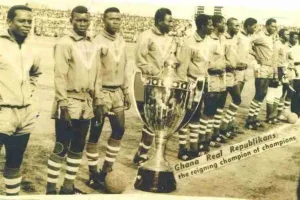



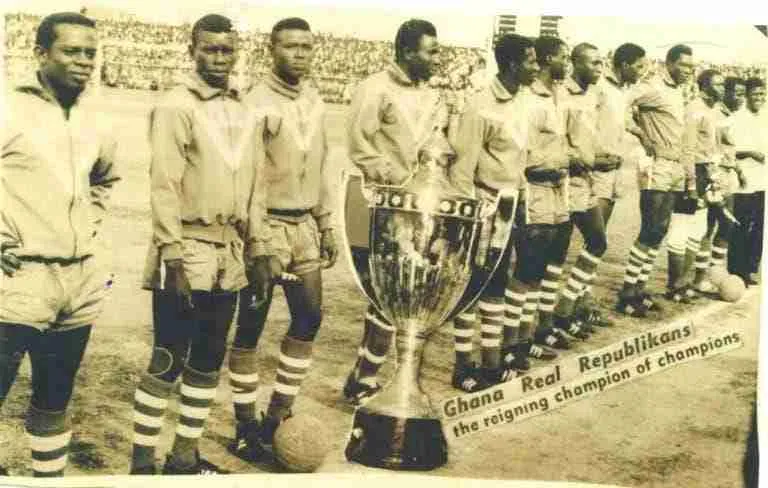

From the sandy pitches of colonial-era Accra to the floodlit stadiums of the modern era, sport in Ghana has long been more than a pastime. It is a source of national identity, a vehicle for Pan-African ambition, and increasingly, a serious business proposition. For decades, Ghanaian sports—particularly football—punched above their weight on the global stage, producing world-class talent and passionate fandom. Yet, until recently, this passion rarely translated into sustainable economic value.
Today, however, the country is at a critical juncture. A government-backed push for commercialisation, the passage of the transformative Sports Act of 2016, and the promise of major international events are converging to reshape how sport is financed, structured, and marketed in Ghana. This High Street Business report traces the evolution of Ghana’s sporting landscape and analyzes the emerging business opportunities in an industry poised for transformation.
The Historical Foundations: From Ordinance to Independence
The modern administrative history of Ghanaian sport began under colonial rule with the Gold Coast Amateur Sports Council, established through Ordinance 14 of 1952 . This body brought various sporting activities under a single controlling authority for the first time, setting the stage for organised competition and international representation. It was during this period that Ghana made its first forays onto the world stage, preparing and sending teams to the 1952 Helsinki Summer Olympics and the 1954 and 1958 Commonwealth Games .
📢 GET DETAILED ARTICLES + JOBS
Join THSB's WhatsApp Channel and never miss a post or opportunity.
A pivotal moment arrived with independence, as the government of Kwame Nkrumah sought to use sport as a tool for nation-building and Pan-African unity . On July 1, 1960, the Central Organization of Sports (COS) was established to replace the colonial Sports Council . Under the leadership of its first Director of Sports, Mr. Ohene Djan, sport became heavily politicised, seen as a way to demonstrate the capability of black Africa on the international stage . This era, while complex, laid the groundwork for significant investment and a centralised sports administration that would later evolve into the National Sports Council .

Over the following decades, the country’s sporting structures underwent numerous changes and reorganisations, reflecting the political shifts within Ghana . A significant outcome of this evolution was the passing of the Sports Act, 2016 (Act 934), which established the National Sports Authority (NSA) as the primary implementing arm of the government’s sports policy . The NSA’s mandate is broad: to promote mass participation, encourage improved performance, and—critically—to encourage the private sector to contribute to funding and development <span class=””>. This Act represented a legislative shift toward a more structured, modern approach to sports governance, creating an environment where commercialisation could begin to take root.
The New Business of Sport: A Revolution in Motion
For years, Ghanaian sports, particularly football, operated on a model of promise and potential rather than sustainable finance. This began to change most dramatically in 2025, with a series of high-impact interventions that signal a new economic era.
Football: A New Economic Model
Football, the nation’s dominant sport, has been the primary focus of the commercialisation drive. In a landmark move, the Ghana Football Association (GFA) and the government announced a new partnership for the 2025/26 Ghana Premier League season . This initiative, developed with production partner Adesa Productions Limited, was designed to treat football not just as a game but as a “high-value industry” and a “content powerhouse” .
The blueprint for this new era is tangible. The government-backed broadcast partnership injected a record GH¢1 million into each of the 18 Ghana Premier League clubs . This was not a grant, but an investment aimed at improving infrastructure, upgrading player facilities, and enhancing broadcast technology . Simultaneously, the prize structure was overhauled, with the champion’s prize money quadrupling to GH¢2 million, and all clubs receiving end-of-season rewards to ensure financial stability and competition throughout the season .
The strategic vision behind this investment is clear. By improving the financial health of clubs, the GFA aims to minimise the exodus of top talent to foreign leagues, retain quality players, and make the Ghana Premier League an attractive destination for foreign talent, thereby creating a more valuable and marketable product . This aligns perfectly with the call from Ghana’s Sports Minister, Kofi Adams, for an “economic revolution” in African football, urging stakeholders to “stop exporting raw talent and start exporting finished football products” .
Beyond Football: A National Sports Economy
The government’s ambition extends far beyond the football pitch. A key part of the strategy is the proposed establishment of a National Sports Museum, a project designed to celebrate Ghana’s rich sporting heritage while tapping into the lucrative potential of sports tourism . The project, championed by the Ministry of Sports and Recreation in partnership with the AfCFTA Young Entrepreneur Federation, aims to tell the “compelling story of Ghanaian sports” and create a new attraction for tourists and a source of national pride .
Major international events are also seen as catalysts for economic growth. The 2026 Commonwealth Games in Glasgow has been highlighted as a platform for significant business opportunities for Ghanaian companies . In addition to sporting competition, the Games are projected to generate significant direct investment and create jobs, with sectors like media, tourism, infrastructure, technology, and logistics expected to benefit . Ghana’s strong performance in events like boxing and athletics positions the country to capitalise on the global attention generated by the Games.
Current Market Structure and Key Players
Ghana’s sports economy is now a developing ecosystem involving several key state and private actors.
Government and Regulatory Bodies
-
Ministry of Sports and Recreation (MOSR): Sets national policy and oversees the development of the sector .
-
National Sports Authority (NSA): The operational arm of the MOSR, tasked with implementing policy and developing sport across the country . The NSA is actively seeking private-sector investment to transform facilities, looking to adopt models used in the United States where major stadiums are financed and commercialised through corporate partnerships and naming rights .
-
Ghana Football Association (GFA): The governing body for football, leading the charge to commercialise the Ghana Premier League .
Private and Commercial Actors
-
Ghana Premier League Clubs: The 18 clubs are the primary recipients of the new investment and are being restructured as sustainable businesses .
-
Corporate Partners: The new commercial push is designed to attract major investment from banks, telecoms, energy companies, and other large corporations .
-
Soccer Academies: Institutions like the Mandela Soccer Academy, Kumasi Sports Academy, and Unistar Soccer Academy are key players in the grassroots and talent development ecosystem, operating as both developmental and entrepreneurial ventures .
Challenges and the Path Forward
Despite the momentum, significant challenges remain. The sports industry has suffered from historic underfunding, weak infrastructure, and governance issues . To truly unlock its potential, Ghana must:
-
Sustain Investment: The GH¢1 million club disbursements are a significant first step, but long-term sustainability requires a structural shift to private-sector funding . The NSA’s goal to mobilise GH¢55 million in cash for development signals a move in this direction .
-
Cement Commercialisation: Success depends on viewing sport as a product. This requires investing in digital storytelling, data-driven insights, and merchandising to build a strong commercial brand . Creating “world-class content” through high-quality broadcast production is essential to attract viewers and sponsors .
-
Professionalise Administration: A “resource mobilisation and partnership committee” is already working on a commercialisation and partnership plan, but progress must be backed by transparency, accountability, and credible enforcement to attract and retain investors .
THSB Conclusion
Ghana’s sports sector is at a fascinating inflection point, transitioning from a legacy of state-led administration and unfulfilled potential to a more commercially driven, professional industry. The government’s blueprint for a “new football economy,” with its cash injections and restructured broadcast deals, and the NSA’s push for private facility management and a grassroots talent pipeline, are clear signals of intent.

Major events like the 2026 Commonwealth Games offer a powerful promotional platform, while initiatives like the National Sports Museum promise to preserve and monetise the country’s rich sporting heritage. The biggest challenge ahead will be to translate this political will and early investment into a self-sustaining economic engine. The foundations are being laid, and for the private investor and corporate sponsor, the opportunity to help build Ghana’s next major industry is now on the table.
FREQUENTLY ASKED QUESTIONS
1. What is the National Sports Authority (NSA)?
The National Sports Authority is the main government body responsible for promoting, developing, and organising amateur and professional sports in Ghana. It was established by the Sports Act of 2016 to replace the National Sports Council and its mandate includes encouraging private sector contribution to the funding and development of sport .
2. What was the Sports Act of 2016?
The Sports Act of 2016 (Act 934) is the primary legislation governing sports in Ghana. It was passed to modernise the governance of sports and establishes the National Sports Authority as the corporate body responsible for the promotion, development, and organisation of sports activities .
3. How much financial support is being given to Ghana Premier League clubs?
Under a new partnership agreement announced in 2025, each of the 18 Ghana Premier League clubs received a record GH¢1 million investment . This is part of a broader strategy to professionalise the league and make it more economically viable.
4. What is the prize money for the Ghana Premier League champion?
Starting with the 2025/26 season, the champion of the Ghana Premier League will receive a prize of GH¢2 million, which is a fourfold increase from the previous allocation .
5. Is there a National Sports Museum in Ghana?
A National Sports Museum is currently being planned. The Minister for Sports and Recreation and the AfCFTA Young Entrepreneur Federation are collaborating to create the museum, which aims to celebrate Ghana’s sporting heritage and boost sports tourism .
6. How is the government commercialising sports in Ghana?
The government is commercialising sports through several key initiatives. These include overhauling the financing of the Ghana Premier League, seeking private-sector investment for sports infrastructure (offering naming rights and other benefits), and developing a National Sports Museum to attract tourists .
7. What is the role of soccer academies in Ghana’s sports economy?
Soccer academies play a critical role in developing talent and operate as entrepreneurial ventures. They are a key part of the grassroots and talent development ecosystem, with some successful examples contributing to the financial and educational ambitions of their communities .
8. What are the business opportunities related to the 2026 Commonwealth Games?
The 2026 Commonwealth Games in Glasgow are expected to create business opportunities for Ghanaian companies in sectors like media, tourism, infrastructure, technology, and logistics. This is because the Games serve as a major platform for global trade and investment .
9. How can the private sector invest in Ghana’s sports infrastructure?
The National Sports Authority is actively seeking private sector investment, proposing a model where companies and financial institutions can fund specific projects in exchange for naming rights and other commercial benefits. This is modelled on successful stadium financing and commercialisation models used in the United States .
10. What is the Constituency Games initiative?
The Constituency Games is a proposed national development platform that aims to create a community-to-national competition pathway for athletes. Athletes would compete at the constituency level, progress through regional qualification, and earn national recognition through a transparent and structured system designed to identify talent from every part of the country
Source: The High Street Business
Disclaimer: Some content on The High Street Business may be aggregated, summarized, or edited from third-party sources for informational purposes. Images and media are used under fair use or royalty-free licenses. The High Street Business is a subsidiary of SamBoad Publishing under SamBoad Business Group Ltd, registered in Ghana since 2014.
For concerns or inquiries, please visit our Privacy Policy or Contact Page.

Samuel Kwame Boadu is a Ghanaian entrepreneur, writer, and digital consultant passionate about creating impactful stories and business solutions. He is the Founder & CEO of SamBoad Business Group Ltd, a dynamic company with subsidiaries in digital marketing, logistics, publishing, and risk management.