





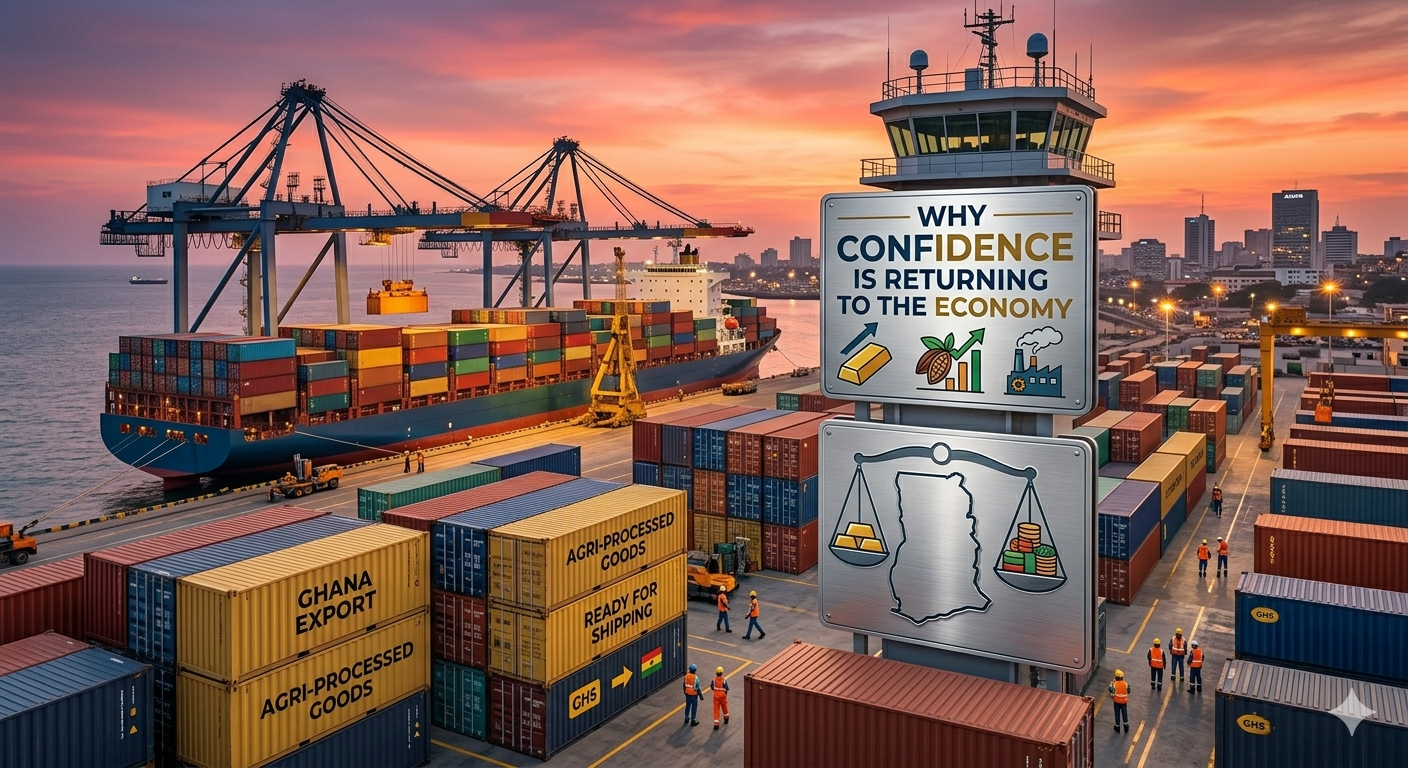
Why Confidence Is Returning to the Economy – Confidence is gradually returning to Ghana’s economy as inflation eases, reforms take hold, and stability improves. Here’s what is driving renewed optimism.
Why Confidence Is Returning to the Economy
After a period of economic uncertainty marked by high inflation, currency volatility, and rising debt, signs of recovery are beginning to emerge in Ghana. Policymakers, supported by institutions like the International Monetary Fund and actions from the Bank of Ghana, are implementing reforms aimed at restoring stability. For businesses, investors, and households, these changes are gradually rebuilding trust in the economy.
Easing Inflation Pressures
One of the clearest signs of improving confidence is the gradual decline in inflation. After a period of sharply rising prices, recent trends suggest that inflation is beginning to ease. This is largely due to tighter monetary policy, including higher interest rates and measures to control money supply.
📢 GET DETAILED ARTICLES + JOBS
Join THSB's WhatsApp Channel and never miss a post or opportunity.
Lower inflation helps restore purchasing power, making it easier for households to manage expenses and for businesses to plan pricing and operations.
READ MORE: What Investors Are Watching In Ghana
Improved Currency Stability
The Ghanaian cedi has also shown signs of stabilisation after periods of significant volatility. A more stable currency reduces uncertainty for businesses that rely on imports and for investors concerned about exchange rate risks. It also helps moderate inflation by keeping the cost of imported goods in check.
Efforts by the Bank of Ghana to manage liquidity and support the currency have played a key role in this progress.
Progress on Fiscal Reforms
Fiscal discipline has become a central focus of Ghana’s economic recovery strategy. Government efforts to control spending, increase revenue, and restructure debt are helping to restore confidence in public finances. These reforms, supported by programmes with the International Monetary Fund, signal a commitment to long-term stability.
For investors and businesses, credible fiscal management reduces the risk of future economic shocks.
Renewed Investor Interest
As economic indicators improve, investor confidence is gradually returning. Both domestic and international investors are closely watching Ghana’s progress, particularly in areas such as inflation control, debt management, and policy consistency.
A more stable macroeconomic environment makes Ghana increasingly attractive for investment, especially in sectors like energy, agriculture, and technology.
Stronger Policy Coordination
Another factor boosting confidence is improved coordination between fiscal and monetary authorities.
When government spending policies align with central bank actions, the overall impact on the economy becomes more effective. This coordinated approach helps stabilise key indicators such as inflation, interest rates, and exchange rates.
For businesses, this creates a more predictable environment for decision-making.
Resilience in Key Sectors
Despite economic challenges, several sectors of Ghana’s economy have remained resilient.
Industries such as agriculture, mining, and digital services continue to show growth potential. These sectors provide a foundation for recovery and offer opportunities for expansion and job creation.
Their resilience reassures investors that the broader economy still has strong fundamentals.
Gradual Return of Business Confidence
Businesses are beginning to regain confidence as conditions stabilise. Lower inflation, a more stable currency, and clearer policy direction allow companies to plan ahead with greater certainty. This can lead to increased investment, expansion, and hiring.
Small and medium-sized enterprises, in particular, benefit from a predictable economic environment.
The Role of Global Support and Partnerships
International support has also contributed to the improving outlook.
Financial assistance and policy guidance from institutions like the International Monetary Fund and the World Bank have helped Ghana implement reforms and stabilise its economy.
Such partnerships reinforce credibility and provide additional resources for recovery.
Conclusion From THSB
Confidence in Ghana’s economy is gradually returning, driven by easing inflation, improved currency stability, and ongoing reforms.
While challenges remain, the progress made so far is helping to rebuild trust among businesses, investors, and households. As these positive trends continue, Ghana’s economy is positioning itself for a more stable and sustainable future.
Source: The High Street Business
Disclaimer: Some content on The High Street Business may be aggregated, summarized, or edited from third-party sources for informational purposes. Images and media are used under fair use or royalty-free licenses. The High Street Business is a subsidiary of SamBoad Publishing under SamBoad Business Group Ltd, registered in Ghana since 2014.
For concerns or inquiries, please visit our Privacy Policy or Contact Page.

Esther Aku-Sika is a content writer and social media strategist who helps brands and startups grow through intentional storytelling and practical marketing strategies. With a keen eye for trends and audience behavior, she shares business insights, content strategies, and real-life lessons to help entrepreneurs build visibility and turn ideas into income. Through her writing, she simplifies complex concepts and equips readers with actionable steps to grow in today’s digital space.