








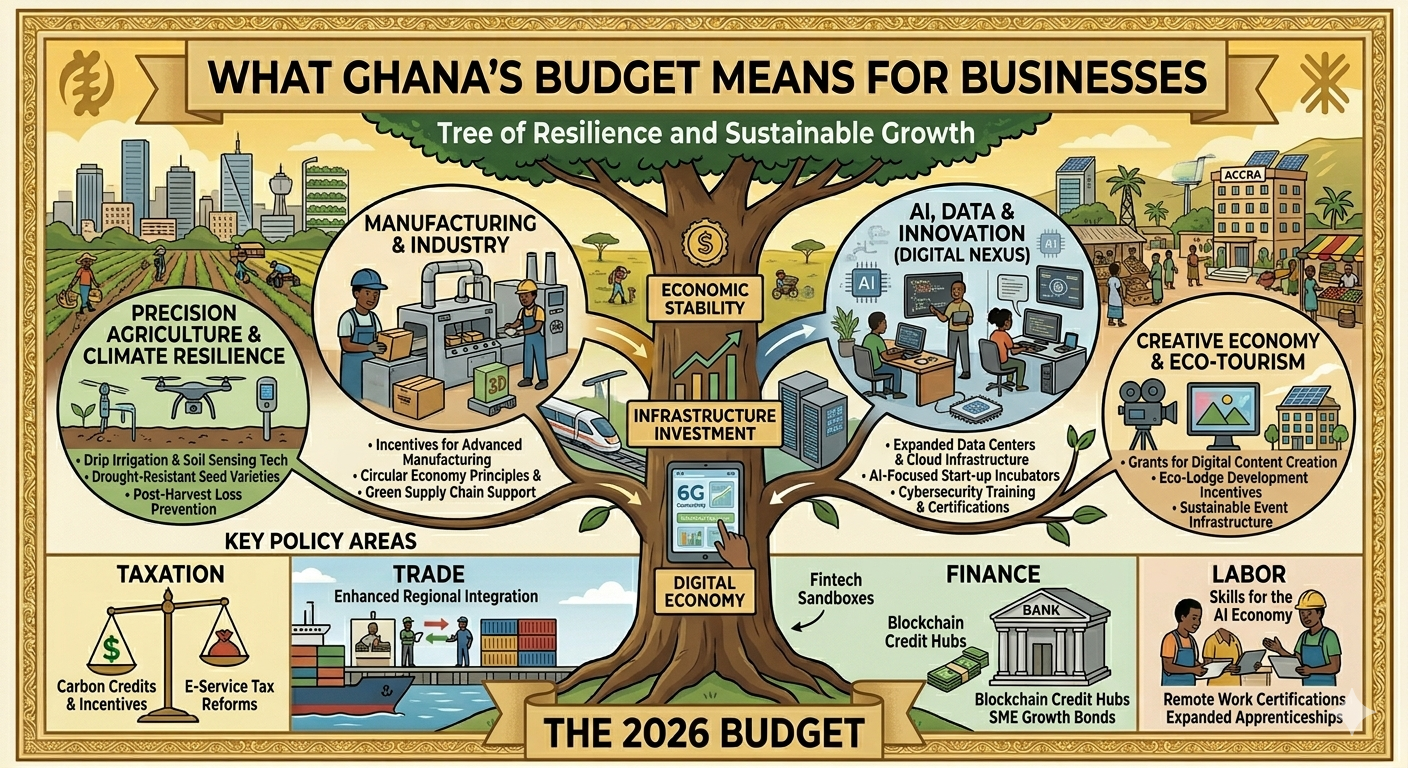
What Ghana’s Budget Means for Businesses – Ghana’s national budget has far-reaching implications for businesses, shaping taxes, spending, and economic direction. Here’s what it means for companies and entrepreneurs.
What Ghanas Budget Means for Businesses
Each year, Ghana’s national budget outlines the government’s financial priorities and economic strategy. Presented by the Ministry of Finance and influenced by institutions like the Bank of Ghana, the budget affects everything from taxation and borrowing costs to infrastructure spending. For businesses: large and small, it serves as a roadmap for planning, investment, and growth.
A Blueprint for Economic Direction
The national budget is more than just numbers, it signals the government’s priorities for the economy. Whether the focus is on infrastructure, industrialisation, or fiscal discipline, businesses closely watch budget announcements to anticipate changes in the operating environment.
📢 GET DETAILED ARTICLES + JOBS
Join THSB's WhatsApp Channel and never miss a post or opportunity.
For instance, a budget that prioritises economic recovery and growth may include incentives for key sectors such as manufacturing, agriculture, and technology. On the other hand, a focus on debt reduction may bring tighter spending and new revenue measures.
Tax Policies and Business Costs
One of the most immediate impacts of the budget on businesses is taxation. Changes in corporate taxes, VAT, import duties, and levies directly affect profitability and pricing strategies.
Tax reductions can ease financial pressure on businesses, allowing them to expand operations or hire more workers. Conversely, new or increased taxes may raise operating costs, forcing companies to adjust prices or cut back on expansion plans.
In Ghana, businesses often pay close attention to policy changes around VAT, import duties, and sector-specific taxes, as these can significantly influence cost structures.
MUST READ: How Interest Rates Affect Everyday Ghanaians
Government Spending and Opportunities
Public spending outlined in the budget can create opportunities for businesses, particularly those involved in construction, logistics, and services.
When the government invests in infrastructure: such as roads, energy, and digital systems, it not only improves the business environment but also generates contracts and supply chain opportunities for private firms.
For example, increased spending on road networks or energy projects can lower transportation and production costs, making businesses more efficient and competitive.
Borrowing, Interest Rates, and Access to Credit
The budget also influences how much the government borrows, which in turn affects interest rates and access to credit.
High levels of government borrowing can lead to increased competition for funds in the financial system, potentially pushing up interest rates. This makes it more expensive for businesses to take loans for expansion or operations.
On the other hand, a budget focused on fiscal discipline may help stabilise interest rates, improving access to affordable credit, especially when aligned with policies from the Bank of Ghana.
Exchange Rate Stability and Imports
Budget decisions can also impact the stability of the Ghanaian cedi. Policies aimed at reducing deficits and boosting exports can strengthen the currency, making imports cheaper for businesses that rely on foreign goods and raw materials.
However, if the budget leads to increased borrowing or economic uncertainty, it may put pressure on the cedi. This can raise the cost of imports, affecting industries such as retail, manufacturing, and construction.
Sector-Specific Incentives and Reforms
Governments often use the budget to introduce targeted incentives for specific sectors. These may include tax holidays, subsidies, or policy reforms aimed at boosting productivity and attracting investment.
In Ghana, sectors like agriculture, manufacturing, and digital innovation frequently receive attention. Businesses operating in these areas may benefit from favourable policies that reduce costs and encourage expansion.
At the same time, reforms aimed at improving efficiency, such as digitising tax systems or streamlining regulations, can make it easier for businesses to operate.
Compliance and Regulatory Changes
Beyond taxes and spending, the budget may introduce new compliance requirements. These can include changes in tax reporting, licensing, or financial regulations.
While such measures are often designed to improve transparency and revenue collection, they may also increase administrative responsibilities for businesses. Companies must therefore stay informed and adapt quickly to remain compliant.
RECOMMENDED: What The Ghanaian Cedis Performance Means For Exports And Imports
The Bigger Picture: Confidence and Planning
Perhaps one of the most important effects of the budget is its impact on business confidence. A clear, credible budget can boost investor trust and encourage long-term planning.
When businesses have confidence in economic policy, they are more likely to invest, expand, and create jobs. On the other hand, uncertainty or frequent policy changes can lead to caution and reduced investment.
Conclusion From THSB
Ghana’s national budget plays a central role in shaping the business landscape. From taxes and government spending to interest rates and sector incentives, its impact is felt across all industries.
For businesses, understanding the budget is not just about compliance—it is about strategy. By closely analysing policy directions, companies can position themselves to manage risks, seize opportunities, and thrive in an evolving economic environment.
Source: The High Street Business
Disclaimer: Some content on The High Street Business may be aggregated, summarized, or edited from third-party sources for informational purposes. Images and media are used under fair use or royalty-free licenses. The High Street Business is a subsidiary of SamBoad Publishing under SamBoad Business Group Ltd, registered in Ghana since 2014.
For concerns or inquiries, please visit our Privacy Policy or Contact Page.

Esther Aku-Sika is a content writer and social media strategist who helps brands and startups grow through intentional storytelling and practical marketing strategies. With a keen eye for trends and audience behavior, she shares business insights, content strategies, and real-life lessons to help entrepreneurs build visibility and turn ideas into income. Through her writing, she simplifies complex concepts and equips readers with actionable steps to grow in today’s digital space.