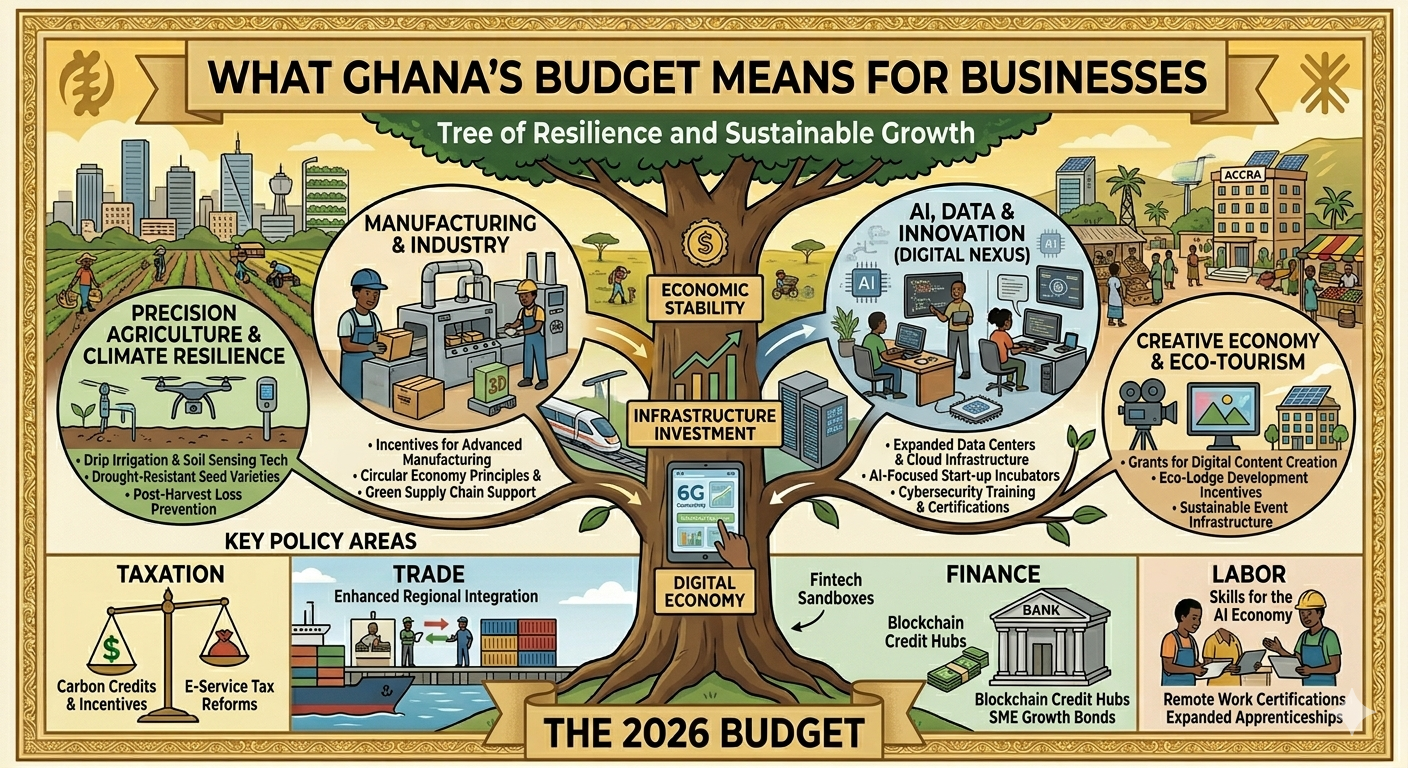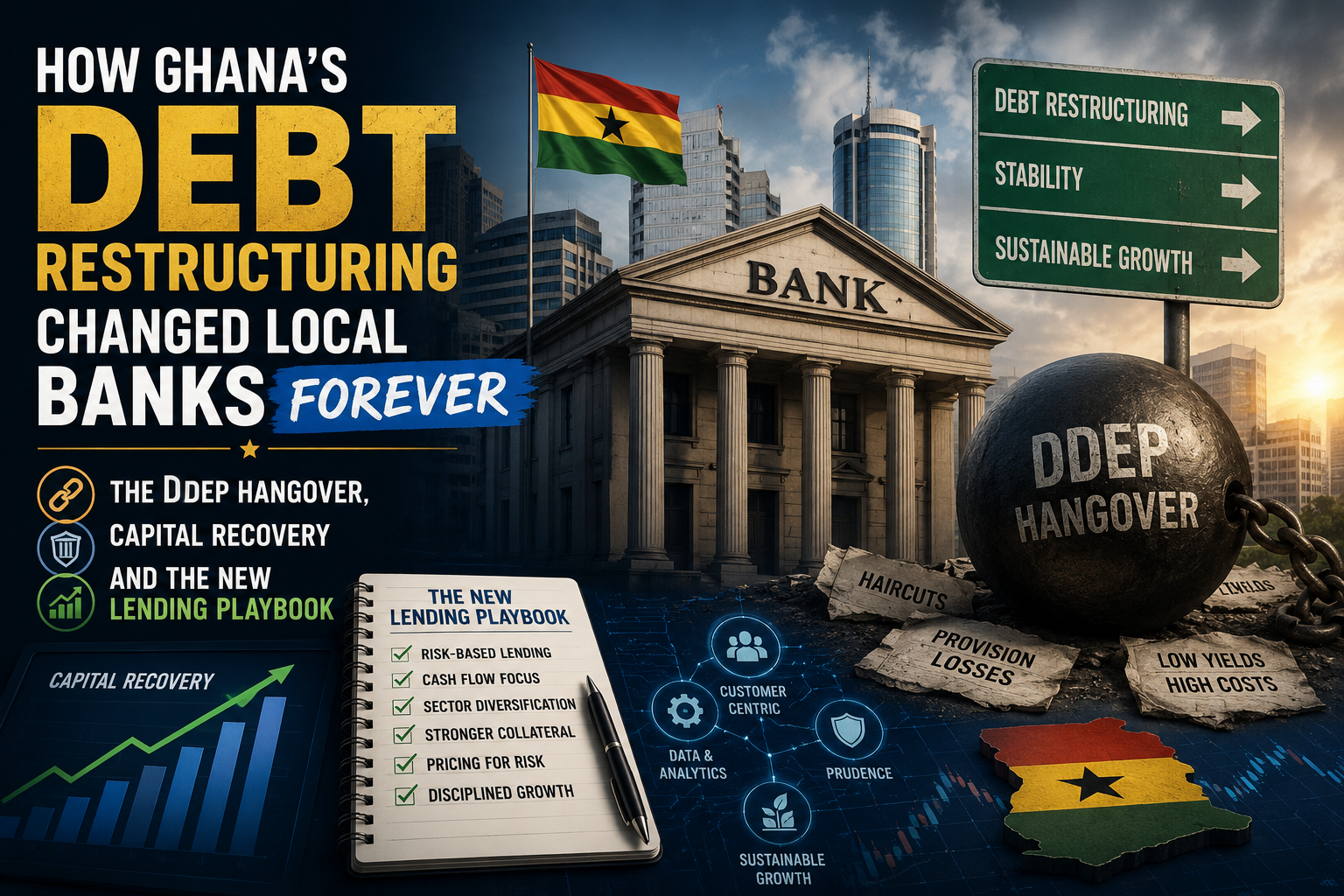








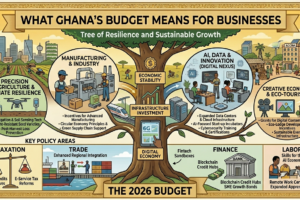

Explore how government policy affects business in Ghana, shaping investment, growth, regulation, and everyday operations across industries.
How Government Policy Affects Business
In every economy, government policy acts as both a guide and a gatekeeper for business activity. In Ghana, this influence is particularly visible: shaping how companies operate, expand, hire, and even survive.
From tax regulations and trade policies to interest rates and infrastructure spending, government decisions ripple through every sector. For business owners, policy is not just something to follow: it is something that can define success or failure.
📢 GET DETAILED ARTICLES + JOBS
Join THSB's WhatsApp Channel and never miss a post or opportunity.
Understanding how government policy affects business is key to understanding how Ghana’s economy truly works.
RECOMMENDED: What Interest Rates Changes Mean.
The Power of Policy in Shaping Business Direction
Government policy sets the tone for the business environment. It determines what is encouraged, what is restricted, and where opportunities lie. For instance, policies promoting local manufacturing can push businesses to invest in production, while import restrictions can shift demand toward locally made goods.
These decisions often reflect broader national goals, such as reducing unemployment, increasing exports, or stabilising the economy. But for businesses, they translate into real, day-to-day choices. A change in policy can mean a new opportunity or a new challenge.
Taxation: The Direct Impact on Profitability
One of the most immediate ways government policy affects businesses is through taxation. Corporate taxes, VAT, import duties, and levies all influence how much a business earns and spends. Higher taxes can reduce profit margins, forcing businesses to increase prices or cut costs. Lower taxes, on the other hand, can encourage expansion and investment.
In Ghana, ongoing efforts to improve revenue collection have led to adjustments in tax policies. While these are necessary for national development, businesses often have to adapt quickly to remain competitive. For many entrepreneurs, tax policy is not just a financial issue, it is a strategic one.
Monetary Policy and Access to Finance
Beyond taxation, monetary policy also plays a major role. The Bank of Ghana influences the cost of borrowing through interest rate decisions. When interest rates are high, loans become expensive, limiting business expansion. When rates are lower, access to credit improves, encouraging investment.
For small businesses in particular, access to affordable finance can be the difference between growth and stagnation. Government-aligned policies that support lending, such as credit schemes or guarantees, can significantly boost business activity.
Regulation and Ease of Doing Business
Regulations are designed to create order, protect consumers, and ensure fair competition. However, the level of regulation can either support or hinder business operations.
Complex licensing processes, lengthy approvals, and bureaucratic delays can slow down business growth. On the other hand, streamlined systems make it easier for entrepreneurs to start and run businesses.
Ghana has made efforts to improve its ease of doing business, but challenges remain. Digital registration systems and regulatory reforms are helping, yet many businesses still navigate administrative hurdles. For investors, the regulatory environment is often a deciding factor.
RELATED: How Ghana Is Managing Economic Recovery.
Trade Policies and Market Access
Trade policies determine how businesses interact with global markets. Import restrictions, export incentives, and trade agreements all shape the competitive landscape. For example, policies that support exports can open up international opportunities for Ghanaian businesses, especially in sectors like agriculture and manufacturing.
At the same time, import policies can protect local industries but may also lead to higher costs for businesses that rely on foreign inputs. Striking the right balance is essential, too much protection can limit competition, while too little can overwhelm local businesses.
Infrastructure and Public Investment
Government spending on infrastructure: roads, electricity, water, and digital networks, has a direct impact on business efficiency. Reliable infrastructure reduces costs, improves productivity, and attracts investment. For instance, stable electricity supply allows manufacturers to operate without interruptions, while good roads improve logistics.
In Ghana, infrastructure development remains a key focus area. However, gaps still exist, particularly in energy and transport. When government investment aligns with business needs, the benefits are felt across the economy.
Policy Stability and Investor Confidence
Consistency in government policy is just as important as the policies themselves. Frequent changes or unclear regulations can create uncertainty, making it difficult for businesses to plan. Investors, both local and foreign, value stability. Clear and predictable policies encourage long-term investment, while uncertainty can lead to hesitation or withdrawal.
Ghana’s collaboration with institutions like the International Monetary Fund has been partly aimed at restoring confidence through structured reforms. For businesses, confidence is currency, and policy plays a major role in building it.
Supporting Small Businesses and Innovation
Government policies targeted at small businesses can have a transformative impact. Funding programmes, tax incentives, and training initiatives can help entrepreneurs grow and create jobs. In recent years, there has been increasing attention on supporting SMEs and startups, particularly in the digital space.
Policies that encourage innovation, such as fintech regulations and startup support, are helping to shape a new generation of businesses in Ghana. When policy supports innovation, the economy becomes more dynamic and competitive.
The Human Side of Policy Decisions
While policies are often discussed in technical terms, their impact is deeply human. A new tax affects a business owner’s bottom line. A change in interest rates influences whether someone can secure a loan. A new regulation can determine whether a startup survives or shuts down.
Behind every policy decision are real people: entrepreneurs taking risks, employees seeking stability, and communities depending on economic activity. Understanding this human dimension is key to appreciating the full impact of government policy.
A Constant Force in Business Growth
Government policy is not static, it evolves with economic conditions, political priorities, and global trends. For businesses in Ghana, adapting to these changes is part of the journey. The most successful businesses are often those that anticipate policy shifts, respond strategically, and remain flexible.
In the end, government policy does not just influence business, it shapes the environment in which businesses live and grow. And in Ghana’s evolving economy, that influence will remain as powerful as ever.
Disclaimer: Some content on The High Street Business may be aggregated, summarized, or edited from third-party sources for informational purposes. Images and media are used under fair use or royalty-free licenses. The High Street Business is a subsidiary of SamBoad Publishing under SamBoad Business Group Ltd, registered in Ghana since 2014.
For concerns or inquiries, please visit our Privacy Policy or Contact Page.

Esther Aku-Sika is a content writer and social media strategist who helps brands and startups grow through intentional storytelling and practical marketing strategies. With a keen eye for trends and audience behavior, she shares business insights, content strategies, and real-life lessons to help entrepreneurs build visibility and turn ideas into income. Through her writing, she simplifies complex concepts and equips readers with actionable steps to grow in today’s digital space.