


Ghana’s market structure is a study in duality. On one hand, a sophisticated, bank-dominated financial system with over GHS 644 billion in assets . On the other, 92.3 percent of businesses operate informally, and 70 percent generate less than GHS 10,000 annually .
For the entrepreneur, investor, or policymaker, understanding this structure is not an academic exercise—it is essential intelligence for navigating the economy, accessing finance, and building a sustainable enterprise.
The Financial Sector: Bank-Dominated and Concentrated
Ghana’s financial system is the backbone of the formal economy. As the International Monetary Fund (IMF) noted in its July 2026 Selected Issues paper, the system is “bank-dominated and concentrated,” amplifying macro-financial transmission .
📢 GET DETAILED ARTICLES + JOBS
Join THSB's WhatsApp Channel and never miss a post or opportunity.
Key Statistics
| Metric | Value |
|---|---|
| Total Financial Sector Assets (2025) | GHS 644 billion (46.9% of GDP) |
| Banks’ Share of Assets | 67.4% (31.6% of GDP) |
| Foreign-Owned Banks’ Share | 40.1% |
| Domestic Private Banks‘ Share | 12.1% |
| Government-Owned Banks’ Share | 15.2% |
| Five Largest Banks‘ Share | ~45% of banking assets |
The Dominance of Foreign-Owned Banks
Foreign-owned banks remain “systemically dominant,” according to the IMF . This concentration has practical implications:
-
Institution-specific stress can have outsized effects on the broader economy
-
Access to credit for SMEs is shaped by the lending practices of a few large institutions
-
Policy interventions must account for the central role these banks play in financial intermediation
Beyond Banks: The Broader Financial Ecosystem
While banks dominate, other institutions play important roles:
-
Specialised Deposit-taking Institutions (SDIs): ~6.5% of assets—serving households and small-scale lending
-
Non-Bank Financial Institutions (NBFIs): Nearly one-quarter of assets—led by pension funds (over GH¢108 billion in assets), but also including insurance companies and securities firms
-
Credit Unions: ~1% of assets but serve nearly 1 million members (about 3% of the population)
The formal financial system reached approximately 81 percent of the population in 2025 , with SDIs and NBFIs playing a key role in financial inclusion.
Regulatory Architecture
The financial system is regulated by a tiered structure :
| Regulator | Oversight Responsibility |
|---|---|
| Bank of Ghana | Banking and non-banking financial business |
| Securities and Exchange Commission | Securities sector |
| National Insurance Commission | Insurance sector |
| National Pensions Regulatory Authority | Pensions sector |
The Bank of Ghana’s balance sheet is large relative to the economy—16.3 percent of GDP at end-2025—underscoring its central role in macro-financial transmission .
The Capital Markets: A Resurgence of Confidence
The Remarkable Recovery
Ghana’s capital markets have staged one of the most remarkable recoveries globally. The Ghana Stock Exchange (GSE) has delivered extraordinary returns over the past four years:
-
2023: 28% return
-
2024: Over 56%
-
2025: Approximately 79%
-
2026: 63.4% (second only to South Korea globally)
Market Concentration and the Listing Challenge
Despite this performance, the GSE remains concentrated. Only eight out of 23 universal banks are listed, and MTN Ghana and a few financial institutions dominate trading . The Bank of Ghana has announced measures to encourage more banks to list, forming a special committee with industry players to attract “patient capital” and deepen market liquidity .
The IPO Revival
After approximately seven years without a new listing, the GSE recorded three initial public offerings in six months—all oversubscribed:
-
First Atlantic Bank PLC (December 2025): GHS 742 million
-
Zen Petroleum Holdings PLC (March-April 2026): GHS 640 million
-
Kasapreko PLC (June 2026): Targeting GHS 700 million
These IPOs added GHS 11 billion in market capitalisation and raised approximately GHS 2 billion. President Mahama called this “one of the clearest signals that investor confidence in Ghana’s capital markets has been restored.
The Commercial Paper Market
In 2024, the GSE launched a regulated commercial paper market for short-term corporate financing. The inaugural issuance of GHS 72.5 million marked a shift toward greater transparency, with simplified listing requirements and compliance with international standards.
The Commodity Market: State-Led Aggregation
Ghana’s approach to commodity markets is defined by two state-led institutions: COCOBOD (cocoa) and GoldBod (gold). Both serve a similar function: stabilising prices, aggregating output, and protecting small producers.
COCOBOD: The Cocoa Pricing Framework
The Ghana Cocoa Board (COCOBOD) runs a centralised marketing and pricing system serving approximately 800,000 cocoa farmers .
How it works:
-
COCOBOD purchases cocoa through licensed buying companies at a producer price announced at the start of each season
-
Prices are set based on international forecasts, production costs, and government policy
-
Farmers are shielded from global price volatility
The limits of the model:
-
Farmers often do not benefit when world prices rise
-
Heavy administrative structures and syndicated loans reduce flexibility
-
Ghana earns only 8–10 percent of the global cocoa value chain
The system is under reform pressure. In February 2026, COCOBOD reduced the guaranteed farm-gate price by 28.6 percent—from GH¢58,000 to GH¢41,392 per tonne—affecting 800,000 farming households . Critics argue this is not a price story but a “governance failure” rooted in a static pricing model unable to absorb market and exchange rate shocks .
GoldBod: The New Aggregation Model
In 2025, Ghana introduced a similar institutional structure for gold through the Ghana Gold Board (GoldBod) under Act 1140 . GoldBod acts as the sole authorised aggregator and exporter for artisanal and small-scale mining (ASM) gold.
Early results:
-
41.5 tonnes exported (February-May 2025), valued at US$4 billion
-
ASM output grew by 70% in 2024, from 1.1M oz to 1.9M oz
-
Gold’s contribution to national production rose from 28% to 39%
-
Bank of Ghana reserves increased by over 21% to 37.06 tonnes
Key differences from COCOBOD:
| Feature | COCOBOD (Cocoa) | GoldBod (Gold) |
|---|---|---|
| Sector Coverage | 800,000+ farmers | 1.5–2 million ASM miners |
| Pricing | Annual producer price | Daily pricing linked to spot market |
| Revenue Retention | 8–10% of value chain | Aims to retain 30–40% of ASM value |
| Export Channel | Licensed exporters | Sole authorised ASM exporter |
| Foreign Exchange | Through BoG/COCOBOD | Direct to reserves |
GoldBod’s model is more market-driven and offers a “far stronger macroeconomic lever” because gold is a monetary asset that directly reinforces foreign-exchange reserves .
The Retail Market: Formal Meets Informal
The Numbers
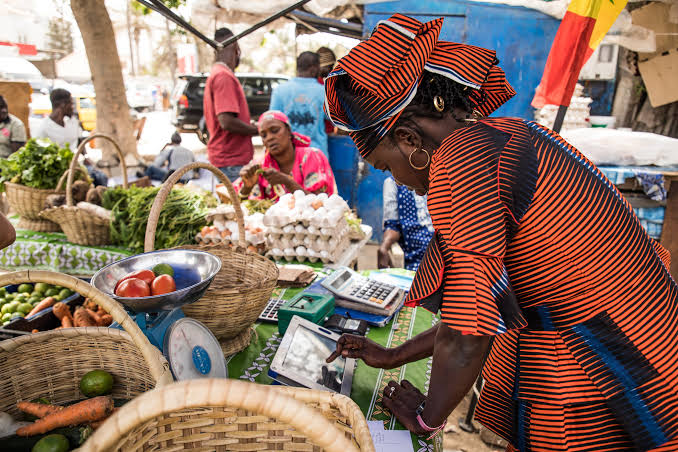
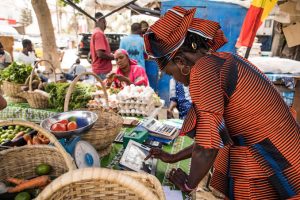
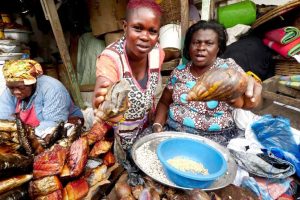
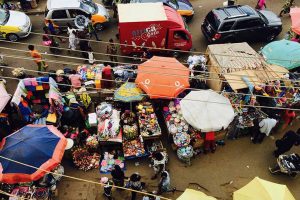
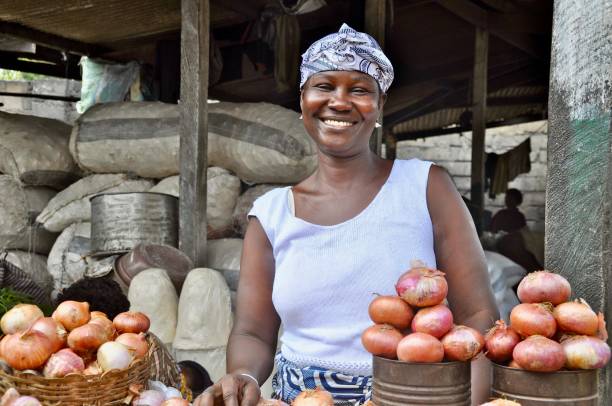
Ghana’s retail sector is a study in dualism. Despite significant growth, informal markets continue to dominate.
| Channel | Market Share (2024) |
|---|---|
| Small grocers/informal | 83% |
| Supermarkets/Hypermarkets | 17% |
The retail industry was valued at approximately US$32 billion in 2023** and is expected to reach about **US$54 billion by 2031, growing at a CAGR of 7.5% . Ghana ranked 5th in Africa in the A.T. Kearney 2023 Global Retail Development Index .
The Modern Retail Landscape
Despite accounting for only 17% of the market, modern retail has grown significantly. Formal retail grew at a Compound Annual Growth Rate of 8.3% (2010–2020), driven by $1.2 billion in FDI in retail infrastructure .
Key players:
-
Melcom: Dominates with broad, mid-market appeal
-
Shoprite: Anchors most malls
-
Palace Hypermarkets: Bulk and value-conscious shoppers
-
Koala and Max-mart: Upper-middle-class consumers
-
“China Malls”: Warehouse-style outlets offering low-cost goods
Mall development:
-
Ghana’s first mall (Accra Mall) opened in 2008 (22,900 m²)
-
By 2020, approximately 138,000 m² of formal retail space
-
Prime retail rents in Accra reach $40–$60 per m²
-
Takoradi Mall (2018), Kumasi City Mall, and the ambitious Ghana International Mall on Spintex Road
The Hybrid Consumer
The result is a uniquely Ghanaian hybrid: a dynamic, multi-format ecosystem shaped by price sensitivity, convenience, and social norms . Many consumers shop across formats—purchasing packaged goods at supermarkets while sourcing fresh produce from open-air markets .
The Distribution Infrastructure
Food distribution is quick and reliable between major urban centers (Accra, Takoradi, Kumasi, Tamale), but less developed in other areas. Local manufacturers and distributors consequently concentrate efforts in Ghana’s main urban areas .
The Informal Sector: The Invisible Economy
The 2024 Integrated Business Establishment Survey (IBES) provides the most comprehensive picture of Ghana’s business structure :
Key Findings:
-
Business establishments: Tripled over the past decade—from 638,235 (2014) to 1.87 million (2024)
-
Employment growth: Lagged behind business growth—persons engaged rose from 3.28 million to 6.90 million
-
Micro businesses: 90.4% of all establishments, up from 16.6% in 2014
-
Informality: 92.3% of enterprises operate outside the formal regulatory framework
-
Revenue: 70% of establishments generate less than GHS 10,000 annually
The Informality Trend: Notably, older businesses—those over 50 years old—are more likely to be informal, and recent trends indicate that more businesses are moving into informality rather than formalizing .
Positive Trends:
-
37.2% of businesses have adopted digital payment solutions (50.9% in Greater Accra)
-
28.5% of agricultural businesses and 20.6% of industrial firms have adopted environmentally sustainable practices
The Structural Challenges
The Competition Deficit
Ghana has had a draft competition bill since 2007 but has not yet enacted comprehensive competition law. Without it, monopolies, cartels, and anti-competitive practices can distort markets, block smaller players, and capture the benefits of industrial policy.
The Fronting Problem
The practice of “fronting”—where foreign nationals use Ghanaian citizens as nominal owners while retaining operational control—remains a core challenge. This has been illegal under the old GIPC Act but has flourished due to weak enforcement.
The Implementation Gap
A recurring theme across all market segments is the gap between well-designed policies and their execution. As the recent cocoa crisis and the persistent dominance of foreign-owned banks demonstrate, structural reform is not just about laws—it is about governance and enforcement.
THSB Conclusion
Ghana’s market structure is complex, layered, and evolving. A sophisticated financial system with over GHS 600 billion in assets sits alongside an informal sector where 92.3 percent of businesses operate outside formal regulation. State-led commodity aggregation institutions protect small producers but struggle with flexibility and governance. Modern retail is growing, but 83 percent of food retail remains in the hands of small grocers.
For the business owner, understanding this structure is essential. Accessing finance means navigating a bank-dominated system where five institutions control 45 percent of assets. Exporting gold means working through GoldBod’s aggregation model. Selling consumer goods means understanding the hybrid retail landscape—where consumers shop across both formal and informal channels.
Ghana’s markets are open, competitive, and dynamic. But they are also fragmented, concentrated, and shaped by a tension between market forces and state intervention. The entrepreneur who understands this structure is the entrepreneur who can navigate it successfully.
QUICK FACTS BOX
| Element | Detail |
|---|---|
| Financial Sector Assets (2025) | GHS 644 billion (46.9% of GDP) |
| Banks’ Share of Assets | 67.4% |
| Foreign-Owned Banks’ Share | 40.1% |
| Five Largest Banks‘ Share | ~45% |
| GSE Return (2026) | 63.4% |
| Market Capitalisation | GH¢263 billion |
| IPOs in Six Months | 3 (GHS 2 billion raised) |
| Pension Fund Assets | GH¢108 billion+ |
| Gold Exported (2025) | 41.5 tonnes (US$4 billion) |
| Retail Market Value (2023) | US$32 billion |
| Informal Food Retail Share | 83% |
| Business Establishments | 1.87 million |
| Informal Businesses | 92.3% |
| Micro Businesses | 90.4% |
| Businesses < GHS 10,000 Revenue | 70% |
FREQUENTLY ASKED QUESTIONS
1. How large is Ghana’s financial sector?
Total financial sector assets rose from GHS 536.8 billion at end-2024 to an estimated GHS 644 billion at end-2025, equivalent to 46.9 percent of GDP. Banks account for about 67.4 percent of total system assets .
2. Why are foreign-owned banks dominant in Ghana?
Foreign-owned banks hold about 40.1 percent of financial sector assets, compared with 12.1 percent for domestic private banks and 15.2 percent for government-owned banks. The IMF notes that this dominance makes them “systemically dominant” in financial intermediation .
3. How has the Ghana Stock Exchange performed?
The GSE has delivered returns of 28% (2023), over 56% (2024), approximately 79% (2025), and 63.4% (2026). Total market capitalisation reached GH¢263 billion .
4. What is the commercial paper market in Ghana?
In 2024, the GSE launched a regulated commercial paper market for short-term corporate financing. The inaugural issuance of GHS 72.5 million marked a shift toward greater transparency and international standards .
5. How does COCOBOD set cocoa prices?
COCOBOD purchases cocoa through licensed buying companies at a producer price announced at the start of each season, based on international forecasts, production costs, and government policy. Farmers are shielded from global price volatility .
6. What is GoldBod and how does it work?
The Ghana Gold Board (GoldBod), established under Act 1140 (2025), acts as the sole authorised aggregator and exporter for artisanal and small-scale mining gold. It centralises collection, assaying, and export to reduce smuggling and strengthen reserves .
7. What percentage of Ghana’s retail market is informal?
Informal markets and small grocers account for approximately 83 percent of food retail, while supermarkets and convenience stores make up only 17 percent .
8. What do the IBES statistics reveal about Ghana’s business structure?
Business establishments tripled to 1.87 million. Micro businesses account for 90.4%. Informality is 92.3%. 70% of establishments generate less than GHS 10,000 annually .
9. What is the “fronting” problem in Ghana’s markets?
Fronting is the practice where foreign nationals use Ghanaian citizens as nominal owners while retaining operational control. This has been illegal but has flourished due to weak enforcement .
10. Why does Ghana need a competition law?
Ghana has had a draft competition bill since 2007 but has not enacted comprehensive legislation. Without it, monopolies, cartels, and anti-competitive practices can distort markets, block smaller players, and capture industrial policy benefits .
Source: The High Street Business
Disclaimer: Some content on The High Street Business may be aggregated, summarized, or edited from third-party sources for informational purposes. Images and media are used under fair use or royalty-free licenses. The High Street Business is a subsidiary of SamBoad Publishing under SamBoad Business Group Ltd, registered in Ghana since 2014.
For concerns or inquiries, please visit our Privacy Policy or Contact Page.

Samuel Kwame Boadu is a Ghanaian entrepreneur, writer, and digital consultant passionate about creating impactful stories and business solutions. He is the Founder & CEO of SamBoad Business Group Ltd, a dynamic company with subsidiaries in digital marketing, logistics, publishing, and risk management.