





How Inflation Affects Household Spending – Inflation reduces purchasing power and changes how households spend money in Ghana. Here’s how rising prices affect daily living and family budgets.
How Inflation Affects Household Spending
Inflation refers to the general rise in prices of goods and services over time, and it has a direct impact on household spending patterns. In Ghana, periods of high inflation affect everything from food and transport to rent and utilities. Institutions such as the Bank of Ghana closely monitor inflation trends as part of efforts to maintain economic stability and protect household purchasing power.
Reduced Purchasing Power
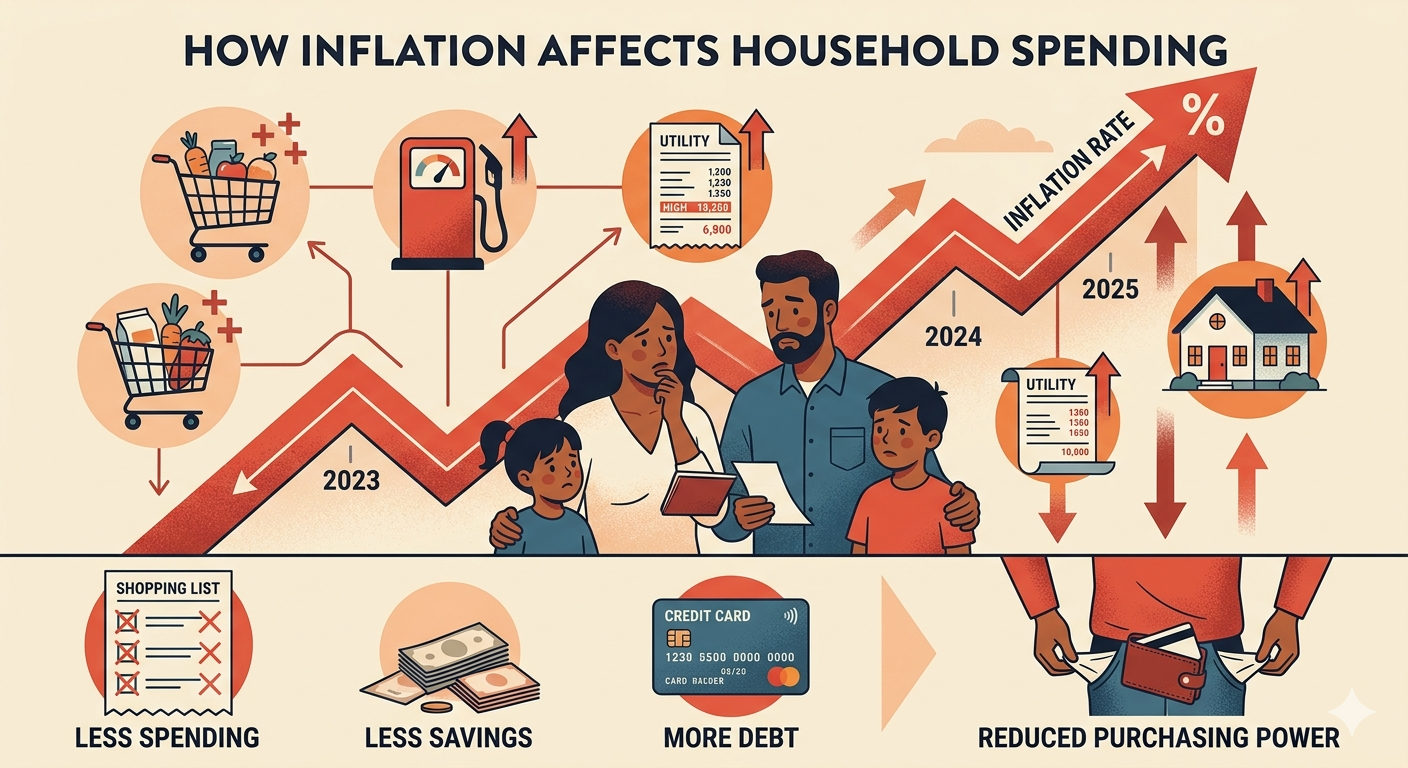
One of the most immediate effects of inflation is reduced purchasing power. When prices rise, the same amount of money buys fewer goods and services. This means households must spend more to maintain their usual standard of living, even if their income has not increased.
📢 GET DETAILED ARTICLES + JOBS
Join THSB's WhatsApp Channel and never miss a post or opportunity.
For many families, this leads to tighter budgets and difficult financial decisions.
Rising Food Prices
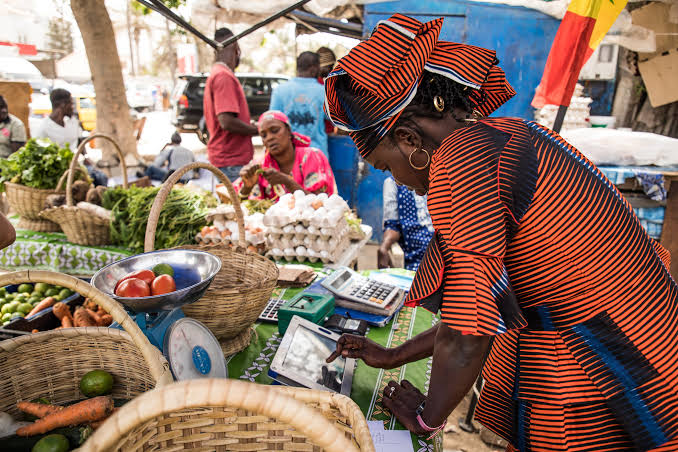
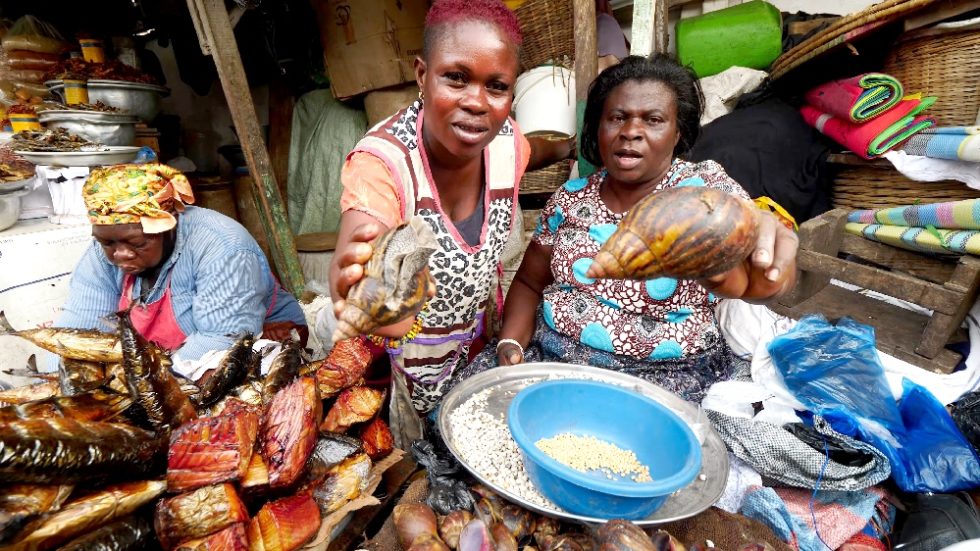
Food is one of the most affected areas during inflation. Staple items such as rice, maize, oil, and vegetables often become more expensive when inflation rises. Since food takes up a large portion of household income in Ghana, price increases can significantly strain family budgets.
Households may respond by reducing consumption or switching to cheaper alternatives.
Transport and Utility Costs
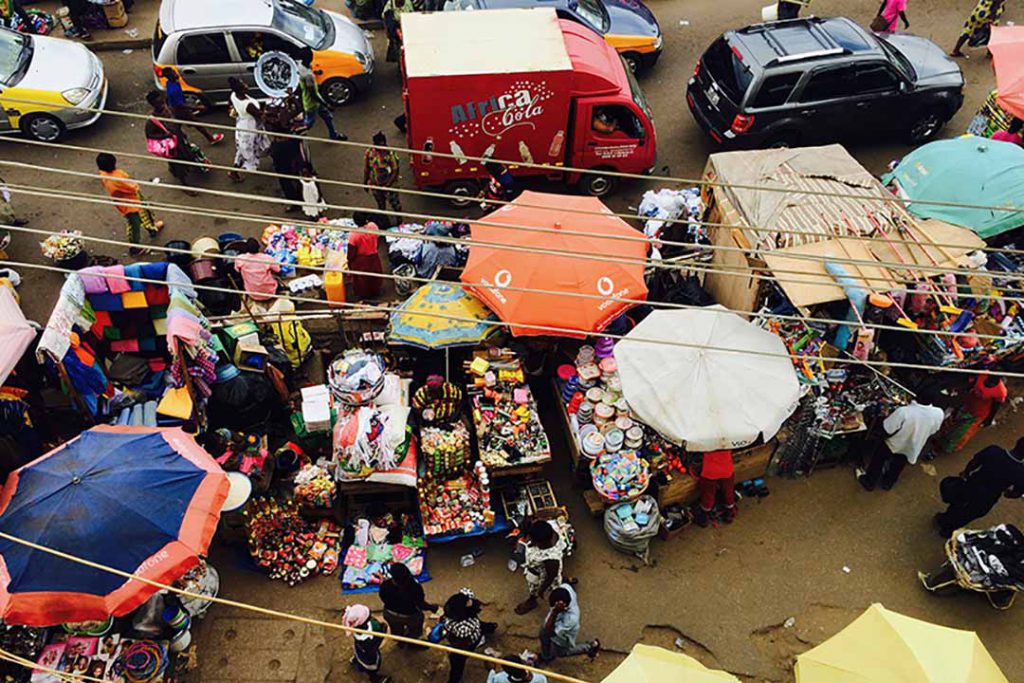
Inflation also affects transport and utility expenses. Fuel price increases lead to higher transport fares, making commuting more expensive for workers and students. Similarly, rising costs of electricity and water can increase monthly household bills.
These combined pressures reduce disposable income available for other needs.
Impact on Savings
Inflation can discourage savings by reducing the real value of money over time. When prices rise quickly, money saved today may be worth less in the future. This can make households less willing to save and more focused on immediate spending.
It also affects long-term financial planning, such as education or retirement savings.
Changes in Spending Habits
As inflation rises, households often adjust their spending behaviour. Families may prioritise essential goods such as food and rent while cutting back on non-essential items like entertainment, travel, and luxury goods.
This shift in consumption patterns can also affect businesses that rely on discretionary spending.
Pressure on Household Income
If wages do not increase at the same rate as inflation, real income declines. This creates pressure on households, especially those with fixed incomes or low-paying jobs. Even when nominal salaries remain unchanged, their value decreases in real terms.
As a result, many families feel financially squeezed during periods of high inflation.
Access to Credit and Debt
Inflation can also influence borrowing and debt repayment. When prices rise, households may turn to credit to manage daily expenses. However, if interest rates are also high, often adjusted by the Bank of Ghana to control inflation, borrowing becomes more expensive.
This can increase financial stress for families with existing loans.
Unequal Impact Across Income Groups
Inflation does not affect all households equally. Low-income families are often the most affected because they spend a larger share of their income on essentials like food and transport. Higher-income households may have more flexibility to absorb price increases.
This can widen inequality during periods of sustained inflation.
Coping Strategies by Households
To manage inflation, households often adopt various coping strategies. These include budgeting more strictly, seeking additional income sources, buying in bulk, or switching to cheaper brands. Some families also rely on informal support networks to manage financial pressure.
While these strategies help, they may not fully offset the impact of rising prices.
Conclusion From THSB
Inflation has a direct and often immediate impact on household spending in Ghana, affecting food, transport, savings, and overall living standards.
By reducing purchasing power and increasing financial pressure, it forces families to adjust their lifestyles and priorities. Effective inflation control by institutions like the Bank of Ghana is therefore essential to protecting households and ensuring economic stability.
Source: The High Street Business
Disclaimer: Some content on The High Street Business may be aggregated, summarized, or edited from third-party sources for informational purposes. Images and media are used under fair use or royalty-free licenses. The High Street Business is a subsidiary of SamBoad Publishing under SamBoad Business Group Ltd, registered in Ghana since 2014.
For concerns or inquiries, please visit our Privacy Policy or Contact Page.

Esther Aku-Sika is a content writer and social media strategist who helps brands and startups grow through intentional storytelling and practical marketing strategies. With a keen eye for trends and audience behavior, she shares business insights, content strategies, and real-life lessons to help entrepreneurs build visibility and turn ideas into income. Through her writing, she simplifies complex concepts and equips readers with actionable steps to grow in today’s digital space.