





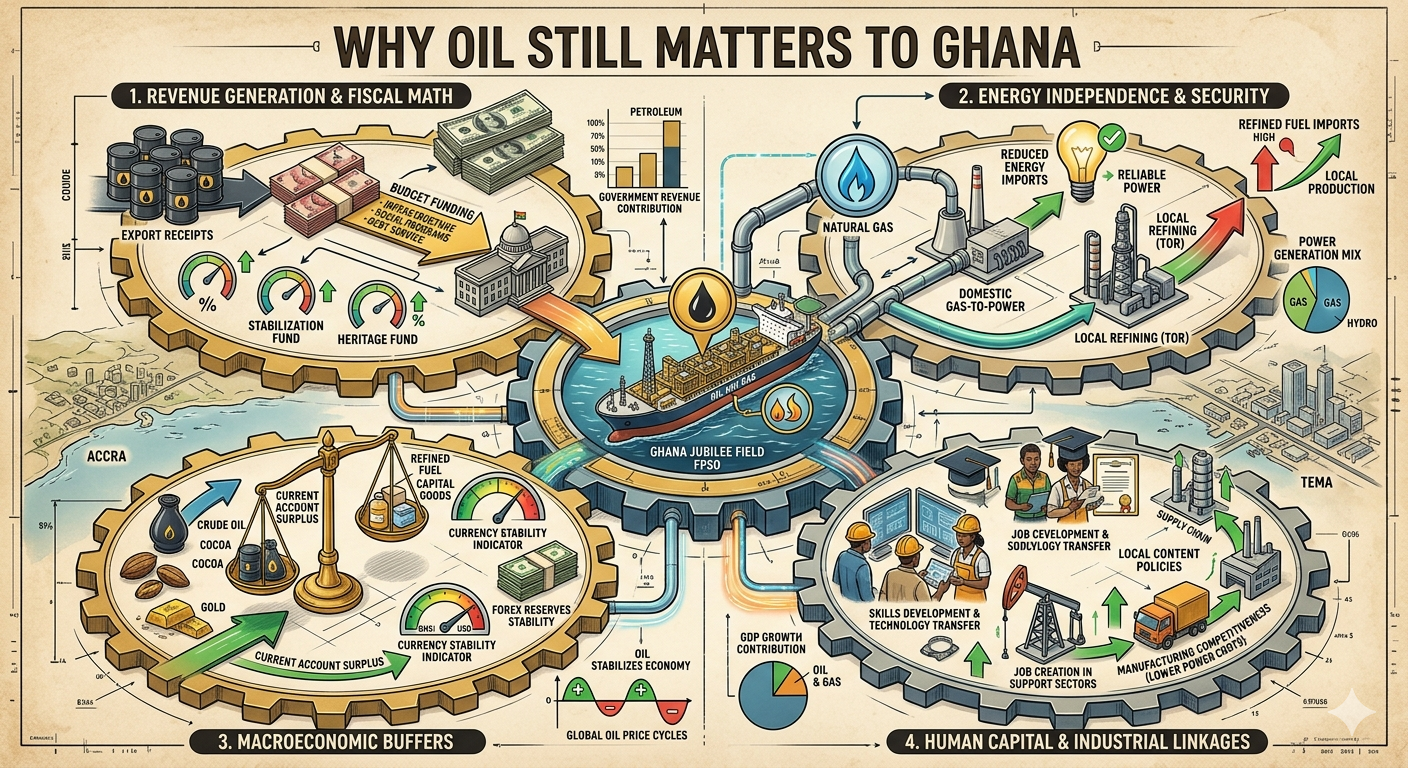
Why Oil Still Matters to Ghana – Oil remains a key pillar of Ghana’s economy, driving export earnings, government revenue, and energy supply. Here’s why it still matters despite diversification efforts.
Why Oil Still Matters to Ghana
Since the start of commercial production in 2010, oil has become an important part of Ghana’s economic landscape. Alongside cocoa and gold, it contributes significantly to export earnings and government revenue. Institutions such as the Bank of Ghana and the Ghana National Petroleum Corporation play key roles in managing oil-related inflows and policy direction, ensuring the sector continues to support national development.
A Major Source of Export Revenue
Oil is one of Ghana’s top exports, alongside gold and cocoa. When global oil prices are high, Ghana earns more from exports, increasing foreign exchange inflows. These earnings help strengthen the country’s external balance and support overall economic stability.
📢 GET DETAILED ARTICLES + JOBS
Join THSB's WhatsApp Channel and never miss a post or opportunity.
However, like other commodities, oil revenues are influenced by global price movements, making them unpredictable at times.
Supporting Government Finances
Oil revenues contribute directly to government income through taxes, royalties, and profits from state participation. These funds are often used to finance infrastructure, social programmes, and development projects. In periods of strong oil prices, the government may have more fiscal space to invest in the economy.
At the same time, managing oil revenues responsibly is essential to avoid overspending and ensure long-term benefits.
Impact on the Ghanaian Cedi
Foreign exchange earnings from oil exports play a key role in supporting the Ghanaian cedi. When oil revenues are strong, they increase the supply of foreign currency in the economy, helping to stabilise the exchange rate. This can reduce the cost of imports and ease inflationary pressures.
The Bank of Ghana often factors oil inflows into its broader strategy for managing currency stability.
Energy Security and Domestic Supply
Beyond exports, oil is critical for Ghana’s domestic energy needs. Petroleum products power transportation, industry, and electricity generation. A stable oil supply is therefore essential for economic activity and daily life.
Fluctuations in global oil prices can directly affect fuel costs, influencing transportation fares, production expenses, and overall inflation.
SEE ALSO: How Cocoa and Gold Revenue Impact The Economy
Attracting Investment
The oil sector continues to attract significant foreign investment. Exploration, production, and related services create opportunities for international oil companies and local businesses. These investments contribute to job creation, technology transfer, and economic growth.
The presence of a functioning oil industry also enhances Ghana’s position as an investment destination in West Africa.
Linkages to Other Sectors
Oil has spillover effects across the broader economy. Industries such as logistics, construction, and services benefit from oil-related activities. For example, infrastructure development linked to oil production can improve connectivity and support other sectors.
These linkages amplify the overall impact of the oil industry on economic growth.
Exposure to Global Price Volatility
Like other commodities, oil prices are determined on the global market. Sharp increases in prices can boost export earnings but also raise fuel costs domestically. Conversely, falling prices may reduce government revenue and foreign exchange inflows.
This dual impact makes oil both an opportunity and a risk for Ghana’s economy.
Managing Oil Wealth for the Future
Effective management of oil revenues is crucial for long-term development. Ghana has established frameworks to manage oil income, including funds designed to support stabilisation and future generations. Ensuring transparency and accountability in the use of these funds remains a key priority.
Support and guidance from institutions like the International Monetary Fund often emphasise the importance of prudent resource management.
The Push for Diversification
While oil remains important, Ghana is actively working to diversify its economy. Reducing reliance on oil and other commodities can help protect the economy from global price shocks. Investments in agriculture, manufacturing, and digital innovation are part of this broader strategy.
Diversification ensures that oil remains a strong pillar, but not the only one, supporting economic growth.
Conclusion From THSB
Oil continues to play a vital role in Ghana’s economy, contributing to export earnings, government revenue, and energy supply.
Despite the push for diversification, its influence remains significant. The challenge lies in managing oil resources wisely while building a more balanced and resilient economy for the future.
Source: The High Street Business
Disclaimer: Some content on The High Street Business may be aggregated, summarized, or edited from third-party sources for informational purposes. Images and media are used under fair use or royalty-free licenses. The High Street Business is a subsidiary of SamBoad Publishing under SamBoad Business Group Ltd, registered in Ghana since 2014.
For concerns or inquiries, please visit our Privacy Policy or Contact Page.

Esther Aku-Sika is a content writer and social media strategist who helps brands and startups grow through intentional storytelling and practical marketing strategies. With a keen eye for trends and audience behavior, she shares business insights, content strategies, and real-life lessons to help entrepreneurs build visibility and turn ideas into income. Through her writing, she simplifies complex concepts and equips readers with actionable steps to grow in today’s digital space.