

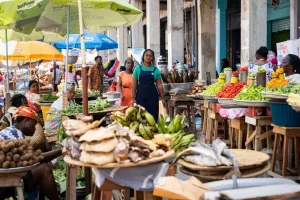







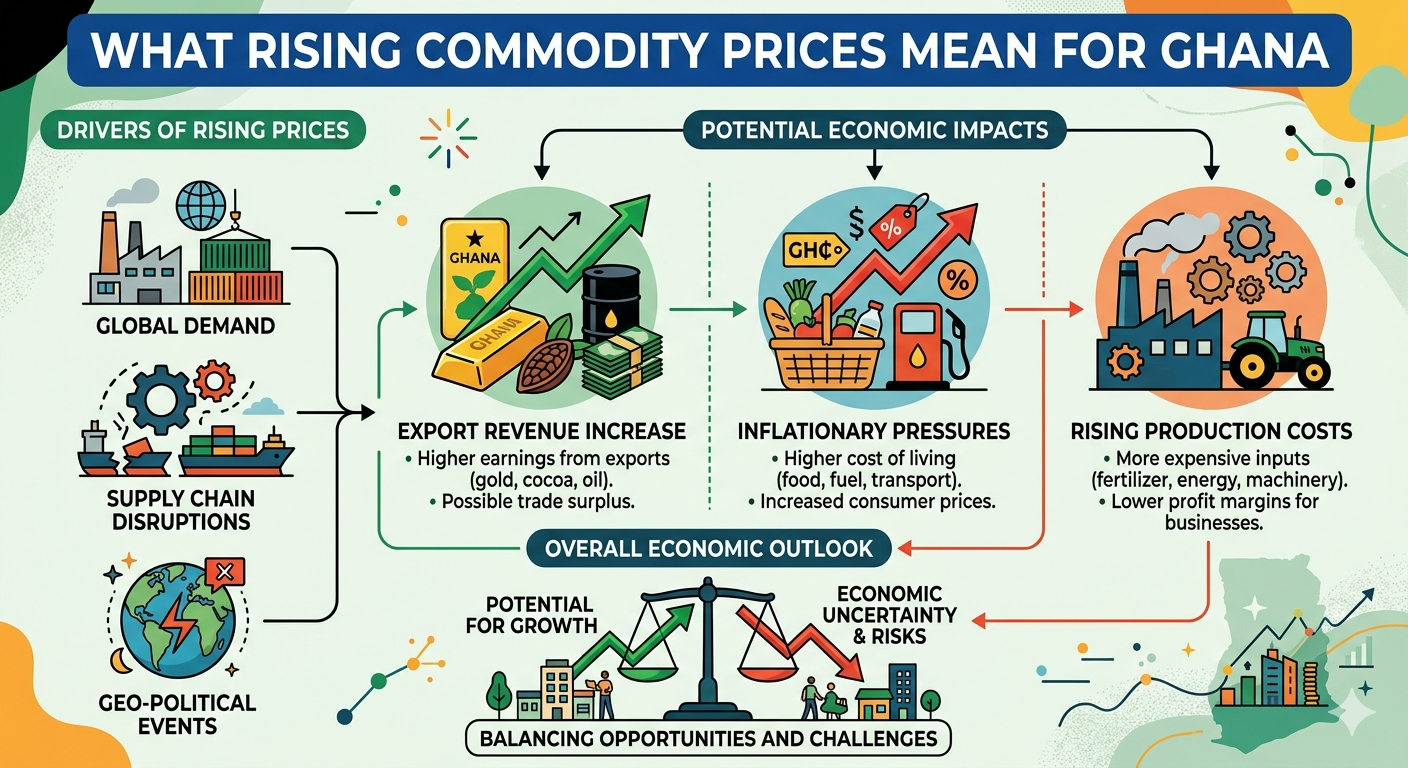
What Rising Commodity Prices Mean for Ghana – Rising commodity prices can boost Ghana’s export earnings but also increase costs locally. Here’s what higher prices mean for the economy, businesses, and households.
What Rising Commodity Prices Mean for Ghana
As a resource-rich economy, Ghana is highly sensitive to global commodity price movements. Key exports such as gold, cocoa, and oil play a central role in government revenue and foreign exchange earnings. When prices rise, the effects ripple across the economy, creating both opportunities and challenges. Policymakers, including the Bank of Ghana, and partners like the International Monetary Fund, closely monitor these shifts to guide economic strategy.
Boost in Export Revenue
One of the most immediate benefits of rising commodity prices is increased export earnings. When global prices for gold, cocoa, or oil go up, Ghana earns more from exports. This strengthens foreign exchange inflows and improves the country’s trade balance.
📢 GET DETAILED ARTICLES + JOBS
Join THSB's WhatsApp Channel and never miss a post or opportunity.
Higher export revenue can also increase government income through taxes and royalties, providing more resources for development projects.
Stronger Foreign Exchange Reserves
Increased export earnings often translate into stronger foreign exchange reserves. This gives Ghana greater capacity to stabilise the cedi and meet international payment obligations. A healthier reserve position also reassures investors and supports overall economic stability.
Efforts by the Bank of Ghana to manage reserves become more effective when commodity inflows are strong.
Potential for Economic Growth
Rising commodity prices can stimulate economic growth, particularly in sectors directly linked to exports. Mining, agriculture, and energy industries tend to benefit from higher global prices, leading to increased production, investment, and job creation.
This growth can have a ripple effect across the economy, supporting related sectors such as transport, logistics, and services.
Increased Government Spending Capacity
With higher revenues, the government may have more room to spend on infrastructure, social programmes, and economic development initiatives.
This can improve public services and create new opportunities for businesses. However, the key challenge lies in managing these revenues responsibly to avoid excessive spending.
Maintaining fiscal discipline, often emphasised in programmes supported by the International Monetary Fund, is crucial to ensuring long-term benefits.
RELATED: What Investors Are Watching In Ghana
Rising Costs for Imports
While higher commodity prices benefit exports, they can also increase costs on the import side, especially when global oil prices rise.
Higher fuel costs affect transportation, electricity, and production, leading to increased prices for goods and services. This can contribute to inflation and reduce purchasing power.
For businesses, rising input costs can squeeze profit margins and force price adjustments.
Inflationary Pressures
Rising global prices, particularly for energy and food, can lead to inflation in Ghana. Even as export earnings improve, households may feel the strain of higher living costs. Policymakers must therefore balance the benefits of increased revenue with measures to control inflation.
Monetary policy actions by the Bank of Ghana play a key role in managing these pressures.
Currency Stability Effects
Higher commodity prices can support the Ghanaian cedi by increasing foreign exchange inflows. A stronger or more stable currency makes imports cheaper and helps reduce inflation. However, this effect depends on how well increased earnings are managed within the broader economy.
If revenues are not properly managed, the positive impact on the currency may be short-lived.
Risk of Over-dependence
One of the long-term challenges is over-reliance on commodities. While rising prices bring short-term gains, they can create vulnerability if the economy depends too heavily on a few exports. A sudden drop in global prices can quickly reverse these benefits.
This highlights the importance of diversifying the economy and investing in other sectors such as manufacturing and technology.
The Need for Strategic Management
To fully benefit from rising commodity prices, effective management is essential. This includes saving excess revenues, investing in long-term projects, and maintaining fiscal discipline. Transparent and strategic use of resources can turn temporary price increases into lasting economic gains.
Conclusion From THSB
Rising commodity prices present both opportunities and challenges for Ghana. While they boost export earnings, strengthen reserves, and support growth, they can also lead to higher costs and inflation. The overall impact depends on how well these gains are managed.
With careful planning and sound policies, Ghana can leverage higher commodity prices to build a more resilient and diversified economy.
Source: The High Street Business
Disclaimer: Some content on The High Street Business may be aggregated, summarized, or edited from third-party sources for informational purposes. Images and media are used under fair use or royalty-free licenses. The High Street Business is a subsidiary of SamBoad Publishing under SamBoad Business Group Ltd, registered in Ghana since 2014.
For concerns or inquiries, please visit our Privacy Policy or Contact Page.

Esther Aku-Sika is a content writer and social media strategist who helps brands and startups grow through intentional storytelling and practical marketing strategies. With a keen eye for trends and audience behavior, she shares business insights, content strategies, and real-life lessons to help entrepreneurs build visibility and turn ideas into income. Through her writing, she simplifies complex concepts and equips readers with actionable steps to grow in today’s digital space.