




Davos, Switzerland — Artificial intelligence is no longer a distant concept for agriculture but a defining force already reshaping how food systems will function, and Africa must position itself at the centre of that transformation, according to Alice Ruhweza, President of the Alliance for a Green Revolution in Africa (AGRA).
Speaking on the sidelines of the World Economic Forum (WEF) Annual Meeting 2026 in Davos, Ms Ruhweza said discussions around AI dominated global conversations on food security, underscoring a shift toward technology- and data-driven agriculture.
“AI is the big subject. AI for agriculture and AI for food have been in many discussions,” she said. “I think the future of food systems will be very much technology– and data-driven. In many panels I attended, we kept talking about the need to embrace this. It is coming.”
📢 GET DETAILED ARTICLES + JOBS
Join THSB's WhatsApp Channel and never miss a post or opportunity.
Her remarks reflect a growing consensus among policymakers and agribusiness leaders that the next phase of agricultural productivity will be shaped less by land expansion and more by data, analytics and intelligent systems that guide decision-making across the value chain.
Yet Ms Ruhweza warned that the promise of artificial intelligence will only materialise if its adoption is practical, inclusive and clearly beneficial to farmers—particularly smallholders who dominate Africa’s agricultural landscape.
“We need to make sure that when it comes, the benefits are spread. And that everybody understands it. But importantly, it solves the problem,” she said. “Because we don’t want farmers to adopt AI unless it solves a problem.”
She identified access to finance and decision-making information as two critical pressure points where AI could deliver immediate value. Data-driven tools, she said, could help unlock credit for farmers—especially women—who are often excluded from traditional financing due to limited credit histories.
“We want to make sure AI makes access to information easier. It makes credit scoring easier for women farmers who need access to finance,” Ms Ruhweza noted.
AI, she added, could also support Africa’s push toward regenerative and climate-smart agriculture, providing real-time data on soil health, crop performance and sustainable farming practices.
“We need to make sure that the regenerative agriculture that we want to introduce, that we are getting the data that we need that tells us these are the farming practices that we need to do,” she said.
The broader implication, Ms Ruhweza stressed, is that Africa’s food systems of the future will be powered by data—but the continent must ensure it owns and shapes that transition.
“I think the future of food systems will be data-driven. But that future is in Africa,” she said.
The WEF Annual Meeting 2026, held under the theme “A Spirit of Dialogue,” brought together global leaders from government, business, civil society and academia to debate emerging economic and technological priorities. Artificial intelligence emerged as one of the most dominant themes across sectors.
Echoing the transformative potential of AI, Tesla CEO Elon Musk told participants that widespread deployment of AI, robotics and renewable energy could usher in an era of unprecedented economic abundance.
“If you have ubiquitous AI that is essentially free or close to it and ubiquitous robotics, you will have an explosion in the global economy that is truly beyond all precedent,” Musk said.
He argued that intelligent machines could take on industrial work, support ageing populations and address labour shortages—reshaping productivity and lowering costs across economies.
For Africa, analysts say the challenge will be less about whether AI will arrive and more about whether the continent can harness it strategically to boost food security, resilience and inclusive growth, rather than widening existing inequalities.
Source: Accra Business News
Disclaimer: Some content on The High Street Business may be aggregated, summarized, or edited from third-party sources for informational purposes. Images and media are used under fair use or royalty-free licenses. The High Street Business is a subsidiary of SamBoad Publishing under SamBoad Business Group Ltd, registered in Ghana since 2014.
For concerns or inquiries, please visit our Privacy Policy or Contact Page.
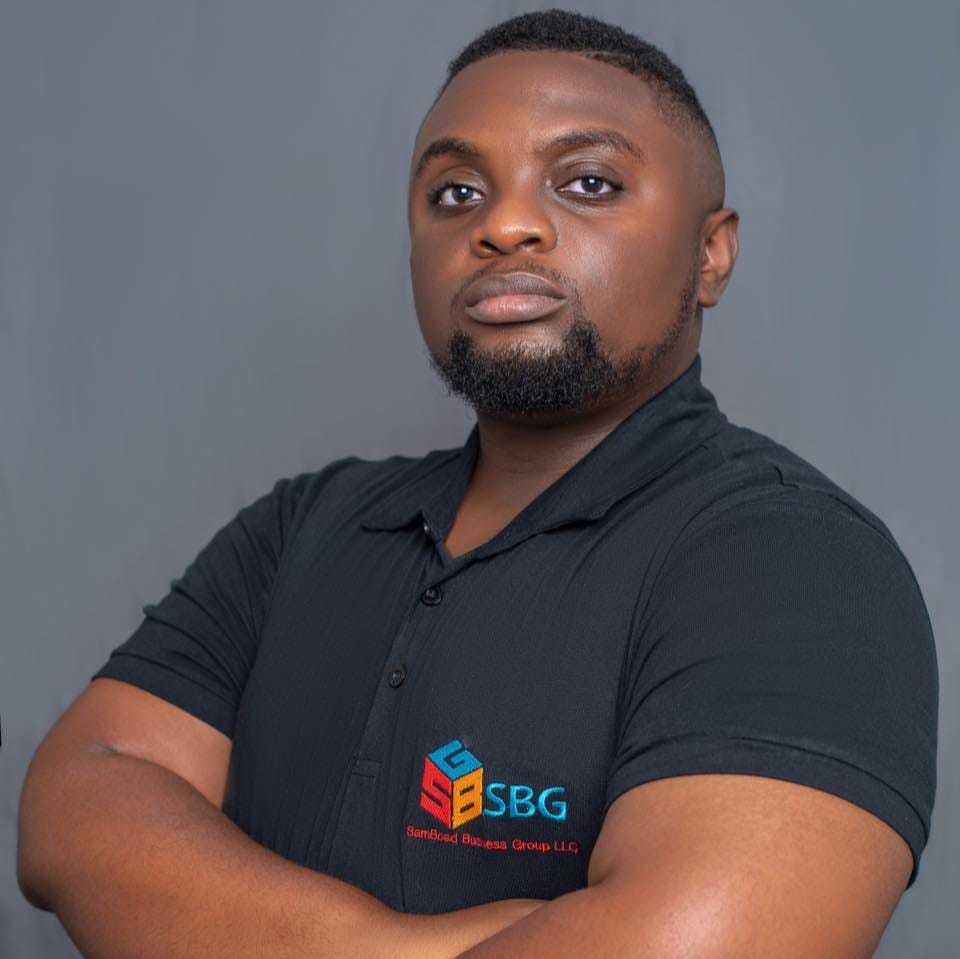
Samuel Kwame Boadu is a Ghanaian entrepreneur, writer, and digital consultant passionate about creating impactful stories and business solutions. He is the Founder & CEO of SamBoad Business Group Ltd, a dynamic company with subsidiaries in digital marketing, logistics, publishing, and risk management.