



Ghana’s Trade Balance Explained – Ghana’s trade balance shows the difference between exports and imports, shaping the cedi, inflation, and growth. Here’s a simple explanation of how it works.
Ghanas Trade Balance Explained
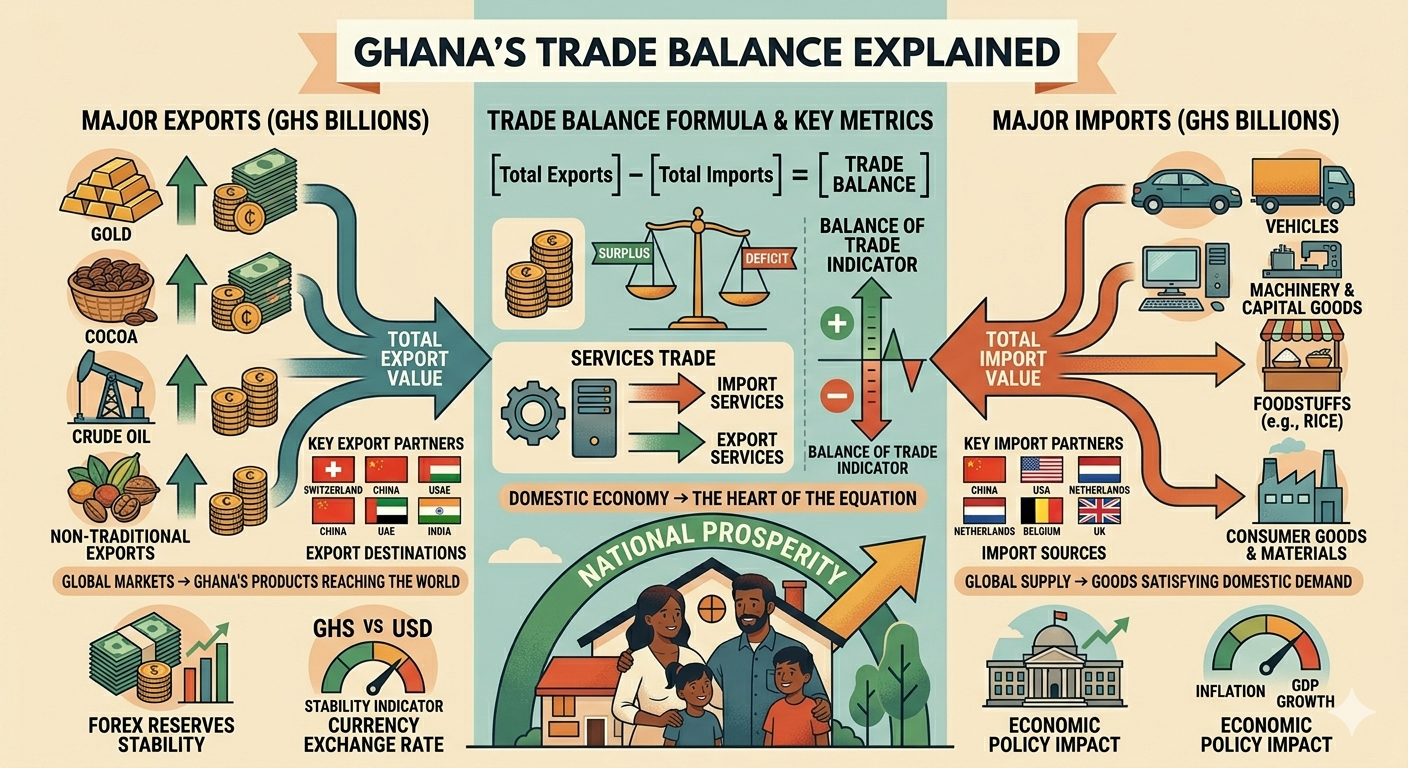
Ghana’s trade balance is a key indicator of economic health, showing the difference between what the country exports and what it imports. A strong export base: driven by gold, cocoa, and oil: supports foreign exchange earnings, while high import dependence can create pressure on the economy. Institutions like the Bank of Ghana closely monitor these trends, alongside global partners such as the International Monetary Fund, to guide policy decisions.
What the Trade Balance Means
The trade balance is simply the difference between the value of exports and imports.
📢 GET DETAILED ARTICLES + JOBS
Join THSB's WhatsApp Channel and never miss a post or opportunity.
- Exports are goods and services sold to other countries (such as gold, cocoa, and oil).
- Imports are goods and services bought from other countries (such as fuel, machinery, and food products).
When exports are greater than imports, Ghana has a trade surplus. When imports are higher, it results in a trade deficit.
Ghana’s Export Strength
Ghana’s economy is strongly supported by commodity exports. Gold remains the country’s largest export, followed by cocoa and crude oil. These products generate foreign exchange, which is essential for stabilising the economy and paying for imports.
Strong export performance helps improve the trade balance and supports economic stability.
Heavy Dependence on Imports
Despite strong exports, Ghana imports a wide range of goods. These include refined petroleum products, machinery, pharmaceuticals, vehicles, and even some food items. This high import dependence often leads to a trade deficit or reduces the size of a trade surplus.
Imports are necessary for development, but they also increase demand for foreign currency.
Impact on the Ghanaian Cedi
The trade balance has a direct effect on the value of the Ghanaian cedi. When exports are strong, more foreign currency enters the economy, helping to support the cedi. However, when imports are high, demand for foreign currency increases, which can weaken the local currency.
The Bank of Ghana uses various tools to manage these pressures and maintain exchange rate stability.
Link to Inflation and Prices
A weak trade balance can contribute to inflation. When imports become more expensive due to a weaker cedi, the cost of goods and services rises. This affects households and businesses, increasing the overall cost of living.
A healthier trade balance helps reduce inflationary pressure by stabilising the currency.
Role of Global Commodity Prices
Ghana’s trade balance is highly influenced by global commodity prices. When prices for gold, cocoa, and oil rise, export earnings increase, improving the trade position. However, when prices fall, export revenues decline, worsening the balance.
This makes Ghana’s economy sensitive to global market fluctuations.
READ ALSO: Why Oil Still Matters To Ghana
Economic Growth and Stability
A strong trade balance supports economic growth and stability. Higher export earnings provide more foreign exchange for investment, infrastructure development, and debt repayment. This also strengthens investor confidence in the economy.
However, persistent trade deficits can create external vulnerabilities and increase reliance on borrowing.
Efforts to Improve the Trade Balance
Ghana has introduced several strategies to improve its trade position. These include promoting local production, reducing import dependence, and adding value to raw materials before export. Industrialisation policies aim to boost manufacturing and reduce the need for imported goods.
Support from international partners like the International Monetary Fund also encourages reforms to strengthen external stability.
The Importance of Diversification
Diversifying the economy is key to improving the trade balance in the long term. By expanding into manufacturing, technology, and services, Ghana can reduce its reliance on imports and increase non-traditional exports.
A more diversified export base helps create a more balanced and resilient economy.
Conclusion From THSB
Ghana’s trade balance is a vital indicator of economic performance, reflecting the relationship between exports and imports.
While strong commodity exports provide support, high import dependence continues to pose challenges. Managing this balance effectively is essential for stabilising the cedi, controlling inflation, and supporting sustainable economic growth.
Source: The High Street Business
Disclaimer: Some content on The High Street Business may be aggregated, summarized, or edited from third-party sources for informational purposes. Images and media are used under fair use or royalty-free licenses. The High Street Business is a subsidiary of SamBoad Publishing under SamBoad Business Group Ltd, registered in Ghana since 2014.
For concerns or inquiries, please visit our Privacy Policy or Contact Page.

Esther Aku-Sika is a content writer and social media strategist who helps brands and startups grow through intentional storytelling and practical marketing strategies. With a keen eye for trends and audience behavior, she shares business insights, content strategies, and real-life lessons to help entrepreneurs build visibility and turn ideas into income. Through her writing, she simplifies complex concepts and equips readers with actionable steps to grow in today’s digital space.