



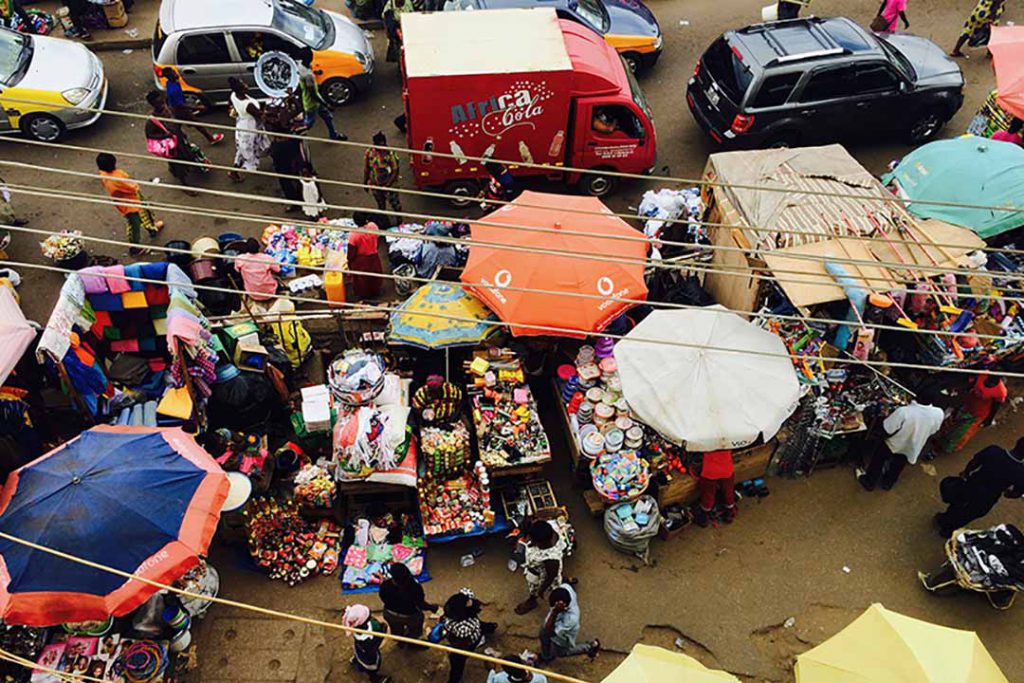
For the business owner, investor, or policymaker seeking to understand Ghana’s economic trajectory, the role of markets is not an abstract concept—it is the fundamental mechanism through which resources are allocated, value is created, and prosperity is generated. Markets are where ideas meet capital, where labour finds employment, and where goods and services flow from producers to consumers.
This High Street Business article examines how markets drive economic growth in Ghana, drawing on the latest data and policy developments to provide a clear, analytical framework for understanding this critical relationship.
The Engine Room: Ghana’s Growth Story
Ghana’s economic performance in 2025 offers a compelling case study in how markets drive growth. The economy expanded by 6.0 percent, up from 5.8 percent in 2024 . This growth was broad-based, with five key sectors accounting for a substantial share of the expansion .
📢 GET DETAILED ARTICLES + JOBS
Join THSB's WhatsApp Channel and never miss a post or opportunity.
| Sector | Growth Rate | Contribution to GDP Growth |
|---|---|---|
| Information & Communication | 20.2% | 23.7% |
| Crops | 7.3% | 19.8% |
| Gold | 19.6% | 16.6% |
| Manufacturing | 5.7% | 10.5% |
| Transport & Storage | 8.6% | 8.5% |
Together, these five sectors accounted for approximately 87 percent of total GDP growth in 2025 . What this reveals is not just which sectors are performing well, but how markets channel investment and activity into areas of comparative advantage.
The services sector remained the largest component of the economy, contributing 45.9 percent of GDP, followed by Industry (31.3%) and Agriculture (22.8%) . Digital and knowledge-based activities led sectoral expansion, with Information and Communication growing at 20.2 percent .
How Markets Mobilise Capital
The Financial Sector as Intermediary
Ghana’s financial sector assets surged to GH¢647.25 billion in 2025, representing 45.1 percent of GDP . This expansion reflects improved macroeconomic conditions, renewed resilience, and the growing capacity of financial institutions to support businesses .
The Second Deputy Governor of the Bank of Ghana, Matilda Asante-Asiedu, noted that the sector recorded stronger profitability and solvency across all four financial industries—banks, insurance firms, pension funds, and other institutions . The banking sector itself is now fully capitalised, with all 23 banks meeting regulatory requirements .
Why this matters for growth: A well-capitalised financial system channels savings into productive investment. As the Governor of the Bank of Ghana, Dr Johnson Pandit Asiama, stressed, the gains in stabilising the economy “must now translate into increased productive investment, stronger private sector growth, higher exports and the creation of quality jobs” .
The Capital Market as a Growth Amplifier
Ghana’s capital markets have staged one of the most remarkable recoveries globally. The Ghana Stock Exchange delivered exceptional returns over the past four years :
-
2023: 28% return
-
2024: Over 56%
-
2025: Approximately 79%
-
2026: 63.4% (second only to South Korea globally)
The market capitalisation reached GH¢263 billion, and three initial public offerings in six months raised approximately GHS 2 billion, adding GHS 11 billion in market capitalisation .
The Securities and Exchange Commission is also promoting Real Estate Investment Trusts (REITs) to channel long-term savings into productive sectors such as commercial property, housing, and urban infrastructure . With pension assets estimated at about GH¢100 billion, at least five percent must be invested in alternative assets—creating a potential investment pool of about GH¢5 billion for REITs and similar instruments .
Value Addition and Export-Led Growth
One of the clearest ways markets drive growth is through the transition from raw commodity exports to value-added production. Ghana’s non-traditional exports rose sharply to a record US$5 billion in 2025, representing a 30.7 percent increase over the previous year .
Processed and semi-processed products accounted for more than US$3 billion of that figure, with cocoa derivatives—including cocoa paste, butter, and powder—emerging as the country’s top foreign exchange earners within the category .
This is the market at work: Value addition captures higher margins, creates higher-skilled employment, and integrates Ghanaian producers into more lucrative segments of global supply chains.
The government has set a target to process at least 50 percent of cocoa domestically and has already installed grinding capacity exceeding 500,000 metric tonnes to support that ambition . Similar reforms are being pursued in the gold sector, with GoldBod acting as the sole authorised aggregator and exporter for artisanal and small-scale mining gold .
The Vital Role of MSMEs
Micro, Small, and Medium-sized Enterprises (MSMEs) are the backbone of Ghana’s market economy. They account for approximately 92 percent of all businesses, contribute an estimated 70 percent of GDP, and provide around 85 percent of manufacturing employment .
In Parliament, it was noted that “they play very vital roles, including ensuring that there is economic growth, there is innovation, there is the provision of job opportunities, and there is sustainable development” .
Current MSME statistics :
| Indicator | Figure |
|---|---|
| Total Business Establishments | 2,644,358 |
| Fixed Structure Businesses | 1.87 million |
| Open-Space Businesses | 693,748 |
| Mobile Businesses | 82,920 |
| Open-Space Employment | 922,177 |
| Women in Open-Space Businesses | 79.5% |
| Businesses < GHS 10,000 Revenue | 70% |
The government has recognised the need to invest in MSMEs, with the Development Bank Ghana making GH¢500 million available for the 24-Hour Economy initiatives . By making loans affordable and grants more available, the aim is to strengthen the role of MSMEs in economic growth .
Emerging Market Opportunities
Gold Tokenisation and Financial Innovation
The Securities and Exchange Commission is collaborating with the Ghana Gold Board to pilot innovative financial products involving gold-backed securities and tokenised gold assets . This partnership will allow GoldBod to serve as the custodian of the gold underlying the securities, taking responsibility for assaying, verification, and vaulting .
Eleven companies have been admitted into the SEC’s regulatory sandbox to pilot virtual asset and financial technology products under the Virtual Asset Services Providers Act, 2025 . This represents a significant step in leveraging Ghana’s gold resources to attract investment and expand financial innovation.
The Cannabis Industry: A New Commodity Frontier
Ghana is betting on a regulated cannabis industry to deliver at least **$1 billion annually** . The CEO of the Ghana Chamber of Cannabis Industry has projected: “We project that Ghana will make not less than $1bn annually from the cannabis industry, and this money we can use for our development agenda. If we pay attention to cannabis, what we would make by way of revenue would be more than what cocoa has done for us as a country” .
Licences are reserved for Ghanaian citizens or permanent residents, with companies required to maintain at least 50 percent Ghanaian ownership and a majority of Ghanaian directors . The government has also established partnerships with the Netherlands and Israel for seed supply, training, and technical support .
Agro-Industrial Twinning Initiative
An ambitious Agro-Industrial Twinning Initiative projects a total investment potential of US$1.5-3.0 billion**, with an expected creation of **50,000-100,000 direct and indirect jobs** . Annual export growth is estimated at **US$500 million to US$1 billion**, alongside a **US$300-600 million reduction in annual import bills .
The initiative is designed to ensure balanced geographic development across all 16 regions of Ghana, identifying specific commodities and districts as the focus for partnership development .
The Informal Market: The Invisible Engine
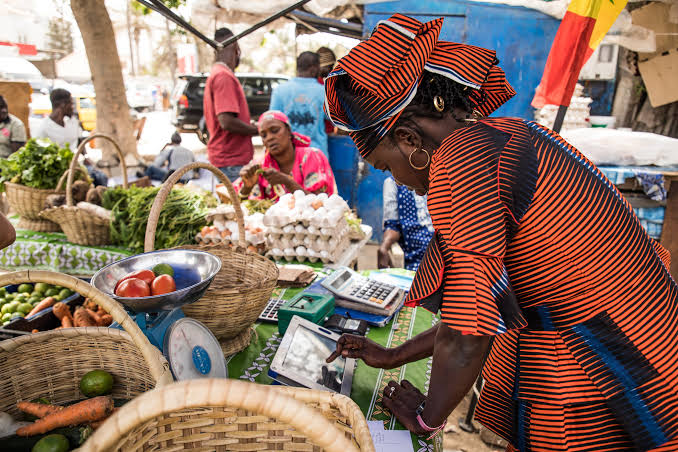
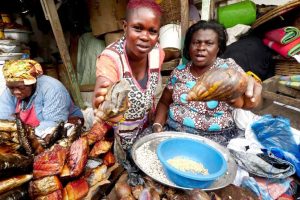
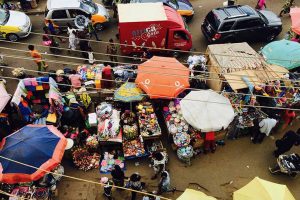
The 2024 Integrated Business Establishment Survey captured for the first time the vast universe of mobile and open-space enterprises that have long existed beyond official statistics .
Key findings include:
-
Nearly 800,000 open-space and mobile businesses are central to how millions of Ghanaians earn a living and access goods
-
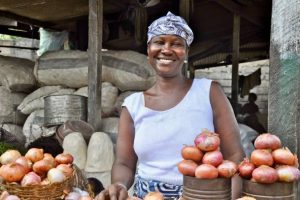
Women dominate open-space businesses, accounting for 79.5 percent of workers and 84 percent of business owners
-
Youth aged 15 to 34 make up over 60 percent of mobile operators
-
Food and beverage retail represents 68.4 percent of all open-space activity
-
The average open-space business has operated for about six years, with 63.7 percent open at least six days a week
However, the sector faces significant challenges. Approximately 31.3 percent of open-space businesses earn GH¢100 or less daily, while 57.1 percent of mobile operators earn less than GH¢100 daily—reflecting the subsistence-level income that characterises much of the sector .
The Government Statistician, Dr Alhassan Iddrisu, stressed that the evidence should serve as a foundation for targeted policy, including investments in market infrastructure, development of microcredit products and digital payment tools tailored to informal traders, and integration of mobile traders into urban planning .
The Road Ahead: Policy Implications
Strengthening Market Infrastructure
The Ghana Statistical Service has recommended sustaining growth momentum by scaling support for high-performing sectors, especially ICT, crops, manufacturing, transport and logistics, education, and financial services . Addressing persistent weaknesses in oil and gas, mining, and forestry is also critical .
Deepening Capital Markets
The Bank of Ghana Governor has urged banks to deepen their participation in Ghana’s capital market to improve access to long-term financing for businesses . A deeper financial system would provide businesses with a wider range of financing options to support expansion and long-term growth .
Digitalising Informal Markets
Digital technology is reducing fragmentation and inefficiencies in supply chains. Platforms like OmniBiz connect small shopkeepers with merchandise suppliers, with approximately 90,000 retailers utilising such platforms daily as of late 2023 . Value-added services, including credit lines and insurance products, are central to the efficacy of these platforms .
THSB Conclusion
The role of markets in economic growth is multi-faceted. Markets mobilise capital through the financial sector and capital markets. They drive value addition through processing and export. They create employment through MSMEs and informal enterprises. And they innovate through emerging sectors and financial products.
Ghana’s 2025 economic performance—6.0 percent growth, a GH¢647 billion financial sector, and a stock market delivering 63.4 percent returns—demonstrates the power of well-functioning markets. Yet significant challenges remain: 70 percent of businesses generate less than GHS 10,000 annually, informality persists at 92.3 percent, and 57 percent of mobile traders earn below subsistence level .
The path forward lies in strengthening market infrastructure, deepening capital markets, supporting MSMEs, and integrating informal enterprises into the formal economy. Markets are not just engines of growth—they are the mechanisms through which Ghana’s economic transformation will be realised. For the business owner who understands this structure, the opportunity is clear.
QUICK FACTS BOX
| Element | Detail |
|---|---|
| GDP Growth (2025) | 6.0% |
| Financial Sector Assets | GH¢647.25 billion (45.1% of GDP) |
| Banks | 23 fully capitalised |
| GSE Return (2026) | 63.4% (2nd globally) |
| Market Capitalisation | GH¢263 billion |
| Non-Traditional Exports | US$5 billion (30.7% increase) |
| Cocoa Processing Target | 50% domestic |
| Total Business Establishments | 2,644,358 |
| Informal Businesses | 92.3% |
| Open-Space Businesses | 693,748 |
| Mobile Businesses | 82,920 |
| MSME Contribution to GDP | ~70% |
FREQUENTLY ASKED QUESTIONS
1. How do markets contribute to economic growth in Ghana?
Markets contribute to growth by mobilising capital through the financial sector, facilitating value addition through processing and export, creating employment through MSMEs and informal enterprises, and driving innovation through emerging sectors and financial products .
2. What is the current state of Ghana’s financial sector?
Ghana’s financial sector assets surged to GH¢647.25 billion in 2025, representing 45.1 percent of GDP. All 23 banks are now fully capitalised, and the sector recorded stronger profitability and solvency across all four financial industries .
3. How has the Ghana Stock Exchange performed?
The GSE delivered returns of 28% (2023), over 56% (2024), approximately 79% (2025), and 63.4% (2026). Market capitalisation reached GH¢263 billion .
4. What role do MSMEs play in Ghana’s economy?
MSMEs account for approximately 92 percent of all businesses, contribute an estimated 70 percent of GDP, and provide around 85 percent of manufacturing employment. They are vital for economic growth, innovation, job creation, and sustainable development .
5. How is Ghana moving beyond raw commodity exports?
Ghana’s non-traditional exports rose to a record US$5 billion in 2025, with processed and semi-processed products accounting for more than US$3 billion. The government aims to process at least 50 percent of cocoa domestically, with grinding capacity exceeding 500,000 metric tonnes .
6. What is the state of Ghana’s informal sector?
Nearly 800,000 open-space and mobile businesses operate in Ghana, employing 922,177 people. Women dominate the sector, accounting for 79.5 percent of workers and 84 percent of business owners .
7. What emerging market opportunities exist in Ghana?
Opportunities include gold-backed securities and tokenised gold assets through the SEC-GoldBod partnership, the regulated cannabis industry projected to deliver $1 billion annually, and the Agro-Industrial Twinning Initiative targeting US$1.5-3.0 billion in investment .
8. What is the government’s strategy for industrial transformation?
The government is focused on value addition, expanding manufacturing, processing more raw materials locally, and diversifying exports. The Feed the Industry Programme is designed to strengthen the supply of quality raw materials to local manufacturers .
9. How are digital technologies transforming Ghana’s retail markets?
Digital platforms like OmniBiz connect small shopkeepers with merchandise suppliers, with approximately 90,000 retailers utilising such platforms daily. Digital adoption is reducing fragmentation and inefficiencies in supply chains .
10. What is the path forward for Ghana’s economic growth?
The Ghana Statistical Service recommends sustaining growth momentum by scaling support for high-performing sectors, especially ICT, crops, manufacturing, transport and logistics, education, and financial services, while addressing weaknesses in other sectors
Source: The High Street Business
Disclaimer: Some content on The High Street Business may be aggregated, summarized, or edited from third-party sources for informational purposes. Images and media are used under fair use or royalty-free licenses. The High Street Business is a subsidiary of SamBoad Publishing under SamBoad Business Group Ltd, registered in Ghana since 2014.
For concerns or inquiries, please visit our Privacy Policy or Contact Page.

Samuel Kwame Boadu is a Ghanaian entrepreneur, writer, and digital consultant passionate about creating impactful stories and business solutions. He is the Founder & CEO of SamBoad Business Group Ltd, a dynamic company with subsidiaries in digital marketing, logistics, publishing, and risk management.