







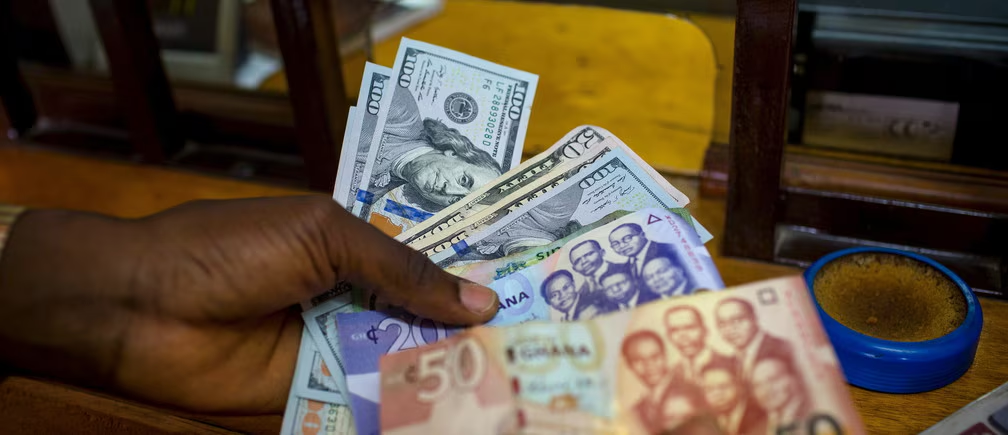
Access to credit is essential for economic growth, business expansion, and personal financial development. However, in Ghana, borrowing from banks often comes with high interest rates that can discourage investment and limit business growth.
For entrepreneurs, SMEs, and even large corporations, the cost of borrowing remains one of the biggest financial challenges. Understanding why bank lending is expensive in Ghana requires examining the broader economic environment, financial system structure, and risk factors that influence interest rates.
At The High Street Business, we break down the key reasons behind high lending costs in Ghana and what they mean for businesses and individuals.
📢 GET DETAILED ARTICLES + JOBS
Join THSB's WhatsApp Channel and never miss a post or opportunity.
1. High Inflation and Monetary Policy
One of the primary drivers of high lending rates is inflation.
When inflation rises:
-
The value of money declines
-
Banks demand higher interest rates to protect returns
-
Borrowing becomes more expensive
The Bank of Ghana responds to inflation by increasing policy rates, which directly influences lending rates across the banking system.
Higher policy rates translate into higher borrowing costs for businesses and consumers.
2. Government Borrowing and Competition for Funds
Government borrowing plays a major role in shaping lending rates.
When the government borrows heavily:
-
It issues treasury bills and bonds with attractive interest rates
-
Banks prefer lending to government due to lower risk
-
Less capital is available for private sector lending
This phenomenon, often referred to as “crowding out,” pushes up interest rates for businesses, making loans more expensive.
3. Perceived Credit Risk
Banks in Ghana often face significant credit risk when lending to businesses and individuals.
Key risk factors include:
To compensate for these risks, banks charge higher interest rates.
Higher perceived risk equals higher cost of borrowing.
4. Weak Credit Information Systems
Although credit reporting systems exist, gaps remain in credit data coverage.
Challenges include:
-
Informal business operations without proper documentation
-
Difficulty assessing borrower reliability
Without strong credit information, banks adopt conservative lending practices and increase interest rates to protect against potential defaults.
5. High Operating Costs for Banks
Banks incur significant operational expenses, which are reflected in lending rates.
These costs include:
-
Branch network maintenance
-
Staff salaries
-
Regulatory compliance
-
Technology investments
To remain profitable, banks incorporate these costs into interest rates charged on loans.
6. Currency and Exchange Rate Risks
Ghana’s economy is exposed to exchange rate fluctuations, particularly due to reliance on imports and foreign currency transactions.
Currency risks affect lending in several ways:
-
Borrowers earning in cedis may struggle to repay foreign currency loans
-
Exchange rate volatility increases uncertainty
As a result, loans — especially those linked to foreign currency — become more expensive.
7. Limited Long-Term Funding Sources
Banks in Ghana often rely on short-term deposits to fund lending.
This creates a mismatch when providing long-term loans for:
-
Infrastructure projects
Because long-term funding is limited, banks charge higher interest rates to manage the risk associated with longer repayment periods.
8. Regulatory and Capital Requirements
Banks are required to maintain certain capital levels and comply with regulatory standards set by the Bank of Ghana.
While these regulations improve financial stability, they also:
-
Increase the cost of doing business
-
Limit the amount of money available for lending
-
Encourage cautious lending practices
These factors indirectly contribute to higher borrowing costs.
9. Impact on Businesses and Economic Growth
High lending rates have significant implications for the economy:
-
SMEs struggle to access affordable financing
-
Business expansion slows
-
Investment levels decline
-
Job creation is limited
When borrowing is expensive, businesses may delay or cancel growth plans, affecting overall economic development.
10. Can Lending Rates Be Reduced?
Reducing lending rates requires improvements across several areas:
-
Lower inflation and stable monetary policy
-
Reduced government borrowing
-
Stronger credit reporting systems
-
Improved financial transparency among businesses
-
Increased competition in the banking sector
These changes can help create a more favorable lending environment over time.
Conclusion From THSB
Bank lending in Ghana remains expensive due to a combination of macroeconomic conditions, structural challenges, and risk factors within the financial system. Inflation, government borrowing, credit risk, and operational costs all contribute to high interest rates.
For businesses and individuals, understanding these factors is essential for making informed financial decisions. While the current environment may present challenges, ongoing reforms and economic stability could gradually reduce borrowing costs.
Until then, careful financial planning and strategic use of credit remain critical for navigating Ghana’s lending landscape.
FAQs
Why are interest rates high in Ghana?
High inflation, government borrowing, and credit risk are key factors driving interest rates upward.
What is the role of the Bank of Ghana in lending rates?
The Bank of Ghana sets monetary policy, which influences interest rates across the banking system.
How does government borrowing affect bank lending?
It reduces funds available for private sector loans and increases competition for capital, pushing rates higher.
Why do banks consider lending risky?
Due to economic volatility, limited credit data, and unpredictable business cash flows.
Can businesses access cheaper loans in Ghana?
It can be challenging, but improving financial records and exploring alternative financing options may help.
Source: The High Street Business
Disclaimer: Some content on The High Street Business may be aggregated, summarized, or edited from third-party sources for informational purposes. Images and media are used under fair use or royalty-free licenses. The High Street Business is a subsidiary of SamBoad Publishing under SamBoad Business Group Ltd, registered in Ghana since 2014.
For concerns or inquiries, please visit our Privacy Policy or Contact Page.

Samuel Kwame Boadu is a Ghanaian entrepreneur, writer, and digital consultant passionate about creating impactful stories and business solutions. He is the Founder & CEO of SamBoad Business Group Ltd, a dynamic company with subsidiaries in digital marketing, logistics, publishing, and risk management.