









Skin, status, and scalpel: The rise of paid-for beauty in Ghana’s luxury capital
QUICK FACTS BOX
| Category | Details |
|---|---|
| Industry | Medical aesthetics / Cosmetic dermatology / Personal care services |
| Typical Business Model | Service-fee based (consultation + procedure) + retail (skincare products) |
| Primary Revenue Driver | High-margin repeat procedures (laser, chemical peels, Botox, fillers) |
| Average Consultation Fee | GHS 150–500 |
| Average Procedure Spend (per visit) | GHS 500–5,000 (non-surgical); GHS 5,000–25,000+ (surgical) |
| Industry Size (Estimated) | GHS 180–250 million annually (formal sector) |
| Annual Growth Rate (2020–2024) | 18–25% year-on-year |
| Key Customer Segments | Middle-to-high-income women (25–45), corporate professionals, brides-to-be, media personalities |
| Barriers to Entry | Moderate to High (qualifications, equipment GHS 200k–1m+, premises, licensing) |
| Profit Margin (Established Clinic) | 30–50% (non-surgical); 40–60% (surgical) |
EXECUTIVE INTRODUCTION
Ten years ago, the phrase “beauty clinic” in Accra meant a small room in Osu with a facial bed, some imported creams, and a beautician who learned on the job. Surgical aesthetics — the kind of work that requires a medical degree and liability insurance — was almost non-existent. Women who wanted Botox flew to South Africa or London. Men who wanted laser hair removal did not talk about it.
That world has changed faster than almost anyone in Ghana’s healthcare or retail sectors anticipated.
📢 GET DETAILED ARTICLES + JOBS
Join THSB's WhatsApp Channel and never miss a post or opportunity.
Today, Accra is home to a growing cluster of medical aesthetics businesses that would not look out of place in Lagos, Nairobi, or Johannesburg. Clinics with medical-grade lasers, dermal fillers, body contouring machines, and consulting rooms staffed by qualified dermatologists and plastic surgeons. The price tags are not small — a single session of laser hair removal can cost GHS 800–1,500; a chemical peel, GHS 600–1,200; a full course of six treatments, GHS 4,000–8,000. And yet, waiting lists are common. Appointment slots for popular clinics book weeks in advance.
This profile examines the business of beauty in Accra: the economics, the customer psychology, the regulatory grey zones, and the competitive dynamics of an industry that is quietly becoming one of the most profitable service sectors in the city.
The numbers tell a clear story: Accra’s middle and upper classes are spending unprecedented amounts on how they look. The question for investors and entrepreneurs is whether this is a bubble or a structural shift in consumer behaviour. The evidence points to the latter.
COMPANY OVERVIEW (Industry Context)
The Industry Defined
The “beauty clinic and aesthetics” industry in Accra spans four distinct business models:
| Model | Primary Services | Typical Price Point (GHS) | Number of Operators (Est.) |
|---|---|---|---|
| Luxury medical aesthetics | Botox, fillers, laser, body contouring, minor surgical | 1,000–25,000 | 15–25 |
| Mid-range aesthetic clinic | Chemical peels, microdermabrasion, facials, laser (basic) | 300–3,000 | 40–60 |
| Skincare clinic (medical-grade) | Acne treatment, hyperpigmentation, anti-aging, product retail | 200–1,500 | 30–50 |
| High-end beauty salon (with aesthetics add-on) | Facials, waxing, lash lifts, some laser | 150–1,000 | 80–120+ |
The luxury medical aesthetics segment is the focus of this profile — not because it is the largest by revenue (the mid-range segment holds that title), but because it is the fastest growing and the most structurally interesting. These are the clinics that are changing consumer expectations and setting new pricing floors for the entire industry.
Key Players (2024)
| Clinic | Est. | Location(s) | Specialisation | Ownership Structure |
|---|---|---|---|---|
| Rejuvenate Health & Aesthetics | 2017 | Cantonments, Kumasi | Full-service medical aesthetics | Locally owned, medical director |
| Elite Body & Skin Clinic | 2015 | Osu, Spintex | Laser, body contouring | Locally owned |
| DermaCare Ghana | 2018 | East Legon | Medical dermatology + aesthetics | Locally owned, Ghanaian-trained dermatologist |
| Avance Aesthetic Clinic | 2020 | Airport City | High-end injectables, surgical | Partnership with overseas surgeon |
| Visage MedSpa | 2016 | Ridge | Anti-aging, hormone therapy | Locally owned, international certifications |
| Revive MedLounge | 2021 | East Legon | IV therapy, aesthetics, wellness | Ghanaian-Indian partnership |
In addition, several established dermatologists (e.g., The Skin Clinic, Dermatology & Aesthetics Centre) have expanded into aesthetics. And international franchise conversations — quietly — have begun. A South African medical aesthetics chain has conducted site visits in Accra. Nothing has signed. Yet.
Geographic Concentration
Beauty clinics in Accra follow a clear geography of wealth:
-
Tier 1 locations (highest concentration, highest prices): Cantonments, Airport Residential, East Legon, Ridge
-
Tier 2 locations (growing, slightly lower prices): Osu, Labone, Dzorwulu, Spintex
-
Tier 3 locations (emerging, mainly mid-range): Tema (Community 5–11), Adenta, Kasoa
-
Everywhere else (limited to basic beauty salons, not medical aesthetics)
The rule is simple: no high-end aesthetics clinic opens where a customer cannot easily pay GHS 1,000 per visit. That restricts most of the industry to Accra’s eastern and coastal wealth belts.
BUSINESS MODEL
Aesthetic clinics in Accra layer four primary revenue streams. The most successful clinics generate significant income from all four. Marginal clinics rely on the first two and struggle.
Revenue Stream 1: Procedure Fees (The Core)
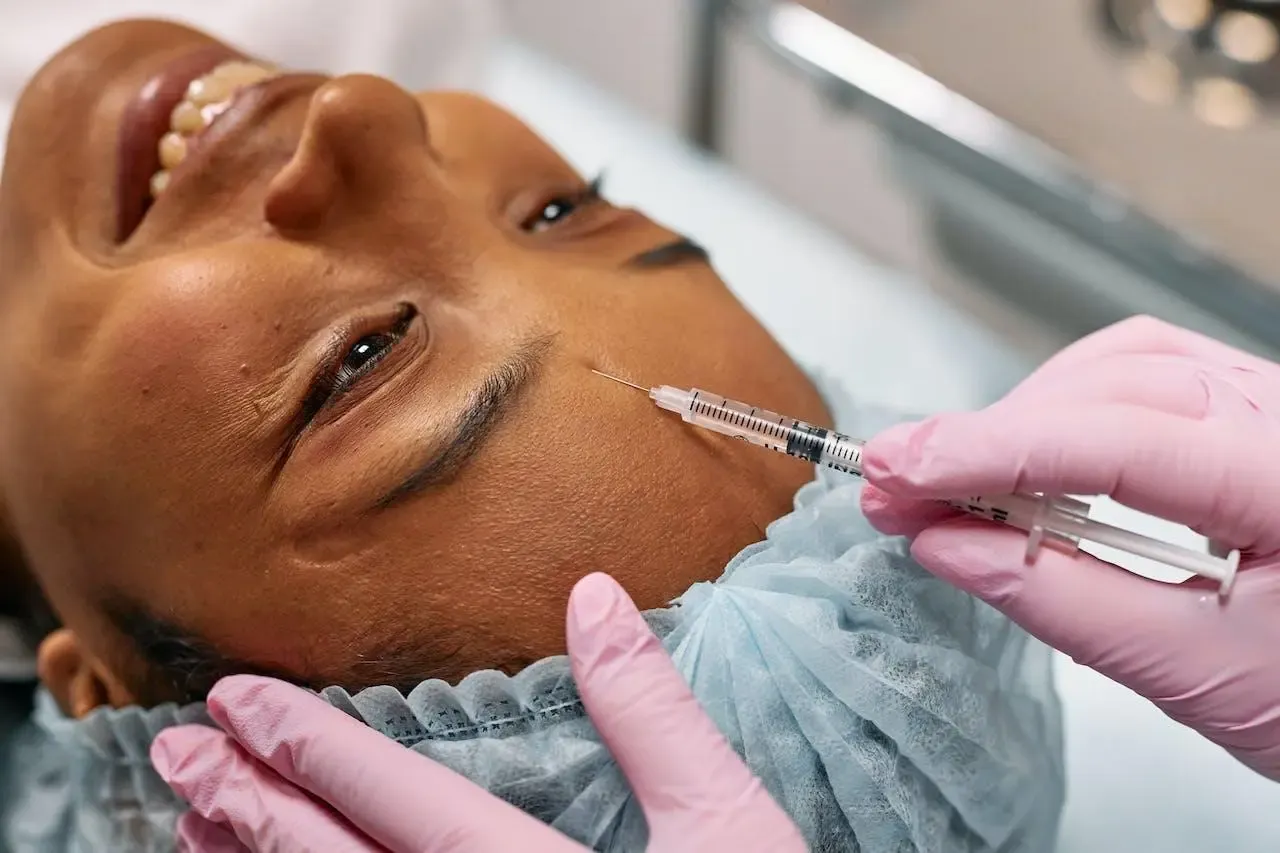
This is the obvious revenue. A client pays for a specific treatment: laser hair removal, Botox (units), dermal fillers (syringes), chemical peel, microneedling, body contouring (CoolSculpting or similar), tattoo removal, etc.
Pricing structure examples (Accra, 2024):
| Procedure | Unit | Price Range (GHS) | Gross Margin (%) |
|---|---|---|---|
| Botox (Dysport/Xeomin) | Per area (forehead, frown lines) | 1,200–2,500 | 60–75% |
| Dermal fillers (Juvederm/Restylane) | Per syringe (1ml) | 1,800–3,500 | 65–80% |
| Laser hair removal (small area) | Per session | 300–600 | 50–65% |
| Laser hair removal (full leg) | Per session | 1,200–2,000 | 50–65% |
| Chemical peel (medical grade) | Per session | 600–1,500 | 70–85% |
| Microneedling with PRP | Per session | 800–1,800 | 60–75% |
| Body contouring (CoolSculpting) | Per applicator | 1,500–3,000 | 40–55% |
| IV vitamin therapy | Per drip | 500–1,200 | 50–70% |
The gross margins look high — and they are, compared to most retail or service businesses. But the cost structure includes significant fixed costs (equipment amortisation, premises, qualified staff) that compress net margins.
Procedure revenue is front-loaded. A new client often spends GHS 2,000–8,000 in their first 90 days (consultation, first treatments, product purchases). After that, spending stabilises at a lower monthly level — unless the clinic successfully cross-sells.
Revenue Stream 2: Skincare Product Retail (The Recurrence Engine)
Every aesthetic clinic sells products. The best ones treat product retail not as an afterthought but as a high-margin subscription engine.
Typical product categories:
-
Medical-grade skincare (ZO Skin Health, Skinceuticals, Neostrata, La Roche-Posay, local compounded formulations)
-
Sunscreen (highest volume, moderate margin)
-
Post-procedure healing products (high margin, short shelf life)
-
Supplements (collagen, vitamins)
Product economics:
| Product Type | Clinic Cost (GHS) | Retail Price (GHS) | Gross Margin (%) |
|---|---|---|---|
| Medical-grade moisturiser (50ml) | 180–250 | 350–550 | 45–60% |
| Sunscreen (SPF 50, 50ml) | 80–120 | 180–280 | 45–55% |
| Vitamin C serum | 120–200 | 300–500 | 50–60% |
| Retinol cream | 100–180 | 250–400 | 50–60% |
A loyal client buying sunscreen (GHS 250), moisturiser (GHS 450), and a serum (GHS 400) every 2–3 months generates GHS 1,100 in product revenue — at 50% gross margin, that is GHS 550 profit per client per quarter, or GHS 2,200 annually. Multiply by 500 active product clients: GHS 1.1 million in annual gross profit from products alone.
This is why established clinics push products. They are margin insurance against slow procedure months.
Revenue Stream 3: Membership & Package Programs (The Cash Flow Smoothie)
Most serious clinics offer pre-paid packages: “buy 6 laser sessions, get 7th free” or “annual skincare membership includes 4 facials, 2 peels, and 20% off products.”
Member package example (mid-range clinic):
-
Annual membership fee: GHS 1,500–3,000
-
Includes: 2 chemical peels, 3 medical facials, 1 consultation, 15% off all products
-
Typical member spend (annual): GHS 4,000–8,000 (membership + additional procedures + products)
Packages smooth cash flow. Instead of unpredictable per-visit revenue, the clinic collects GHS 30,000–100,000 from members in January. That working capital covers equipment leases, rent, and staff salaries through lean months (e.g., December, when many clients travel).
Revenue Stream 4: Consultations & Follow-ups (The Entry Point)
Consultation fees are rarely profit centres — they are customer acquisition costs that pay for themselves.
-
Initial consultation: GHS 150–500 (sometimes waived if client proceeds with treatment)
-
Follow-up consultation: GHS 100–300
A clinic with 40 consultations per week (2,000 annually) generates GHS 300,000–1,000,000 in consultation revenue. More importantly, each consultation is a sales opportunity. Conversion rates from consultation to first procedure range from 40% (new clinics with weak sales skills) to 80%+ (established clinics with trusted reputations).
Ancillary Revenue
-
Wedding packages: Brides pay premium (GHS 5,000–15,000) for pre-wedding skin preparation, treatments, and post-wedding follow-up. Wedding season (October–December, March–June) is peak revenue.
-
Corporate wellness programmes: Some clinics contract with banks, law firms, and multinationals to offer employee aesthetics services (discounted rates, on-site consultations). Low volume, high prestige.
-
Training and certification: A few clinics offer training for aspiring aestheticians (GHS 3,000–10,000 per course). Margin is high, but accreditation is a grey area.
MARKET POSITION & COMPETITION
Competitive Landscape
The Accra aesthetics market is fragmented but polarising. At the bottom, hundreds of beauty salons offer cheap facials (GHS 50–150) with consumer-grade products. At the top, a small number of medical clinics compete on quality, safety, and results — not price.
Competitive tiers:
| Tier | Number of Operators | Key Features | Average Spend per Client (Annual) |
|---|---|---|---|
| Premium medical (qualified doctors, medical-grade lasers, surgical options) | 15–25 | Medical director on-site, insurance, international certifications | GHS 8,000–30,000+ |
| Mid-range (nurse-led, aestheticians with advanced training) | 40–60 | Good equipment, some medical oversight, limited to non-surgical | GHS 3,000–10,000 |
| Basic beauty salon (beauticians, consumer-grade products, no medical involvement) | 200–300+ | Low prices, convenient locations, limited results | GHS 500–2,500 |
The gap is widening. Clients who have experienced premium medical aesthetics rarely return to basic salons — just as someone who has flown business class rarely returns to economy. The premium tier is capturing an increasing share of total industry spend, even as the number of clients in that tier grows more slowly.
Who Is Driving Demand?
The typical Accra aesthetics client is not who most people assume.
Demographic breakdown (based on clinic interviews, 2024):
| Segment | % of Clients | Average Annual Spend (GHS) | Primary Procedures |
|---|---|---|---|
| Professional women (25–40, corporate, legal, medical, finance) | 35–40% | 6,000–12,000 | Laser, peels, Botox, fillers |
| Brides and wedding party (22–35) | 20–25% | 8,000–20,000 (concentrated in 6 months) | Full pre-wedding package |
| Men (25–45, professionals and entrepreneurs) | 15–20% (growing) | 4,000–10,000 | Laser hair removal, Botox, acne treatment |
| Wealthy women (40–60, established entrepreneurs, wives of executives) | 15–20% | 12,000–30,000+ | Fillers, body contouring, surgical consultations |
| Media and entertainment personalities | 5–10% | 5,000–20,000 | Full range (often discounted in exchange for social media posts) |
The male segment is the fastest growing. Men now account for 15–20% of clients at premium clinics, up from under 5% in 2018. The taboo against men seeking aesthetic treatments — particularly laser hair removal and Botox — has largely disappeared among Accra’s professional class.
Competitive Advantages
| Advantage | Explanation |
|---|---|
| Medical qualification trust | Clients will not let an unqualified person inject their face. A clinic with a Ghanaian-trained dermatologist or plastic surgeon on staff has an insurmountable trust advantage over nurse-led competitors. |
| Equipment quality | Medical-grade lasers (e.g., Candela, Cynosure, Lumenis) cost GHS 200,000–600,000. Most salons cannot afford them. This creates a permanent quality moat for clinics that invest. |
| Privacy and discretion | Premium clinics offer private entrances, separate waiting areas, and strict confidentiality. For high-profile clients (politicians, clergy, celebrities), this is non-negotiable. |
| Results guarantee | A chemical peel from a medical clinic delivers visible results. A facial from a beauty salon delivers relaxation. The two are not substitutes. |
| International referrals | Some clinics have partnerships with overseas surgeons for procedures not available in Ghana (e.g., Brazilian butt lift, rhinoplasty). Clients pay a deposit locally, fly abroad for surgery, and return for follow-up care. The clinic earns a referral fee (10–20%) and retains the client for post-op care. |
COST STRUCTURE & UNIT ECONOMICS
Startup Costs (Premium Medical Aesthetics Clinic, East Legon/Cantonments)
| Item | Estimated Cost (GHS) |
|---|---|
| Premises (rent, deposit, renovation) | 200,000–500,000 |
| Medical-grade laser (1–2 devices) | 300,000–800,000 |
| Other equipment (microdermabrasion, cryo, etc.) | 50,000–150,000 |
| Furniture, fixtures, reception | 50,000–100,000 |
| Initial product inventory | 50,000–100,000 |
| Licensing, certifications, insurance | 30,000–80,000 |
| Staff recruitment and training | 20,000–50,000 |
| Working capital (6 months operations) | 200,000–400,000 |
| Total startup capital | GHS 900,000 – 2.2 million |
Minimum viable clinic (non-surgical, nurse-led, mid-range): GHS 300,000–600,000.
Monthly Operating Costs (Premium Clinic)
| Cost Item | Monthly Amount (GHS) | % of Revenue (typical) |
|---|---|---|
| Rent (Cantonments/East Legon, 150–250 sqm) | 15,000–30,000 | 10–15% |
| Medical director/doctor salary | 12,000–25,000 | 8–12% |
| Nurses and aestheticians (3–5 staff) | 10,000–20,000 | 6–10% |
| Equipment lease/finance payments | 8,000–15,000 | 5–8% |
| Consumables (needles, gloves, disposables) | 5,000–12,000 | 3–6% |
| Marketing (digital, influencer, events) | 8,000–20,000 | 5–10% |
| Utilities (electricity, water, backup generator) | 3,000–6,000 | 2–4% |
| Product restocking | 10,000–25,000 | 6–12% |
| Professional insurance, licensing, CPD | 2,000–5,000 | 1–3% |
| Miscellaneous (cleaning, security, etc.) | 3,000–6,000 | 2–3% |
| Total monthly operating costs | GHS 76,000 – 164,000 | 48–83% of revenue |
Revenue and Profit Projections
Premium clinic, year two (mature operations):
| Item | Monthly (GHS) | Annual (GHS) |
|---|---|---|
| Total revenue | 160,000–250,000 | 1.92–3.00 million |
| Total operating costs | 90,000–150,000 | 1.08–1.80 million |
| Net profit (before tax) | 40,000–100,000 | 0.48–1.20 million |
| Net profit margin | 25–40% | 25–40% |
These are excellent margins by any service industry standard. A successful premium aesthetics clinic in Accra is more profitable than most law firms, architecture practices, or mid-sized retail businesses — with lower overhead than a hospital or a hotel.
Payback period on initial investment: 18–30 months for a well-run clinic. 36–48 months for average operators.
DIGITAL STRATEGY & INNOVATION
The aesthetics industry in Accra has embraced digital tools more aggressively than almost any other service sector — because its customers are digitally native, high-income, and highly active on social media.
Digital Acquisition Channels
| Channel | Effectiveness | Typical Monthly Spend (GHS) | ROI (Client acquisition cost) |
|---|---|---|---|
| Instagram (paid ads + organic) | Very high | 3,000–15,000 | GHS 150–400 per new client |
| Facebook (targeted to 25–45 women) | High | 2,000–8,000 | GHS 200–500 |
| Google Search (e.g., “Botox Accra”) | Moderate (small search volume) | 1,000–3,000 | GHS 250–600 |
| Influencer partnerships (micro-influencers, 10k–50k followers) | High (for credibility) | 1,000–5,000 per post | Hard to measure, but effective for brand |
| WhatsApp Business (direct communication with clients) | Very high (for retention) | Zero (labour cost) | Best for repeat bookings |
| TikTok (educational content, before/after) | Growing (younger demographic) | 1,000–4,000 | Lower acquisition, higher brand awareness |
The Instagram-first clinic: Most successful clinics generate 60–80% of new clients from Instagram. The playbook is standardised: high-quality before/after photos, client testimonials (with permission), educational reels (“how Botox works”), and paid ads targeting women in specific Accra postcodes (Cantonments, East Legon, Airport, Ridge, Labone).
Technology Adoption
-
Clinic management software: A growing number of clinics use platforms like Clinicea, Pabau, or simple custom systems built on Microsoft Bookings. Appointment scheduling, client records, consent forms, and payment tracking are increasingly digital.
-
Teleconsultation: Post-COVID, many clinics offer video consultations for returning clients (GHS 100–200). Reduces no-shows and expands reach to clients in Kumasi, Takoradi, or abroad.
-
E-commerce for products: Clinics sell skincare products through their websites and Instagram Shops. Typically accounts for 10–20% of product revenue.
-
CRM automation: Basic email and WhatsApp reminders for follow-up appointments, product reorders, and membership renewals.
What Has Not Worked
Mass-market digital advertising. Targeting low-income segments with aesthetic services does not work — the price point is too high. Successful clinics precisely target high-income postcodes and professional job titles (e.g., “lawyer,” “doctor,” “manager”).
Aggressive discounting online. Offering 50% off laser hair removal attracts the wrong clients: price-sensitive, low loyalty, and likely to complain. Premium clinics avoid deep discounts and instead offer “refer a friend” credits or small package bonuses.
CHALLENGES & RISKS
1. Regulatory Grey Zone
This is the single greatest risk to the industry’s growth — and its reputation.
Ghana’s Health Professions Regulatory Bodies Act (2013) and the Medical and Dental Council clearly regulate medical practice. Injecting Botox (a prescription medicine) or dermal fillers (medical devices) is a medical procedure. Performing it without a medical license is illegal.
Yet, in Accra today, unqualified practitioners — some with no medical training at all — are injecting faces. In back rooms. In salons. In hotel rooms.
The risks:
-
Client harm: Necrosis (tissue death) from incorrectly injected filler. Blindness from filler injected into an artery. Botox spreading beyond the intended muscle, causing drooping.
-
Regulatory crackdown: The Medical and Dental Council has, to date, been slow to prosecute. That will not last forever. A high-profile injury or death will trigger enforcement. When it comes, the entire industry — including qualified clinics — will suffer reputational damage.
Qualified clinics are caught in a bind. They want regulation enforced to protect their patients and their business. But they fear that a crackdown will create panic and reduce consumer confidence in all aesthetics, regardless of provider qualifications.
2. Currency and Import Dependency
Almost everything in a premium aesthetics clinic is imported:
-
Lasers (US, Germany, China)
-
Botox and fillers (US, Europe, South Korea)
-
Skincare products (US, Europe, South Africa)
-
Consumables (needles, cannulas, disposables — mostly China)
The cedi’s volatility directly affects COGS (cost of goods sold). A clinic that priced a filler syringe at GHS 2,500 in January may find that its replacement cost has risen to GHS 1,500 (up from GHS 1,200) by June. If they raise prices, clients complain. If they absorb the increase, margins shrink.
Hedging strategies used by smart clinics:
-
Buying consumables 6–12 months ahead when the cedi is relatively stable
-
Holding foreign currency accounts to pay overseas suppliers directly
-
Gradually adjusting prices every 3–4 months instead of sudden large increases
3. Staff Retention
Qualified aesthetic nurses and experienced laser technicians are scarce. A good nurse can earn GHS 3,000–5,000 per month at a clinic — plus commissions on product sales (5–10%) and procedure upselling (5–15%). That is competitive with hospital salaries.
But the best staff are constantly poached. New clinics opening need experienced people. They offer higher base salaries, signing bonuses, or profit-sharing. Turnover rates of 30–50% annually are common.
The solution some clinics are adopting: Offering equity or significant profit-sharing to key staff (head nurse, clinic manager). This aligns incentives and reduces poaching risk.
4. Client Safety Expectations vs. Reality
Ghana has no formal system for reporting adverse events from aesthetic procedures. No mandatory complication registry. No medical malpractice insurance requirement for aesthetics (though some clinics carry it voluntarily).
This is a latent liability. When a client suffers a serious complication — and statistically, it will happen — and the clinic has no insurance, no clear protocol, and no legal structure, the fallout will be severe. A single lawsuit or public complaint could destroy a clinic’s reputation permanently.
5. Competition from Abroad
The wealthiest Ghanaian aesthetics clients still travel. London (Harley Street), Dubai, Istanbul, and Johannesburg offer procedures not available in Accra (e.g., deep plane facelifts, Brazilian butt lifts, advanced body contouring). A clinic that positions itself as “the best in Accra” still loses its most profitable clients to overseas providers.
The counter-strategy: Partnerships with overseas surgeons for referral fees, as noted earlier. If you cannot stop the client from travelling, at least earn from the referral.
6. Power and Water
Lasers require stable electricity. Unstable voltage damages sensitive equipment. Every premium clinic must have:
-
Heavy-duty voltage stabilisers (GHS 20,000–50,000)
-
Backup generator (GHS 30,000–100,000)
-
Inverter for computers and lighting
Water cuts affect cleaning, laundry (towels, gowns), and client comfort. Clinics need storage tanks and pumps.
These are solvable problems — but they add cost and management complexity that clinics in London or Dubai simply do not face.
ECONOMIC & INDUSTRY IMPACT
Employment
| Role | Estimated Workers (Accra) |
|---|---|
| Medical directors (doctors) | 30–50 |
| Aesthetic nurses | 150–250 |
| Aestheticians (non-nurse) | 200–350 |
| Laser technicians | 80–150 |
| Clinic managers | 40–60 |
| Reception, admin, cleaning | 200–400 |
| Marketing and social media | 50–100 |
| Total direct employment | 750–1,360 |
This is still a small industry by headcount. But the average salary is high (GHS 3,000–15,000 per month for clinical staff), and the jobs are skilled. Aesthetic nursing is becoming a desirable specialisation.
Training and Capacity Building
The growth of aesthetics has spurred training:
-
The Ghana College of Physicians and Surgeons now includes dermatology and aesthetics in continuing education programmes.
-
Private training academies (e.g., Ghana Academy of Aesthetics, MedSpa Training Institute) offer certificates in laser safety, chemical peels, and basic injectables.
-
International training (South Africa, UK, Dubai) is common for serious practitioners.
However, no formal accreditation or licensing pathway exists for aesthetic practitioners who are not already doctors or nurses. This is a gap the government will need to address.
Tax Contribution
Larger, registered clinics pay:
-
Corporate income tax (25% on profits)
-
VAT on product sales (but not on medical procedures — medical services are VAT-exempt in Ghana. This is a significant tax advantage for aesthetics clinics compared to regular retail.)
-
Payroll taxes (PAYE, SSNIT contributions)
-
Import duties on equipment and consumables
Smaller, informal operators pay little or nothing. The industry’s total tax contribution is likely less than 30% of what it could be if fully formalised.
FUTURE OUTLOOK
Short-to-Medium Term (1–4 years)
The industry will continue growing at 15–25% annually. Specific trends:
-
More male clients. The male segment will grow from 15–20% to 25–30% of clients. Laser hair removal for back, chest, and beard shaping will lead. Botox for “preventative” ageing among men in their 30s will rise.
-
Body contouring booms. Non-surgical fat reduction (CoolSculpting, cavitation, radiofrequency) will grow faster than facial injectables. Demand is driven by post-pregnancy bodies and general body dissatisfaction.
-
Premium clinic consolidation. The 15–25 premium clinics will consolidate to 10–15 through mergers and acquisitions. Strong brands will buy weaker ones for their client lists and locations.
-
Entry of international chains. A South African or Kenyan medical aesthetics chain will enter Accra within 24 months. They will bring capital, systems, and marketing — and force local clinics to raise their standards.
-
Regulatory enforcement begins. The Medical and Dental Council will issue public warnings, then prosecute one or two unqualified practitioners. The fear effect will drive clients toward qualified clinics — benefiting the premium tier.
Long-Term (5–10 years)
-
Surgical aesthetics in Ghana. Today, almost all surgical cosmetic procedures (facelifts, breast augmentation, liposuction) are done abroad. Within 10 years, Accra will have 2–3 clinics offering surgical aesthetics with Ghana-based plastic surgeons. The economics make sense: a facelift that costs GHS 80,000–150,000 in Ghana is still cheaper than GHS 150,000–300,000 in London plus flights and accommodation.
-
Financing for aesthetics. As procedure prices rise, clinics will partner with banks or fintechs to offer “buy now, pay later” for packages (GHS 5,000–20,000 over 3–6 months). This will expand the addressable market significantly.
-
Medical tourism reverse flow. Today, Ghanaians travel abroad for aesthetics. Tomorrow, Nigerians, Ivorians, and others may travel to Accra — if the quality and price are right. Accra is cheaper than Lagos for similar real estate and labour, but the airport and hotel infrastructure are comparable. This is a credible opportunity.
Strategic Risks to Monitor
| Risk | Probability | Impact | Mitigation |
|---|---|---|---|
| High-profile complication leading to regulatory crackdown | Medium (30–40% in 5 years) | Severe (industry panic, client flight) | Establish safety protocols, insurance, and self-regulation before government imposes it |
| Cedi collapse making imported consumables unaffordable | Medium (similar to 2022 risk) | High (margins disappear) | Diversify suppliers (South Africa, Turkey as alternatives to US/Europe), hold forex |
| Economic downturn reducing discretionary spending | High (Ghana’s economy is volatile) | Medium (clients trade down from premium to mid-range) | Build recurring revenue (memberships, product subscriptions) that survive downturns |
| Shift to “natural beauty” movement reducing demand for injectables | Low in Ghana (social pressure for aesthetics remains strong) | Low | Diversify into non-injectable services (laser, skincare, body contouring) |
THSB CONCLUSION
Beauty clinics and aesthetic businesses in Accra are not a fad. They are a structural response to three durable trends: rising disposable income among professionals, increasing exposure to global beauty standards (via Instagram, travel, and diaspora connections), and the absence of a public healthcare system that addresses cosmetic concerns.
The economics are compelling. Gross margins of 50–80% on procedures. Net margins of 25–40% for well-run clinics. Recurring revenue from products and memberships. Payback periods under three years. These numbers would attract serious investment in any sector — and they are attracting it here, quietly, from Ghanaian doctors returning from abroad, from diaspora entrepreneurs, and from local business people who see the gap between supply and demand.
But the industry is also fragile. Unqualified practitioners are a ticking regulatory bomb. Import dependency makes every clinic vulnerable to the cedi. Staff poaching creates constant operational stress. And the absence of a formal safety net — insurance, adverse event reporting, licensing pathways — means that a single serious complication could reshape the entire market overnight.
For investors: the opportunity is real but requires patient capital, operational discipline, and a commitment to medical ethics over short-term profit. For entrepreneurs: entry is still possible but the window is closing. The next three years will determine which brands become the long-term leaders.
For consumers: you now have choices your mother did not. Choose qualified practitioners. Ask about their training. Demand to see the doctor. Paying more for safety is not a luxury — it is the only sensible decision.
The business of beauty in Accra has grown up. Now it needs to grow safer.
FAQ SECTION
1. How big is the beauty clinic industry in Accra?
Estimated at GHS 180–250 million annually for the formal sector, growing 18–25% year-on-year. Including informal operators (unregistered salons offering “medical” procedures), the total may exceed GHS 300 million.
2. How much does it cost to start a medical aesthetics clinic in Accra?
A premium clinic requires GHS 900,000–2.2 million. A mid-range, non-surgical clinic can start with GHS 300,000–600,000. A basic beauty salon with aesthetics add-ons needs GHS 80,000–150,000.
3. How profitable are aesthetic clinics in Accra?
Net profit margins for well-run clinics range from 25–40%. A successful premium clinic can net GHS 40,000–100,000 monthly (GHS 480,000–1.2 million annually). Payback period is typically 18–30 months.
4. Do I need a medical license to perform Botox or fillers in Ghana?
Yes. Botox (botulinum toxin) and dermal fillers are prescription medicines and medical devices. Injecting them without a medical license (from the Medical and Dental Council) is illegal. However, enforcement has been weak, and unqualified practitioners operate openly.
5. What is the most profitable service for an aesthetics clinic?
Non-surgical injectables (Botox and fillers) have the highest margins (60–80% gross) and are the core profit driver. Laser hair removal has lower margins (50–65%) but higher volume and repeat business. Skincare product retail offers 45–60% margins with recurring revenue.
6. Who are the main customers of aesthetic clinics in Accra?
Professional women (25–45) account for 35–40% of clients. Brides and wedding parties (20–25%). Men (15–20% and growing). Wealthy women over 40 (15–20%). Average annual spend ranges from GHS 4,000–30,000 depending on segment.
7. How do aesthetic clinics attract new clients?
Instagram is the primary acquisition channel (60–80% of new clients). Paid ads targeting high-income Accra postcodes, influencer partnerships, before/after photos, and educational content. Referrals from existing clients are also significant for established clinics.
8. Is the aesthetic industry regulated in Ghana?
Partially. The Medical and Dental Council regulates medical practice but has not specifically addressed aesthetics. There is no licensing pathway for aesthetic practitioners who are not already doctors or nurses. This regulatory gap allows unqualified practitioners to operate.
9. What are the risks of investing in an aesthetics clinic in Ghana?
Key risks: regulatory crackdown on unqualified practitioners (which could affect consumer confidence across the industry), cedi depreciation increasing import costs, staff poaching, and liability from client complications without adequate insurance.
10. Are men really getting aesthetic treatments in Accra?
Yes, and the segment is growing rapidly. Men now account for 15–20% of clients at premium clinics, up from under 5% in 2018. Common procedures: laser hair removal (back, chest, beard shaping), Botox (forehead lines, “preventative” ageing), and acne treatment.
11. How does the cedi affect aesthetic clinic profitability?
Most equipment, consumables, and products are imported. When the cedi depreciates, COGS rises. Clinics can raise prices but risk losing price-sensitive clients. Smart clinics hold forex accounts, buy inventory in advance during stable periods, and adjust prices gradually.
12. What is the future of surgical aesthetics in Ghana?
Currently, most surgical cosmetic procedures (facelifts, breast augmentation, liposuction) are done abroad. Within 5–10 years, Accra will likely have 2–3 clinics offering surgical aesthetics with Ghana-based plastic surgeons. The market exists; the trained personnel are returning from overseas.
Source: The High Street Business
Disclaimer: Some content on The High Street Business may be aggregated, summarized, or edited from third-party sources for informational purposes. Images and media are used under fair use or royalty-free licenses. The High Street Business is a subsidiary of SamBoad Publishing under SamBoad Business Group Ltd, registered in Ghana since 2014.
For concerns or inquiries, please visit our Privacy Policy or Contact Page.

Samuel Kwame Boadu is a Ghanaian entrepreneur, writer, and digital consultant passionate about creating impactful stories and business solutions. He is the Founder & CEO of SamBoad Business Group Ltd, a dynamic company with subsidiaries in digital marketing, logistics, publishing, and risk management.