




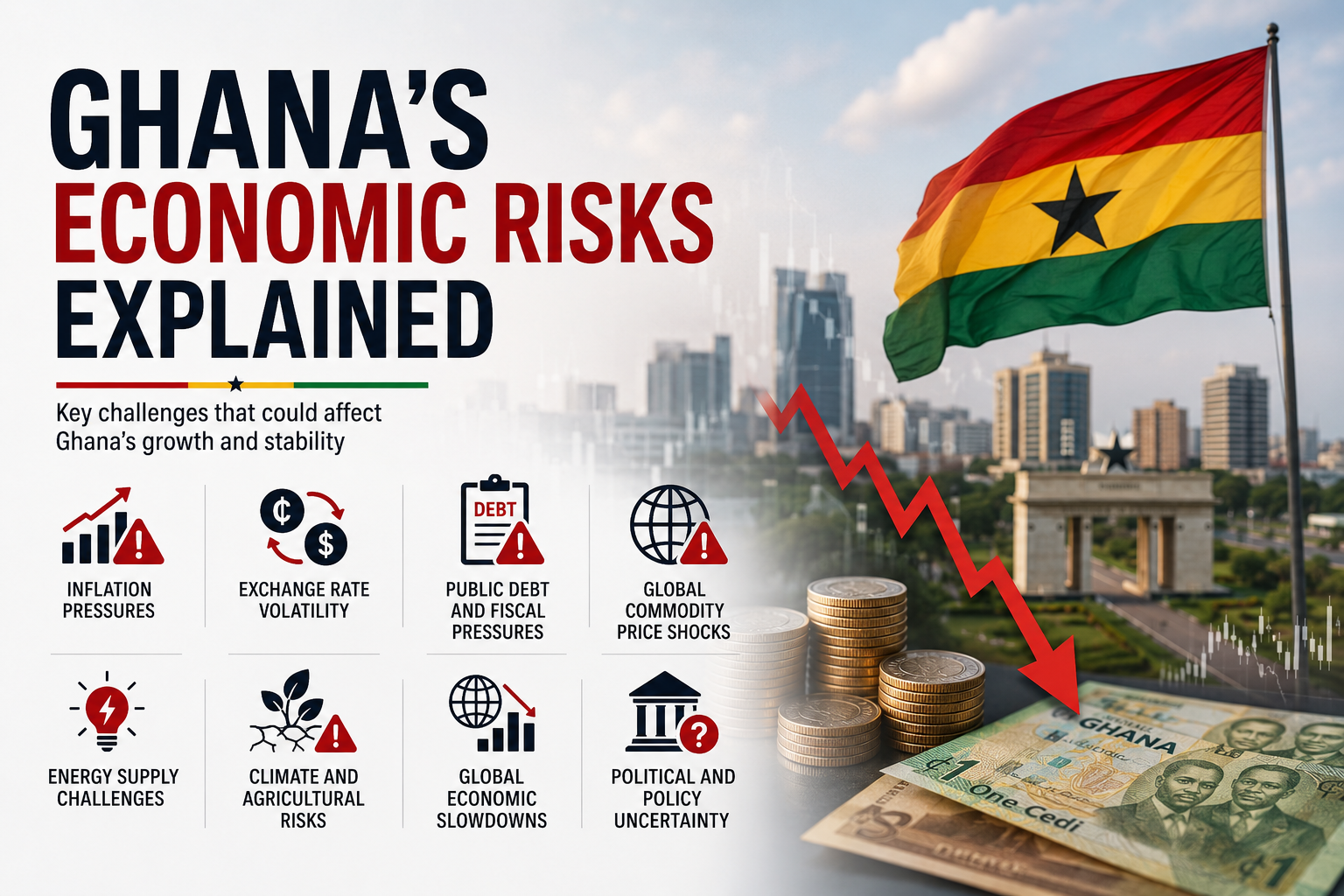
Ghana’s Economic Risks Explained – Ghana’s economic outlook remains promising, but several risks could affect growth and stability. Learn about the key economic challenges facing Ghana and what they mean for businesses and households.
Ghanas Economic Risks Explained
Ghana’s economy has shown signs of recovery after a period marked by high inflation, currency volatility, and debt challenges. Inflation has eased, the Ghana cedi has strengthened at times, and investor confidence is gradually returning. However, every economy faces risks that can slow progress or create new difficulties.
Economic risks are factors that can disrupt growth, increase the cost of living, or affect jobs and businesses. For Ghana, these risks come from both domestic and international sources. Understanding them helps citizens, investors, and business owners prepare for possible changes.
📢 GET DETAILED ARTICLES + JOBS
Join THSB's WhatsApp Channel and never miss a post or opportunity.
What Are Economic Risks?
Economic risks are uncertainties that could negatively affect a country’s financial health and development. These risks may arise from government policy decisions, global market changes, natural disasters, or political instability.
In practical terms, economic risks can lead to:
- Higher prices of goods and services
- Currency depreciation
- Reduced job opportunities
- Lower business profits
- Increased borrowing costs
For Ghana, managing these risks is essential to maintaining economic stability and supporting long-term growth.
Inflation Pressures
One of the biggest risks to Ghana’s economy is the possibility of rising inflation. Inflation occurs when prices increase over time, reducing the purchasing power of households. Although inflation has moderated in recent months, it can rise again if food production falls, fuel prices surge, or the cedi weakens significantly.
When inflation increases:
- Families spend more on essentials
- Businesses face higher operating costs
- Interest rates may remain elevated
- Economic growth can slow
Keeping inflation under control remains a major priority for policymakers.
Exchange Rate Volatility
The value of the Ghana cedi plays a central role in the economy. A sharp depreciation of the cedi can make imported goods such as fuel, medicines, and machinery more expensive. This often pushes up inflation and increases costs for businesses.
While the cedi has experienced periods of stability, global financial shocks, declining export earnings, or reduced foreign investment could trigger renewed pressure on the currency.
Exchange rate volatility remains a key risk because Ghana relies heavily on imports and external financing.
Public Debt and Fiscal Pressures
Ghana’s debt burden has been one of the most discussed economic issues in recent years. Although the government has implemented debt restructuring and fiscal reforms, the country still faces the challenge of managing public finances carefully. If revenue collection falls short or spending rises too quickly, debt levels could become difficult to sustain.
High debt can lead to:
- Reduced government spending on social services
- Delays in infrastructure projects
- Higher borrowing costs
- Lower investor confidence
Fiscal discipline is therefore critical to economic recovery.
Global Commodity Price Shocks
Ghana is a major exporter of gold, cocoa, and oil. Changes in international commodity prices can have a significant impact on government revenue and foreign exchange earnings.
For example:
- Lower cocoa prices reduce farmer incomes
- Falling oil prices affect government revenue
- Gold price declines reduce export receipts
On the other hand, higher import costs for fuel and food can worsen inflation and strain household budgets.
Because Ghana is connected to global markets, international price movements remain an important economic risk.
Energy Supply Challenges
Reliable electricity and fuel supplies are essential for economic growth. Any disruption in energy generation or increases in utility costs can affect manufacturing, services, and small businesses. Power shortages can reduce productivity and increase operating expenses.
Energy sector debt and infrastructure constraints also pose financial risks to the broader economy. A stable and efficient energy sector is necessary to support investment and job creation.
Climate and Agricultural Risks
Agriculture remains a major part of Ghana’s economy, employing millions of people and contributing significantly to food supply.
Erratic rainfall, droughts, floods, and crop diseases can reduce production and drive up food prices. Cocoa farmers are especially vulnerable to climate-related challenges.
Climate risks can lead to:
- Food inflation
- Lower rural incomes
- Reduced export earnings
- Greater pressure on government support programmes
Investing in climate resilience is becoming increasingly important.
Global Economic Slowdowns
Ghana’s economy is influenced by developments in the global economy. If major economies such as the United States, China, or the European Union experience slower growth, demand for Ghanaian exports may decline. Foreign investment and remittances could also be affected.
Global recessions often create uncertainty in financial markets, making it harder for emerging economies like Ghana to access affordable funding.
Political and Policy Uncertainty
Investors and businesses value consistency and predictability. Sudden policy changes, delayed reforms, or uncertainty during election periods can affect investment decisions. If businesses are unsure about tax rules, regulations, or government priorities, they may postpone expansion plans.
Strong institutions and transparent policymaking help reduce this risk.
Why Understanding Economic Risks Matters
Economic risks do not mean a crisis is inevitable. They are warning signs that require careful management. Ghana has taken important steps to strengthen the economy through fiscal reforms, debt restructuring, and efforts to improve investor confidence. Still, progress depends on maintaining discipline and responding effectively to both local and global challenges.
For households, understanding these risks helps with budgeting and financial planning. For businesses, it supports better decision-making and risk management.
THSB Bottom Line
Ghana’s economy is on a path toward recovery, but several risks remain. Inflation, exchange rate volatility, public debt, commodity price changes, climate pressures, and global economic uncertainty all have the potential to influence the country’s progress.
By addressing these challenges with sound policies and strategic investments, Ghana can build a more resilient economy that creates opportunities for businesses and improves living standards for its people.
Source: The High Street Business
Disclaimer: Some content on The High Street Business may be aggregated, summarized, or edited from third-party sources for informational purposes. Images and media are used under fair use or royalty-free licenses. The High Street Business is a subsidiary of SamBoad Publishing under SamBoad Business Group Ltd, registered in Ghana since 2014.
For concerns or inquiries, please visit our Privacy Policy or Contact Page.

Esther Aku-Sika is a content writer and social media strategist who helps brands and startups grow through intentional storytelling and practical marketing strategies. With a keen eye for trends and audience behavior, she shares business insights, content strategies, and real-life lessons to help entrepreneurs build visibility and turn ideas into income. Through her writing, she simplifies complex concepts and equips readers with actionable steps to grow in today’s digital space.