





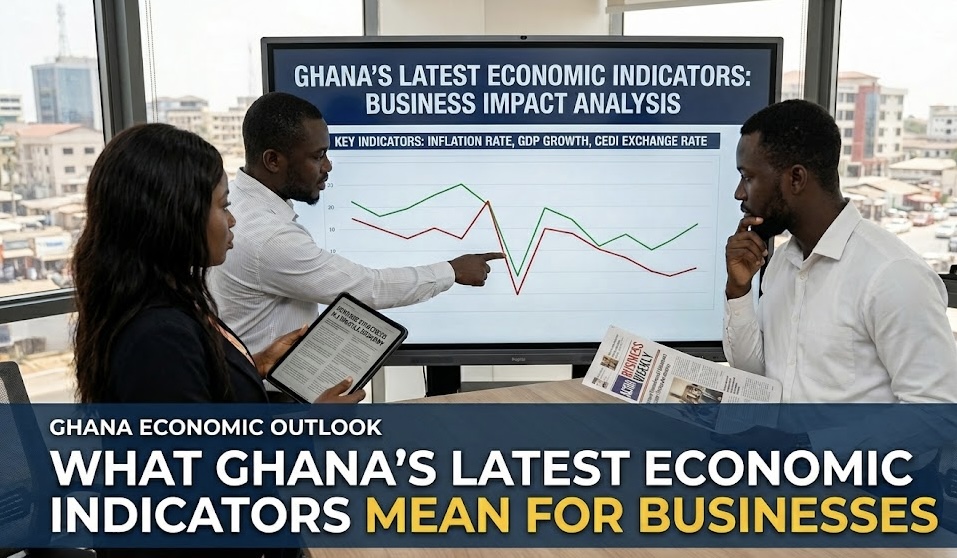
What Ghana’s Latest Economic Indicators Mean for Businesses – Understanding economic indicators is crucial for any business operating in Ghana today. From inflation and exchange rates to interest rates and GDP growth, these indicators shape the environment in which businesses operate.
What Ghana’s Latest Economic Indicators Mean for Businesses
In recent years, Ghana’s economy has experienced both challenges and gradual recovery efforts, making it more important than ever for entrepreneurs and companies to stay informed. This article breaks down the latest economic indicators in Ghana and explains what they mean for businesses.
What Are Economic Indicators?
Economic indicators are statistics that show how well an economy is performing. They help businesses, investors, and policymakers make informed decisions.
📢 GET DETAILED ARTICLES + JOBS
Join THSB's WhatsApp Channel and never miss a post or opportunity.
Key indicators include:
- Inflation rate
- Exchange rate
- Interest rate
- Gross Domestic Product (GDP)
- Unemployment rate
Each of these plays a direct role in shaping business costs, demand, and profitability.
Inflation: Rising Costs and Pricing Pressure
Ghana has experienced high inflation in recent years, although there are signs of gradual decline due to policy interventions and support from institutions like the International Monetary Fund.
What It Means for Businesses
High inflation affects businesses in several ways:
- Increased cost of raw materials
- Higher wages as workers demand better pay
- Reduced consumer purchasing power
Businesses must respond by:
- Adjusting pricing strategies
- Improving cost efficiency
- Exploring local sourcing to reduce expenses
Exchange Rate: The Cedi Factor
The Ghanaian cedi has seen fluctuations against major currencies, particularly the US dollar. This volatility has been a major concern for import-dependent businesses.
What It Means for Businesses
- Importers face higher costs for goods and materials
- Exporters may benefit from more competitive pricing internationally
- Financial planning becomes more complex
Businesses can manage this risk by:
- Holding foreign currency reserves
- Diversifying suppliers
- Pricing products strategically
Interest Rates: Cost of Borrowing
Interest rates in Ghana have remained relatively high as the central bank works to control inflation.
What It Means for Businesses
- Loans become more expensive
- Expansion plans may be delayed
- Cash flow management becomes critical
For small and medium-sized enterprises (SMEs), this means exploring alternative financing options or reinvesting profits rather than relying heavily on bank loans.
GDP Growth: Signs of Recovery
Ghana’s Gross Domestic Product (GDP) shows signs of recovery, driven by sectors such as agriculture, mining, and services.
What It Means for Businesses
- Expanding sectors create new opportunities
- Increased economic activity boosts demand
- Investor confidence improves
However, growth may not be evenly distributed across all sectors, so businesses must identify where opportunities lie.
RELATED: Ghana’s Economy Explained: What’s Happening and Why It Matters in 2026
Unemployment: Talent and Demand
Unemployment, especially among youth, remains a challenge in Ghana despite economic growth.
What It Means for Businesses
- Access to a large labor pool
- Opportunity to hire skilled workers at competitive rates
- Lower consumer spending in some segments
Businesses can take advantage by investing in training and building a strong workforce.
Government Policies and Reforms: What’s Happening
The Ghanaian government is implementing reforms aimed at stabilizing the economy, including fiscal discipline and improved tax collection.
Institutions like the Bank of Ghana play a key role in monetary policy decisions.
What It Means for Businesses
- Changes in tax policies may affect profitability
- Regulatory adjustments can impact operations
- Improved stability can attract investment
Businesses must stay updated on policy changes to remain compliant and competitive.
Sector-Specific Impacts
Agriculture
Agriculture remains a vital sector with opportunities for agribusinesses, especially in local production and exports.
Mining and Natural Resources
Ghana’s resource sector continues to attract foreign investment, offering opportunities for supply chain businesses.
Digital and Financial Services
The rise of fintech and mobile money platforms, led by companies like MTN Ghana, is transforming how businesses operate and transact.
Strategic Tips for Businesses in Ghana
To navigate the current economic landscape, businesses should:
- Monitor economic indicators regularly
- Diversify revenue streams
- Invest in technology and innovation
- Focus on customer value and affordability
- Build financial resilience
These strategies can help businesses adapt to uncertainty and position themselves for growth.
Conclusion From THSB
Ghana’s latest economic indicators paint a picture of both challenge and opportunity. While inflation, exchange rate volatility, and high interest rates present difficulties, signs of economic recovery and sectoral growth offer hope.
For businesses, the key lies in understanding these indicators and adapting accordingly. Those that remain informed, flexible, and innovative will be best positioned to survive and thrive in Ghana’s evolving economic environment.
In today’s dynamic economy, knowledge is not just power—it’s a competitive advantage.
Source: The High Street Business
Disclaimer: Some content on The High Street Business may be aggregated, summarized, or edited from third-party sources for informational purposes. Images and media are used under fair use or royalty-free licenses. The High Street Business is a subsidiary of SamBoad Publishing under SamBoad Business Group Ltd, registered in Ghana since 2014.
For concerns or inquiries, please visit our Privacy Policy or Contact Page.

Esther Aku-Sika is a content writer and social media strategist who helps brands and startups grow through intentional storytelling and practical marketing strategies. With a keen eye for trends and audience behavior, she shares business insights, content strategies, and real-life lessons to help entrepreneurs build visibility and turn ideas into income. Through her writing, she simplifies complex concepts and equips readers with actionable steps to grow in today’s digital space.