




Ghana’s Long-Term Economic Plan Explained – Ghana’s long-term economic plans focus on growth, industrialisation, infrastructure, and stability. Here’s a simple explanation of the country’s long-term economic direction.
Ghanas Long-Term Economic Plan Explained
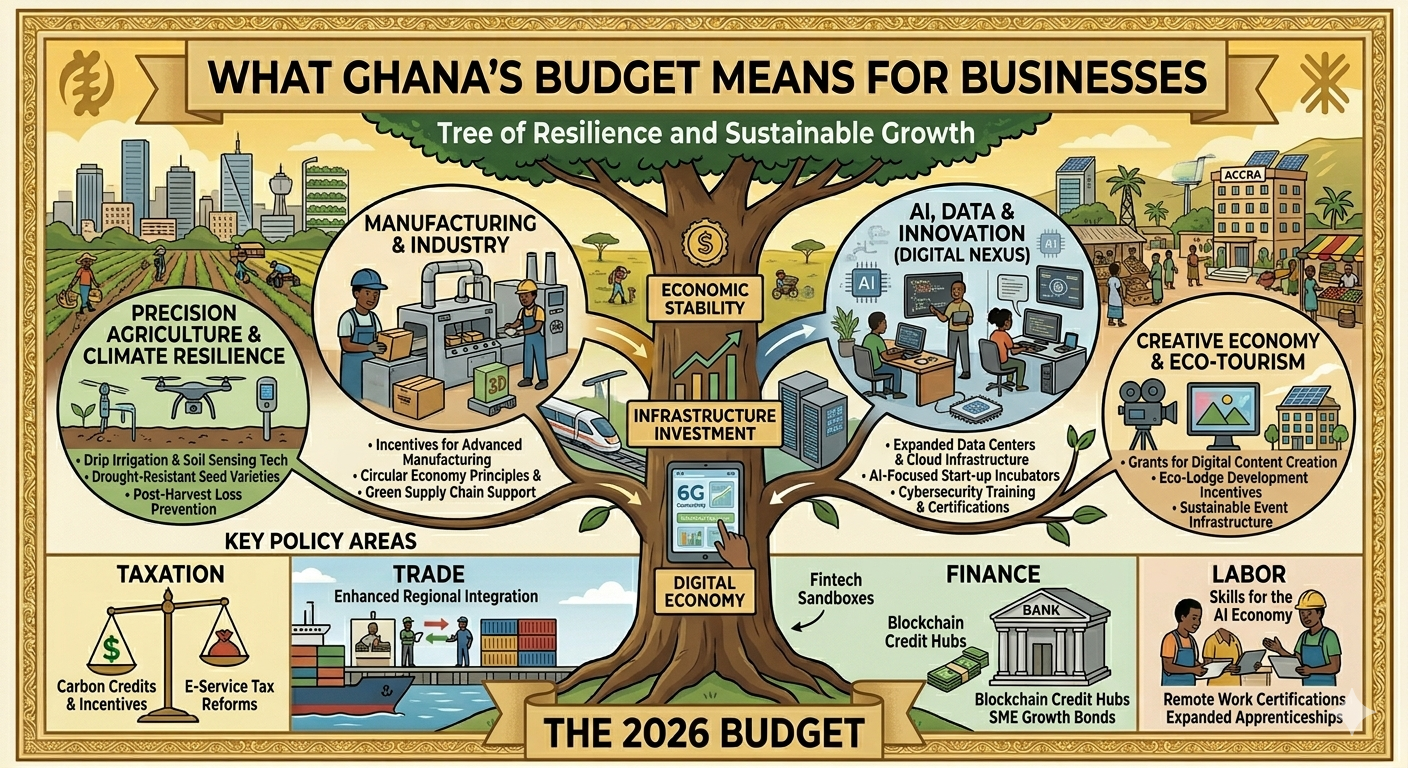
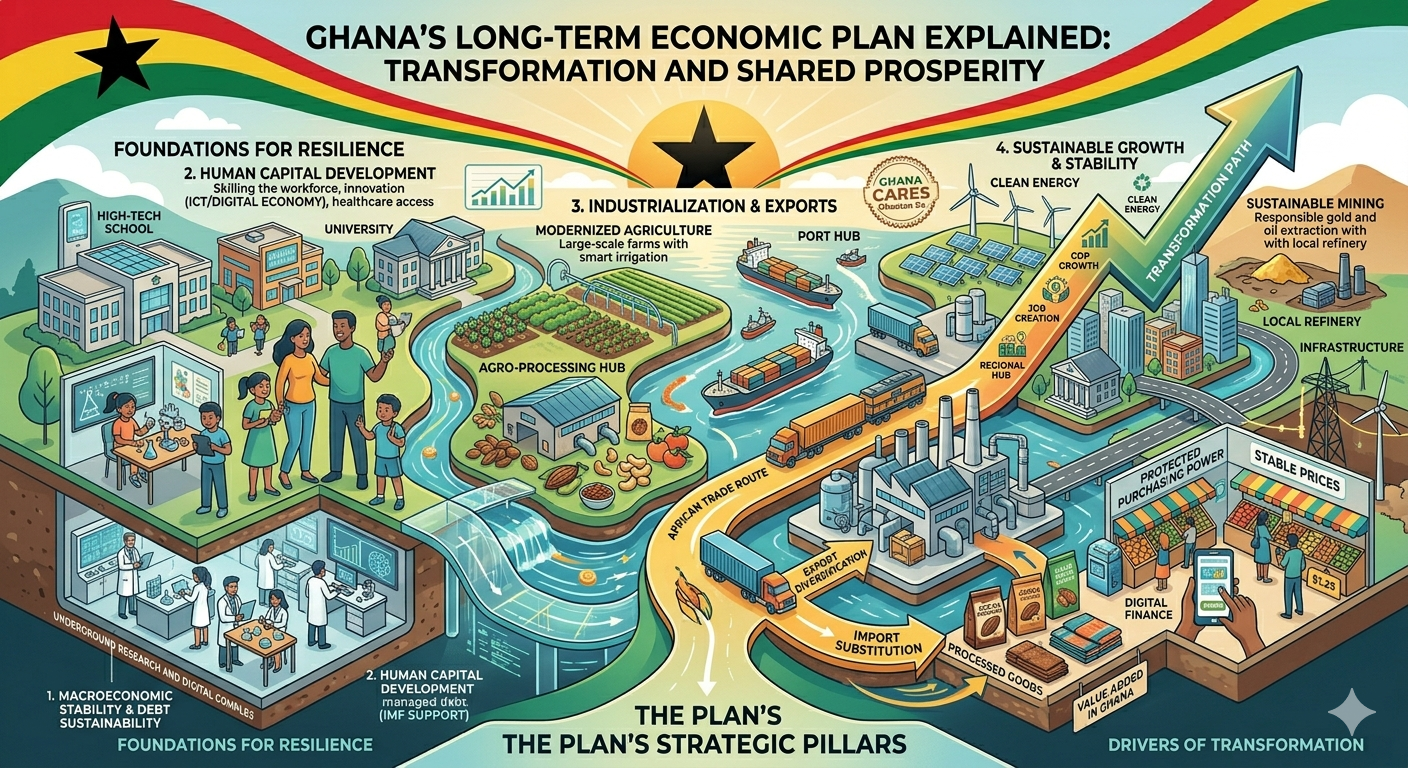
Every country needs a long-term economic vision to guide development, improve living standards, and create opportunities for future generations. In Ghana, long-term economic planning focuses on building a stronger and more resilient economy capable of supporting businesses, reducing poverty, and improving national infrastructure.
While short-term economic policies often address immediate challenges such as inflation or currency pressures, long-term plans are designed to shape the country’s future over many years. These plans influence decisions on education, industrialisation, agriculture, energy, and investment.
📢 GET DETAILED ARTICLES + JOBS
Join THSB's WhatsApp Channel and never miss a post or opportunity.
Why Long-Term Economic Planning Matters

Long-term economic planning helps governments prepare for future challenges and opportunities. It provides direction for national development and helps ensure that economic growth remains sustainable over time.
Without long-term planning, countries may struggle to:
- Maintain consistent development
- Build strong infrastructure
- Create enough jobs for growing populations
- Attract long-term investment
For Ghana, economic planning is closely tied to goals such as industrial growth, economic diversification, and improved living conditions.
Building a More Diversified Economy
One major focus of Ghana’s long-term economic direction is reducing overdependence on a few sectors and commodities. Historically, the economy has relied heavily on:
While these sectors remain important, diversification aims to strengthen industries such as manufacturing, technology, agribusiness, and services.
A more diversified economy is generally considered more stable because it is less vulnerable to global commodity price fluctuations.
Industrialisation and Local Production
Industrialisation remains central to Ghana’s long-term development ambitions. Expanding local industries can:
- Create jobs
- Reduce import dependency
- Increase exports
- Improve productivity
Governments often encourage industrial growth through infrastructure projects, investment incentives, and support for local manufacturing.
Increasing local production is also viewed as a way to strengthen the value of the cedi and improve economic resilience.
Infrastructure as a Foundation for Growth
Infrastructure development plays a critical role in long-term economic planning. Investments in:
- Roads and highways
- Ports and rail systems
- Electricity and energy supply
- Water systems
- Digital connectivity
help businesses operate more efficiently and improve economic activity across the country. Better infrastructure can also attract foreign investment and support trade expansion.
Human Capital and Education
Long-term economic growth depends not only on physical infrastructure but also on people. Investment in education, skills training, and healthcare is intended to build a more productive workforce capable of supporting modern industries and innovation.
Countries with stronger human capital often experience:
- Higher productivity
- Greater innovation
- Improved income levels
- Better employment opportunities
In Ghana, education and youth development remain important parts of national economic planning.
Agriculture and Food Security
Agriculture continues to be a major part of Ghana’s economy and long-term development strategy. Efforts to modernise agriculture often focus on:
- Improving productivity
- Expanding irrigation systems
- Supporting farmers with technology and financing
- Strengthening food security
A stronger agricultural sector can help reduce food inflation, improve exports, and support rural development.
Economic Stability and Fiscal Discipline
Long-term plans also aim to strengthen economic stability. This includes efforts to:
- Control inflation
- Improve revenue mobilisation
- Manage public debt
- Maintain currency stability
- Strengthen investor confidence
Sustainable growth is difficult to achieve without stable economic conditions.
For this reason, fiscal discipline and sound economic management are often considered essential parts of Ghana’s long-term strategy.
The Role of Private Sector Growth
Governments alone cannot drive long-term economic growth. The private sector is expected to play a major role in creating jobs, increasing productivity, and encouraging innovation.
Policies that support entrepreneurship and business expansion can help:
- Increase employment
- Boost exports
- Strengthen local industries
- Encourage investment
Small and medium-sized businesses are especially important because they contribute significantly to employment and economic activity.
Challenges Facing Long-Term Planning
Although long-term economic plans can provide direction, challenges often affect implementation. These challenges may include:
- Global economic shocks
- Political changes
- Funding constraints
- Climate and environmental risks
Despite these difficulties, consistent planning remains important for maintaining development momentum.
THSB’S Conclusion
Ghana’s long-term economic plan is centred on building a stronger, more diversified, and more resilient economy. Through investments in infrastructure, industrialisation, education, agriculture, and economic stability, the country aims to create sustainable growth and improve living standards over time.
While challenges remain, long-term planning provides a roadmap for national development and helps shape the future direction of Ghana’s economy.
Source: The High Street Business
Disclaimer: Some content on The High Street Business may be aggregated, summarized, or edited from third-party sources for informational purposes. Images and media are used under fair use or royalty-free licenses. The High Street Business is a subsidiary of SamBoad Publishing under SamBoad Business Group Ltd, registered in Ghana since 2014.
For concerns or inquiries, please visit our Privacy Policy or Contact Page.

Esther Aku-Sika is a content writer and social media strategist who helps brands and startups grow through intentional storytelling and practical marketing strategies. With a keen eye for trends and audience behavior, she shares business insights, content strategies, and real-life lessons to help entrepreneurs build visibility and turn ideas into income. Through her writing, she simplifies complex concepts and equips readers with actionable steps to grow in today’s digital space.