




What Economic Diversification Means for Ghana – Economic diversification helps reduce dependence on a few industries and supports long-term growth. Here’s what diversification means for Ghana’s economy and future development.
What Economic Diversification Means for Ghana
Economic diversification has become one of the most important discussions surrounding Ghana’s long-term development. For many years, the country’s economy has relied heavily on a few major sectors such as cocoa, gold, and oil. While these industries remain important, depending too much on a limited number of exports can create economic risks.
Diversification is about expanding the economy into new industries and sources of income. For Ghana, this means building a broader and more resilient economy capable of creating jobs, attracting investment, and reducing vulnerability to global market shocks.
📢 GET DETAILED ARTICLES + JOBS
Join THSB's WhatsApp Channel and never miss a post or opportunity.
Understanding Economic Diversification
Economic diversification refers to the process of expanding economic activity across multiple sectors instead of relying heavily on only a few industries or commodities.
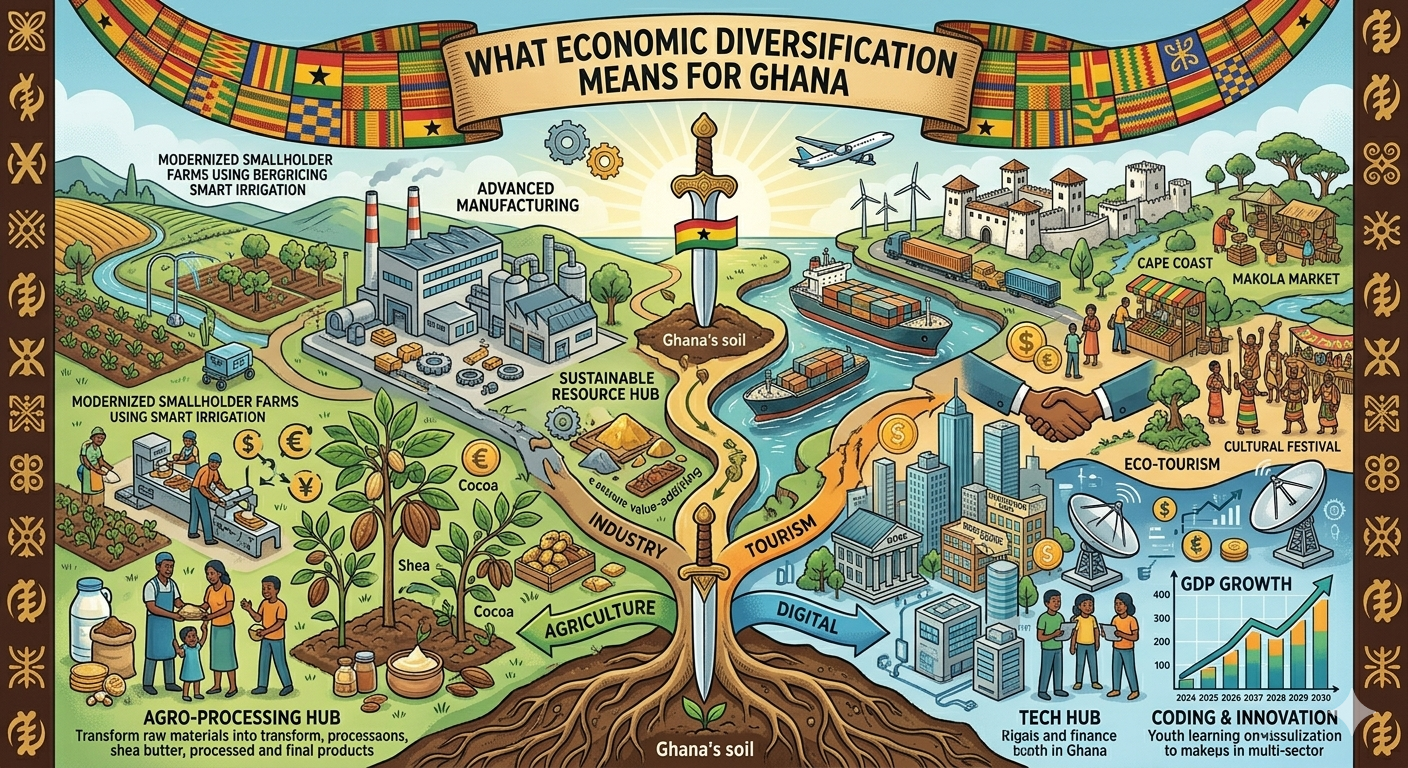
A diversified economy may include stronger growth in: Manufacturing, Agriculture and agribusiness, Technology and innovation, Tourism, Financial services, Renewable energy, and Creative industries. The goal is to create more balanced and sustainable economic growth.
Why Diversification Matters for Ghana
Ghana’s economy has traditionally depended on commodities such as: Gold, Cocoa, and Oil. These sectors generate significant revenue and foreign exchange earnings. However, commodity prices can fluctuate sharply due to global economic conditions.
When prices fall: Government revenue may decline, export earnings can weaken, currency pressures may increase, and economic growth may slow. Diversification helps reduce these risks by creating multiple sources of economic activity and income.
Creating More Job Opportunities
One major benefit of diversification is employment creation. Expanding sectors such as manufacturing, technology, agribusiness, and tourism can create jobs for:
- Young people entering the workforce
- Skilled professionals
- Entrepreneurs
- Small business owners
A broader economy generally provides more opportunities across different industries rather than concentrating employment in only a few sectors.
In Ghana, youth employment remains an important reason why diversification is often emphasised in development discussions.
Supporting Industrialisation and Local Production
Diversification is closely connected to industrialisation. Developing local industries can:
- Reduce dependence on imports
- Increase local production
- Strengthen exports
- Improve economic resilience
For example, processing raw materials locally instead of exporting them in raw form can create more value within the economy. This approach can also help Ghana retain more economic benefits from its natural resources.
Technology and Innovation as Growth Areas
Technology is becoming an increasingly important part of economic diversification worldwide.
In Ghana, growth in: digital services, financial technology, e-commerce, and innovation hubs is helping create new business opportunities and attract investment. Technology-driven sectors can improve productivity and support modern economic transformation.
Agriculture Beyond Traditional Farming
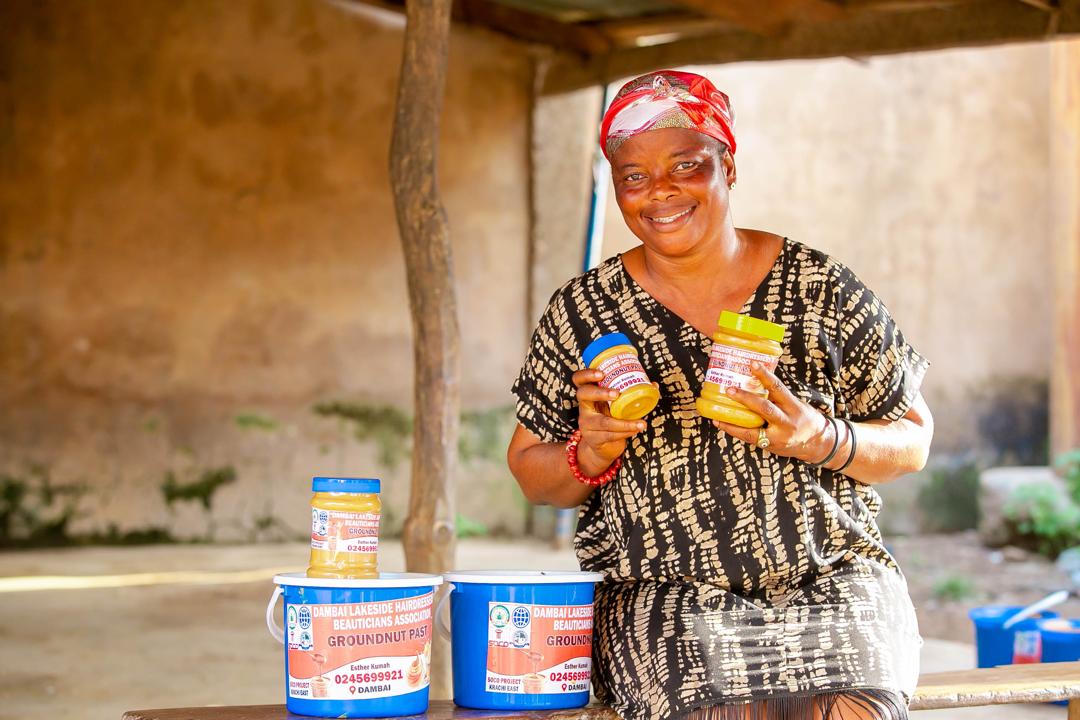
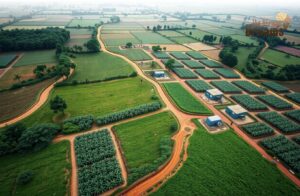
Agriculture remains a major part of Ghana’s economy, but diversification within the sector is also important. Modern agribusiness can involve:
- Food processing
- Export-oriented farming
- Agricultural technology
- Storage and logistics systems
Expanding agricultural value chains helps create jobs and increase export potential beyond raw commodity production.
Reducing Economic Vulnerability
Countries that depend heavily on one or two sectors are often more vulnerable to external shocks. For Ghana, diversification can help reduce the impact of:
- Falling commodity prices
- Global economic downturns
- Climate-related disruptions
- Changes in international demand
A broader economy is usually better able to absorb economic pressures and recover more quickly from challenges.
The Role of Infrastructure and Education
Successful diversification depends on strong infrastructure and human capital development. Investments in: roads and transportation, reliable electricity, internet connectivity, education and skills training help businesses grow and allow new industries to emerge.
Without these foundations, diversification efforts may struggle to achieve long-term success.
Challenges to Economic Diversification
Although diversification offers many benefits, achieving it is not always easy. Challenges may include:
- Limited industrial capacity
- Infrastructure gaps
- Access to financing
- Policy inconsistency
Building new industries often requires long-term investment and consistent economic planning.
THSB’S Conclusion
Economic diversification means creating a broader, stronger, and more resilient economy. For Ghana, reducing dependence on commodities like gold, cocoa, and oil is seen as an important step toward sustainable development and long-term economic stability.
By expanding industries such as manufacturing, technology, agribusiness, and services, Ghana can create more jobs, attract investment, and strengthen its ability to withstand global economic changes. Over time, diversification has the potential to shape a more balanced and competitive economy for the future.
Source: The High Street Business
Disclaimer: Some content on The High Street Business may be aggregated, summarized, or edited from third-party sources for informational purposes. Images and media are used under fair use or royalty-free licenses. The High Street Business is a subsidiary of SamBoad Publishing under SamBoad Business Group Ltd, registered in Ghana since 2014.
For concerns or inquiries, please visit our Privacy Policy or Contact Page.

Esther Aku-Sika is a content writer and social media strategist who helps brands and startups grow through intentional storytelling and practical marketing strategies. With a keen eye for trends and audience behavior, she shares business insights, content strategies, and real-life lessons to help entrepreneurs build visibility and turn ideas into income. Through her writing, she simplifies complex concepts and equips readers with actionable steps to grow in today’s digital space.