







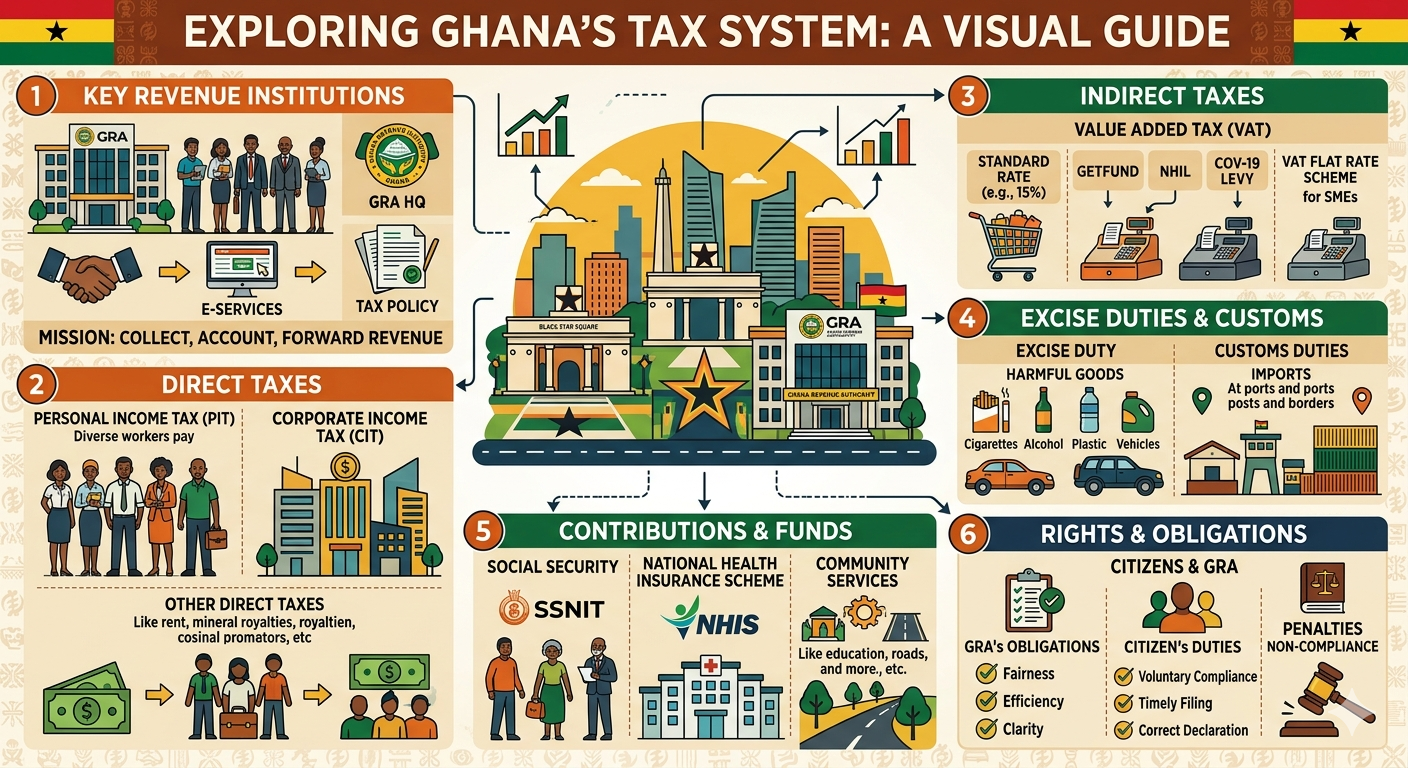
Ghana’s Tax System Explained – Ghana’s tax system plays a major role in funding public services and supporting economic development. Here’s a simple explanation of how taxation works in Ghana.
Ghanas Tax System Explained
Taxes are one of the main ways governments raise money to run a country. In Ghana, taxes help fund roads, schools, hospitals, security services, and other important national projects.
Although taxation can sometimes feel complicated, understanding how the system works helps explain how governments generate revenue and manage the economy. From workers and small businesses to large corporations and importers, taxes affect nearly every part of economic life in Ghana.
📢 GET DETAILED ARTICLES + JOBS
Join THSB's WhatsApp Channel and never miss a post or opportunity.
What Is a Tax System?
A tax system refers to the structure through which a government collects revenue from individuals, businesses, and economic activities.
Taxes are used to finance:
- Public infrastructure
- Healthcare services
- Education
- Security and governance
- Social programmes
In Ghana, the tax system is managed mainly by the Ghana Revenue Authority.
Types of Taxes in Ghana

Ghana’s tax system includes several forms of taxation.
Income Tax
Income tax is charged on earnings from employment, business activities, and investments. This includes:
- Salaries and wages
- Business profits
- Rental income
- Investment earnings
Workers in the formal sector often have taxes deducted directly from their salaries through the Pay As You Earn (PAYE) system.
Value Added Tax (VAT)
VAT is one of the most common taxes consumers encounter daily. It is added to the price of many goods and services, including:
- Restaurant meals
- Retail purchases
- Professional services
- Imported goods
Consumers pay VAT whenever they buy taxable products or services.
Corporate Tax
Businesses operating in Ghana are required to pay corporate income tax on profits. Corporate taxes contribute significantly to government revenue and help finance public expenditure. Different sectors may have varying tax obligations depending on regulations and incentives.
Import Duties and Levies
Imported goods entering Ghana are often subject to:
- Customs duties
- Import taxes
- Special levies
These charges help generate revenue while also influencing trade and local production. Because Ghana imports many products, import-related taxes can affect prices in the local market.
Why Taxes Matter to the Economy
Taxes are essential because they provide governments with the financial resources needed to operate.
Tax revenue supports:
- Infrastructure projects
- Public sector salaries
- Economic development programmes
- National security
- Public utilities and services
Without taxation, governments would struggle to maintain essential public services.
Taxes and Economic Growth
Tax policy can also influence economic activity. Governments may adjust taxes to:
- Encourage investment
- Support local industries
- Increase consumer spending
- Improve revenue generation
Lower taxes may encourage business expansion in some sectors, while higher taxes can help governments raise more funds during financial pressures. Finding the right balance is important for economic stability.
Challenges Within the Tax System
Like many developing economies, Ghana faces several challenges in tax collection. These include:
- Tax evasion
- Informal business activity
- Weak compliance systems
- Limited public awareness
A large informal sector means many businesses operate outside the formal tax net, reducing potential government revenue.
The Role of Digitisation
Technology is increasingly helping improve tax administration in Ghana. Digital systems now support:
- Online tax filing
- Electronic payments
- Revenue tracking
- Business registration
These reforms aim to improve efficiency, reduce leakages, and increase compliance.
Public Perception of Taxation
Many citizens expect taxes to translate into visible improvements in roads, healthcare, education, and other public services. Public trust often increases when people see:
- Better infrastructure
- Transparent spending
- Improved public services
This is why accountability and efficient use of tax revenue are important for maintaining confidence in the system.
Why Businesses Pay Attention to Tax Policy
Businesses closely monitor tax changes because taxes affect:
- Profit margins
- Investment decisions
- Operating costs
- Consumer demand
Stable and predictable tax policies can improve business confidence and encourage long-term investment.
THSB Conclusion
Ghana’s tax system is a key part of the country’s economic structure. Through income taxes, VAT, corporate taxes, and import duties, the government raises revenue to fund national development and public services.
While challenges such as tax evasion and informal economic activity remain, ongoing reforms and digitisation efforts are helping strengthen the system. Ultimately, taxation remains essential for supporting economic growth, infrastructure, and the functioning of the state.
Source: The High Street Business
Disclaimer: Some content on The High Street Business may be aggregated, summarized, or edited from third-party sources for informational purposes. Images and media are used under fair use or royalty-free licenses. The High Street Business is a subsidiary of SamBoad Publishing under SamBoad Business Group Ltd, registered in Ghana since 2014.
For concerns or inquiries, please visit our Privacy Policy or Contact Page.

Esther Aku-Sika is a content writer and social media strategist who helps brands and startups grow through intentional storytelling and practical marketing strategies. With a keen eye for trends and audience behavior, she shares business insights, content strategies, and real-life lessons to help entrepreneurs build visibility and turn ideas into income. Through her writing, she simplifies complex concepts and equips readers with actionable steps to grow in today’s digital space.