





Ghana has received a significant vote of confidence from global markets after Fitch Ratings upgraded the country’s sovereign credit rating to ‘B-’ with a Stable Outlook, marking its strongest rating since falling into default in 2022. The upgrade reflects steady progress in debt restructuring, early signs of macroeconomic stabilization, and renewed credibility under the IMF-supported reform program. While the country still faces elevated risks, the decision signals a cautiously optimistic turn after nearly two decades of fiscal volatility and repeated crises.
This marks a critical turning point in Ghana’s debt crisis narrative. After defaulting on both local and external bonds between late 2022 and early 2023, the country embarked on a bold and painful economic adjustment process. That included a historic domestic debt exchange in early 2023 and a landmark USD 13.1 billion Eurobond restructuring concluded in late 2024, a deal Fitch described as significantly reducing the risk of holdouts among commercial creditors. By early 2025, the government had also reached agreements on most of its official bilateral debt, with just a small portion left to finalize.
The upgrade represents a pivotal moment in Ghana’s post-default recovery. After suspending payments on both domestic and external debt between late 2022 and early 2023, the government embarked on one of the most aggressive economic overhauls in its history. The process included a controversial domestic debt exchange in early 2023 and a landmark restructuring of USD 13.1 billion in Eurobonds completed at the end of 2024. Fitch highlighted that the settlement substantially lowered the risk of creditor holdouts and improved the country’s medium-term debt sustainability. By early 2025, Ghana had also secured agreements with most bilateral lenders, with only a small portion of negotiations pending.
📢 GET DETAILED ARTICLES + JOBS
Join THSB's WhatsApp Channel and never miss a post or opportunity.
The June 2025 rating action restores Ghana to the same speculative grade it held prior to default, a notch above its post-default low, signaling cautious investor optimism. But while the rating upgrade recognizes progress, it also reflects lingering vulnerabilities. Ghana continues to grapple with elevated debt levels, a heavy interest burden, and narrow fiscal space. Fitch noted that although the 2024 election year led to some fiscal slippage, Ghana is now targeting a return to surplus, with primary fiscal balance expected to improve from a deficit of 3.9% to a 0.5% surplus in 2025, and nearly 1% by 2026.

Beyond fiscal indicators, Fitch acknowledged improvements in the external sector. Ghana’s current account has returned to surplus, and reserves have increased to USD 6.8 billion, a far cry from the pre-default era. The cedi has appreciated since April 2025, helping ease imported inflation and stabilizing investor expectations. Inflation, which peaked in 2022 and remained elevated through 2024, is now projected to decline to 15% in 2025 and 10% in 2026, supported by tight monetary policy and falling global commodity prices.
Public debt, once over 90% of GDP, is now projected to settle around 60% by 2026, reflecting strong nominal GDP growth, exchange rate gains, and successful restructuring efforts. Yet, despite these improvements, Fitch still sees risks. Ghana’s interest-to-revenue ratio, though down from its 2021 peak of 48%, remains high at 26%. Liquidity pressures could reemerge if fiscal discipline wavers or if global conditions tighten.
To fully appreciate the weight of this upgrade, it is important to view it against the historical arc of Fitch’s sovereign ratings for Ghana. Over the past two decades, Ghana has hovered in the speculative “B” range, swinging between periods of reform-driven optimism, such as the post-HIPC era and the 2011 oil boom, and repeated bouts of fiscal crisis, most notably in 2013 and again in 2022.

Early 2000s–2005: From B to B+.
In March 2005, Fitch upgraded Ghana’s long-term foreign‑currency IDR to ‘B+’ (Stable) from ‘B’. This upgrade reflected strong post‑HIPC debt relief effects and prudent macro policies. Fitch noted Ghana’s recently completed Heavily Indebted Poor Countries (HIPC) debt relief, stable growth through the 2004 election year, and fiscal reforms (e.g. deregulating fuel prices) as drivers of the upgrade. The agency highlighted that Ghana had for the first time “navigated an electoral cycle without compromising macroeconomic policy,” bolstering investor confidence. Fitch’s action in 2005 thus signaled Ghana’s improved solvency ratios and commitment to consolidation; it cautioned, however, that Ghana remained vulnerable to external shocks given its still‑high debt and export concentration.
2012–2013: Fiscal Slippage and Downgrades.
By early 2013, Ghana’s fiscal situation had worsened sharply: the deficit surged to ~12% of GDP in 2012 (well above targets) due to overspending on wages, subsidies and election‑year financing. In February 2013, Fitch revised Ghana’s outlook to Negative (keeping the ‘B+’ IDR) citing a “severe deterioration” in the fiscal balance to 12.1% of GDP. Fitch saw this as evidence of “serious loss of fiscal control” and fading policy credibility. By October 17, 2013, Fitch downgraded Ghana’s IDR to ‘B’ (Stable outlook).
Fitch explained that the government had “failed to fully implement its fiscal consolidation plan”, accumulating new arrears and breaching deficit targets, thus weakening Ghana’s creditworthiness. (Reuters reported Fitch calling Ghana “one of Africa’s brightest prospects,” but warned that high deficits and debt had “weakened creditworthiness,” prompting the cut into B-rated “speculative” territory.) Fitch emphasized that Ghana’s public debt was rising (debt/GDP jumped in 2012) and that the new administration would need to halve the deficit by 2015 to restore confidence. Politically, this period saw a transition to President Mahama’s government (elected Dec 2012), which began adopting austerity measures in early 2013.
2014–2019: Stabilization at ‘B’.
From 2014 through 2019, Ghana’s sovereign IDR remained at ‘B’ (speculative grade). Fiscal consolidation under IMF-backed reforms gradually improved deficits (falling towards single digits by 2015–16) and moderate growth resumed. Notably, in September 2017 Fitch affirmed Ghana at ‘B’ (Stable). Fitch cited Ghana’s favorable medium-term growth prospects (5–8% GDP growth expectations, driven by oil and improved power supply) and moderating inflation, which allowed the central bank to loosen policy.
In 2017 the outlook was kept Stable, reflecting confidence that recent reforms (including capping the fiscal deficit) would continue to support debt dynamics. Throughout this era, political stability (successful 2016 elections) and robust commodity prices (gold, cocoa, oil) underpinned gradual improvement, though Fitch remained concerned that public debt (in the 60–70% GDP range) was high for a ‘B’ rating.

2020–2021: Pandemic Shock and Rising Risk.
The COVID-19 pandemic took a toll on Ghana’s economy in 2020. In October that year, Fitch kept Ghana’s ‘B’ IDR with a Stable outlook, noting signs of gradual recovery and strong external financing. Ghana had raised $3.0 billion through a Eurobond and was set to receive IMF and World Bank budget support to help close a major 2020 funding gap. Although Fitch projected a modest GDP contraction of about –3.2% for the year, it saw resilience in agriculture and domestic demand. Still, it warned that the fiscal deficit would grow to around 10–11% of GDP due to pandemic-related spending and cautioned that debt could climb above 70% of GDP if reforms stalled.
By June 2021, with recovery still underway but deficits and debt running high, Fitch shifted the outlook to Negative while keeping the rating at ‘B’. Heavy COVID-related spending and slow fiscal consolidation had weakened the country’s finances. By the end of 2021, debt had jumped from about 61% of GDP in 2019 to 79.7%, and interest payments were eating up more than 80% of tax revenue—pressures that paved the way for further downgrades.

January 2022: Downgrade to ‘B-‘ (Negative).
On Jan 22, 2022, Fitch downgraded Ghana’s LT FC IDR to ‘B-‘ (maintaining a Negative outlook). This was Fitch’s first ‘B-‘ rating for Ghana. The move reflected persistent fiscal stress and external pressures. Ghana had run very large deficits (around 9–11% of GDP in 2020–21) and inflation had surged (~12.6% by Jan 2022). Public debt reached ~80% of GDP and interest costs were crowding out other spending. In context, Fitch had warned in 2013 that deficits >9–12% were unsustainable; the situation in 2022 echoed those concerns.
The downgrade acknowledged Ghana’s ongoing economic crisis: growth slowed, and although 2021 elections had passed, the new government faced limited room to maneuver. Finance Minister Ofori-Atta publicly lamented the downgrades, noting them as “unfortunate,” while Ghana began announcing steep spending cuts to placate markets. Moody’s likewise cut Ghana in early 2022 (to Caa1), and S&P lowered Ghana to ‘CCC+’ (still in default classification) in May 2022, reflecting the deepening stress.
2022–2023: Default and “Restricted Default”.
By late 2022, Ghana had defaulted on much of its external debt. After depleting reserves and losing market access, it suspended foreign bond payments in December and turned to the IMF for help. On February 21, 2023, after missing the grace period on a Eurobond coupon, Fitch downgraded Ghana’s long-term foreign currency rating to ‘Restricted Default (RD)’. The missed $40.6 million coupon on a 2026 Eurobond was part of a debt standstill, marking a formal default even as talks with creditors continued. Earlier, on February 14, Fitch had already labeled Ghana’s local-currency rating as ‘RD’ due to suspended domestic bond payments. Around this time, Ghana launched major debt restructurings, completing a domestic debt exchange between December 2022 and January 2023 that reprofiled GH₵126 billion in local bonds.
Fitch said the move would cut interest costs by about 1.6% of GDP in 2023, though it slightly increased debt-to-GDP. By March 22, after payments resumed on the new local bonds, Fitch upgraded the long-term local-currency rating to ‘CCC,’ citing the immediate fiscal relief from the restructuring. Over 65% of eligible local bondholders took part, and Ghana appeared on track for IMF board approval, pending creditor assurances. However, Fitch kept the foreign currency rating at RD until external deals were finalized.
Late 2023–2024: Restructuring and Rating.
In October 2024, Ghana pulled off a major international bond swap, exchanging fifteen outstanding Eurobonds for five new ones. The move cut foreign debt by about 6% of GDP and wiped out $3.5 billion in debt payments through 2026. On October 17, 2024, Fitch responded by upgrading Ghana’s long-term local currency IDR to ‘CCC+’ and giving the new Eurobonds the same rating, praising the country’s “increased confidence” in avoiding another local debt default after the deal.
Fitch projected Ghana’s debt-to-GDP ratio would drop from roughly 77% in 2023 to about 68% by 2026 thanks to the reforms. However, it kept the long-term foreign currency IDR at ‘RD’, as Ghana still hadn’t finished restructuring all its external debt. The agency expected the remaining work, including settling with Paris Club and Chinese creditors as well as Eurobond holdouts, to wrap up by early 2025.

June 2025 Upgrade: Back to ‘B-‘ (Stable).
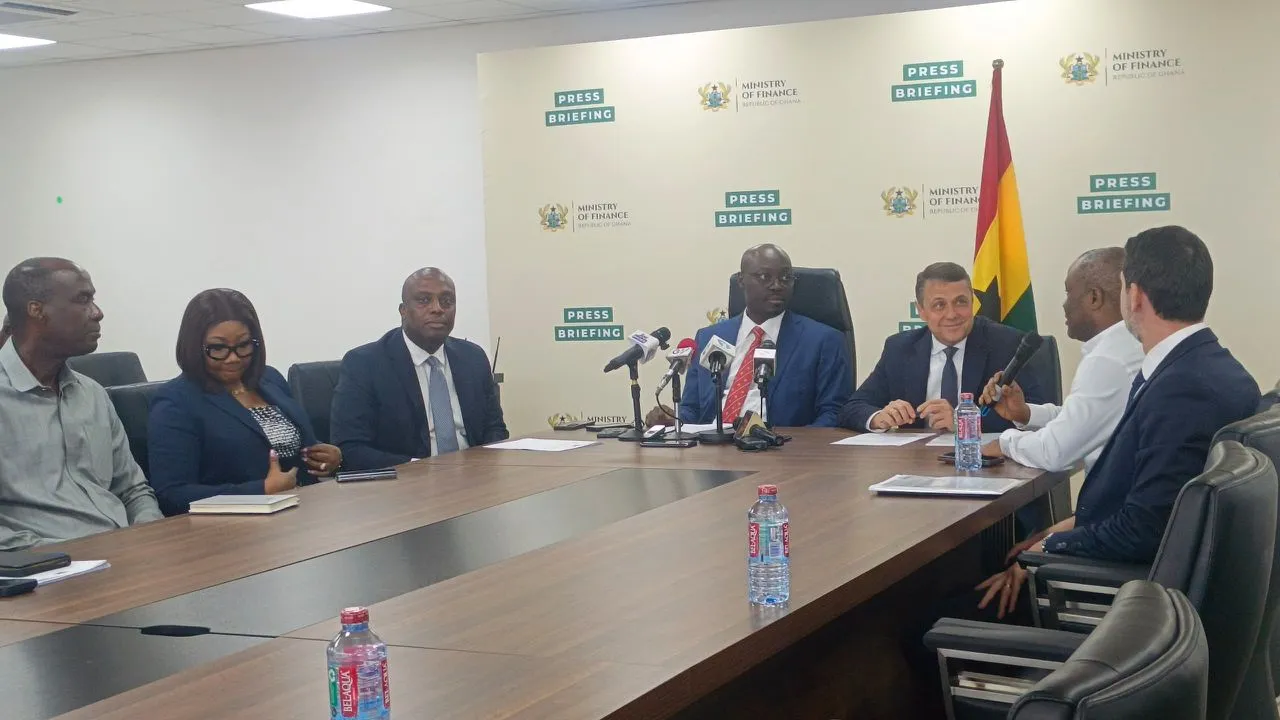
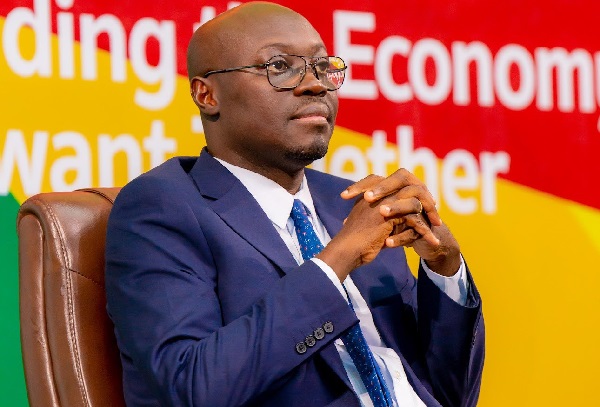
On June 16, 2025, Fitch raised Ghana’s sovereign rating to ‘B-’ (Stable) from RD, marking the country’s exit from default and signaling the near-completion of its debt restructuring efforts. Fitch said Ghana had mended ties with most of its external commercial creditors. The economy, bouncing back from the 2022 crisis, saw stronger exports of gold, cocoa, and oil, while the new government pushed for fiscal discipline. Finance Minister Forson announced major spending cuts for 2025, backed by a $3 billion IMF Extended Credit Facility. Fitch noted that local debt issues were resolved and external debt exchanges should wrap up by the end of 2025, with the Stable outlook suggesting Ghana’s credit path is now more than it was in 2022.
Table 1. Fitch Ratings – Ghana Sovereign (Long-Term FC IDR, 2005–2025)
| Date | Action | FC IDR | Outlook | Notes/Drivers |
| Mar 2005 | Upgrade to ‘B+’ | B+ | Stable | External debt relief (HIPC), stable growth through elections, fiscal reforms (e.g. fuel price deregulation). |
| Feb 2013 | Outlook → Negative | B+ | Negative | Fiscal deficit ballooned to ~12% GDP in 2012 (election-year spending); Fitch warned of serious loss of fiscal control. |
| Oct 2013 | Downgrade to ‘B’ | B | Stable | Continued overspending on wages/subsidies; failure to meet fiscal targets. Fitch cut to ‘B’ deepening speculative category. |
| Sep 2017 | Affirm at ‘B’ | B | Stable | Rating affirmed; Fitch cited Ghana’s medium-term growth potential (oil, cocoa), improving macro stability, and falling inflation. |
| Oct 2020 | Affirm at ‘B’ | B | Stable | Post-COVID context: Stronger-than-expected recovery, large external financing (IMF loans, Eurobond proceeds) helped meet a ~16% GDP financing need. |
| Jan 2022 | Downgrade to ‘B-‘ | B– | Negative | Rising deficits and debt (debt ~80% GDP end-2021; interest >80% of revenues) eroded credit; Fitch cited fiscal slippage. |
| Feb 2023 | Downgrade to ‘RD’ | RD | – | Sovereign default: Ghana missed a $40.6m Eurobond coupon, suspended foreign bond payments. Domestic debt had also been defaulted. |
| Jun 2025 | Upgrade to ‘B-‘ | B– | Stable | Ghana largely completed debt restructurings; “normalized” creditors’ relations; strong fiscal-adjustment commitments. |
Ghana’s recent economic moves come against a backdrop of shifting fortunes – from the HIPC‑era stability of the mid‑2000s, through the 2012–13 fiscal crunch, to the latest debt crisis and rebound. The June 2025 upgrade to ‘B–’ (Stable) lifts the country just one notch above its post‑default low, showing it’s out of default territory but still facing big challenges like heavy debt and interest costs as it works through fiscal consolidation.
Over the past twenty years, Ghana’s Fitch ratings have swung within the speculative range (‘B’ and below), with brief climbs to B+ followed by drops to B or even B–/RD, driven by budget strains and external shocks. This latest upgrade marks a potential turning point, as debt relief and stricter fiscal discipline set the stage for a more sustainable debt path.
Disclaimer: Some content on The High Street Business may be aggregated, summarized, or edited from third-party sources for informational purposes. Images and media are used under fair use or royalty-free licenses. The High Street Business is a subsidiary of SamBoad Publishing under SamBoad Business Group Ltd, registered in Ghana since 2014.
For concerns or inquiries, please visit our Privacy Policy or Contact Page.

Samuel Kwame Boadu is a Ghanaian entrepreneur, writer, and digital consultant passionate about creating impactful stories and business solutions. He is the Founder & CEO of SamBoad Business Group Ltd, a dynamic company with subsidiaries in digital marketing, logistics, publishing, and risk management.