



For the entrepreneur, investor, or policymaker seeking to understand Ghana’s economic landscape, the country presents a fascinating paradox. On one hand, it is a vibrant $112 billion economy with one of Africa’s most dynamic stock markets—the GSE Composite Index delivering a 63.4 percent return in 2026 . On the other, it is an economy where 92.3 percent of businesses operate informally and 70 percent generate less than GHS 10,000 annually .
Understanding how markets work in Ghana requires navigating this duality: the formal and the informal, the regulated and the unregulated, the international and the hyper-local. This guide provides a clear, analytical framework for understanding Ghana’s market economy—from its philosophical foundations to its practical mechanics.
The Philosophical Foundation: Free Market vs. Regulation
A Nation at a Crossroads
Ghana operates fundamentally as a free market economy, where prices and production are largely determined by supply and demand with limited state intervention . This model entrenches property rights and individual economic freedom, but critics argue it leaves the public vulnerable to exploitation through monopolies, oligopolies, and cartels .
📢 GET DETAILED ARTICLES + JOBS
Join THSB's WhatsApp Channel and never miss a post or opportunity.
The debate has intensified in recent years. In July 2026, Dr. Stephen Amoah, Member of Parliament for Nhyiaeso, formally called for a transition from a free market to a mixed market system—one that combines market forces with state intervention to curb excesses and ensure equitable outcomes . He pointed to successful modern economies like the United Kingdom, the United States, and Germany, all of which operate mixed systems .

The Case for Intervention
The argument for greater regulation is grounded in lived experience. Without adequate oversight, free markets can encourage profiteering through monopolies and cartels that restrict supply to create artificial scarcity, enabling outrageous pricing on essential goods . This is particularly dangerous when it affects medicines, food, and other necessities, resulting in a high cost of living and a low standard of living .
But regulation is a delicate art. The IMANI Centre for Policy and Education has warned that interventions must be “proportionate” and “evidence-based . The 2024 Economic Freedom Index placed Ghana in the “Mostly Unfree” category, while the World Bank’s B-Ready Report highlighted rising operational costs, weak contract enforcement, and regulatory unpredictability as worsening risks for businesses . The challenge is striking a balance that protects consumers without stifling private sector growth.
The Financial Sector: The Engine of the Formal Economy
A Bank-Dominated System
Ghana’s financial system is bank-dominated and concentrated. Total financial sector assets rose from GHS 536.8 billion at end-2024 to an estimated GHS 644 billion at end-2025 . Banks account for about 67.4 percent of total system assets—equivalent to 31.6 percent of GDP—placing them at the core of financial intermediation and shock transmission .
The concentration is significant:
-
Foreign-owned banks hold about 40.1 percent of financial sector assets
-
Domestic private banks hold 12.1 percent
-
Government-owned banks hold 15.2 percent
-
The five largest banks control about 45 percent of total banking assets
This concentration means that institution-specific stress outcomes can have outsized effects on the broader economy . It also means that accessing finance remains a challenge for smaller businesses, with SMEs receiving a disproportionately small share of credit.
The Expanding Financial Inclusion Landscape
The formal financial system reached an estimated 81 percent of the population in 2025 . Beyond banks, the ecosystem includes:
-
Specialised deposit-taking institutions (SDIs): 6.5 percent of total assets
-
Non-bank financial institutions (NBFIs) led by pension funds: nearly one-quarter of system assets
-
Credit unions: About 1 percent of total assets but serving nearly 1 million members (about 3 percent of the population)
The adoption of digital payment solutions is on the rise, with 37.2 percent of businesses integrating digital financial services—a trend that is reshaping how money moves in Ghana .
The Capital Markets: A Resurgence of Confidence
A Remarkable Recovery
Ghana’s capital markets have staged one of the most remarkable recoveries in the world. The Ghana Stock Exchange (GSE) has delivered extraordinary returns:
-
2023: 28 percent return
-
2024: Over 56 percent return
-
2025: Approximately 79 percent return
-
2026: 63.4 percent return (second only to South Korea globally)
Total market capitalisation reached GH¢263 billion in 2026 . This is not just about returns—it reflects a fundamental restoration of investor confidence.
The IPO Revival
After approximately seven years without a single new listing, the GSE recorded three initial public offerings in just six months, raising approximately GHS 2 billion and adding GHS 11 billion in market capitalisation . All three offerings were oversubscribed:
-
First Atlantic Bank PLC (December 2025): Raised GHS 742 million
-
Zen Petroleum Holdings PLC (March–April 2026): Raised GHS 640 million
-
Kasapreko PLC (June 2026): Targeting GHS 700 million
President Mahama called this “the most active primary issuance period in nearly a decade” and “one of the clearest signals that investor confidence in Ghana’s capital markets has been restored .
The Commercial Paper Market
In 2024, the GSE launched a regulated commercial paper (CP) market, providing a new avenue for corporate short-term financing . The inaugural issuance of GHS 72.5 million marked a shift toward greater transparency and broader market participation . The framework adheres to international standards, enabling participation from international institutional investors such as pension funds, asset managers, and development finance institutions .
Institutional Investors
Pension funds alone currently manage assets exceeding GH¢108 billion . These institutional investors represent a growing pool of patient capital for businesses that can demonstrate strong governance and transparency . Experts are pushing for greater financial literacy and pension participation—currently only about 2.1 million people contribute to pension schemes despite Ghana’s large workforce .
The Commodity Markets: State-Led Aggregation
Gold: The New Aggregation Model
In 2025, Ghana took a major step by introducing an institutional structure for gold through the Ghana Gold Board (GoldBod) . The Board was created to regulate, aggregate, and market gold, especially from the artisanal and small-scale mining (ASM) sector .
The Gold Aggregation Model centralises the collection, assaying, and export of gold from licensed small-scale miners. GoldBod acts as the sole authorised aggregator and exporter, buying gold through licensed agents and accredited refiners .
The results have been significant:
-
41.5 tonnes exported (February–May 2025), valued at US$4 billion
-
ASM output grew by 70 percent from 1.1M oz to 1.9M oz in 2024
-
ASM contribution to national production rose from 28 percent to 39 percent
-
BoG reserves rose to 37.06 tonnes in 2025—a 21 percent increase
Cocoa: The Longstanding Model
The Ghana Cocoa Board (COCOBOD) has run a centralised marketing and pricing system for decades, stabilising farmer incomes and protecting Ghana’s global reputation for quality . COCOBOD purchases cocoa at a producer price announced at the start of each season, providing protection from global price volatility and strong quality control systems .
However, the model has limits. Farmers don’t always benefit when world prices rise, and the administrative cost of heavy structures and syndicated loans reduces flexibility . Both models aim to protect small producers, but gold offers a far stronger macroeconomic lever because it is a monetary asset that directly boosts foreign reserves.
The Retail Market: Formal Meets Informal
A Fragmented Landscape
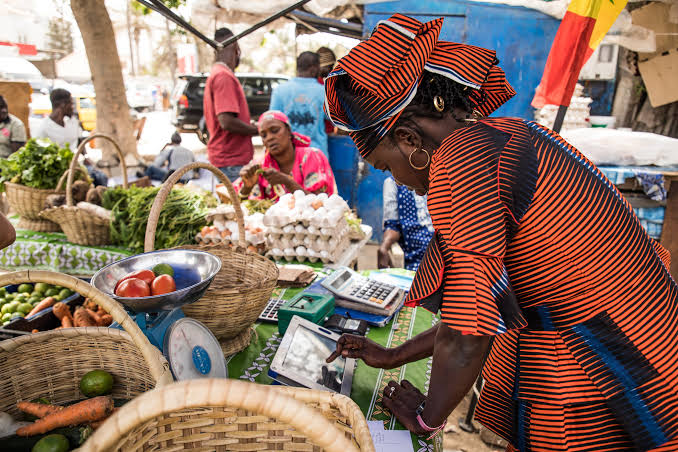
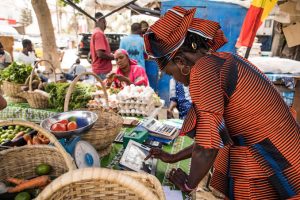
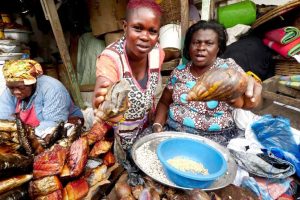
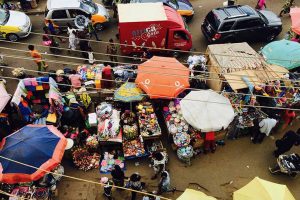
Despite the rise of organised retail, Ghana’s retail market remains fragmented. Informal markets and small grocers still account for approximately 83 percent of food retail, while supermarkets and convenience stores make up only 17 percent .
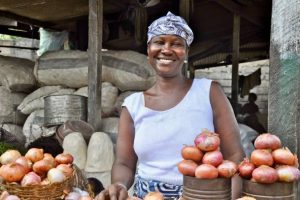
This coexistence underscores the adaptability of Ghanaian consumers. Many shop across formats, purchasing packaged goods at supermarkets while sourcing fresh produce and staples from open-air markets . The latter often offer lower prices, flexibility in quantity, and strong personal relationships with sellers.
The Rise of Modern Retail
Ghana’s first full-scale mall, Accra Mall, opened in 2008. By 2020, Ghana had approximately 138,000 m² of formal retail space, with additional developments in the pipeline . Formal retail grew at a Compound Annual Growth Rate of 8.3 percent (2010–2020), driven by FDI inflows totalling $1.2 billion in retail infrastructure . The Ghana retail industry was about US$32 billion in 2023 and is expected to reach about US$54 billion by 2031.
The market is highly segmented:
-
Melcom dominates mid-market appeal
-
Shoprite anchors most malls
-
Palace Hypermarkets cater to bulk, value-conscious shoppers
-
Koala and Max-mart attract upper-middle-class consumers
-
“China Malls” offer a vast range of low-cost goods
The Hybrid Marketplace
The result is a uniquely Ghanaian hybrid: a dynamic, multi-format ecosystem shaped by price sensitivity, convenience, and social norms . Even within the formal sector, consumers move across channels based on need and affordability .
The Enabling Environment: What Makes Markets Work
The Macroeconomic Context
Ghana’s improving macroeconomic fundamentals support market functioning:
-
GDP growth: 5.7 percent in 2024, 6 percent in 2025
-
Inflation: Fell to 3.3 percent in February 2026
-
Public debt: Fell from 68.9 percent to 45 percent of GDP
-
Reserves: Over 5.7 months of import cover
Access to International Markets
Ghana’s strategic location and trade agreements provide market access:
-
AfCFTA: Host of the secretariat; gateway to Africa’s 1.4 billion people
-
AGOA: Preferential access to the U.S. market
-
Bilateral agreements: Strengthening trade with partners like the U.S. (total bilateral trade reached US$2.5 billion in 2025)
The Policy Framework
The GIPA Act, passed in 2026, represents the most comprehensive reform of Ghana’s investment regime in over a decade . It removes minimum capital requirements for joint ventures and wholly foreign-owned companies (except trading companies) and establishes a one-stop shop for investors .
The Market Challenges
The Competition Deficit
Ghana has had a draft competition bill since 2007 but has not yet enacted comprehensive competition law . This means there are limited legal safeguards against anti-competitive practices such as cartels, price fixing, abuse of dominance, and collusive tendering .
Experts have warned that without a competition policy, even the best-designed industrial and export policies risk being “captured by vested interests, stifled by monopolies, or rendered ineffective by unregulated market power . This is a critical gap as Ghana pursues its 24-Hour Economy and export development ambitions.
The Enforcement Gap
The persistent challenge of fronting—where foreign nationals use Ghanaian citizens as nominal owners while retaining operational control—remains a core problem . This practice has been illegal but has flourished due to weak enforcement . As analysts have noted, “a law is only as strong as its enforcement. And here, Ghana must be honest with itself .
Structural Imbalances
Despite the tripling of business establishments over the past decade, employment growth has lagged behind—a sign of structural challenges in how Ghana’s markets create and sustain productive jobs . The dominance of micro-businesses (90.4 percent) and high informality (92.3 percent) limit tax revenue, access to credit, and the ability to scale.
THSB Conclusion
Ghana’s markets operate at multiple levels: a sophisticated, globally connected financial sector alongside a vast, informal economy where millions of Ghanaians earn their livelihoods. The formal system—banks, the stock exchange, state-led commodity aggregation—provides the infrastructure for large-scale investment and economic growth. The informal system provides resilience, employment, and accessibility for those excluded from formal channels.
The tension between free market forces and the need for regulation is a defining feature of the contemporary landscape. Ghana is not a pure free market economy—the state plays a significant role in cocoa and gold aggregation, investment regulation, and macroeconomic stabilisation. But it is not a controlled economy either. It is a work in progress, grappling with the same questions that have defined economic policy debates globally.
For the business owner, understanding these dynamics is essential. Whether you are accessing capital markets, navigating the banking sector, or competing in the crowded retail space, the rules of the game are shaped by this evolving balance between market forces and state intervention. The markets are open, but they demand sophistication, preparation, and an understanding of the unique Ghanaian context.
QUICK FACTS BOX
| Element | Detail |
|---|---|
| Economy Size (2025) | $112 billion |
| GDP Growth (2025) | 6% |
| Inflation (Feb 2026) | 3.3% |
| Financial Sector Assets | GHS 644 billion (46.9% GDP) |
| Banks’ Share of Assets | 67.4% |
| Foreign-Owned Banks’ Share | 40.1% |
| GSE Composite Return (2026) | 63.4% |
| Market Capitalisation | GH¢263 billion |
| IPOs in Six Months | 3 (GHS 2 billion raised) |
| Pension Fund Assets | GH¢108 billion+ |
| Retail Market Value (2023) | US$32 billion |
| Informal Food Retail Share | 83% |
| Gold Exported (Feb-May 2025) | 41.5 tonnes (US$4 billion) |
FREQUENTLY ASKED QUESTIONS
1. What type of economy does Ghana have?
Ghana operates a free market economy where prices and production are determined by supply and demand with limited state intervention. However, there is an ongoing debate about transitioning to a mixed market system that combines market forces with state regulation to curb excesses and ensure equitable outcomes .
2. How big is Ghana’s financial sector?
Total financial sector assets rose from GHS 536.8 billion at end-2024 to an estimated GHS 644 billion at end-2025, equivalent to 46.9 percent of GDP. Banks account for about 67.4 percent of total system assets .
3. Why are foreign-owned banks dominant in Ghana?
Foreign-owned banks hold about 40.1 percent of financial sector assets, compared with 12.1 percent for domestic private banks and 15.2 percent for government-owned banks. The IMF notes that this dominance makes them “systemically dominant” in financial intermediation and shock transmission .
4. How has the Ghana Stock Exchange performed recently?
The GSE has delivered extraordinary returns: 28 percent (2023), over 56 percent (2024), 79 percent (2025), and 63.4 percent (2026). Total market capitalisation reached GH¢263 billion, and the exchange ended a seven-year IPO drought with three oversubscribed listings in six months .
5. What is the commercial paper market in Ghana?
In 2024, the GSE launched a regulated commercial paper market for short-term corporate financing. The inaugural issuance of GHS 72.5 million marked a shift toward greater transparency, with simplified listing requirements and compliance with international standards .
6. How does the GoldBod work?
goldBod, established under Act 1140 (2025), acts as the sole authorised aggregator and exporter of gold from licensed small-scale miners. It centralises collection, assaying, and export, allowing bulk sales at stronger prices, reducing smuggling, and building national gold reserves .
7. How does COCOBOD set cocoa prices?
COCOBOD purchases cocoa from farmers at a producer price announced at the start of each season. Prices are set based on international forecasts, production costs, and government policy, providing farmers with protection from global price volatility and ensuring quality control .
8. What percentage of Ghana’s retail market is informal?
Informal markets and small grocers still account for approximately 83 percent of food retail, while supermarkets and convenience stores make up only 17 percent. This fragmentation reflects the adaptability of Ghanaian consumers .
9. What is the debate about free markets in Ghana?
Critics argue that decades of free-market policies have failed the average citizen, leading to high costs of living and low standards of living. Some MPs are calling for a transition to a mixed market system with price caps and stronger regulation of monopolies and cartels .
10. Why is competition law important for Ghana?
Ghana has had a draft competition bill since 2007 but has not enacted comprehensive legislation. Without it, monopolies, cartels, and anti-competitive practices can distort markets, block smaller players, and capture the benefits of industrial policy .
11. How many Ghanaians contribute to pension schemes?
Only about 2.1 million people currently contribute to pension schemes despite Ghana’s large workforce. Increasing financial literacy and pension participation, particularly among informal sector workers, is seen as critical for expanding long-term capital availability .
12. What is fronting and why is it a problem?
Fronting is the practice where foreign nationals use Ghanaian citizens as nominal owners while retaining operational control. This has been illegal under the old GIPC Act but has flourished due to weak enforcement, undermining local participation requirements and depriving Ghanaians of business opportunities.
Source: The High Street Business
Disclaimer: Some content on The High Street Business may be aggregated, summarized, or edited from third-party sources for informational purposes. Images and media are used under fair use or royalty-free licenses. The High Street Business is a subsidiary of SamBoad Publishing under SamBoad Business Group Ltd, registered in Ghana since 2014.
For concerns or inquiries, please visit our Privacy Policy or Contact Page.

Samuel Kwame Boadu is a Ghanaian entrepreneur, writer, and digital consultant passionate about creating impactful stories and business solutions. He is the Founder & CEO of SamBoad Business Group Ltd, a dynamic company with subsidiaries in digital marketing, logistics, publishing, and risk management.