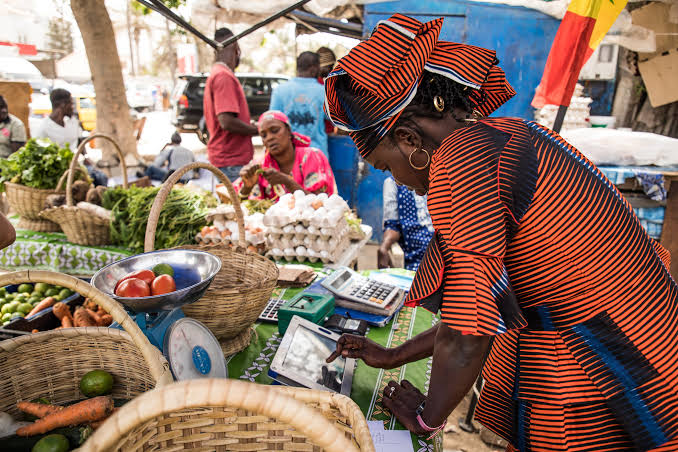




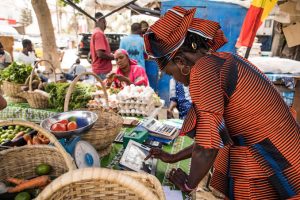



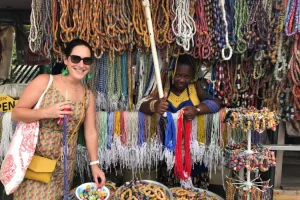

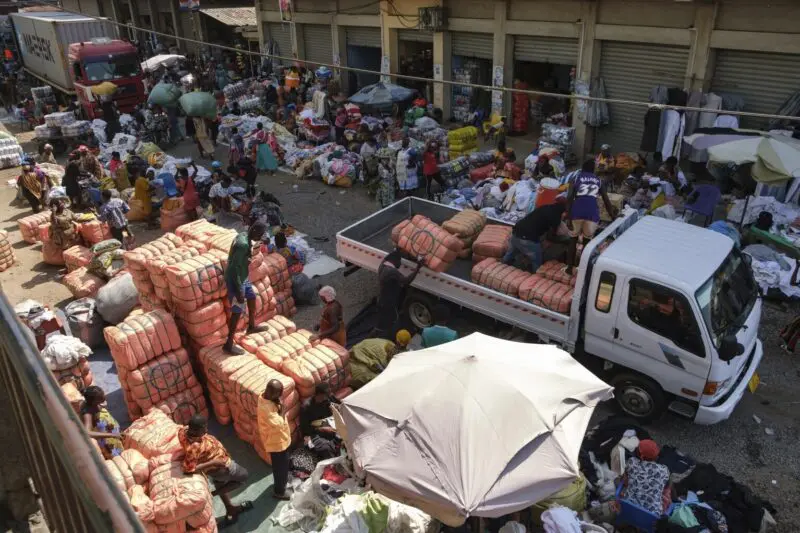

The Ghanaian retail and wholesale sector is a study in duality. On one side lies the organised chaos of Makola Market, a sprawling traditional trading hub home to over 35,000 resellers and the lifeblood of daily commerce . On the other sits the steady rise of shopping malls, supermarket chains, and a rapidly growing e-commerce ecosystem . This dual structure defines the market’s character and creates both its resilience and its vulnerability.
In 2025-2026, this duality has been tested by a fundamental shift in consumer behaviour. After two years of punishing inflation, Ghanaian shoppers have recalibrated their understanding of value. Brands that demonstrate tangible empathy at the shelf—through price relief, bonus packs, or consistent quality—are being rewarded with loyalty and market share . This is not simply bargain hunting; it is a structural shift in purchasing psychology.
This deep dive examines Ghana’s retail and wholesale markets, exploring how they operate, how consumers are reshaping them, and what the future holds for the different players vying for Ghanaian wallets.
📢 GET DETAILED ARTICLES + JOBS
Join THSB's WhatsApp Channel and never miss a post or opportunity.
Part 1: The Structure of Ghana’s Wholesale Market
The Role of Wholesale in the Trade Ecosystem
Wholesale trade forms the critical artery connecting manufacturers and importers to the vast network of retailers across Ghana. The market was estimated at approximately USD 366 million in 2025 and is projected to reach USD 511 million by 2032, growing at a steady compound annual growth rate (CAGR) of 5.7% . Key cities—Accra, Kumasi, and Takoradi—serve as central conduits for this activity .

The growth has been supported by several factors. Infrastructure improvements, particularly in roads, enhanced access to wholesale platforms in 2023 . The adoption of digital payment systems gained traction in 2024, transforming how transactions are conducted . By 2025, increased urbanization drove heightened demand for diverse consumer goods .
The wholesale sector is not uniform. It encompasses large-scale importers and distributors who service supermarket chains and formal retailers, alongside the independent wholesalers who supply the thousands of stalls in traditional markets . In many cases, larger traders in hubs like Makola either import directly or receive dedicated deliveries from manufacturers and distributors on specific days .
The Integration of Traditional Markets
Makola Market in Accra offers the clearest window into how wholesale and retail interact in Ghana’s traditional economy. Strategically located, it sits at the heart of the Abidjan-Lagos trade corridor and is well-connected by road to Burkina Faso and the Sahel . This positioning makes it a vital entry point for goods moving through West Africa via the Port of Tema.
The market operates on a sophisticated, informal framework. It is organised into sections based on product type: food, personal care, clothes, fabric, shoes, and electronics . Each section is under the informal leadership of a “queen mother” or “chief” who manages trade, organises seller meetings, and helps fix trade guidelines .
While there is no formal price-fixing, an implicit understanding exists that prices within a section should not vary by more than 10 to 15% . When a seller is temporarily out of stock, they can obtain the product from a neighbouring stall and sell it with a small extra margin, typically 1-2% . This informal cooperation keeps the market fluid and ensures customers can generally find what they need.
Women at the Centre
Historically dominated by women, markets like Makola are often described as the engine room of Ghana’s economy. Since being built in 1924, Makola has been a space where women from the indigenous Ga ethnic group and, increasingly, from across the country, have built businesses and gained financial independence .
Traders rely on a deep understanding of cultural shifts, global trends, and marketing techniques. Wax print sellers, for example, source fabrics from the US, China, Nigeria, and Togo, and use storytelling—beginning with naming patterns to reflect Ghanaian sociocultural realities—to sell their products . The “market queens” manage facilities, enforce rules, provide financial support, and create networking opportunities, playing a crucial role in market governance .
Part 2: The Retail Landscape
The Rise of Modern Retail
The modern retail sector in Ghana is a rapidly growing segment, driven by urbanisation, a rising middle class, and increasing consumer spending . Shopping malls and organised retail spaces are expanding, providing not just goods but an experience valued by Ghanaian consumers . Supermarkets, hypermarkets, and convenience stores now compete alongside traditional open-air markets for the consumer’s cedi.
A growing, tech-savvy population, more than half of which is under 25, is reshaping consumption patterns . These consumers are digital-first, brand-conscious, and aspirational, creating a fertile ground for the expansion of formal retail and e-commerce .
The E-Commerce Revolution
The shift from physical markets to digital platforms is a defining trend in Ghanaian retail. Globally, e-commerce accounted for 20.1% of all retail sales in 2024, crossing the 20% threshold for the first time . The trend is not limited to advanced economies; it is reshaping commerce across Africa.

Key drivers of e-commerce growth in Ghana include:
-
Mobile Money Penetration: With over 50% of adults using mobile money, cash is no longer the barrier it once was .
-
Youth Demographics: A young, digital-first population is eager for the convenience of online shopping .
-
Urban Expansion: Growing middle-class populations in cities like Accra, Kumasi, and Takoradi demand convenience and quality .
However, the digital shift faces barriers. Customers still worry about product authenticity and delivery reliability . Logistics challenges, including traffic and poor addressing systems, slow the pace of scaling . Crucially, the informal market remains cheaper and deeply embedded in Ghanaian culture, meaning e-commerce is not replacing but layering technology onto existing trust structures . Fashion, food, and crafts are already thriving on Instagram and WhatsApp commerce .
Part 3: The Consumer Shift: A Flight to Value
The Post-Inflation Consumer
The quiet revolution in Ghana’s retail markets is being driven by the consumer. A survey by Maverick Research in Q2 2025 revealed a structural shift in purchasing psychology . “By the first quarter of this year, inflation was easing from its 2023 peak. Yet disposable income remained tight, and consumer behaviour had permanently adjusted. Ghanaian shoppers are deliberate. And they are watching,” said Ato Micah, Managing Principal at Maverick .
The data is striking. Following the cedi’s appreciation in early 2025, 90% of consumers said they expected prices of foreign goods to decline . Seventy-three percent reported switching to more affordable alternatives, and 88% said they would reconsider their brand—if they felt the price was fair .
Relief at the Shelf
The research found that consumers are not simply chasing the lowest price; they are rewarding brands that provide “relief at the shelf” . Relief is a signal of empathy, a tangible demonstration that the brand understands the consumer’s plight.
Two examples illustrate this. One food company cut prices by about two percentage points. The result was a surge in unit sales and a regain of roughly three percentage points in market share . Another food brand, instead of cutting the shelf price, offered bonus packs at the same price and paired them with retail activations. The effect was immediate and volume surged .
As Micah explained: “Relief means: the product stretches. Relief means: the product remains consistent. Relief means: the brand is on the consumer’s side” .
Loyalty to Pockets, Not to Brands
The data suggests that brand loyalty in Ghana is highly conditional. “Ghanaians are loyal to their pockets and how much disposable income they have versus any brand or any piece of item being sold,” Micah noted . Price increases from the cedi’s instability made consumers extremely price-sensitive, leading many to abandon their favourite brands for affordable alternatives.
However, this presents an opportunity. Fifty percent of consumers said they would return to their preferred brands if the price reduction was significant, while 38% said they would return immediately . To win back lapsed consumers, Micah advocates offering “price reliefs” rather than “price reductions”—a shift in language that frames the move as a mutual effort to help consumers and build goodwill . The brands that act with empathy, he argues, will be the ones consumers reward with loyalty, volume, and growth .
Part 4: Policy and Competition
Protectionism vs. Modernisation
Ghana’s retail sector is also shaped by a long-running policy debate on protectionism. President Mahama’s announcement to scrap the USD 1 million minimum capital requirement for foreign trading companies under the GIPC Act marks a bold shift in investment policy . The rule was originally designed to protect local traders but has been long criticized as a barrier that stifles dynamism.
The Ghana Union of Traders Association (GUTA) has voiced its opposition, seeing retail as the preserve of Ghanaians and protecting livelihoods in the informal market . However, critics argue this protectionist stance is increasingly misaligned with the realities of modern commerce, where retail is shifting away from open markets towards digital platforms and organised centres .
Opening the retail sector could yield significant consumer benefits. More competition would mean greater product variety and downward pressure on prices . As economies grow, retail markets naturally become more competitive and attractive to investors. Ghana, lacking a strong manufacturing or wholesale base, has retail as one of its most dynamic entry points for foreign direct investment .
Government Policies
The government has several policies in place to regulate the sector. The Retail Trade Act (2003) regulates foreign participation in retail . The National Single Window system aims to streamline trade processes . The Competition Act (2000) promotes fair competition . Additionally, the government collaborates with regulatory agencies to establish guidelines for retail licensing and offers incentives such as tax breaks and access to credit to encourage investment .
Part 5: Challenges and Outlook
Structural Challenges
Ghana’s retail and wholesale sector faces significant headwinds:
-
Infrastructure: Unreliable infrastructure, including inconsistent power supply and inadequate transportation systems, hinders operations and increases costs .
-
Economic Instability: Currency volatility directly impacts import costs and consumer purchasing power . The research data shows consumers are acutely aware of these dynamics.
-
Informal Competition: The large informal sector creates unfair competition and tax evasion challenges .
-
Access to Finance: Limited access to financing and credit for small businesses restricts their ability to expand and invest .
-
Low Response Rates: The Ghana Statistical Service notes difficulty in collecting data for the sector due to an outdated register and low response rates to surveys .
Future Outlook
The future outlook for Ghana’s retail and wholesale market appears promising, with continuous economic growth and urbanisation driving demand . The increasing adoption of digital technologies and e-commerce platforms is expected to further boost sales .
Key trends to watch include:
-
E-Commerce Growth: E-commerce platforms are gaining prominence, facilitating broader access to products nationwide .
-
Digital Payments: Digital payment systems continue to transform transactions .
-
Sustainable Practices: Sustainable practices are beginning to influence wholesale and retail operations .
-
Local Manufacturing: Emergence of local manufacturing is expected to reduce reliance on imports and boost domestic supply chains .
-
Logistics Advancements: Logistical advancements are streamlining supply chains and improving market responsiveness .
THSB Conclusion
Ghana’s retail and wholesale markets are at a crossroads. The traditional system, embodied by the structured chaos of Makola Market and the ingenuity of its women traders, continues to serve as the backbone of daily commerce. Yet, a modernising sector, driven by e-commerce, a young population, and the expansion of formal retail, is reshaping the landscape.
The single most powerful force in this evolution right now is the Ghanaian consumer. Having endured a period of high inflation, shoppers are now signalling that they will reward empathy at the shelf. Brands that offer genuine relief—through price cuts, value-added packs, or consistent quality—are gaining market share and loyalty. Those that do not are losing out.
The sector’s future will be defined by how this dual structure evolves. E-commerce is not replacing the market culture; it is layering technology onto trust . Modern retail and traditional trade will likely coexist, but the balance will shift further towards organised and digital commerce.
As President Mahama’s reforms open the market to more foreign investment, competition will intensify. The winners will be those who can navigate Ghana’s unique consumer landscape, deliver on the promise of relief, and build the logistics and trust required to serve a modernising West African nation.
Quick Facts Box
| Category | Details |
|---|---|
| Wholesale Market Value (2025) | USD 366 million |
| Wholesale Market Projection (2032) | USD 511 million |
| Wholesale Market Growth Rate (CAGR) | 5.7% (2026-2032) |
| Key Wholesale Hubs | Accra, Kumasi, Takoradi |
| Makola Market Resellers | Over 35,000 |
| Traditional Market Structure | Product-specific sections; leadership by “market queens” |
| E-Commerce Global Share (2024) | 20.1% of all retail sales |
| Key Retail Formats | Supermarkets, hypermarkets, convenience stores, e-commerce |
| Primary Sector Driver | Urbanisation, rising middle class |
| Top Consumer Expectation (2025) | 90% expect prices of foreign goods to fall with stronger cedi |
Source: The High Street Business
Disclaimer: Some content on The High Street Business may be aggregated, summarized, or edited from third-party sources for informational purposes. Images and media are used under fair use or royalty-free licenses. The High Street Business is a subsidiary of SamBoad Publishing under SamBoad Business Group Ltd, registered in Ghana since 2014.
For concerns or inquiries, please visit our Privacy Policy or Contact Page.

Samuel Kwame Boadu is a Ghanaian entrepreneur, writer, and digital consultant passionate about creating impactful stories and business solutions. He is the Founder & CEO of SamBoad Business Group Ltd, a dynamic company with subsidiaries in digital marketing, logistics, publishing, and risk management.