








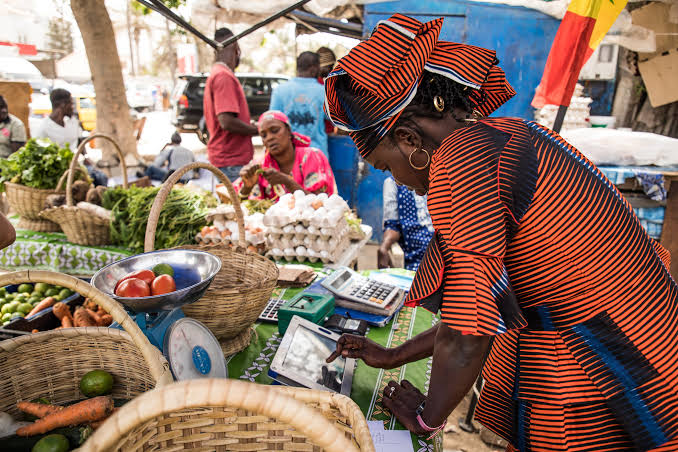
From the fuel pump to the sachet water vendor, competition—or the lack of it—is the invisible hand that determines what Ghanaians pay. In a truly competitive market, prices reflect individual firm efficiencies, sourcing strategies, and innovation. Where competition is stifled, consumers pay more, and the economy loses its dynamism.
Yet Ghana’s markets present a complex picture. In some sectors, deregulation has unleashed fierce competition that benefits consumers. In others, industry associations, regulatory interventions, and market dominance keep prices artificially high. Understanding this dynamic is essential for any business owner, investor, or policymaker navigating the Ghanaian economy.
The Power of Price Competition: What It Looks Like
The Deregulated Petroleum Market
When Ghana deregulated petroleum pump prices in 2015, the government’s logic was straightforward: allow prices to reflect market realities—international product prices, exchange rate movements, taxes, and distribution costs—while competition disciplines margins .
📢 GET DETAILED ARTICLES + JOBS
Join THSB's WhatsApp Channel and never miss a post or opportunity.
For nearly a decade, that framework broadly held. The results were tangible:
-
Choice and price variance: Today, Ghana boasts over 100 licensed Oil Marketing Companies (OMCs). At any given week, a savvy driver can scan price boards along a single street and find variances of up to 50 pesewas per litre, allowing consumers to vote with their wallets .
-
Innovation and improved service: Deregulation forced OMCs to innovate. Fuel stations morphed into one-stop service hubs with supermarkets, pharmacies, and loyalty reward programs, vastly improving the overall consumer experience .
-
Price wars: Firms differentiate through pricing, promotions, and efficiency, leading to consumer benefits during favourable market conditions .
This is price competition at work. In a largely undifferentiated market where fuel is fuel, pricing becomes the key competitive tool . Efficient operators can pass on cost advantages to consumers, driving down prices and forcing competitors to improve.
The Dangers of Anti-Competitive Behaviour
The recent sachet water price hike illustrates what happens when competition is absent. The National Association of Sachet and Packaged Water Producers (NASPAWAP) announced a uniform price structure: GH¢8 per bag ex-factory, GH¢10 ex-truck, and a recommended maximum retail price of GH¢15 .
While businesses face genuine cost pressures, collective announcements that impose uniform pricing raise serious concerns about coordinated pricing that undermines competition . As one legal analyst noted, “Not all sachet water producers source their raw materials from the Middle East. Indeed, some import from the US, Brazil, Russia, India, China, Nigeria, or elsewhere, and larger or more efficient players can absorb costs better and still offer lower prices” .
A uniform price floor or guideline, even if framed as “recommended,” discourages price competition and punishes efficient producers while shielding less efficient ones . This leads to higher prices for consumers and reduced incentives for innovation.
The Fuel Price Floor: A Case Study in Regulatory Intervention
The Policy and Its Rationale
The National Petroleum Authority (NPA) introduced a petroleum price floor in April 2024, setting a minimum retail price for petrol, diesel, and LPG . The policy was designed to curb what regulators described as “unhealthy competition” and to ensure stability within the downstream market.
Supporters of the price floor, including the Chamber of Oil Marketing Companies (COMAC), argue it is necessary to:
-
Prevent predatory pricing: No jurisdiction tolerates deliberate below-cost selling aimed at eliminating competitors .
-
Protect smaller operators: Intense price competition creates thin margins that threaten smaller or less-capitalised OMCs .
-
Sanitise the market: The presence of illegal petroleum products sold at extremely low prices creates an uneven playing field for compliant businesses .
The Counterargument: Stifling Competition
Critics argue that the price floor fundamentally undermines the competition that deregulation was meant to foster . The arguments are compelling:
-
It restricts efficient operators: Several OMCs possess the capacity to sell petrol and diesel below the prescribed minimum but are unable to do so due to regulatory constraints . As one analyst put it, “The deregulation policy was introduced to promote competition and efficiency in the downstream sector. The introduction of a price floor is effectively a form of price control, which defeats that objective” .
-
It mutes the benefits of market movements: When global prices soften or the cedi strengthens, pump prices do not adjust as quickly or as visibly as consumers expect. In effect, the floor can act as a price anchor, muting the benefits of favourable market movements .
-
It denies consumers relief: During periods of declining global crude oil prices, a price floor could prevent reductions from being passed on to consumers, particularly affecting low-income households and transport-dependent businesses . The Chamber of Petroleum Consumers (COPEC) has called the policy “anti-consumer and detrimental to the interests of Ghanaians” .
-
It weakens incentives for efficiency: When firms are unable to fully benefit from cost reductions by lowering prices, the incentive to invest in logistics, technology, and improved service delivery is reduced .
The debate has created unusual tensions. Star Oil, one of the largest OMCs, suspended its membership of COMAC, arguing that the price floor impedes downward price transmission and that its views were not fairly represented within the Chamber .
Monopoly Power and the Absence of Competition Law
DSTV: Market Power Without Accountability
In March 2025, MultiChoice Ghana (DSTV) raised its subscription prices, triggering public backlash. Soon after, the Ghanaian cedi appreciated significantly against the US dollar, gaining roughly a third of its value. Despite the change in exchange rate, DSTV did not adjust its prices downward .
From basic economics, a firm with no competitive pressure has little incentive to reduce prices, even when market conditions change . Through exclusive rights to premium content like the English Premier League, DSTV enjoys a unique position in Ghana’s pay-TV market, creating a bottleneck monopoly where other players cannot compete effectively without access to the same content .
The Legal Vacuum
Ghana currently lacks a comprehensive competition law. Only the petroleum downstream sector has explicit prohibitions on cartelisation and price-fixing under the National Petroleum Authority Act . This legal vacuum leaves consumers exposed.
As one legal expert observed, “Businesses in sachet water, cement, or other sectors can fix prices with limited recourse, unlike in mature competition regimes where such conduct attracts fines, cease-and-desist orders, or prosecutions” . Technically, there is no law in Ghana that can criminalise the actions of associations that engage in price-fixing .
The long-pending Competition and Fair Trade Practices Bill, 2019, would provide a comprehensive legal framework to regulate anti-competitive behavior, address exclusive licensing agreements, reduce entry barriers, and drive prices down through healthy competition . Yet nearly two decades after Ghana began developing a competition framework, the bill remains unpassed .
The Impact on Businesses and Consumers
Higher Prices and Reduced Choice
The absence of competition has real economic consequences. Historical analysis shows cartels often impose overcharges of around 20-25 percent on average, with significant GDP-level impacts in affected markets . In essential sectors like sachet water, which serves as a primary safe drinking water source for millions of Ghanaians, coordinated pricing disproportionately burdens low-income households .
Distorted Investment Incentives
When firms cannot compete on price, the incentive to invest in efficiency, technology, and innovation is reduced . In the petroleum sector, the price floor may discourage the very investments in logistics and operational improvements that would lower costs and benefit consumers in the long term.
Uneven Playing Field
The price floor has highlighted how regulations designed to protect smaller operators can have unintended consequences. Non-compliant operators and illegal products continue to distort the market, and the enforcement gap means that compliant businesses face an uneven playing field .
The Path Forward: Smart Regulation, Not Blunt Intervention
Experts suggest a more nuanced approach to managing competition:
-
Strengthen transparency: Rather than hard floors or ceilings, Ghana should strengthen price-build-up transparency, publishing simplified reference ranges so consumers understand what they are paying for .
-
Enforce targeted anti-predatory rules: Regulators should punish deliberate below-cost selling intended to eliminate competition, without penalising legitimate efficiency or scale advantages .
-
Pass competition law: The Competition and Fair Trade Practices Bill must be fast-tracked to establish an independent authority to investigate and enforce compliance. This would empower consumers and smaller businesses while allowing legitimate associations to advocate without crossing into collusion .
-
Strengthen enforcement: Effective enforcement, credible licensing, transparent monitoring, and consistent oversight are the foundation of a healthy market. Pricing rules alone cannot fix structural imbalances .
THSB Conclusion
Competition shapes prices in Ghana in profound ways. In the petroleum sector, deregulation unleashed fierce competition that brought choice and innovation to consumers. Yet the introduction of a price floor has created a paradox: a mechanism designed to prevent under-pricing may end up protecting prices themselves .
In the sachet water industry, the absence of competition law allows industry associations to coordinate pricing with limited recourse, leaving consumers exposed to cartel-like behaviour . In the pay-TV market, monopoly power enables firms to maintain inflated prices with little accountability .
The lesson is clear: competition is the most effective mechanism for ensuring fair prices, driving efficiency, and protecting consumers. Where it is absent, prices rise, innovation stalls, and the economy suffers. Ghana must move beyond ad-hoc interventions and build a regulatory framework that genuinely supports competitive markets.
QUICK FACTS BOX
| Element | Detail |
|---|---|
| Petroleum Deregulation Year | 2015 |
| Licensed OMCs in Ghana | Over 100 |
| Price Variance at Pumps | Up to 50 pesewas per litre |
| Fuel Price Floor Introduced | April 2024 |
| Floor Price Level | GH¢9.80 per litre |
| Cartel Overcharge Estimate | 20-25% |
| Status of Competition Bill | Pending since 2007 |
| Sachet Water New Price Structure | GH¢15 retail, GH¢10 ex-truck |
| DSTV Price Cut Demanded | 30% |
| Non-Compliant Fuel Volumes | ~15% (according to COMAC) |
FREQUENTLY ASKED QUESTIONS
1. How does competition affect prices in Ghana?
Competition drives prices down by forcing firms to pass on cost savings to consumers. In a truly competitive market, prices reflect individual firm efficiencies, sourcing strategies, and innovation. When competition is absent, firms can maintain inflated prices with little accountability .
2. What is the fuel price floor in Ghana?
The fuel price floor is a minimum retail price for petroleum products introduced by the National Petroleum Authority (NPA) in April 2024. It prevents Oil Marketing Companies (OMCs) from selling petrol, diesel, or LPG below a set level .
3. Why was the fuel price floor introduced?
The policy was designed to curb what regulators described as “unhealthy competition” and protect smaller operators from predatory pricing. Supporters also argue it helps sanitise the market from illegal petroleum products .
4. Why is the fuel price floor controversial?
Critics argue that the price floor restricts competition by preventing efficient OMCs from passing on cost savings to consumers. It can also delay price reductions when global oil prices fall, disproportionately affecting low-income households and transport-dependent businesses .
5. What is the issue with sachet water pricing in Ghana?
The National Association of Sachet and Packaged Water Producers announced a uniform price structure, raising concerns about coordinated pricing that undermines competition. Not all producers face the same cost pressures, and the uniform “recommended” price punishes efficient producers while shielding less efficient ones .
6. Does Ghana have a competition law?
No. Ghana currently lacks a comprehensive competition law. Only the petroleum downstream sector has explicit prohibitions on cartelisation under the National Petroleum Authority Act .
7. How does the absence of competition law affect consumers?
Without competition law, businesses in sectors like sachet water, cement, or pay-TV can coordinate prices or abuse market power with limited recourse. This leads to higher prices for consumers and reduced incentives for innovation .
8. What is the Competition and Fair Trade Practices Bill?
The bill is a long-pending legal framework designed to regulate anti-competitive behavior in Ghana. If enacted, it would establish an independent authority to investigate, enforce compliance, and impose sanctions for price fixing and abuse of dominance .
9. What role did deregulation play in fuel pricing?
Ghana deregulated petroleum prices in 2015, allowing OMCs to set prices based on market conditions. This created unprecedented choice and innovation, but also exposed consumers to global price volatility and exchange rate risks .
10. What is the recommended path forward for competition policy?
Experts recommend strengthening price transparency, enforcing targeted anti-predatory pricing rules, passing the competition bill, and strengthening regulatory enforcement rather than relying on blunt price controls
Source: The High Street Business
Disclaimer: Some content on The High Street Business may be aggregated, summarized, or edited from third-party sources for informational purposes. Images and media are used under fair use or royalty-free licenses. The High Street Business is a subsidiary of SamBoad Publishing under SamBoad Business Group Ltd, registered in Ghana since 2014.
For concerns or inquiries, please visit our Privacy Policy or Contact Page.

Samuel Kwame Boadu is a Ghanaian entrepreneur, writer, and digital consultant passionate about creating impactful stories and business solutions. He is the Founder & CEO of SamBoad Business Group Ltd, a dynamic company with subsidiaries in digital marketing, logistics, publishing, and risk management.