








For the entrepreneur who has moved beyond registration and into operations, the true cost of doing business in Ghana begins to reveal itself. It is not captured by the registration fees at the Office of the Registrar of Companies or the initial capital requirements at the Ghana Investment Promotion Centre. It is found in the monthly utility bills, the compliance costs that consume a third of working capital, the unpredictable tax assessments, and the hidden expenses of navigating a system where infrastructure and efficiency remain works in progress.
This is the reality of running a business in Ghana. Understanding these costs is not merely an accounting exercise—it is a survival imperative.
The Energy Cost Crisis: The Single Largest Operating Expense
For most businesses in Ghana, energy has become the defining cost pressure. The Ghana National Chamber of Commerce and Industry (GNCCI) has sounded the alarm: energy currently accounts for between 30 and 40 percent of operating costs for many businesses, with manufacturers among the hardest hit . This is a staggering burden for any enterprise.
📢 GET DETAILED ARTICLES + JOBS
Join THSB's WhatsApp Channel and never miss a post or opportunity.
The Chamber’s CEO, Mark Badu-Aboagye, explained the competitive disadvantage this creates: “In a typical case, the cost per kilowatt hour in Ghana is about 18 cents, while competitors such as China and other industrialized economies are doing less than five cents” . When energy prices increase, the cost of production also increases, “making businesses highly uncompetitive and highly unprofitable” .
The Tariff Landscape
The Public Utilities Regulatory Commission (PURC) has approved significant tariff increases effective January 2026: a 9.86 percent increase in electricity tariffs and a 15.92 percent rise in water tariffs . The Minority in Parliament has described these hikes as “punitive and unjustified,” warning that they could push households into “utility poverty” and cripple SMEs already struggling with high operational costs .
The criticism is rooted in a fundamental frustration: Ghana’s power sector continues to suffer from commercial and technical losses totalling 32 percent, and the country is losing approximately $80 million to $90 million to these inefficiencies . The Minority argues that increasing tariffs without addressing these systemic inefficiencies merely punishes consumers and businesses for the failures of utility providers.
The Hidden Infrastructure Costs
Beyond the official tariffs, businesses face hidden costs associated with Ghana’s infrastructure deficits. Power fluctuations damage equipment, forcing businesses to rely on diesel or petrol generators . Air-conditioning during peak heat seasons increases monthly expenses dramatically. Inconsistent water supply in certain areas forces businesses to purchase polytank refills or tanker water deliveries .
These are costs that rarely appear in business plans—yet they are unavoidable for most enterprises.
The GNCCI Response
The GNCCI has established an Energy and Climate Desk, in collaboration with GIZ, to help businesses adopt more affordable and reliable energy solutions . The Chamber is targeting a reduction in energy-related expenditure to about 20 percent of operating costs—a significant improvement from the current 30-40 percent.
The initiative will offer energy audits, capacity-building programmes, and assistance in accessing financing for alternative energy projects, with a particular focus on encouraging businesses to adopt solar power given Ghana’s solar potential . The Chamber sees this initiative as critical not only for business survival but also for Ghana’s broader trade ambitions under the AfCFTA framework .
Regulatory Compliance: The Silent Capital Drain
The Institute for Liberty and Policy Innovation (ILAPI) has documented a sobering reality: startups with a minimum capital of GH¢100,000 risk spending about 20 to 30 percent on business regulation alone . This means that for every GH¢100,000 in startup capital, approximately GH¢20,000 to GH¢30,000 is consumed by compliance costs .
The Executive Director of ILAPI, Peter Bismark Kwofie, noted that these costs are not merely financial—they are behavioural. Although young people can spend years saving up to $10,000, many hesitate to establish businesses in Ghana because regulatory requirements can consume nearly 30% of their start-up capital” . Instead of investing locally, many divert their capital to fund migration abroad through dangerous, irregular routes .
The Cost of Compliance
Research by ILAPI has identified several structural challenges confronting SMEs :
-
High regulatory compliance costs for SMEs
-
Overlapping mandates among ministry departments and agencies
-
Delayed licensing and permits affecting business and investors
-
Limited use of regulatory impact assessment for new policies
-
Inadequate stakeholder consultation, especially with MSMEs
The General Secretary of the Foundation for Economic Advancement has called for a shift toward more flexible systems such as Positive Silence and Responsible Declaration models . Under Positive Silence, “you ask the administration for a certain thing, and if they take longer than X amount of time, then it is granted” . This would allow businesses to begin operations after meeting requirements, without waiting for lengthy bureaucratic approval.
The Investment Context
For foreign investors, the cost structure is even more pronounced. The Ghana Investment Promotion Centre (GIPC) revised its fees effective February 2026, with registration fees ranging from the cedi equivalent of US$3,500 for joint-venture enterprises to US$7,000 for trading enterprises . Renewal fees are required every two years, ranging from US$700 to US$2,100 equivalent .
The fee revision also introduced new categories:
-
Premium Registration Service: US$210
-
Premium Investor Concierge Service: US$3,500
-
Strategic Projects application (processing) fee: US$35,000 equivalent
All service fees are non-refundable and remain subject to review without prior notice .
Labour Costs: The Human Factor
Labour costs represent another significant operational expense. The statutory daily minimum wage in Ghana is currently set at 18.15 GHS for all workers . Employers must contribute a mandatory 13 percent share to the SSNIT pension scheme for every local employee, bringing total employer contributions to approximately 13-15 percent .
The Construction Sector Example
The Ghana Statistical Service’s Prime Building Cost Index (PBCI) reveals how labour costs have become the single biggest driver of inflation in Ghana’s construction sector, overtaking materials and machinery . In December 2025, the Labour group recorded a year-on-year inflation rate of 10.7 percent, more than double the overall building cost inflation rate of 4.4 percent .
This has placed fresh pressure on project costs across the industry. Contractors continue to struggle with escalating wage demands and other labour-related expenses .
A Positive Development
There is some encouraging news. The GSS reported that in June 2026, unskilled labour costs declined by 4.9 percent year-on-year, and overall labour costs decreased by 2.6 percent compared with the same period last year—marking the first annual decline in the current data series . This represents a sharp turnaround from the 16.3 percent labour inflation recorded in June 2025 .
The Tax Burden
The UK-Ghana Chamber of Commerce’s 2024 Business Environment and Competitiveness Survey identified taxation policy as one of the top concerns for businesses, alongside the cost of power . The survey of 725 businesses across 22 industries revealed that tax policy and macroeconomic challenges—including the weakening of the Ghana Cedi—were highlighted as key drivers of high operational costs .
Withholding Tax
The withholding tax regime adds another layer of cost. Resident persons face withholding tax rates of 8 percent on interest, dividends, and rent on residential properties, and 15 percent on rent on commercial properties . These taxes apply regardless of business profitability.
The Transparency Deficit
The survey highlighted that corruption remains a persistent issue, consistently appearing among the top five most declined components over the past four years . The report advocates for government-business collaboration to proactively reduce tax burdens, combat corruption, enhance transparency, and streamline regulations .
Other Hidden Costs
Location and Rent
Location significantly affects operating costs. Office spaces in high-rise buildings at Airport City are priced in dollars—often $25 to $45 per square meter . However, the Airport City Association has noted that properties are negotiable, with some rates as low as $17 or $18 per square meter .
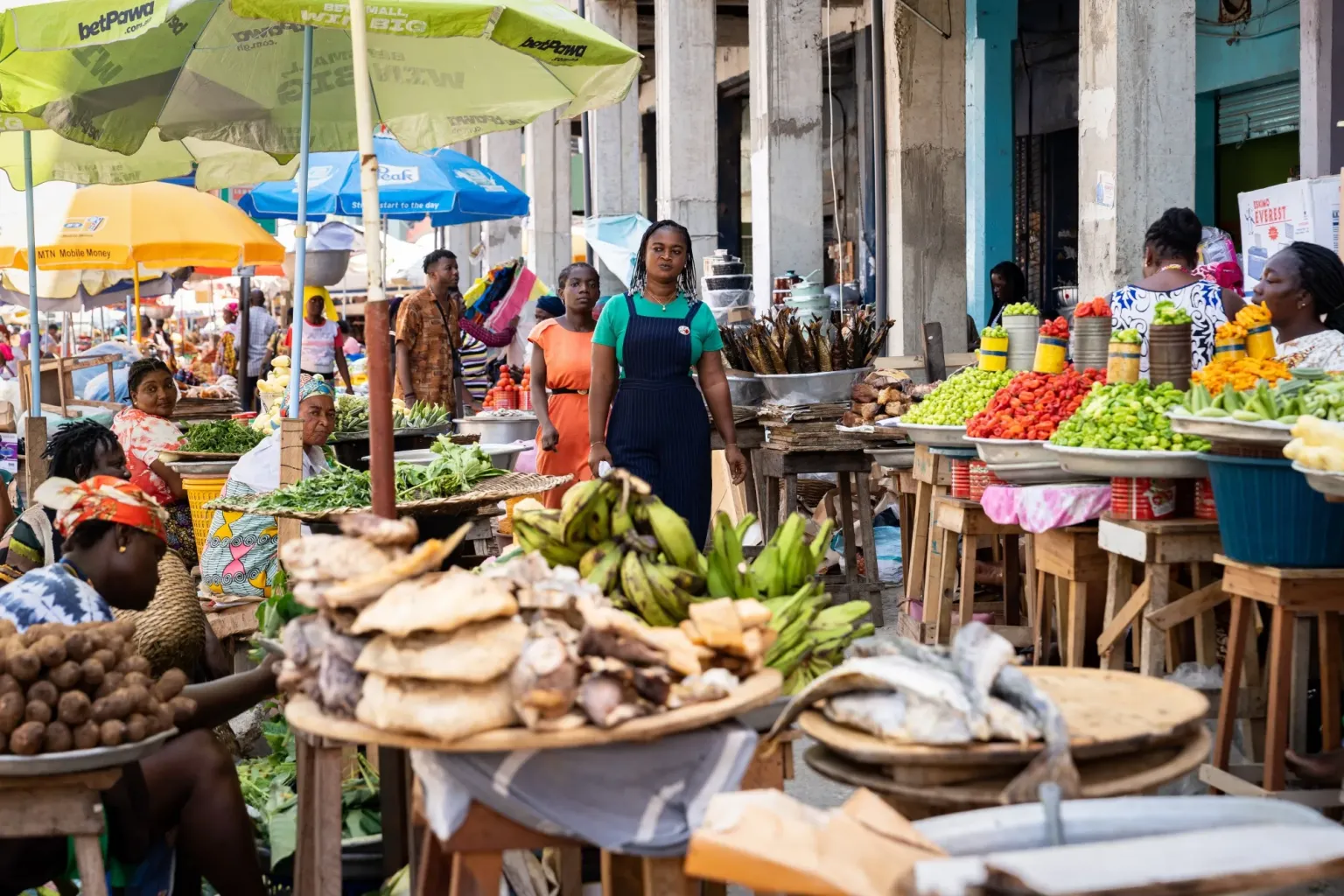
A small shop at Osu Oxford Street can cost over GH¢3,500 per month in rent . Commercial electricity tariffs for small businesses range between GH¢2.60 and GH¢3.20 per kWh . These costs, combined with transport and marketing, mean many startups operate on razor-thin margins .
Telecommunications
For the first time in 2024, the cost of telecoms appeared on the list of poorly rated business components, emphasising areas requiring immediate government attention .
The Big Picture: A Call for Reform
The combination of high energy costs, regulatory compliance burdens, labour expenses, and taxes creates a challenging environment for business operators. The GNCCI’s target of reducing energy costs to around 20 percent of operating costs and the proposed Positive Silence model for regulatory approval represent potential pathways forward.
But as ILAPI’s Kwofie noted, “Digital system damage is a probability between regulatory agencies. These challenges weaken productivity, slow down investment flows, and undermine Ghana’s ability to build a unified economy or drive global transformation” . The opportunity lies in reform: “These challenges also present opportunities to reform, to innovate, collaborate, and accelerate business” .
The entrepreneur who understands the full cost landscape—who builds energy efficiency into their business model, budgets for regulatory compliance, and plans for labour costs—will be far better positioned to survive and thrive. The business environment is challenging, but for those who plan accordingly, the opportunity remains.
QUICK FACTS BOX
| Element | Detail |
|---|---|
| Energy as % of Operating Costs | 30-40% |
| Cost per kWh in Ghana | ~18 cents |
| Electricity Tariff Increase (Jan 2026) | 9.86% |
| Water Tariff Increase (Jan 2026) | 15.92% |
| Power Sector Losses | 32% commercial/technical |
| Annual Power Sector Losses | $80-90 million |
| Startup Capital Lost to Compliance | 20-30% |
| Minimum Wage (Daily) | 18.15 GHS |
| SSNIT Employer Contribution | ~13% |
| Labour Inflation (Dec 2025) | 10.7% |
| GIPC Joint Venture Registration Fee | USD 3,500 equivalent |
| GIPC Wholly Foreign Registration Fee | USD 5,250 equivalent |
| GIPC Trading Registration Fee | USD 7,000 equivalent |
| Airport City Office Rent | $17-45 per sqm |
| Osu Oxford Street Shop Rent | GH¢3,500+ per month |
FREQUENTLY ASKED QUESTIONS
1. What percentage of operating costs does energy account for in Ghana?
Energy currently accounts for between 30 and 40 percent of operating costs for many businesses in Ghana, with manufacturers among the hardest hit .
2. How much does electricity cost per kWh in Ghana?
The cost per kilowatt hour in Ghana is approximately 18 cents, compared to less than five cents in competing economies like China .
3. What are the latest utility tariff increases in Ghana?
Effective January 2026, electricity tariffs increased by 9.86% and water tariffs by 15.92%, resulting in a cumulative increase of 28.14% .
4. How much of startup capital is lost to regulatory compliance?
Startups with a minimum capital of GH¢100,000 risk spending about 20 to 30 percent on business regulation alone .
5. What is the minimum wage in Ghana?
The statutory daily minimum wage in Ghana is currently set at 18.15 GHS for all workers .
6. What are the employer contributions to SSNIT?
Employers must contribute a mandatory 13% share to the SSNIT pension scheme for every local employee, with total employer contributions approximately 13-15% .
7. What is the GIPC registration fee for a foreign-owned business?
Joint-venture enterprises pay the cedi equivalent of US$3,500; wholly foreign enterprises pay US$5,250; and trading enterprises (foreign or joint venture) pay US$7,000 .
8. How much is rent for commercial space in Accra?
A small shop at Osu Oxford Street can cost over GH¢3,500 per month, while office spaces in high-rise buildings at Airport City are priced at $25 to $45 per square meter .
9. What is the Positive Silence model?
Positive Silence would allow businesses to begin operations after meeting requirements without waiting for lengthy bureaucratic approval—if the administration takes longer than a specified time, approval is automatically granted .
10. What are the main concerns for businesses in Ghana?
Taxation policy, cost of telecoms, government bureaucracy, and the regulatory framework are the top concerns, with corruption remaining a persistent issue .
11. How much does labour cost contribute to inflation?
In December 2025, labour recorded a year-on-year inflation rate of 10.7%, more than double the overall building cost inflation rate of 4.4% .
12. What is the GNCCI’s target for energy costs?
The GNCCI is targeting a reduction in energy-related expenditure to about 20 percent of operating costs for businesses, down from the current 30-40 percent
Source: The High Street Business
Disclaimer: Some content on The High Street Business may be aggregated, summarized, or edited from third-party sources for informational purposes. Images and media are used under fair use or royalty-free licenses. The High Street Business is a subsidiary of SamBoad Publishing under SamBoad Business Group Ltd, registered in Ghana since 2014.
For concerns or inquiries, please visit our Privacy Policy or Contact Page.

Samuel Kwame Boadu is a Ghanaian entrepreneur, writer, and digital consultant passionate about creating impactful stories and business solutions. He is the Founder & CEO of SamBoad Business Group Ltd, a dynamic company with subsidiaries in digital marketing, logistics, publishing, and risk management.