


The spread, the scramble, and the small window on the world’s largest market
QUICK FACTS BOX
| Category | Details |
|---|---|
| Industry | Foreign exchange retail / Bureau de change |
| Typical Business Model | Spread-based (buy low, sell high) + volume turnover |
| Primary Revenue Driver | The spread (difference between buy and sell rates) |
| Average Spread (USD/GHS, 2026) | 5–8% (interbank ~10.90, bureau sell ~11.80) |
| Average Spread (GBP/GHS, 2026) | 8–10% (interbank ~14.70, bureau sell ~16.10) |
| Average Spread (EUR/GHS, 2026) | 7–9% (interbank ~12.85, bureau sell ~14.00) |
| Number of Licensed Bureaus | 300–500 (active) |
| Licence Renewal Fee (Biennial, 2025–) | GH¢2,000 (increased from GH¢800) |
| Regulator | Bank of Ghana (BoG) |
| Primary Governing Legislation | Foreign Exchange Act, 2006 (Act 723) |
| Key Customer Segments | Travelers, small businesses, importers, diaspora remittance recipients, students abroad |
EXECUTIVE INTRODUCTION
There is no single “real” exchange rate in Ghana .
The Bank of Ghana publishes an interbank rate — a weighted average of transactions between commercial banks. This morning, that rate might be GH¢10.90 to the dollar. But walk into a forex bureau in Osu or Airport City, and the same dollar will cost you GH¢11.80. Walk into a bank, and it will cost you GH¢11.55 . Three different prices for the same currency, at the same moment, in the same city.
📢 GET DETAILED ARTICLES + JOBS
Join THSB's WhatsApp Channel and never miss a post or opportunity.
This is not inefficiency. This is the structure of Ghana’s tiered foreign exchange market.
At the top is the interbank market — where banks trade large volumes (millions of dollars) at the best rates. Below that is the bank retail market — where banks sell to corporate and high-net-worth customers, adding a margin. At the bottom is the forex bureau market — where licensed bureaus sell to the general public, adding the largest margin of all .
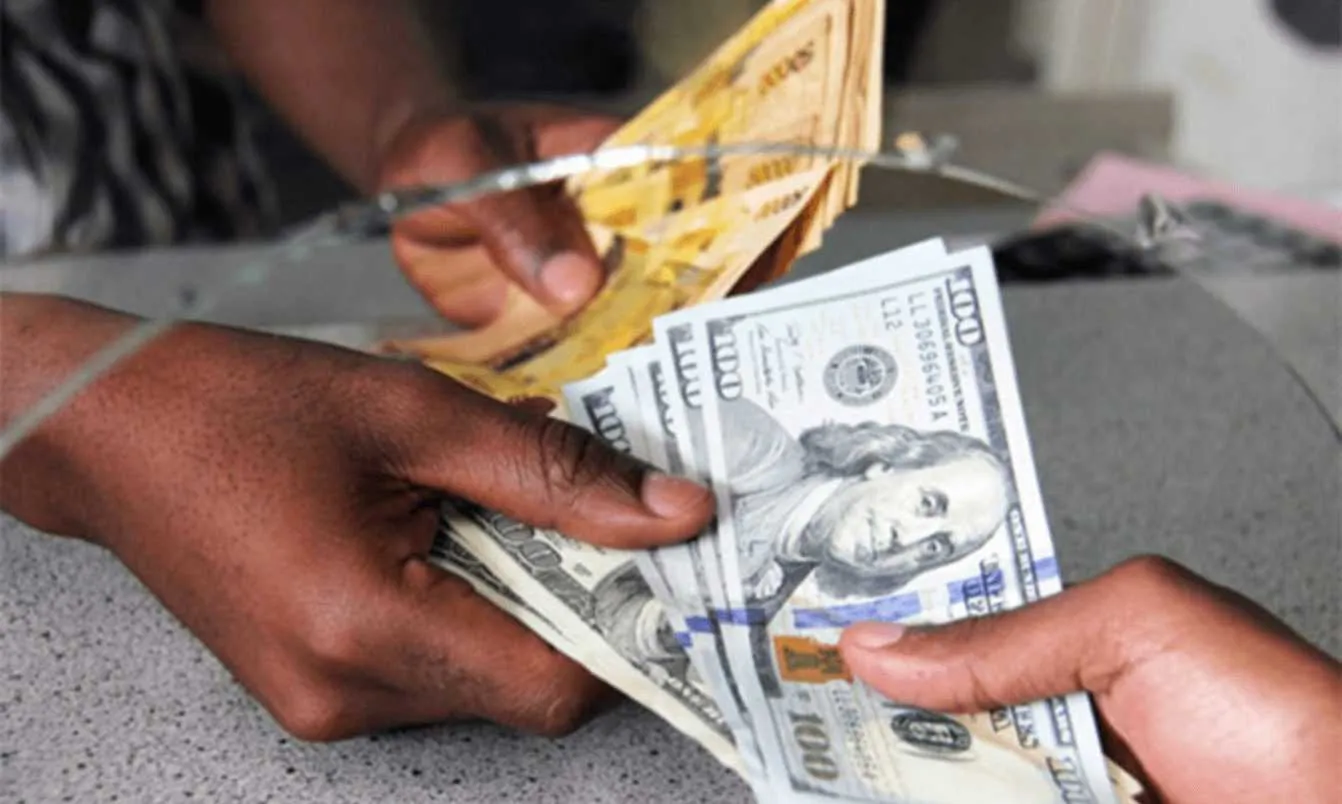
The forex bureau’s profit is not mysterious. It is the spread — the difference between the price at which the bureau buys foreign currency and the price at which it sells. Buy low. Sell high. That is the entire business model. The art lies in managing inventory (float), navigating regulations (the Bank of Ghana is watching), and surviving the inherent risks (currency volatility, fraud, theft).
This profile examines how forex bureaus in Ghana make money: the mechanics of the spread, the cost of holding inventory, the regulatory burden (including the new GH¢2,000 licence fee and the Ghana Card directive), the competitive dynamics, and the structural role these small shops play in Ghana’s foreign exchange ecosystem.
The forex bureau is not a bank. It is not an investment house. It is a retail currency shop — and like any shop, its success depends on location, volume, and the gap between buying price and selling price.
THE FOREX VALUE CHAIN (STRUCTURE)
Ghana’s foreign exchange market is tiered. Understanding the tiers is essential to understanding the bureau’s position.
The Three Tiers of Ghana’s Forex Market
| Tier | Players | Access | Rate (USD/GHS, Feb 2026) | Spread |
|---|---|---|---|---|
| Interbank | Commercial banks, authorised FX brokers | Large corporates, institutional | ~10.90 | 0.1–0.2% |
| Bank retail | Commercial banks (to customers) | Corporate clients, high-net-worth individuals | ~11.55 | 4–6% |
| Forex bureau | Licensed bureaus | General public (cash transactions) | ~11.80 | 7–9% |
The gap is persistent and significant. In February 2026, the interbank rate was GH¢10.90 (selling), while forex bureaus averaged GH¢11.80 — a difference of GH¢0.90 per dollar, or approximately 8% . For the British pound, the gap was even wider: interbank ~GH¢14.70, bureaus ~GH¢16.10 — a difference of GH¢1.40, or nearly 10% .
This gap is not an accident. It reflects:
-
Access to liquidity — Banks have direct access to the interbank market; bureaus do not. Bureaus acquire currency from banks (at bank retail rates) or from walk-in customers .
-
Transaction size — Interbank transactions are millions of dollars. Bureau transactions are hundreds or thousands. Smaller volumes command higher margins.
-
Risk and overhead — Bureaus face higher operational risks (cash handling, fraud) and regulatory costs.
The Forex Bureau’s Supply Chain
Where bureaus get foreign currency:
-
Walk-in customers (retail purchase): Individuals sell foreign currency to the bureau (e.g., a traveler returning from the UK with pounds, a diaspora recipient with dollars). This is the cheapest source — the bureau buys at its “buy” rate, which is lower than the “sell” rate.
-
Banks: Bureaus purchase foreign currency from commercial banks at bank retail rates (above interbank). This is more expensive but necessary to replenish inventory.
-
Other bureaus: Bureaus sometimes trade among themselves to balance inventory.
Where bureaus sell foreign currency:
-
Travelers needing dollars, pounds, or euros for trips abroad
-
Small businesses paying for imports (containers of goods from China, Dubai, Europe)
-
Students paying tuition and living expenses abroad
-
Medical tourists seeking treatment overseas
-
Individuals sending money abroad (school fees, family support)
The Spread: How Bureaus Calculate Their Rates
The BoG calculates and publishes a spot weighted median rate
Simple example:
| Item | Rate (GHS/USD) |
|---|---|
| Interbank rate (benchmark) | 10.90 |
| Bureau buy rate (from customers) | 11.20 |
| Bureau sell rate (to customers) | 11.80 |
| Spread (sell minus buy) | 0.60 |
The bureau buys dollars at GH¢11.20 and sells at GH¢11.80. The GH¢0.60 difference is the gross profit per dollar.
Spread as a percentage: 0.60 / 11.80 = 5.1% gross margin on sell transactions. This is lower than the 7–9% gap between interbank and bureau rates because the bureau’s buy rate is above interbank.
Real-world example (February 2026): With bureaus selling the dollar at GH¢11.80 and interbank at GH¢10.90, the effective markup from interbank is 8.3%. However, bureaus cannot buy at interbank rates. Their cost of acquiring dollars (from banks or walk-in customers) determines their true margin .
BUSINESS MODEL
The forex bureau’s business model is elegantly simple: buy low, sell high, turn inventory quickly.
Revenue Stream 1: The Spread (Core)
This is the primary and often only revenue stream. The bureau sets two rates:
-
Buy rate: The price at which the bureau purchases foreign currency from customers
-
Sell rate: The price at which the bureau sells foreign currency to customers
The difference is the gross profit.
Example transaction (USD):
| Action | Rate | Amount (USD) | GHS Equivalent |
|---|---|---|---|
| Customer A sells $1,000 to bureau | Buy rate: 11.20 | 1,000 | 11,200 (paid to customer) |
| Bureau holds $1,000 inventory | — | 1,000 | — |
| Customer B buys $1,000 from bureau | Sell rate: 11.80 | 1,000 | 11,800 (received from customer) |
| Gross profit | 600 |
Gross margin on this transaction: 5.1%
The volume imperative: A single transaction of $1,000 generates GHS 600 gross profit. A bureau that processes 20 such transactions daily (buy and sell) generates GHS 12,000 daily gross profit — GHS 312,000 monthly (assuming 26 days). This is substantial. However, real-world volumes are rarely this high for a single bureau.
Revenue Stream 2: Inventory Revaluation (Speculative Gain)
When a bureau holds inventory of a foreign currency and that currency appreciates against the cedi, the bureau gains without any transaction. This is inventory revaluation.
Example: A bureau holds 10,000purchasedatanaveragecostofGH¢11.20(112,000 cost). The cedi depreciates, and the sell rate rises to GH¢12.00. The bureau’s inventory is now worth GH¢120,000 on the market — an unrealised gain of GH¢8,000.
The risk is symmetric. If the cedi appreciates (foreign currency falls), the bureau incurs a loss on inventory. This is why bureaus turn inventory quickly — they do not want to hold foreign currency overnight if they can avoid it.
Revenue Stream 3: Ancillary Services (Minor)
Some bureaus offer additional services for fees:
| Service | Typical Fee (GHS) | Notes |
|---|---|---|
| Western Union / MoneyGram payouts | Commission (5–10% of transfer) | Requires agent agreement |
| International money transfers (Ria, WorldRemit) | Commission | |
| Currency delivery (to hotels, offices) | 20–50 per trip | Premium service |
| Encashment of travelers cheques | 1–2% of amount | Declining market |
These ancillaries add 5–15% to revenue for bureaus that offer them. However, most bureaus focus purely on the spread.
COST STRUCTURE (BUREAU LEVEL)
Regulatory Costs (The Rising Burden)
The Bank of Ghana has increased the regulatory burden on forex bureaus significantly in recent years.
| Cost Item | Amount (GHS) | Frequency | Notes |
|---|---|---|---|
| Licence renewal fee | 2,000 | Biennial | Increased from GH¢800 in 2025 |
| Application fee for new licence | 2,000 | One-time | |
| Bank of Ghana supervision fees | Variable | Annual | |
| Ghana Card verification system | Indirect | Ongoing | Compliance with KYC/AML |
The licence fee increase, announced by BoG Governor Dr. Johnson Asiama in October 2025, was justified as necessary “to strengthen oversight, improve compliance, and ensure the long-term sustainability of operations within the foreign exchange sector” .
Operating Costs (Typical Bureau, Accra)
| Cost Item | Monthly (GHS) | Notes |
|---|---|---|
| Rent (small shop, commercial area) | 2,000–5,000 | Osu, Airport City, Circle, Madina |
| Staff salaries (2–4 tellers, manager) | 5,000–12,000 | |
| Security (guards, CCTV, safe) | 1,000–3,000 | Essential for cash business |
| Utilities (lighting, AC, internet) | 500–1,500 | |
| Bank charges (for deposits, transfers) | 500–2,000 | |
| Stationery and receipts | 200–500 | |
| Professional fees (audit, legal) | 500–2,000 | |
| Ghana Card verification system | 200–500 | |
| Total monthly costs | 9,900–26,500 |
The Capital Requirement (Float)
A forex bureau must hold sufficient inventory (foreign currency) to meet customer demand. This is the float.
Recommended float by location:
| Location Type | Typical Daily Transaction Volume (USD equiv.) | Recommended Float (USD) |
|---|---|---|
| Low-traffic (suburban) | 5,000–10,000 | 10,000–20,000 |
| Medium-traffic (market area) | 10,000–25,000 | 25,000–50,000 |
| High-traffic (Airport City, Osu) | 25,000–50,000 | 50,000–100,000 |
At an exchange rate of GH¢11.80/USD, a float of $50,000 requires GH¢590,000 in working capital. This is a significant barrier to entry.
The Ghana Card Directive (Compliance Cost)
In July 2024, the Bank of Ghana mandated that all forex bureaus must verify the Ghana Card of customers before completing any transaction . The directive took effect on August 1, 2024.
Impact on business: The Ghana Association of Forex Bureaux reported a significant slowdown following the directive. Customers who were asked to present their Ghana Card would leave and go elsewhere .
You know Forex Bureaux are profit-oriented institutions and this particular policy that has come has slowed down our business. We are just praying as time goes on and public education goes on, people will get to understand that if you walk to a bureau you must use your Ghana Card or Passport.” — Dr. Alex Akpabli, Vice President, Ghana Association of Forex Bureaux
Compliance costs: Bureaus must invest in card verification terminals or software, train staff, and accept slower transaction times — all of which reduce throughput and profitability.
THE REGULATORY LANDSCAPE
The Bank of Ghana’s Role
The BoG is the primary regulator of forex bureaus under the Foreign Exchange Act, 2006 (Act 723). Key regulatory instruments include:
-
Licensing: No person may carry on the business of dealing in foreign exchange without a licence .
-
Annual/biennial renewal: Licences must be renewed every two years, with fees set by the BoG .
-
Reporting: Bureaus must submit transaction reports to the BoG.
-
KYC/AML: Bureaus must verify customer identities (Ghana Card, passport) and maintain transaction records.
-
Electronic receipts: Bureaus are required to issue electronic receipts for all transactions .
Enforcement Actions
The BoG actively enforces compliance. In 2022, it revoked the licences of two bureaus — Airport City Forex Bureau Ltd and Trade House Forex Bureau Ltd — for non-compliance, including failure to request valid ID and failure to issue electronic receipts .
New Authorisations (2026)
In January 2026, the BoG authorised 12 foreign exchange brokers and 3 cross-border payment providers to operate in the Ghana Interbank FX market .
Newly authorised FX brokers (2026):
IC Securities, SIC Brokers, Serengeti Limited, Sarpong Capital, Terika Financial Services Limited, Savy Africa, GFX Brokers, Regulus, MB&CO Capital Limited, ICAP, Obsidian Achernar, TAW Impact Capital .
Cross-border payment providers: Crown Agents Bank, CSL Capital, StoneX Financial Limited .
These brokers are prohibited from buying or selling foreign exchange for their own accounts, holding or lending foreign exchange, or dealing directly with corporate entities. They operate strictly on a commission basis and must not incorporate commissions into pricing spreads .
MARKET STRUCTURE & COMPETITION
The Bureau Landscape
Estimates of the number of licensed bureaus vary, but active bureaus number in the low hundreds (300–500). Many more are licensed but inactive or operate at very low volume.
Geographic concentration: Most bureaus are located in:
-
Airport City / Airport Residential Area — catering to travelers, expatriates
-
Osu / Oxford Street — high foot traffic, tourists
-
Circle / Kwame Nkrumah Circle — transport hub, commercial
-
Madina / Adenta — residential areas with diaspora connections
-
Tema — port city, importers
Competitive Dynamics
| Competitor | Advantage | Disadvantage |
|---|---|---|
| Other forex bureaus | Proximity, hours | Rate competition erodes spreads |
| Commercial banks | Better rates (closer to interbank) | Inconvenient locations, slower service |
| Informal / black market | No ID requirements, no receipts | Illegal, unsafe, unreliable |
| Online / mobile platforms | Convenience | Limited reach, regulatory uncertainty |
The Black Market (Parallel Market)
Despite liberalisation, a parallel market persists. Informal operators offer rates that may be better or worse than licensed bureaus, with no regulatory oversight. The BoG’s Ghana Card directive may have driven some customers toward informal channels .
The Ghana Association of Forex Bureaux has rejected accusations that bureaus contribute to cedi depreciation, pointing instead to multinational companies repatriating profits .
“Whoever is putting the blame on the association has gotten it completely wrong because what we do is to buy and sell so why should we be blamed as the cause of the depreciation. One of the problems leading to the fall of the cedi is capital flight, and we have so many foreign companies in the system. When they are repatriating profits they won’t take your Ghana Cedi.” — Dr. Alex Akpabli
CHALLENGES & RISKS
1. Exchange Rate Volatility
The cedi’s volatility is the bureau’s greatest risk. A sudden depreciation means inventory appreciates (gain). A sudden appreciation means inventory depreciates (loss). Bureaus that hold large positions overnight are exposed.
The hedge: Turn inventory quickly. Many bureaus close positions daily, holding minimal foreign currency overnight.
2. Cash Handling and Theft
Forex bureaus deal in large amounts of cash. This makes them targets for robbery — both from external criminals and from internal staff.
Mitigation: Safes, CCTV, armed guards (in some locations), limited cash on premises after hours, frequent bank deposits.
3. Regulatory Compliance (The Rising Tide)
The BoG is increasing regulatory pressure. Key compliance burdens:
-
Ghana Card verification — slows transactions, deters customers
-
Electronic receipts — requires investment in POS/printers
-
Licence renewal fees — increased from GH¢800 to GH¢2,000 per biennium
-
Reporting requirements — administrative burden
4. Interbank Rate Transparency
The BoG now publishes daily interbank rates. Customers can see the gap between interbank and bureau rates. This creates pressure on bureaus to narrow spreads — reducing profitability .
5. Competition from Banks
Commercial banks offer better rates (closer to interbank) and can serve corporate customers directly. Banks quoted ~GH¢11.55 when bureaus quoted ~GH¢11.80 in February 2026 . For large transactions, customers will choose banks.
6. Economic Downturns
When the Ghanaian economy contracts, demand for foreign currency falls (fewer imports, fewer travelers). Bureau revenues decline. Fixed costs (rent, salaries) remain.
ECONOMIC & INDUSTRY IMPACT
Historical Contribution
A 1996 study by Kofi A. Osei for the African Economic Research Consortium found that forex bureau taxes brought the government more than 1% of company taxes, plus a licence renewal fee of $1,000 per bureau per year . The bureaus had removed the inconveniences small-scale foreign currency purchasers experienced under the previous exchange control regime and increased the overall level of economic activity .
Modern Contribution
Today, forex bureaus continue to:
-
Provide liquidity to small-scale users of foreign currency (travelers, small importers, students)
-
Reduce the black market by offering a legal, accessible alternative
-
Generate employment (thousands of jobs across the sector)
-
Contribute to tax revenue (licence fees, corporate taxes)
The “Widening Gap” Signal
Analysts monitor the gap between interbank and bureau rates as an indicator of underlying demand pressure. A widening gap suggests tight dollar liquidity and demand-supply mismatches, particularly among retail buyers and small businesses .
The persistent gap shows tight dollar liquidity and demand–supply mismatches, particularly among retail buyers and small businesses that rely on forex bureaus for immediate access to foreign currency. For an import-dependent economy like Ghana, bureau rates often determine the effective cost of foreign exchange for traders. As a result, higher retail forex prices can feed directly into the cost of imported goods, amplifying cost-push inflation pressures.” — Citi Business News analysis
FUTURE OUTLOOK
Short-to-Medium Term (1–5 years)
-
Regulatory pressure intensifies. The BoG will continue to enforce Ghana Card verification, electronic receipts, and AML/KYC compliance. Some bureaus will exit.
-
Spread compression continues. As interbank rates become more transparent, customers will demand narrower spreads. Bureaus must increase volume to maintain profitability.
-
Consolidation. Smaller, undercapitalised bureaus will close or be acquired. Larger bureaus with prime locations and efficient operations will gain market share.
-
Digital integration. Some bureaus may adopt online platforms for rate quotations and transaction initiation (though physical cash will remain central).
Long-Term (5–10 years)
Scenario 1: Continued Relevance (Probability: 60%)
Forex bureaus remain the primary retail access point for foreign currency. They adapt to digital payments, integrate with mobile money, and offer remittance services. The gap between interbank and bureau rates narrows but persists.
Scenario 2: Decline (Probability: 30%)
Banks expand their retail forex operations, offering better rates and more convenient locations (branches, ATMs with forex, online platforms). The bureau sector shrinks to serve only niche markets (tourists, informal traders).
Scenario 3: Formalisation and Professionalisation (Probability: 10%)
The BoG introduces stricter capital requirements, professional qualifications for bureau operators, and a national forex bureau association with self-regulatory powers. The sector becomes more professional, with fewer but larger, better-capitalised players.
Strategic Risks to Monitor
| Risk | Probability | Impact | Mitigation |
|---|---|---|---|
| Further BoG compliance requirements (e.g., biometric verification) | Medium | High | Invest in technology, train staff |
| Cedi stabilisation (reducing demand for USD) | Low | Medium (in a stable currency, bureaus have less business) | Diversify into other currencies, remittances |
| Digital currency adoption (e-Cedi) | Low | Medium | Integrate e-Cedi services if launched |
| Economic crisis reducing diaspora remittances | Medium | High | Maintain lean cost structure, preserve capital |
THSB CONCLUSION
The forex bureau is a deceptively simple business. Buy low. Sell high. That is the entire model. But the simplicity masks a high-risk, capital-intensive, regulatory-burdened operation that requires constant attention to inventory, security, and compliance.
The numbers tell a clear story: a well-located bureau with $50,000–100,000 float can generate GHS 300,000–500,000 monthly gross profit from spreads. After operating costs (GHS 10,000–25,000 monthly), net profit is substantial — GHS 200,000–400,000 monthly for a high-volume operation. This is excellent money by Ghanaian standards.
But the barriers are real. The GH¢2,000 licence fee (biennial) is modest, but the working capital requirement (GH¢500,000–1 million) is not. The Ghana Card directive has slowed business. The spread is under pressure from interbank transparency. And the BoG is watching — revoking licences for non-compliance, increasing fees, and demanding more reporting.
The bureaus that survive will be those that comply fully, manage inventory efficiently, and maintain prime locations with high foot traffic. The marginal operator — undercapitalised, non-compliant, poorly located — will exit.
The forex bureau is not a business for the faint-hearted. But for those who understand the spread, manage the float, and respect the regulator, it remains one of the most profitable small businesses in Ghana’s commercial landscape.
FAQ SECTION
1. How do forex bureaus in Ghana make money?
Forex bureaus profit from the spread — the difference between the price at which they buy foreign currency from customers and the price at which they sell it. For example, buying dollars at GH¢11.20 and selling at GH¢11.80 yields a GH¢0.60 gross profit per dollar (approximately 5% margin) .
2. What is the average spread for a forex bureau in Ghana?
The spread varies by currency and market conditions. In February 2026, bureaus sold the US dollar at an average of GH¢11.80, while interbank rates were ~GH¢10.90 — a gap of 8%. However, the bureau’s true margin (sell rate minus their cost) is lower, typically 3–7% .
3. How much does a forex bureau licence cost in Ghana?
The biennial licence renewal fee was increased from GH¢800 to GH¢2,000 in October 2025. New licence applications also incur a fee of GH¢2,000 .
4. What is the Ghana Card directive for forex bureaus?
Effective August 1, 2024, the Bank of Ghana mandated that all forex bureaus must verify the Ghana Card of customers before completing any transaction. The directive has slowed business and driven some customers to informal channels .
5. How much capital is needed to start a forex bureau in Ghana?
Beyond the licence fee, the primary capital requirement is float (inventory of foreign currency). A medium-traffic bureau needs $25,000–50,000 float, which at current rates requires GH¢300,000–600,000 in working capital. Prime locations require more.
6. Why is there a difference between interbank rates and bureau rates?
The interbank rate applies to large-volume transactions between banks. Bureaus, dealing in smaller amounts and facing higher operational risks, add a markup to cover costs and profit. Banks also charge a markup but less than bureaus .
7. Are forex bureaus regulated in Ghana?
Yes. The Bank of Ghana regulates all licensed bureaus under the Foreign Exchange Act, 2006 (Act 723). Bureaus must comply with KYC/AML rules, issue electronic receipts, and submit transaction reports. Non-compliance can lead to licence revocation .
8. Do forex bureaus contribute to cedi depreciation?
The Ghana Association of Forex Bureaux denies this, pointing instead to multinational companies repatriating profits. Bureaus argue that they provide a service by channelling foreign currency into the economy and do not set the underlying exchange rate .
9. How many forex bureaus are there in Ghana?
Estimates vary, but active licensed bureaus number in the low hundreds (300–500). Many more are licensed but inactive. Most are concentrated in Accra (Airport City, Osu, Circle, Madina) and other major cities.
10. What is the most profitable currency for a forex bureau in Ghana?
The US dollar is the highest volume and most profitable due to demand from importers, travelers, and remittance recipients. The British pound and euro also generate significant business, but volumes are lower.
11. What are the biggest risks for a forex bureau?
Exchange rate volatility (inventory revaluation losses), theft and robbery (cash handling), regulatory compliance (Ghana Card directive, reporting), and competition from banks (better rates).
12. What is the future of forex bureaus in Ghana?
The sector faces regulatory pressure and spread compression. Smaller bureaus will exit. Survivors will be larger, better-capitalised operations with prime locations and efficient compliance systems. Digital integration (online rate quotes, mobile money linkage) may emerge.
Source: The High Street Business
Disclaimer: Some content on The High Street Business may be aggregated, summarized, or edited from third-party sources for informational purposes. Images and media are used under fair use or royalty-free licenses. The High Street Business is a subsidiary of SamBoad Publishing under SamBoad Business Group Ltd, registered in Ghana since 2014.
For concerns or inquiries, please visit our Privacy Policy or Contact Page.

Samuel Kwame Boadu is a Ghanaian entrepreneur, writer, and digital consultant passionate about creating impactful stories and business solutions. He is the Founder & CEO of SamBoad Business Group Ltd, a dynamic company with subsidiaries in digital marketing, logistics, publishing, and risk management.