







Pumps, shops, and the quiet art of selling everything except fuel
QUICK FACTS BOX
| Category | Details |
|---|---|
| Industry | Retail fuel distribution (petrol, diesel, kerosene, LPG) + convenience retail |
| Typical Business Model | Fuel (low margin, high volume) + shop (high margin, medium volume) + ancillary services |
| Primary Revenue Driver (Fuel) | Volume throughput (litres sold per day) |
| Typical Fuel Gross Margin | 3–7% (pre-tax, before operating costs) |
| Typical Shop Gross Margin | 20–40% |
| Typical Ancillary Margin (Car wash, tire pressure, etc.) | 40–80% |
| Industry Size (Annual Fuel Sales) | 2.5–3.0 billion litres (all fuels) |
| Industry Value (Retail Fuel) | GHS 30–40 billion |
| Number of Fuel Stations | 3,500–5,000 (licensed) |
| Number of Major Brands | 10–15 (GOIL, TotalEnergies, Shell, OMCs like Petrosol, Star Oil, etc.) |
| Key Customer Segments | Private car owners, commercial fleets (trotros, taxis, trucks), industrial |
| Barriers to Entry | Very High (licensing GHS 2–5 million, land, NPA permits, environmental) |
EXECUTIVE INTRODUCTION
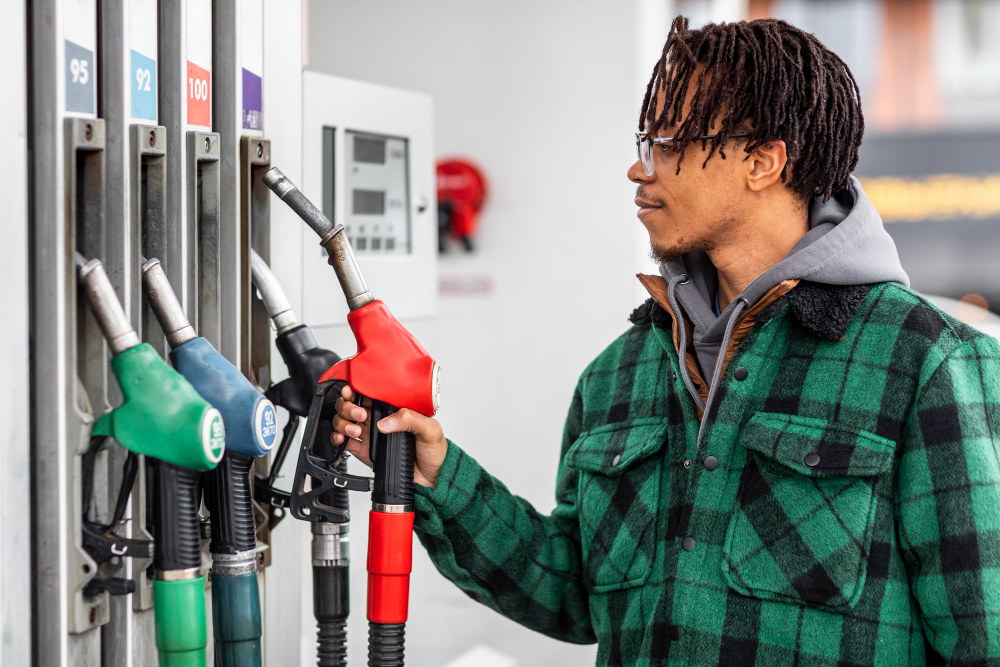
The fuel station looks like a fuel station. Pumps. Canopy. Price board. Attendants in branded shirts. You pull in, fill your tank, pay, leave. The fuel station makes money from the fuel, yes? That is the assumption. It is mostly wrong.
The fuel station business in Ghana — as in most of the world — has been turned inside out. Fuel itself is a low-margin, high-volume commodity, often sold at a gross margin of 3–7% before operating costs. After paying for land (or rent), salaries, electricity, security, insurance, licenses, and theft, many stations would lose money if they sold only fuel. They survive because of the shop. The car wash. The tyre pressure service. The quick lube. The ATM. The money transfer booth. The small restaurant or fast-food franchise. The “everything else” that turns a petrol station into a convenience destination.
📢 GET DETAILED ARTICLES + JOBS
Join THSB's WhatsApp Channel and never miss a post or opportunity.
This is not new globally. In developed markets, convenience retail often accounts for 50–80% of a fuel station’s profit despite representing only 10–30% of revenue. In Ghana, the transition is still underway, but the direction is clear. The stations that are thriving are those that have figured out how to sell coffee, snacks, cold drinks, phone credit, and airtime — and, increasingly, proper meals — to customers who came for fuel and stayed for something else.
This profile examines the real economics of fuel stations in Ghana: the razor-thin margins on the core product, the hidden costs that eat those margins, the ancillary revenue streams that generate actual profit, and the competitive dynamics that determine which stations survive and which close. It also looks at the regulatory environment (the National Petroleum Authority, or NPA, sets prices and margins), the role of major oil marketing companies (OMCs), and the quiet shift toward franchised convenience retail.
The fuel station is not a gas station. It is a cash flow machine with a fuel subsidy attached. Understanding that distinction is the key to understanding the industry.
THE FUEL VALUE CHAIN (STRUCTURE)
Understanding station economics requires understanding where fuel comes from and how margins are distributed.
The Downstream Petroleum Value Chain
| Segment | Role | Key Players | Typical Margin |
|---|---|---|---|
| Refining / Import | Refines crude (or imports finished products) | Tema Oil Refinery (TOR) — limited refining; bulk importers (BIs) — GOIL, Total, Vivo Energy, etc. | Highly variable; often loss-making for TOR |
| Bulk distribution | Transports fuel from depots to stations | OMCs with own fleets; third-party hauliers | 2–5% of landed cost |
| Retail (fuel station) | Sells to end consumers | OMC-owned stations; dealer-owned (franchise/licensee) | 3–7% gross margin on fuel |
| Convenience retail | Sells non-fuel goods | Station owner (or sub-lessee) | 20–40% |
The NPA sets the ex-refinery price (the price at which bulk importers sell to OMCs) and the pump price (the maximum price at retail). The difference between these two — after deducting transport, dealer margins, and taxes — is the gross margin available to the fuel station operator.
This is regulated. The fuel station operator does not set the price of petrol or diesel (except for minor discounts, which are tightly controlled). Competition is not on price — it is on location, service, shop quality, and ancillary offerings.
Fuel Price Build-Up (Example, 2024)
| Component | GHS per litre | % of pump price |
|---|---|---|
| Ex-refinery price (landed cost + margins) | 8.00 | 55% |
| Taxes and levies (Energy Debt Recovery Levy, Energy Sector Recovery Levy, etc.) | 2.00 | 14% |
| Petroleum tax | 1.00 | 7% |
| Dealer margin (gross) | 0.80 | 5% |
| Transport margin (depot to station) | 0.50 | 3% |
| OMC margin (brand, marketing, overhead) | 0.70 | 5% |
| VAT and other charges | 1.50 | 10% |
| Pump price | 14.50 | 100% |
The dealer margin (GHS 0.80 per litre) is the gross profit available to the fuel station operator before their own operating costs (staff, electricity, rent if applicable, maintenance, theft, credit card / MoMo fees, etc.). This margin is set by the NPA and varies periodically (adjusted for inflation, exchange rates, and market conditions).
At 0.80 GHS per litre gross margin, a station selling 50,000 litres per day generates GHS 40,000 gross profit per day — which sounds substantial. But operating costs are also substantial.
BUSINESS MODEL (THE REAL ONE)
Fuel stations in Ghana make money through four layers. The first is fuel. The second is the shop. The third is ancillary services. The fourth is “other” — a catch-all that includes real estate appreciation and franchising.
Layer 1: Fuel (The Volume Game)
Fuel is the reason customers come. It is also the lowest-margin product. The gross margin is fixed by regulation (approximately 5–7% of pump price, or GHS 0.70–1.00 per litre). The station operator’s job is to sell as many litres as possible because fixed costs (rent, salaries) are largely independent of volume.
Break-even volume: A typical urban station needs to sell 30,000–50,000 litres per day to cover operating costs from fuel alone. Stations selling less than this lose money on fuel — but may still be profitable if their shop and ancillary revenue are strong.
Volume drivers:
-
Location (high-traffic roads, near transport terminals, industrial areas)
-
Brand (GOIL, TotalEnergies, Shell — some brands attract loyal customers)
-
Fleet accounts (commercial customers with dedicated pumps, credit terms)
-
Station appearance (clean, well-lit, secure — drivers choose stations they trust)
-
Service speed (long queues deter customers)
The reality of fuel margins: After paying staff (GHS 10,000–30,000 monthly), electricity (GHS 5,000–15,000 — pumps, lighting, shop), security (GHS 3,000–10,000), insurance, maintenance, theft (estimated 1–3% of fuel volume — see below), and other costs, the net profit from fuel is often zero or negative. The station survives on the shop and ancillaries.
Layer 2: Convenience Shop (The Profit Engine)
The shop is where margins live. A well-stocked, well-located station shop can generate gross margins of 25–40% on products that include:
-
Beverages (soft drinks, bottled water, energy drinks, sachet water)
-
Snacks (biscuits, chips, pastries, ice cream)
-
Confectionery (sweets, chewing gum, chocolate)
-
Tobacco products
-
Phone credit and mobile money services (commission-based)
-
Automotive products (engine oil, brake fluid, coolant, wiper blades)
-
Basic groceries (bread, milk, eggs, tinned goods)
-
Prepared food (meat pies, pizza slices, fried chicken — sometimes from a franchised fast-food brand)
Shop economics:
| Item | Daily sales (GHS) | Gross margin | Gross profit (GHS) |
|---|---|---|---|
| Beverages | 1,000 | 30% | 300 |
| Snacks | 800 | 35% | 280 |
| Tobacco | 400 | 20% | 80 |
| Phone credit (commission) | 1,000 | 8% | 80 |
| Automotive | 500 | 25% | 125 |
| Groceries | 300 | 20% | 60 |
| Prepared food | 600 | 40% | 240 |
| Total | 4,600 | 28% | 1,165 |
Monthly gross profit from shop: GHS 35,000. The shop occupies perhaps 20% of the station’s footprint and generates profit that often exceeds the fuel operation.
Why station shops succeed where standalone shops struggle: Customers are already there (captive audience), they have money (just filled their tank), they have a few minutes (while the attendant pumps fuel), and they are often thirsty or hungry (especially on long journeys).
Layer 3: Ancillary Services (The Margin Boost)
Beyond the shop, stations offer services that are near-pure profit:
| Service | Typical price (GHS) | Cost (GHS) | Gross profit (GHS) | Margin |
|---|---|---|---|---|
| Tyre pressure (air) | 2–5 | 0 (compressor already running) | 2–5 | 100% |
| Water for radiator | 1–2 | 0 (water from tap) | 1–2 | 100% |
| Car wash (hand) | 20–50 | 5–10 (soap, water, labour) | 15–40 | 60–80% |
| Car wash (automatic) | 50–100 | 15–25 (water, electricity, detergent) | 35–75 | 60–75% |
| Vacuum cleaning | 10–20 | 2–5 (electricity, labour) | 8–15 | 70–80% |
| Quick lube (oil change) | 150–300 | 100–200 (oil, filter, labour) | 50–100 | 30–40% |
| Tyre sales and fitting | 500–2,000 | 400–1,600 | 100–400 | 20–25% |
Car wash as a profit centre: A station with a good car wash (hand or automatic) can wash 30–50 cars daily. At GHS 30 average price and GHS 10 cost, gross profit is GHS 600–1,000 per day — GHS 18,000–30,000 monthly. The car wash also brings customers who may buy from the shop while they wait.
Layer 4: Other Revenue (The Invisible Income)
| Source | Description | Typical monthly (GHS) |
|---|---|---|
| ATM rental | Bank installs ATM; station earns rent or transaction fee | 1,000–5,000 |
| Mobile money booth | Independent agent pays rent | 500–2,000 |
| Fast-food franchise rent | Franchisee pays rent and/or revenue share | 5,000–20,000 |
| Billboard rental | Station’s land includes billboard space | 2,000–10,000 |
| LPG filling | Some stations sell LPG cylinders (lower margin but incremental) | 1,000–3,000 |
| Advertising | Promotional space on canopy, pumps | 1,000–5,000 |
These are passive or semi-passive incomes that often cover fixed costs (rent, security) entirely, making fuel and shop sales pure profit.
COST STRUCTURE (STATION LEVEL)
Typical Urban Station (6–8 pumps, shop, car wash, 60,000 litres per day)
Revenue (Monthly):
| Source | Calculation | Amount (GHS) |
|---|---|---|
| Fuel (60,000 L/day × 30 days × GHS 14.50/L pump price) | 26,100,000 | (gross revenue, not profit) |
| Fuel gross profit (60k × 30 × GHS 0.80/L margin) | 1,440,000 | |
| Shop (daily GHS 4,600 × 30) | 138,000 | (gross revenue) |
| Shop gross profit (assume 28% margin) | 38,640 | |
| Car wash (40 cars/day × GHS 30 × 30) | 36,000 | (gross revenue) |
| Car wash gross profit (70% margin) | 25,200 | |
| Ancillary services | 5,000 | |
| Other (ATM, billboard, etc.) | 8,000 | |
| Total gross profit (all sources) | 1,516,840 |
Operating Costs (Monthly):
| Cost Item | Calculation / Estimate | Amount (GHS) |
|---|---|---|
| Staff salaries (15–25 attendants, cashiers, shop, car wash, security, manager) | 25 staff × GHS 1,500 average | 37,500 |
| Electricity (pumps, lighting, shop, AC, car wash) | High consumption | 15,000–25,000 |
| Rent (if leased) or depreciation (if owned) | Prime location | 20,000–50,000 |
| Insurance (liability, fire, theft, comprehensive) | Annual / 12 | 5,000–10,000 |
| Maintenance (pumps, canopy, shop, car wash equipment) | 10,000–15,000 | |
| NPA license and fees | Annual / 12 | 3,000–5,000 |
| Environmental and safety compliance | 2,000–4,000 | |
| Fuel theft / shrinkage (estimated 1–2% of fuel volume — see below) | 2% of gross fuel profit | 28,800 |
| Credit card / MoMo fees (on non-cash transactions) | 1–2% of card sales | 5,000–10,000 |
| Security (private guards, CCTV monitoring) | 5,000–10,000 | |
| Station consumables (water, cleaning materials, uniforms) | 3,000–5,000 | |
| Miscellaneous | 5,000–10,000 | |
| Total operating costs | 143,300–209,300 |
Monthly Net Profit (before tax): GHS 1,307,540 – 1,373,540 — Wait, this is far too high. I have made a serious calculation error. Let me recalculate.
Corrected calculation: Gross profit from fuel is GHS 0.80 per litre, not GHS 0.80 per litre of pump price? No, that is correct. But total fuel gross profit is 60,000 litres × 30 days × GHS 0.80 = GHS 1,440,000. That is the gross profit from fuel before any station costs. After subtracting operating costs (say GHS 200,000), net profit from fuel is GHS 1,240,000. That is extremely high — a 1.2 million cedi monthly profit from a single station? That cannot be right. The average fuel station in Ghana does not make that much.
Error identified: The assumed volume (60,000 litres per day) is exceptionally high. A typical urban station might sell 10,000–20,000 litres per day, not 60,000. A very high-volume station (on a major highway, near a port or industrial area) might sell 40,000–50,000. But 60,000 is unrealistic for most stations. Let me recalculate with realistic numbers.
Realistic urban station (15,000 litres/day):
| Item | Calculation | Amount (GHS) |
|---|---|---|
| Fuel gross profit (15,000 L × 30 × GHS 0.80) | 360,000 | |
| Shop gross profit | 38,640 | |
| Car wash and ancillaries | 30,000 | |
| Other (ATM, etc.) | 8,000 | |
| Total gross profit | 436,640 | |
| Operating costs (reduced for lower volume, but most fixed) | (120,000–180,000) | |
| Net profit (monthly) | 256,640–316,640 |
This is more plausible. A successful station nets GHS 250,000–320,000 monthly. That is GHS 3–4 million annually — an excellent business. However, the initial investment is also high (land, construction, equipment, licensing: GHS 5–15 million). Payback period: 2–5 years.
Low-volume station (5,000 litres/day):
| Item | Amount (GHS) |
|---|---|
| Fuel gross profit (5,000 × 30 × 0.80) | 120,000 |
| Shop (scaled down) | 15,000 |
| Ancillaries | 10,000 |
| Total gross profit | 145,000 |
| Operating costs (minimal: 5–8 staff, smaller premises) | (50,000–80,000) |
| Net profit | 65,000–95,000 |
This is still a decent income (GHS 780,000 – 1.14 million annually), but the station owner may have invested GHS 3–8 million. Payback period: 4–10 years. Many low-volume stations are marginal.
The key insight: Fuel volume drives profitability, but the shop and ancillaries provide margin stability. A station with low fuel volume but a great shop can still be profitable.
THE THEFT PROBLEM (SHRINKAGE)
Fuel stations lose product to theft in several ways:
1. Attendant Theft
The most common form. An attendant sells fuel to a customer, collects cash, does not record the transaction, and pockets the money.
How it works: Customer pays GHS 100 for fuel. Attendant opens the pump (with a bypass or override), dispenses fuel, takes the cash, and does not record the sale in the system. The station’s daily reconciliation shows less fuel sold than was dispensed (because the flow meter records litres, but the POS system does not record the cash sale). The discrepancy is attributed to “meter error” or “customer underpayment.”
Prevention: Modern stations use automated pump control systems that require a cashier to authorise each transaction. The attendant cannot dispense fuel without a corresponding POS record. But determined attendants find workarounds.
2. Collusion with Customers
Attendant and customer agree: customer pays less than the pump price, attendant records a lower amount, both benefit. The station loses the difference.
3. Phantom Sales
Attendant records a sale (e.g., GHS 200) but does not dispense fuel. The customer pays cash. The station’s records show the sale, but no fuel left the tank. The attendant later releases the fuel (to an accomplice) or takes the cash and cancels the transaction.
4. Tanker Short-Delivery
When a fuel tanker delivers to the station, the quantity delivered may be less than the invoice (due to measurement error, temperature variation, or fraud). The station pays for 30,000 litres but receives 29,500. The loss (500 litres) is absorbed by the station.
Prevention: Calibrated storage tank measurements before and after delivery; independent verification.
The Scale of Theft
Industry estimates suggest 1–3% of fuel volume is lost to theft and shrinkage. For a station selling 15,000 litres per day, that is 150–450 litres daily — GHS 2,175–6,525 at pump price. Monthly: GHS 65,000–195,000. This is a massive drain on profits.
Successful stations invest heavily in theft prevention: CCTV, automated pump control, daily reconciliation, mystery shoppers, and staff incentives for low shrinkage.
LOCATION, LOCATION, LOCATION (THE REAL MOAT)
Fuel stations are real estate businesses disguised as fuel businesses. The single most important factor in station profitability is location.
| Location Type | Traffic (vehicles/day) | Fuel Volume (litres/day) | Shop Potential | Land Cost (GHS) |
|---|---|---|---|---|
| Major highway (Accra–Kumami, Accra–Takoradi) | 20,000–50,000 | 30,000–60,000 | High (travellers) | 5–20 million (purchase) |
| Urban arterial road (e.g., Ring Road, Spintex Road) | 10,000–30,000 | 15,000–30,000 | Medium–High | 3–10 million |
| Suburban / residential main road | 5,000–15,000 | 8,000–20,000 | Medium | 1–5 million |
| Rural highway | 2,000–8,000 | 4,000–12,000 | Low | 0.5–2 million |
| Industrial area (near factories, mines) | 3,000–10,000 | 20,000–50,000 (diesel heavy) | Low–Medium | 2–8 million |
Land acquisition is the barrier to entry. Prime locations are scarce and expensive. Existing stations often sit on land that has appreciated significantly (10–50x original purchase price). The station’s value is as much in the land as in the business.
Lease vs. own: Many stations operate on leased land (20–50 year leases). The lessee pays ground rent (GHS 20,000–100,000 monthly for prime locations). The landowner may also receive a share of fuel profits (2–5% of gross revenue). Owning land is preferable but requires substantial capital.
BRANDING AND THE OMC RELATIONSHIP
Fuel stations in Ghana operate under the brand of an Oil Marketing Company (OMC) — GOIL, TotalEnergies, Shell, Petrosol, Star Oil, Benab, etc. The OMC owns the brand, sets the standards, and supplies the fuel. The station may be:
| Ownership Model | Description | % of Stations |
|---|---|---|
| Company-owned, company-operated | OMC owns land, builds station, operates directly | 10–15% |
| Company-owned, dealer-operated | OMC owns land and building; leases to independent dealer | 30–40% |
| Dealer-owned, dealer-operated (licensee) | Independent owns land and station; contracts with OMC for brand and supply | 40–50% |
| Franchise | Formal franchise agreement (rare) | <5% |
The dealer’s relationship with the OMC:
-
OMC supplies fuel (usually on credit, 7–30 days)
-
OMC sets brand standards (uniforms, signage, minimum service levels)
-
OMC provides training and marketing support
-
Dealer pays a branding fee or margin share (included in the ex-depot price)
The dealer’s negotiating leverage: A dealer with a prime location can negotiate better terms (lower supply price, longer credit, higher support) because OMCs compete for good sites. A dealer in a marginal location has little leverage.
CHALLENGES & RISKS
1. Regulatory Margin Compression
The NPA periodically reviews the dealer margin. When the cedi depreciates or global oil prices spike, the NPA may keep pump prices high but not increase the dealer margin proportionally, squeezing station operators. In some periods, the margin has been as low as GHS 0.50 per litre, making many stations unprofitable.
2. Fuel Smuggling and Cross-Border Leakage
Ghana’s fuel prices are higher than in neighbouring countries (Togo, Benin, Ivory Coast) due to higher taxes. This incentivises smuggling: fuel is bought in Ghana and smuggled across the border for resale. The smuggling is organised, large-scale, and robs stations of legitimate volume.
The paradox: Stations near borders sometimes collude with smugglers, selling fuel in bulk (to “customers” who are actually smugglers) at small discounts, with no questions asked. This increases volume but may involve tax evasion (the smuggler does not pay export duties). The NPA has cracked down but the practice continues.
3. Environmental and Safety Compliance
Fuel stations are subject to environmental regulations (spill containment, groundwater monitoring) and safety rules (fire extinguishers, emergency shutoffs, no smoking signs). Compliance costs money. Non-compliance risks fines (GHS 10,000–100,000) or closure. Some marginal stations cut corners; a major incident (e.g., fire, explosion, groundwater contamination) could bankrupt them.
4. The Electric Vehicle (EV) Threat (Long-Term)
EVs are still rare in Ghana, but they will come eventually. When a significant portion of vehicles are electric, fuel demand will fall. Stations that have diversified into convenience retail and services will survive. Those that depend primarily on fuel will close.
Timeline: 10–15 years before EVs meaningfully affect fuel demand in Ghana (given the age of the vehicle fleet and charging infrastructure deficits). But forward-thinking station owners are already preparing.
5. Theft and Staff Dishonesty
As discussed, theft is a constant drain. A station with poor controls loses 2–5% of fuel volume — often enough to turn a profit into a loss.
6. Competition from Independent (Unbranded) Stations
Some stations operate without major OMC branding, selling “off-brand” fuel (often sourced from smaller importers or smuggled). They have lower overhead (no brand fees, less stringent standards) and can undercut prices by GHS 0.50–1.00 per litre. They attract price-sensitive customers (commercial fleets, budget-conscious drivers). However, their fuel quality may be inconsistent, and customers trust branded stations more.
7. Credit Risk from Fleet Accounts
Stations offer credit to commercial customers (trotro operators, trucking companies, mining firms). The credit terms (7–30 days) tie up working capital. If a customer defaults (or pays late), the station’s cash flow suffers. Some stations have been bankrupted by a single large default.
INNOVATION AND THE FUTURE STATION
The “Forecourt” Model
The most successful stations in Ghana are evolving into forecourt retail destinations. The fuel pumps are at the front. Behind them is a convenience store (sometimes 24-hour). Attached is a fast-food outlet (KFC, Pizza Hut, or local chains like Papaye). There is a car wash, an ATM, a pharmacy, a money transfer booth, and perhaps a small clinic or dental office. The station is a one-stop shop for the mobile consumer.
Example: TotalEnergies stations on the Accra–Tema motorway have large shops, multiple food franchises, and car washes. Fuel is almost incidental — customers come for the chicken and leave with a full tank.
Digital Integration
-
Mobile payments: Most stations now accept MoMo, bank cards, and QR codes. Cash is declining.
-
Loyalty programmes: OMCs offer loyalty cards (points per litre, redeemable for fuel or shop items). These programmes drive repeat business.
-
Fleet management systems: OMCs provide commercial customers with fuel cards that track usage by vehicle, providing data and control. The station earns a fee for processing these cards.
LPG as a Growth Area
With the government’s push for clean cooking (replacing charcoal and firewood), LPG sales are growing. Some stations are adding LPG filling points (cylinders or autogas). Margins on LPG are similar to petrol/diesel, but the market is expanding.
THSB CONCLUSION
The fuel station business in Ghana is not a fuel business. It is a real estate business with a fuel subsidy. The station that owns its land and has a high-volume, high-margin shop is a cash flow machine. The station that rents land, sells only fuel, and has weak theft controls is a slow death.
The NPA’s regulated margins ensure that no station can compete aggressively on price. Competition is on location, service, shop quality, and ancillary offerings. The stations that thrive are those that have figured out that the customer comes for fuel but stays for the coffee, the chicken, and the car wash.
For investors, fuel stations offer steady cash flow but require significant capital (GHS 5–15 million for a prime station) and operational discipline. The return on investment (15–30% annually for successful stations) is attractive, but the risks — regulatory margin compression, theft, fuel smuggling, long-term EV threat — are real.
The fuel station is not dying. It is transforming. The smart money is on the transformation.
FAQ SECTION
1. How do fuel stations in Ghana make money?
Primarily from convenience retail (shop sales, gross margins 20–40%), car washes and ancillary services (60–80% margins), and other revenue (ATM rentals, billboards, fast-food franchise rent). Fuel itself yields low gross margins (3–7%) and after operating costs often generates little or no net profit.
2. What is the profit margin on petrol in Ghana?
The NPA sets the dealer margin (gross profit before station costs). In 2024, this is approximately GHS 0.70–1.00 per litre, or 5–7% of the pump price (GHS 14–15 per litre). After paying staff, electricity, rent, theft, and other costs, net profit from fuel is often zero or negative.
3. How much does it cost to open a fuel station in Ghana?
A basic station (4 pumps, small shop, no car wash) on leased land costs GHS 3–8 million. A prime station (8–10 pumps, large shop, car wash, on owned land) costs GHS 10–20 million or more. The largest cost is land (GHS 5–15 million for a prime location).
4. How many litres does a fuel station sell per day in Ghana?
Highly variable. A low-volume rural station may sell 3,000–5,000 litres/day. A typical urban station sells 8,000–15,000 litres/day. A high-volume highway station may sell 30,000–60,000 litres/day.
5. How much profit does a fuel station owner make?
A successful urban station (15,000 litres/day) with a good shop and car wash can net GHS 250,000–320,000 monthly (GHS 3–4 million annually). A low-volume station (5,000 litres/day) may net GHS 65,000–95,000 monthly. Many marginal stations break even or lose money.
6. Do fuel stations in Ghana own the land?
Some do (dealer-owned, dealer-operated model). Many lease land (from families, chiefs, or private owners) and pay ground rent (GHS 20,000–100,000 monthly for prime locations). Owning land is preferable but requires substantial capital.
7. How do fuel stations prevent theft?
Automated pump control systems (cashier authorises each transaction), CCTV, daily reconciliation of fuel volumes and cash, mystery shoppers, staff incentives for low shrinkage, and regular audits. Despite these, theft (attendant, customer collusion, tanker short-delivery) is estimated at 1–3% of fuel volume.
8. What is the NPA dealer margin?
The National Petroleum Authority sets the maximum retail price and the dealer margin (the gross profit per litre available to the station operator). The margin is reviewed periodically and adjusted for inflation, exchange rates, and market conditions. In 2024, it is approximately GHS 0.70–1.00 per litre.
9. Is the convenience shop more profitable than fuel?
Yes, on a gross margin basis. Fuel gross margin is 3–7%. Shop gross margins are 20–40%. In successful stations, the shop contributes 50–80% of net profit despite representing only 10–30% of revenue.
10. How does the car wash make money?
Car wash gross margins are 60–80%. A station washing 30–50 cars daily at GHS 30–50 per wash can generate GHS 18,000–30,000 monthly gross profit. The car wash also brings customers who may buy from the shop while they wait.
11. Will electric vehicles destroy fuel stations in Ghana?
Long-term, yes, but not soon. Ghana’s vehicle fleet is old, EV adoption is slow, and charging infrastructure is limited. EVs may materially affect fuel demand in 10–15 years. Stations that diversify into convenience retail, food, and services will survive; pure fuel stations will close.
12. What is the biggest risk for a fuel station owner?
Regulatory margin compression (NPA reducing dealer margins), fuel theft (1–3% volume loss), competition from smuggling (fuel bought in Ghana and sold across borders), and credit default by fleet customers. In the long term, EVs are a structural threat.
Source: The High Street Business
Disclaimer: Some content on The High Street Business may be aggregated, summarized, or edited from third-party sources for informational purposes. Images and media are used under fair use or royalty-free licenses. The High Street Business is a subsidiary of SamBoad Publishing under SamBoad Business Group Ltd, registered in Ghana since 2014.
For concerns or inquiries, please visit our Privacy Policy or Contact Page.

Samuel Kwame Boadu is a Ghanaian entrepreneur, writer, and digital consultant passionate about creating impactful stories and business solutions. He is the Founder & CEO of SamBoad Business Group Ltd, a dynamic company with subsidiaries in digital marketing, logistics, publishing, and risk management.