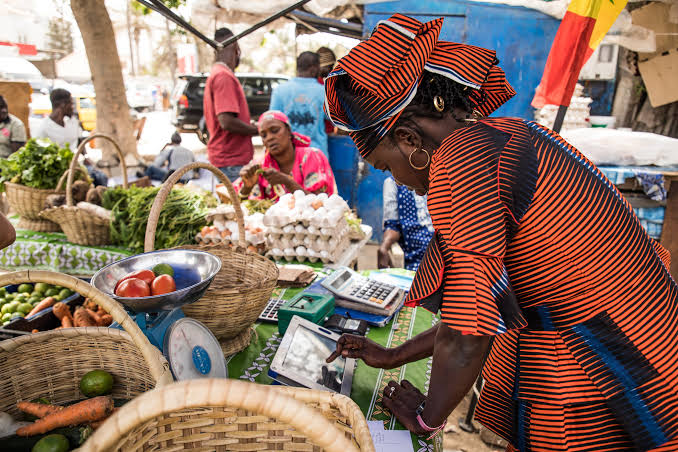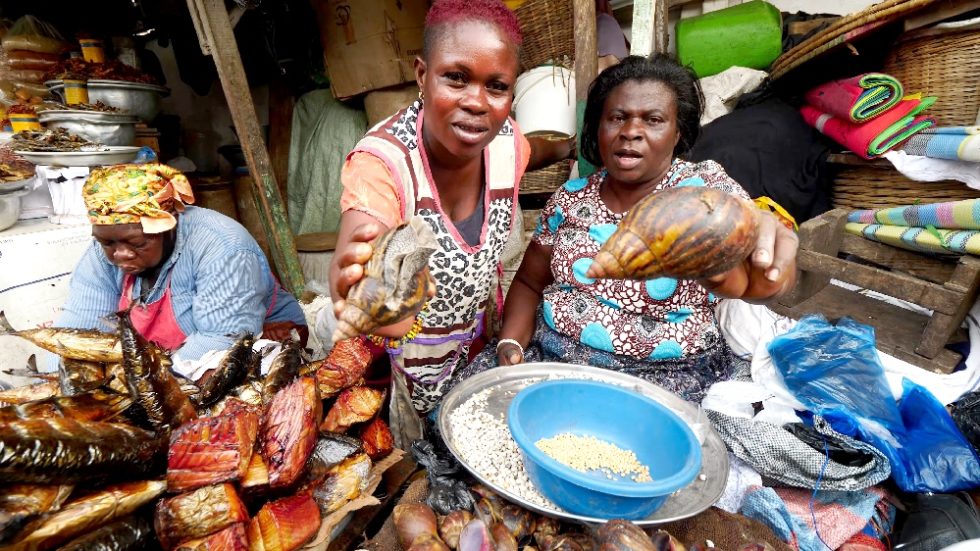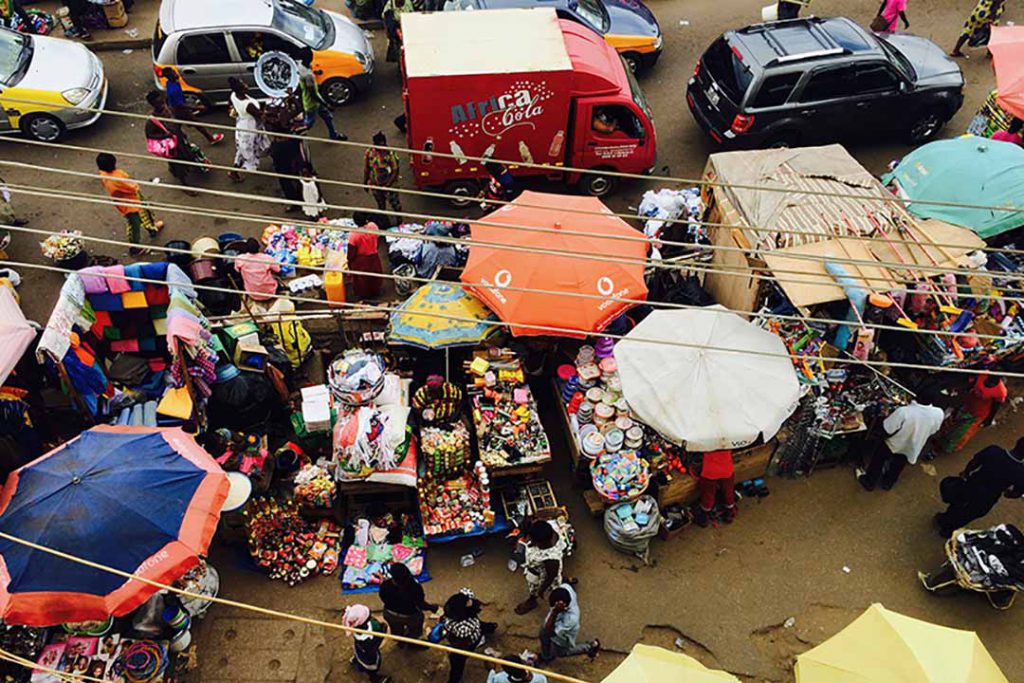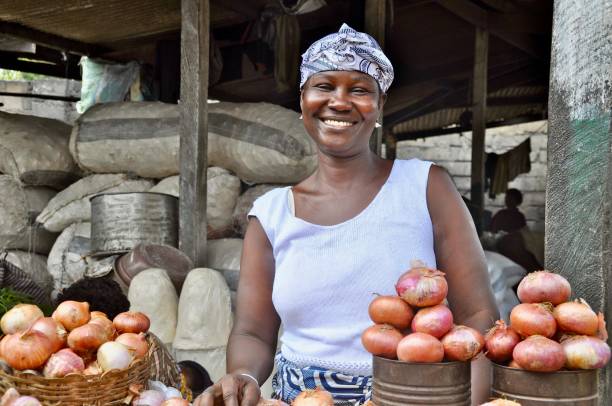







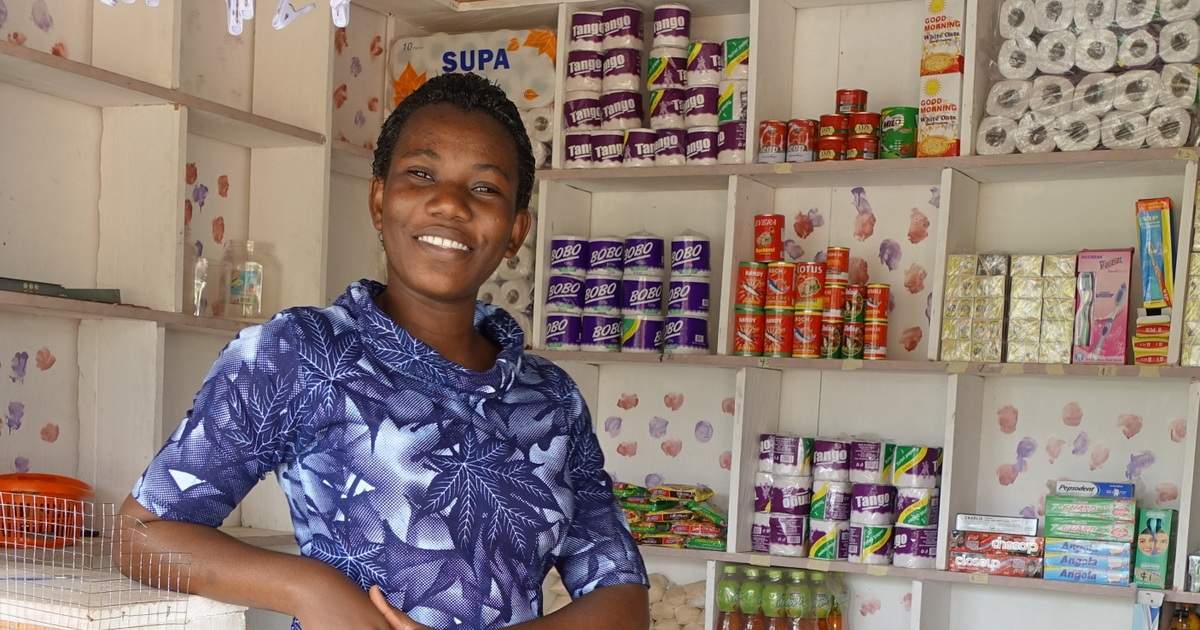
The smallest store in the world. The most durable business model in the economy.
QUICK FACTS BOX
| Category | Details |
|---|---|
| Industry | Micro-retail / Convenience retail / Fast-moving consumer goods (FMCG) |
| Typical Business Model | Cash-and-carry retail (small unit sales) + credit to trusted customers |
| Primary Revenue Driver | High velocity, low margin on staples; medium margin on impulse items |
| Average Markup (Staples: rice, oil, sugar, milk) | 5–15% |
| Average Markup (Impulse: biscuits, sweets, drinks, sachets) | 20–40% |
| Average Markup (High-margin: cigarettes, alcohol, phone credit) | 10–25% (varies; phone credit is fixed commission) |
| Industry Size (Annual) | GHS 8–12 billion (estimated, total household FMCG spend through micro-retail) |
| Number of Provision Shops (Est.) | 500,000–800,000 nationwide |
| Typical Daily Revenue | GHS 100–500 (low-end); GHS 500–2,000 (medium); GHS 2,000–5,000+ (high-volume roadside) |
| Key Customer Segments | Neighbourhood households, children buying small quantities, workers on break |
| Barriers to Entry | Very low (GHS 1,000–10,000 capital) |
| Average Lifespan | 5–10 years (high churn, but survivors last decades) |
EXECUTIVE INTRODUCTION
Everywhere. They are everywhere.
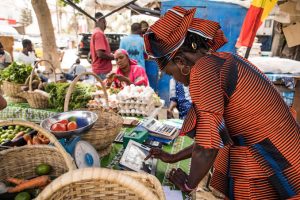
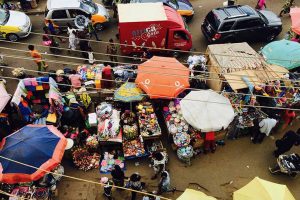
At the corner of a dusty street in Nima. Under a mango tree in a village in the Volta Region. On the pavement outside a bank in central Accra. In a wooden kiosk at a lorry park in Kumasi. On a metal table beside a classroom in a rural school. In the entrance hall of a government office. Beside the gate of a private university.
📢 GET DETAILED ARTICLES + JOBS
Join THSB's WhatsApp Channel and never miss a post or opportunity.
The provision shop — known colloquially as the akwantofo (traveller’s shop) or simply kiosk — is the most ubiquitous retail format in Ghana. There are more provision shops than there are taxis. More than there are public schools. More than there are churches, mosques, and chop bars combined. Estimates vary wildly, but a reasonable figure is between half a million and eight hundred thousand such outlets nationwide. That is one provision shop for approximately every 40 Ghanaians.
And they are remarkably durable. While supermarkets and e-commerce grow in the headlines, provision shops quietly persist. They do not close in large numbers. They do not consolidate. They do not go bankrupt from competition with Shoprite or MaxMart. They simply continue — as they have for generations — selling small quantities of everyday goods to neighbourhood customers who value proximity, credit, and the social relationship with the shopkeeper over the lower prices and wider selection of formal retail.
This profile examines why. Why does a business that looks so marginal — a few shelves, a wooden counter, a cash box, maybe a refrigerator — survive and even thrive in the age of modern retail? The answer lies not in the shop but in the customer. Provision shops solve problems that supermarkets cannot: the need for tiny quantities (a single egg, not a dozen), the need for credit (until tomorrow, or next week), the need for convenience (thirty seconds from your door), and the need for a trusted person who knows your name.
The economics are not spectacular. Most provision shop owners earn a modest living — GHS 1,000–5,000 monthly profit. Some do better. A few — those located at transport terminals, near schools, or in high-foot-traffic areas — earn excellent incomes. But the real story is not high margins. It is survival. The provision shop is the cockroach of Ghanaian retail: unglamorous, resilient, and impossible to eliminate.
This THSB profile breaks down the business model, the unit economics, the competitive moats, and the quiet reasons why the provision shop will outlast most of the modern retailers that threaten it.
THE PROVISION SHOP DEFINED
Not all small retail is the same. The provision shop occupies a specific niche in Ghana’s retail hierarchy.
The Retail Hierarchy in Ghana
| Format | Size (sqm) | SKUs (approx.) | Typical Location | Ownership |
|---|---|---|---|---|
| Supermarket/hypermarket | 500–5,000+ | 5,000–20,000+ | Shopping malls, high-end suburbs | Corporate or wealthy individuals |
| Mini-mart / convenience store | 50–200 | 1,000–3,000 | Residential areas, petrol stations | Small business owners |
| Provision shop (standard) | 5–20 | 200–800 | Street corners, neighbourhood centres, lorry parks | Individual proprietor |
| Tabletop / kiosk (micro) | 1–4 | 50–150 | Pavements, under trees, beside gates | Individual (often woman) |
| Hawker / mobile | N/A | 10–30 | Walking routes, traffic jams, markets | Individual (often child or woman) |
The provision shop (standard) is the focus here. It is large enough to stock a meaningful range of goods (rice, oil, sugar, milk, tinned tomatoes, biscuits, sweets, drinks, soap, detergent, phone credit, cigarettes, sometimes frozen goods) but small enough to be operated by one person or a family.
The tabletop kiosk is a smaller variant — often literally a table or a wooden box. Its economics are similar but scaled down. Many provision shops start as tabletops and expand.
What They Sell (Typical Inventory Mix)
| Category | Examples | % of Inventory (by value) | Typical Margin | Velocity |
|---|---|---|---|---|
| Staples | Rice, cooking oil, sugar, milk, tinned tomatoes, spaghetti | 40–50% | 5–15% | High |
| Impulse / snacks | Biscuits, sweets, chewing gum, sachet water, soft drinks, juice | 20–30% | 20–40% | Very high |
| Household essentials | Soap, detergent, toothpaste, bleach, matches, candles | 10–15% | 10–20% | Medium |
| Controlled/regulated | Cigarettes, alcohol, phone credit (vouchers or e-vouchers) | 10–15% | 10–25% (phone credit is fixed commission, typically 5–12%) | Medium to high |
| Frozen/perishable | Eggs, frozen chicken parts, fish (some shops) | 5–10% | 15–25% | Medium (requires refrigerator — adds cost) |
The mix varies by location. A shop near a school sells more biscuits, sweets, and sachet water. A shop in a residential area sells more staples and household goods. A shop at a lorry park sells more drinks, phone credit, and cigarettes.
BUSINESS MODEL
The provision shop is a cash-and-carry, high-velocity retail model with a crucial twist: credit to trusted customers.
Revenue Stream 1: Retail Margin (The Core)
The shopkeeper buys goods from wholesalers (often at the central market — Makola in Accra, Kejetia in Kumasi, or smaller district markets) and sells them in smaller units at a markup.
Typical markup examples (2024):
| Product | Wholesale Price (GHS) | Retail Price (GHS) | Markup (%) | Unit size |
|---|---|---|---|---|
| Cooking oil | 120 (5 litres) | 25 (1 litre) or 2.5 (100ml) | ~25% (on 1-litre) to 100%+ (on 100ml) | Variable |
| Rice (local) | 180 (25kg bag) | 8 (1kg) or 0.40 (50g) | ~10% (1kg) to 100%+ (small unit) | Variable |
| Sugar | 140 (10kg) | 16 (1kg) or 0.80 (50g) | ~15% (1kg) to 100%+ (small unit) | Variable |
| Tin tomatoes | 2.50 | 3.00–3.50 | 20–40% | Single tin |
| Biscuits (packet) | 0.80 | 1.50 | 87% | Single packet |
| Chewing gum (single) | 0.05 | 0.20–0.50 | 300–900% | Single piece |
| Sachet water (bag of 30) | 5.00 | 0.30 per sachet | 80% | Single sachet |
| Phone credit | 10 credit costs 10 (commission 5–12%) | 10 | 5–12% (commission, not markup) | Fixed value |
The key insight: Profit comes from breaking bulk. The shopkeeper buys in large units (bags, cartons, crates) and sells in very small units (single eggs, 50g of rice, one chewing gum). The customer pays a premium for small-unit convenience. That premium is the shopkeeper’s margin.
Example: Rice
-
Buy 25kg bag for GHS 180 (GHS 7.20 per kg)
-
Sell 1kg for GHS 8.00 (GHS 0.80 margin, 11% gross margin)
-
Sell 50g for GHS 0.40 (GHS 0.20 margin on 50g, which is GHS 4.00 per kg equivalent — 55% gross margin on a per-kg basis)
By selling in very small units, the shopkeeper increases the effective margin dramatically. The customer who buys 50g of rice pays far more per kg than the customer who buys a full bag. But that customer cannot afford a full bag, or does not need it. The shopkeeper captures value from that constraint.
Revenue Stream 2: Credit to Customers (The Loyalty Engine)
The provision shop’s most distinctive feature is credit. Trusted customers — neighbours, regulars, people from the same church or family network — can take goods and pay later: tomorrow, next week, or when they receive their salary.
How credit works:
| Customer Type | Credit Limit (GHS) | Repayment Period | Default Rate | Interest/Price Premium (implicit) |
|---|---|---|---|---|
| Highly trusted (family, long-term neighbour) | 50–200 | 1–4 weeks | <5% | None (price same as cash) |
| Regular customer | 20–50 | 1–2 weeks | 5–10% | 10–20% premium (credit price higher than cash price) |
| Occasional | 10–20 | 1 week | 10–20% | 20–30% premium |
| New/unknown | None (cash only) | N/A | N/A | N/A |
Why offer credit? Because it locks in loyalty. A customer who owes GHS 30 to the shopkeeper will not take their business elsewhere until the debt is cleared. And then they return — because the shopkeeper extended trust when others would not. Credit creates a relationship debt that transcends the financial transaction.
The risk: Default. Shopkeepers estimate that 5–15% of credit sales are never repaid. They build this into their pricing — effectively charging paying customers slightly more to cover the losses from defaulters.
The credit ledger: The traditional shopkeeper keeps a notebook (exercise book) with customer names and debts. Some now use mobile money records or simple digital tools, but the notebook remains common.
Revenue Stream 3: Phone Credit and Bill Payments (The Digital Bridge)
Mobile money has transformed the provision shop. Most shops now offer:
-
Phone credit (e-credit/vouchers): Buy from a distributor (commission 5–12%) and sell to customers. Digital delivery (no physical card) — the shopkeeper types the customer’s number and amount into a merchant app or uses a USSD code.
-
Mobile money cash-in/cash-out: Customers deposit cash (to their MoMo wallet) or withdraw cash. The shopkeeper earns a commission (typically 0.5–1% of transaction value, capped).
-
Bill payments: Electricity, water, DStv/GOtv, school fees. The shopkeeper processes payment via MoMo or a dedicated terminal, earning a small fee.
Revenue from digital services:
| Service | Typical Daily Volume (GHS) | Commission/Revenue |
|---|---|---|
| Phone credit | 200–1,000 | 10–100 (5–10% commission) |
| MoMo cash-in/out | 500–3,000 | 2.5–30 (0.5–1%) |
| Bill payments | 100–500 | 2–10 (1–2% fee) |
| Total daily | 15–140 | |
| Total monthly | 450–4,200 |
For a low-volume shop, digital services add GHS 450–1,000 monthly — a meaningful supplement. For a high-volume roadside shop, digital services can exceed GHS 4,000 monthly, sometimes rivaling goods sales.
Revenue Stream 4: Informal Services (The Adjacencies)
Provision shops often add adjacent services:
-
Mobile phone charging: GHS 1–2 per phone (customer leaves phone, collects later). Near-pure profit (electricity cost minimal).
-
Coin exchange / change provision: Customers need small change for transport, market purchases. Shopkeeper charges a small fee (e.g., GHS 1 for GHS 10 change) — controversial but common.
-
Sachet water cooling: The shopkeeper buys frozen sachets and sells them cold at a premium.
-
Cigarette single sales: Breaking a pack of 20 cigarettes into singles. High margin (single sells for GHS 1, pack of 20 sells for GHS 10–15 — the singles total GHS 20, double the pack price).
These are small but add up.
UNIT ECONOMICS
Typical Provision Shop (Urban Residential Area, Accra)
Assumptions: Medium volume, owner-operated (no paid staff), open 14 hours daily.
Daily Revenue Breakdown:
| Category | Daily Revenue (GHS) | % of Total |
|---|---|---|
| Staples (rice, oil, sugar, milk, tinned foods) | 150 | 30% |
| Impulse (biscuits, sweets, drinks, water) | 100 | 20% |
| Household essentials (soap, detergent, bleach) | 50 | 10% |
| Controlled (cigarettes, alcohol, phone credit) | 100 | 20% |
| Digital services (MoMo, bill payments) | 50 | 10% |
| Other (charging, single cigarette, etc.) | 50 | 10% |
| Total daily revenue | 500 | 100% |
Cost of Goods Sold (COGS) Estimate:
| Category | Revenue (GHS) | Gross Margin (%) | COGS (GHS) |
|---|---|---|---|
| Staples | 150 | 15% | 128 |
| Impulse | 100 | 35% | 65 |
| Household | 50 | 20% | 40 |
| Controlled (excluding phone credit) | 60 (cigarettes/alcohol) | 20% | 48 |
| Phone credit (pass-through) | 40 | 8% commission | 37 (cost to shopkeeper is 37, sells for 40) |
| Digital services | 50 | varies | 45 (mostly pass-through, small commission) |
| Other | 50 | 40% | 30 |
| Total | 500 | ~26% overall | ~370 |
Daily Gross Profit: GHS 130.
Monthly Gross Profit (30 days): GHS 3,900.
Monthly Operating Costs:
| Cost | Amount (GHS) |
|---|---|
| Rent (small shop, residential area) | 300–600 |
| Electricity (lighting, phone charging, small fridge) | 150–300 |
| Transport (to market for restocking) | 100–200 |
| Credit losses (defaults, spoilage, shrinkage) | 200–400 |
| Miscellaneous (bags, permits, phone credit) | 50–100 |
| Total monthly costs | 800–1,600 |
Monthly Net Profit: GHS 2,300–3,100.
The owner nets GHS 2,500 monthly on average — approximately GHS 80–100 per day. This is a modest income, comparable to a security guard’s salary or a junior clerical worker. But the owner is self-employed, controls their own time, and has no boss.
High-Volume Provision Shop (Transport Terminal, Accra)
| Item | Amount (GHS) |
|---|---|
| Daily revenue | 2,000 |
| Daily gross profit (25% margin) | 500 |
| Monthly gross profit | 15,000 |
| Rent (premium location) | (1,500) |
| Staff (2 attendants, each GHS 600) | (1,200) |
| Utilities and transport | (800) |
| Credit losses and shrinkage | (500) |
| Monthly net profit | 11,000 |
This is an excellent income — equivalent to a senior manager’s salary in many organisations. High-volume terminal shops are coveted; they are often owned by politically connected individuals or passed down through families.
Low-Volume Rural Provision Shop
| Item | Amount (GHS) |
|---|---|
| Daily revenue | 100–200 |
| Daily gross profit (20–25% margin) | 20–50 |
| Monthly gross profit | 600–1,500 |
| Rent (often own premises or family land) | (0–200) |
| Utilities and transport | (100–200) |
| Monthly net profit | 300–1,100 |
This is subsistence. The owner survives but does not thrive. Many rural provision shops are run by elderly women or as supplementary income for farming households.
WHY THEY NEVER DIE: THE COMPETITIVE MOATS
The provision shop survives against supermarkets, mini-marts, and e-commerce for seven structural reasons.
1. Proximity Monopoly
The nearest supermarket is, for most Ghanaians, a 15–30 minute walk or a short trotro ride. The provision shop is two minutes away, often on the same street. The time and transport cost of going to the supermarket exceeds the savings from lower prices. The provision shop wins on convenience.
The math: A customer spends GHS 20 at the provision shop for rice, oil, and tomatoes. The same goods cost GHS 18 at the supermarket. But the trotro fare to the supermarket is GHS 4 round-trip, and the trip takes 45 minutes. The customer effectively pays GHS 22 (18 + 4) and loses 45 minutes. The provision shop is cheaper in total cost — and far more convenient.
2. Small-Unit Economics
Supermarkets sell in standardised packs: 1kg of rice, 500ml of oil, a dozen eggs. The provision shop sells any quantity: 50g of rice, 100ml of oil, a single egg. For a customer with GHS 5 in their pocket, the supermarket cannot serve them. The provision shop can.
The small-unit premium: The customer pays more per unit for the privilege of buying a tiny quantity. That premium is the shopkeeper’s profit.
3. Credit (The Unbeatable Advantage)
No supermarket extends credit to customers (except corporate accounts). No e-commerce platform allows you to “pay next week” without a credit card. The provision shop does. For low-income households that are paid weekly or irregularly, credit is not a luxury — it is a necessity.
The social contract: The shopkeeper knows the customer’s family, their employment, their character. Default is rare because the social cost (shame, loss of access to the shop) exceeds the financial benefit.
4. Zero or Low Formality
The provision shop pays minimal taxes (or none). It does not register for VAT. It does not file annual returns. It does not comply with labour laws (the owner is the worker). This low compliance cost allows the shop to operate on margins that would kill a formal retailer.
The tax advantage: A supermarket pays corporate tax (25%), VAT (12.5% on most goods, though food is zero-rated in theory but applied inconsistently), SSNIT for employees, and various local permits. The provision shop pays none of these — or pays a fraction through informal “fees” to local assemblies.
5. Relationship Capital
The provision shopkeeper knows the customer’s name, their preferences, their children’s names. This relationship generates loyalty that cannot be bought with lower prices. Customers return because they are known.
The emotional moat: In a world of anonymous transactions (supermarket self-checkout, online shopping), the provision shop offers human connection. It is not just a store. It is a neighbourhood institution.
6. Low Fixed Costs
A supermarket requires GHS 1–5 million in startup capital. A provision shop requires GHS 1,000–10,000. The low entry barrier means new shops can open anywhere — but also that existing shops have no debt burden. No rent? Operate from home. No electricity? Use a lantern. No refrigerator? Sell non-perishables only.
The survival floor: The provision shop can survive on extremely low revenue because its fixed costs are near zero. A supermarket with GHS 50,000 monthly revenue would close. A provision shop with GHS 50,000 monthly revenue is thriving.
7. Fragmentation as Defence
There are 500,000 provision shops. No single competitor can defeat them all. Even if a new retail format (e.g., a chain of mini-marts) captures 10% of the market, 90% of provision shops remain. The market is too fragmented to consolidate.
The predator’s problem: Attacking provision shops requires opening thousands of outlets — a capital-intensive, logistically complex, and operationally demanding strategy. No one has done it successfully in Ghana.
CHALLENGES & RISKS
Despite their resilience, provision shops face real threats.
1. Competition from Modern Retail (Slow but Steady)
Supermarkets and mini-marts are expanding. In high-density areas, a new mini-mart can capture 10–30% of a provision shop’s customers — specifically, the higher-spending customers who value selection and fixed prices.
The response: Provision shops adapt. Some add refrigerators (to sell cold drinks, frozen goods). Others add digital services (MoMo, bill payments). The most successful provision shops upgrade to “mini-mart” status — better shelving, signage, lighting — without losing their core advantages of credit and small units.
2. Economic Shocks (The Double-Edged Sword)
When the economy contracts (inflation, cedi depreciation, unemployment), provision shop revenue falls because customers have less money. But provision shops are less vulnerable than formal retailers because:
-
Customers trade down from supermarkets to provision shops (seeking credit and small units)
-
Customers buy smaller quantities (the provision shop’s specialty)
During the 2022–2023 economic crisis, many supermarkets reported declining sales. Provision shops, anecdotally, held steady or grew slightly.
3. Stock Shrinkage and Theft
Small shops are vulnerable to theft: shoplifting by customers, pilferage by staff (if employed), and occasionally armed robbery.
Mitigation: Owner-operated shops (no staff) have lower theft. Some shops install mirrors, limit customers inside the shop (serve through a window or counter), and keep high-value items behind the counter.
4. Credit Defaults
As noted, 5–15% of credit sales are never repaid. A shop with GHS 10,000 monthly credit sales loses GHS 500–1,500 to defaults. This is a significant drain.
Mitigation: Stricter credit limits, shorter repayment periods, and blacklisting defaulters (neighbourhood shops share information informally). Some shops have stopped offering credit entirely — but this reduces loyalty and revenue.
5. Health and Safety Regulations (Rarely Enforced)
Local assemblies occasionally enforce sanitation and safety rules: proper food storage, waste disposal, fire extinguishers. Compliance costs money. Most provision shops ignore regulations because enforcement is rare.
The risk: A high-profile incident (e.g., food poisoning from a provision shop) could trigger a crackdown.
6. Succession
Many provision shops are run by ageing proprietors (especially women). Their children often do not want to take over — they prefer formal employment or migration abroad. When the proprietor dies or retires, the shop closes.
The result: A constant churn of shops opening (young people starting new businesses) and closing (elderly proprietors retiring without successors). The total number of shops remains stable, but individual shops are not permanent.
ECONOMIC & INDUSTRY IMPACT
Employment
| Role | Estimated Workers |
|---|---|
| Shop owners (working proprietors) | 500,000–800,000 |
| Family members assisting (unpaid or low-paid) | 200,000–400,000 |
| Paid attendants | 100,000–200,000 |
| Wholesale market workers (indirect) | 50,000–100,000 |
| Total | 850,000–1,500,000 |
The provision shop is one of the largest sources of self-employment in Ghana. For many families, it is the difference between subsistence and destitution.
Contribution to the Economy
-
Distribution channel: Provision shops are the last mile for FMCG companies (Unilever, Nestlé, FanMilk, etc.). Without them, these companies could not reach most Ghanaians.
-
Cash circulation: Provision shops keep cash moving at the neighbourhood level, supporting other small businesses (chop bars, hairdressers, phone repair).
-
Credit extension: Provision shops provide informal credit to millions of Ghanaians who have no access to bank loans or credit cards. This credit smooths consumption and prevents starvation during lean periods.
Government Revenue (Minimal)
Provision shops contribute almost nothing to government revenue:
-
No income tax (most are not registered, earnings unreported)
-
No VAT (turnover below registration threshold, or simply not registered)
-
No SSNIT (no employees, or employees not declared)
-
Local assembly permits (some pay GHS 50–200 annually, but many do not)
This is a policy choice. The government could tax provision shops more aggressively, but enforcement would be costly and politically unpopular. The informal sector is tolerated because it provides employment and reduces poverty.
DIGITAL STRATEGY & INNOVATION
The provision shop is not digital-first. But it has absorbed digital tools selectively.
Mobile Money (Ubiquitous)
Almost every provision shop offers MoMo cash-in/out. The shopkeeper earns commission and attracts customers who need MoMo services. This has been the single most transformative digital innovation for provision shops.
Stock Management (Limited)
Most shopkeepers still use mental inventory or exercise books. A small minority (perhaps 5–10%) use simple inventory apps on smartphones — scanning barcodes, tracking sales, calculating reorder points. The barrier is cost and digital literacy.
Supplier Ordering via WhatsApp
Many shopkeepers now order from wholesalers via WhatsApp. They send a list of items, the wholesaler prepares the order, and the shopkeeper sends a runner or collects. Faster and cheaper than visiting the market each time.
E-Commerce Threats (Overblown)
Online grocery delivery (e.g., Hubtel, Glovo, Jumia Food) has grown but remains a tiny fraction of household FMCG spend. The delivery fee (GHS 10–20) exceeds the profit margin on a typical provision shop purchase. E-commerce will not kill provision shops.
The Future: Mobile Credit?
Some fintechs are experimenting with “buy now, pay later” for small retail. A customer scans a QR code at the provision shop, receives short-term credit (repaid via MoMo), and the shopkeeper is paid immediately. This could replace the informal credit ledger — but it requires digital literacy and trust in the fintech. Adoption is currently negligible.
FUTURE OUTLOOK
Short-to-Medium Term (1–5 years)
-
Continued ubiquity. The number of provision shops will remain stable or grow slightly (population growth).
-
Digital adoption deepens. More shops will use MoMo, inventory apps, and WhatsApp ordering. But the notebook will survive.
-
Competition from mini-marts intensifies in middle-income neighbourhoods. Some provision shops will close or convert to mini-marts.
-
Credit remains central. No digital alternative will replace informal credit at scale within 5 years.
Long-Term (5–15 years)
Scenario 1: Gradual Decline (Probability: 40%)
As incomes rise and formal retail expands, provision shops lose market share to mini-marts and supermarkets. The number of shops declines by 20–30% over 15 years. But they do not disappear — they continue serving lower-income neighbourhoods and rural areas.
Scenario 2: Stasis (Probability: 50%)
The provision shop market share remains stable. Formal retail grows, but the total retail market grows faster. Provision shops serve the bottom 60–70% of households; formal retail serves the top 30–40%. Both coexist.
Scenario 3: Renaissance (Probability: 10%)
Provision shops digitise and professionalise, becoming “agent banking hubs” that offer credit, savings, insurance, and bill payments alongside goods. They become more profitable and attract younger proprietors. The format survives and thrives.
Strategic Risks to Monitor
| Risk | Probability | Impact | Mitigation |
|---|---|---|---|
| Aggressive supermarket expansion | Medium | Medium | Focus on credit, small units, proximity |
| Government tax enforcement on informal retail | Low (10–20%) | High (reduces margins) | Political lobbying; pass costs to customers |
| Mobile money credit replacing informal credit | Low (10%) | Medium | Become MoMo agent; adapt |
| Succession crisis (ageing proprietors) | High | Medium | Encourage younger family members to take over |
THSB CONCLUSION
The provision shop does not die because the conditions that created it have not died. Poverty remains. Unemployment remains. The need for tiny quantities and credit remains. The failure of formal retail to reach every corner remains. As long as these conditions persist, the provision shop persists.
This is not a business that venture capitalists fund. It is not a business that appears in economic development reports as a “growth sector.” It is not a business that the government celebrates. But it is a business that millions of Ghanaians depend on — as customers, as shopkeepers, as suppliers, as a last resort when formal employment fails.
The provision shop is not efficient. It is not scalable. It does not generate taxes. It does not produce GDP growth at the margin. But it is resilient. And resilience, in Ghana’s volatile economy, is perhaps the most valuable business attribute of all.
The supermarket will come and go. The e-commerce platform will rise and fall. The provision shop will remain. Not because it is better. Because it is necessary.
FAQ SECTION
1. How many provision shops are in Ghana?
Estimated 500,000–800,000 nationwide. This represents approximately one provision shop for every 40 Ghanaians. The number is difficult to count precisely due to the informal nature of the sector.
2. How much profit does a provision shop make in Ghana?
A typical urban provision shop nets GHS 2,000–3,500 monthly. High-volume shops (transport terminals, busy junctions) can net GHS 10,000–15,000 monthly. Rural shops may net as little as GHS 300–1,000 monthly.
3. How much capital do I need to start a provision shop?
As little as GHS 1,000–2,000 for a tabletop kiosk (basic stock, no rent). A standard shop with shelves, a small refrigerator, and decent stock requires GHS 5,000–15,000. A high-volume terminal shop requires GHS 20,000–50,000.
4. Why do people buy from provision shops instead of supermarkets?
Proximity (2-minute walk vs. 15–30 minutes to supermarket), credit (ability to pay later), small-unit purchases (single egg, 50g of rice), social relationship with the shopkeeper, and lower total cost when transport is factored in.
5. Do provision shops offer credit?
Yes. Credit is a core feature. Trusted customers can take goods and pay later (tomorrow, next week, next month). Interest is not charged explicitly, but credit prices are often higher than cash prices. Default rates are 5–15%.
6. How do provision shops compete with mobile money and e-commerce?
They embrace mobile money (offering MoMo cash-in/out, phone credit, bill payments). E-commerce is not a serious threat because delivery fees exceed typical purchase values. The provision shop’s advantages — proximity, credit, small units — are not replicated online.
7. Do provision shops pay taxes?
Most do not. They operate in the informal sector, paying minimal or no income tax, VAT, or SSNIT. Some pay small annual fees to local assemblies for operating permits. The government tolerates this because provision shops provide employment and essential services to low-income communities.
8. What is the most profitable product in a provision shop?
High-margin impulse items: single chewing gum (300–900% markup), single cigarette (100% markup on per-unit basis), sachet water (80% markup). However, staples (rice, oil, sugar) provide steady volume even with lower margins (10–15%).
9. How do provision shop owners restock their shops?
They typically visit wholesale markets (Makola in Accra, Kejetia in Kumasi) every few days or weekly, buying in bulk and transporting goods via taxi, trotro, or their own vehicle. Some now order via WhatsApp from wholesalers who deliver.
10. Are provision shops declining in Ghana?
No. The number of provision shops has remained stable or grown slightly over the past decade. While modern retail (supermarkets, mini-marts) has grown, provision shops continue to serve lower-income and rural populations that formal retail does not reach.
11. What is the biggest threat to provision shops?
The biggest long-term threat is not supermarkets or e-commerce — it is succession. Many provision shops are run by ageing proprietors whose children do not want to take over. Without new entrants, the number of shops could decline over time.
12. Can a provision shop owner become wealthy?
Most earn a modest living (GHS 2,000–3,500 monthly). High-volume shops in prime locations (transport terminals, busy markets) can earn GHS 10,000–15,000 monthly — a very good income by Ghanaian standards. However, this is wealth in income terms, not capital accumulation. Few provision shop owners become genuinely wealthy (GHS 1 million+ net worth) from the shop alone.
Source: The High Street Business
Disclaimer: Some content on The High Street Business may be aggregated, summarized, or edited from third-party sources for informational purposes. Images and media are used under fair use or royalty-free licenses. The High Street Business is a subsidiary of SamBoad Publishing under SamBoad Business Group Ltd, registered in Ghana since 2014.
For concerns or inquiries, please visit our Privacy Policy or Contact Page.

Samuel Kwame Boadu is a Ghanaian entrepreneur, writer, and digital consultant passionate about creating impactful stories and business solutions. He is the Founder & CEO of SamBoad Business Group Ltd, a dynamic company with subsidiaries in digital marketing, logistics, publishing, and risk management.