





Bolts, belts, and billions: The unlikely story of Ghana’s most resilient merchant class
QUICK FACTS BOX
| Category | Details |
|---|---|
| Industry | Automotive spare parts retail and wholesale |
| Typical Business Model | Import (direct or via intermediaries) + wholesale/retail distribution |
| Primary Revenue Driver | Volume turnover + scarcity premium (rare parts) + credit to mechanics |
| Average Markup (Standard Parts) | 25–50% (retail); 10–20% (wholesale) |
| Average Markup (Scarce/Rare Parts) | 100–300% (sometimes higher) |
| Industry Size (Annual) | GHS 4.5–6.5 billion |
| Number of Active Businesses | 25,000–35,000 (formal and informal) |
| Key Locations | Abossey Okai (Accra) — the largest spare parts market in West Africa; Suame Magazine (Kumasi) |
| Primary Customer Segments | Commercial vehicle owners, transport operators, private car owners, mechanics |
| Barriers to Entry | Low (capital GHS 10,000–50,000); but survival requires specialist knowledge |
EXECUTIVE INTRODUCTION
Abossey Okai. The name alone carries weight in Ghanaian commerce.
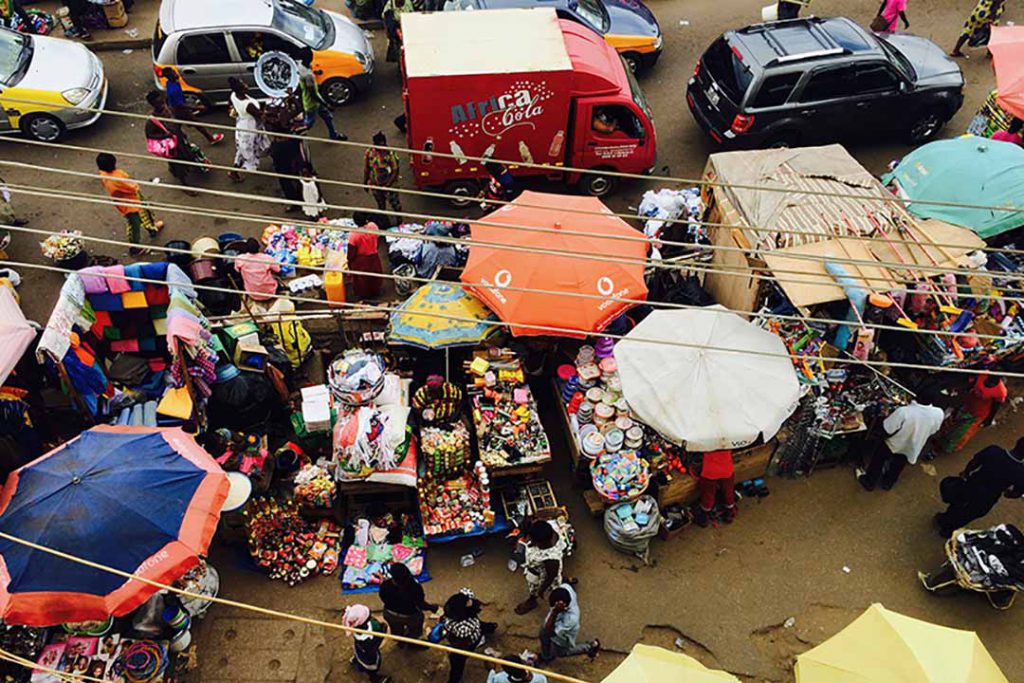
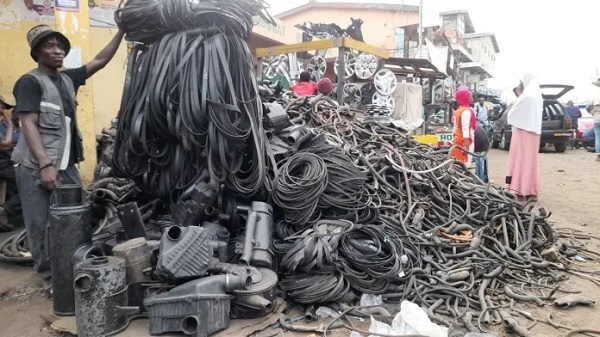
A dense, chaotic, sprawling maze of narrow streets in western Accra, it does not look like the headquarters of a billion-cedi industry. The shops are cramped. The roads are rutted. Spare parts spill onto the pavement — shock absorbers stacked next to brake pads, alternators balanced on crankshafts, headlamps hanging from hooks like strange fruit. The noise is relentless: hammering, welding, the screech of lorries manoeuvring through passages barely wider than their side mirrors.
📢 GET DETAILED ARTICLES + JOBS
Join THSB's WhatsApp Channel and never miss a post or opportunity.
And yet, behind this apparent disorder is one of the most sophisticated and profitable merchant economies in West Africa. The men and women of Abossey Okai — and their counterparts at Suame Magazine in Kumasi — have built personal fortunes, sent children to universities abroad, and created a distribution network that reaches every corner of Ghana. They did it by knowing one thing better than anyone else: the anatomy of the automobile — and the art of getting the right part to the right mechanic at the right price.
The spare parts business in Ghana is not a single industry. It is an ecosystem: importers who bring containers of parts from Dubai, China, Europe, and Japan; wholesalers who break those containers into smaller lots; retailers who know which part fits which model of Kia, Nissan, Mercedes, or Toyota; and specialised “dealer shops” that focus on a single brand or component (gearboxes only, or electrical systems, or Japanese cars exclusively).
This profile examines how this ecosystem works: the capital structures, the supply chains, the pricing strategies, the credit systems, and the quiet ways that spare parts dealers have turned what looks like a messy trade into one of Ghana’s most durable paths to wealth.
The story matters because the spare parts trade sits at the intersection of three structural realities of Ghana: an ageing vehicle fleet (average age exceeding 15 years), a weak formal automotive market (few new cars sold), and an informal economy that prefers cash, credit, and relationships over receipts and banks.
The dealers did not create these conditions. They simply adapted to them better than anyone else.
INDUSTRY OVERVIEW
The Scale of Ghana’s Vehicle Population
| Vehicle Type | Estimated Number | Average Age (years) | Annual Import (used) |
|---|---|---|---|
| Private cars | 800,000–1,000,000 | 12–18 | 50,000–70,000 |
| Commercial vehicles (taxis, trotros, buses) | 150,000–200,000 | 15–25 | 5,000–8,000 |
| Trucks and heavy-duty | 80,000–120,000 | 18–25 | 2,000–3,000 |
| Motorcycles and three-wheelers | 500,000–700,000 | 5–10 | 100,000+ |
| Total | 1.5–2.0 million | 12+ (average) | 160,000–180,000 |
Every single one of these vehicles needs parts. Regularly. The older the vehicle, the more frequent the repairs. And because Ghana’s vehicle fleet is predominantly used imports (mostly from Europe, Japan, the United States, and increasingly China and Dubai), the parts market is driven by compatibility and substitution — not by original equipment manufacturer (OEM) supply chains.
The Two Giants: Abossey Okai and Suame Magazine
| Market | Location | Estimated Number of Shops | Specialisation | Annual Turnover (Est.) |
|---|---|---|---|---|
| Abossey Okai | Accra (west, near Kaneshie) | 8,000–12,000 | Comprehensive (all makes, all parts) | GHS 2.5–3.5 billion |
| Suame Magazine | Kumasi (southwest) | 5,000–8,000 | Heavy-duty and commercial vehicles | GHS 1.5–2.0 billion |
These two markets account for an estimated 70–80% of all spare parts transactions in Ghana. Smaller markets exist in Takoradi, Tema, Tamale, and Cape Coast, but they are feeder nodes — they buy from Abossey Okai or Suame, not directly from importers.
Specialisation Clusters
Within Abossey Okai, shops cluster by specialisation. A visitor who knows the layout can find anything:
| Cluster | Location within Abossey Okai | What They Sell |
|---|---|---|
| German cars (Mercedes, BMW, VW) | Central area | Engine parts, electrical systems |
| Japanese cars (Toyota, Nissan, Honda, Mitsubishi) | Northern section | Everything — largest cluster |
| Korean cars (Hyundai, Kia) | Eastern edge | Body parts, suspension |
| Chinese cars (Foton, Dongfeng, Sinotruk) | Western fringe (newer area) | Growing rapidly |
| Commercial vehicles (Benz, MAN, Tata) | Near main road | Heavy-duty, truck parts |
| Electrical/electronics | Small cluster | Alternators, starters, sensors |
| Body parts (panels, lights, bumpers) | Scattered | Crash repair parts |
| Engine rebuild specialists | Deep interior | Crankshafts, pistons, rings, bearings |
| Tyres and batteries | Main roads (high visibility) | Consumables |
This specialisation is the key to efficiency. A mechanic looking for a Toyota Corolla water pump does not wander. He goes directly to the Japanese cluster, then to the three shops known for cooling systems. The dealer, in turn, knows exactly which models his customers drive and stocks accordingly.
BUSINESS MODEL
Spare parts dealers operate on four distinct business models, ranging from low-margin, high-volume to high-margin, low-volume. The most successful dealers often operate multiple models simultaneously.
Model 1: The General Retailer (The Most Common)
The general retailer operates a small to medium shop (20–50 square metres) and stocks a wide range of parts for the most common vehicles in their area. They buy from wholesalers within Abossey Okai or directly from importers if they have capital.
Revenue mechanics:
| Item | Typical |
|---|---|
| Average parts stocked | 500–2,000 SKUs |
| Inventory value (wholesale cost) | GHS 50,000–200,000 |
| Average turnover days (inventory) | 60–90 days |
| Gross margin (average across parts) | 30–40% |
| Net margin (after costs) | 10–20% |
Example monthly economics (medium general retailer):
| Item | Amount (GHS) |
|---|---|
| Monthly sales revenue | 80,000 |
| Cost of goods sold (COGS) | (55,000) |
| Gross profit | 25,000 |
| Rent (shop) | (2,000) |
| Staff (2–3 attendants) | (3,000) |
| Electricity and generator fuel | (1,500) |
| Transport and delivery | (2,000) |
| Miscellaneous | (1,000) |
| Net profit | 15,500 |
| Net margin | 19% |
A general retailer netting GHS 15,000 monthly (GHS 180,000 annually) is a solid business. Many operate at this level or higher. The owners are not wealthy by international standards, but in Ghana, GHS 180,000 annual profit places them in the top 5–10% of small business owners.
Model 2: The Specialist Importer-Wholesaler (The Wealth Builder)
This is where the real fortunes are made. The specialist importer does not sell to mechanics or car owners. They sell to other spare parts dealers — the general retailers. They import container loads of specific parts (e.g., brake pads for all Japanese cars, or alternators for Mercedes, or engine gaskets for commercial vehicles) and distribute wholesale.
Capital requirements are substantial:
| Item | Amount (GHS) |
|---|---|
| Initial container (1x40ft, mixed parts) | 300,000–600,000 |
| Warehousing (dedicated, not just a shop) | 50,000–100,000 (annual rent) |
| Staff (warehouse, sales, admin) | 10,000–20,000 (monthly) |
| Working capital for next container | 400,000–800,000 |
| Total capital required | GHS 750,000 – 1.5 million |
Economics of a specialist importer:
| Item | Per Container |
|---|---|
| Container cost (parts, freight, duties, clearance) | 400,000 |
| Wholesale revenue (selling to 20–30 retailers) | 520,000 |
| Gross profit per container | 120,000 |
| Gross margin | 30% |
| Operating costs (warehouse, staff, transport) per container | (30,000) |
| Net profit per container | 90,000 |
A successful specialist importer handling 2–3 containers per month nets GHS 180,000–270,000 monthly. That is GHS 2–3 million annually. This is the tier where “billion-cedi businesses” (in cumulative turnover, not net worth) are built.
Who are these people? They are often the second generation of spare parts families. The father started with a small shop in Abossey Okai in the 1980s. The son expanded into importing. The family now owns multiple shops, warehouses, and sometimes real estate in Accra’s wealthiest neighbourhoods. They are not visible in the media. They do not seek publicity. But their wealth is real.
Model 3: The Scarcity Specialist (High Margin, Low Volume)
Some dealers focus on rare, hard-to-find parts — items that are no longer manufactured, or were never common in Ghana. A control module for a 1998 Mercedes C-Class. A specific gearbox for a Mitsubishi Canter truck. A dashboard instrument cluster for a Peugeot 504.
How they source: They have networks of suppliers in Dubai (the world’s largest market for used auto parts), Europe, Japan, and the United States. They buy parts that would otherwise be scrapped, ship them to Ghana, and sell them at premiums of 200–500% or more.
Example:
| Part | Cost (CIF, Ghana) | Retail Price (GHS) | Markup |
|---|---|---|---|
| Used ECU (engine control unit), Toyota Corolla | 350 (GHS 4,200 at 12/USD) | 12,000 | 185% |
| Reconditioned alternator, Mercedes Sprinter | 600 (GHS 7,200) | 18,000 | 150% |
| Gearbox, Nissan Hardbody (used, working) | 1,200 (GHS 14,400) | 35,000 | 143% |
Volume is low — a scarcity specialist may sell only 50–100 parts per month. But the margins are extraordinary. A dealer who makes GHS 50,000–100,000 monthly from 50–100 parts has an extremely efficient business — low inventory costs (small shop), low staff, and pricing power that general retailers envy.
Model 4: The Credit-to-Mechanics Model (The Cash Flow Engine)
This is not a separate business type but a revenue optimisation strategy
Why dealers offer credit: It locks in the mechanic’s loyalty. A mechanic who owes GHS 5,000 to a dealer will buy from that dealer again — and again — to maintain the relationship. The interest rate implicit in the credit (if the dealer charges a premium for credit sales) can be very attractive.
Credit terms and effective interest rates:
| Payment Term | Price Premium (vs. cash) | Effective Annual Interest Rate |
|---|---|---|
| 30 days | 5% | 60% |
| 60 days | 10% | 60% (annualised) |
| 90 days | 15% | 60% |
A dealer who sells GHS 100,000 worth of parts on 60-day credit at a 10% premium effectively earns 60% annualised interest on the money tied up. This is significantly more profitable than bank lending.
The risk: Mechanics default. Some disappear with parts and never pay. Dealers manage this by:
-
Limiting credit to known mechanics (years of relationship)
-
Diversifying across many mechanics (no single client exceeds 10% of receivables)
-
Charging higher premiums to newer or riskier mechanics
-
Using informal enforcement (visiting the mechanic’s workshop, speaking to the landlord, community pressure)
THE SUPPLY CHAIN: FROM DUBAI TO ABOSSEY OKAI
Understanding the spare parts business requires understanding where the parts come from. The supply chain has three primary channels.
Channel 1: Dubai (The Most Important)
Dubai is the spare parts capital of the Middle East and Africa. The Ras Al Khor auto market in Dubai is a vast emporium of new, used, and reconditioned parts from Japan, Europe, and the United States. Ghanaian importers travel to Dubai 2–4 times per year, visit dozens of suppliers, negotiate prices, and consolidate a container.
Why Dubai dominates:
-
No import duties on auto parts in Dubai’s free zones (parts are cheaper there than almost anywhere else)
-
Established Ghanaian networks — many Dubai parts suppliers are themselves Ghanaians or Lebanese-Ghanaians who moved to Dubai
-
Direct shipping from Dubai to Tema (12–18 days)
-
Price transparency — dealers can compare prices across multiple suppliers
The Dubai trip economics:
| Item | Cost (GHS) |
|---|---|
| Return flight Accra–Dubai | 6,000–10,000 |
| Hotel and living (10–14 days) | 10,000–15,000 |
| Supplier visits and negotiations | (time cost) |
| Container cost (parts + freight + duties) | 300,000–600,000 |
| Total trip cost (excluding parts purchase) | 16,000–25,000 |
The trip cost is significant but small relative to the container value. A successful trip yielding GHS 90,000 net profit per container (as earlier) justifies the travel expense many times over.
Channel 2: China and the Far East (Growing Rapidly)
Chinese spare parts are cheaper than European or Japanese equivalents — often 30–50% lower. However, quality varies widely. Some Chinese parts are excellent. Others fail within weeks.
Who buys Chinese parts: Price-sensitive customers with older vehicles where original parts are no longer available or too expensive. Commercial vehicle operators (trotro, taxi) who prioritise cost over longevity.
The challenge: Chinese parts require different supply relationships. Most Ghanaian spare parts dealers do not speak Chinese, do not understand Chinese business culture, and have been burned by low-quality shipments. A new generation of dealers — often younger, tech-savvy — is building direct relationships with Chinese factories via Alibaba and attending trade shows in Guangzhou.
Channel 3: Europe and Japan (Original and OEM)
Original parts from Europe (Mercedes, BMW, VW) and Japan (Toyota, Nissan, Honda) are the gold standard. They are expensive, but they fit perfectly and last. They are also the most profitable on a per-part basis because the customers who demand them (luxury car owners, fleet operators with expensive vehicles) are less price-sensitive.
Supply route: European and Japanese parts often come through Dubai intermediaries, not directly. A few large Ghanaian importers have established direct relationships with OEM suppliers in Germany or Japan, but this requires significant volume and long-term contracts.
The Role of Counterfeit and “Local” Parts
A shadow supply chain exists: counterfeit parts (branded as Toyota, Mercedes, etc., but manufactured in unlicensed factories, primarily in China) and locally fabricated parts (e.g., a local welder making a suspension arm).
Counterfeit parts are illegal but common. A dealer selling a counterfeit brake pad labelled “Toyota Genuine” at GHS 150 (vs. genuine GHS 350) makes a 100% margin on a product that costs GHS 75. The risk: customer injury, lawsuit (rare in Ghana), reputational damage.
Locally fabricated parts are legal and sometimes excellent. A skilled machinist in Suame Magazine can fabricate a part that is no longer manufactured. The dealer buys from the fabricator for GHS 200, sells for GHS 500. The customer gets a working part. The economy gets value addition. Everyone wins.
MARKET POSITION & COMPETITION
The Information Asymmetry Advantage
The most important competitive advantage in the spare parts business is information. Which part fits which vehicle? Which aftermarket brand is reliable? Which supplier in Dubai has the best price this month? Which mechanic pays on time?
A new entrant without this knowledge will fail. A dealer who has spent 20 years in Abossey Okai knows things that cannot be learned from a catalogue:
-
That the “Toyota” water pump from Supplier A is actually a Chinese counterfeit, but Supplier B’s is genuine
-
That the Mercedes part number for a 2002 E-Class is superseded by a newer number, and the newer part fits better
-
That Mechanic Kwame in Tema pays within 30 days, but Mechanic Adjei in Kasoa takes 90 days and must be chased
This knowledge is the barrier to entry. It is why new dealers rarely succeed unless they are apprenticed to an existing dealer (often a family member).
Competitive Threats
| Threat | Severity | Explanation |
|---|---|---|
| Online parts retailers (e.g., Jiji, Tonaton, Facebook Marketplace) | Low to Medium | Some customers now buy parts online from individual sellers, but trust and delivery are issues |
| Authorised dealerships (e.g., Toyota Ghana, Silver Star) | Low | Their parts are too expensive for most customers; they serve a different segment |
| Mechanics buying directly from importers | Medium | Large mechanics with significant volume sometimes bypass retailers and go direct to importers |
| Vehicle electrification (long-term) | Low (10+ years) | Electric vehicles have far fewer moving parts; but Ghana’s EV adoption will be slow |
| Improved roadworthiness enforcement (removing old vehicles) | Low | Government occasionally threatens to scrap old vehicles, but enforcement is weak |
The biggest threat is not external competition. It is internal credit defaults — mechanics who fail to pay, leaving dealers with large receivables they cannot collect.
COST STRUCTURE & CAPITAL MANAGEMENT
The Working Capital Trap
The spare parts business is working capital intensive. A dealer must:
-
Buy inventory (often 3–6 months’ supply for slower-moving parts)
-
Extend credit to mechanics (30–90 days)
-
Pay for the next container before the previous one is fully sold
Cash flow cycle (typical retailer):
| Event | Day |
|---|---|
| Buy inventory (cash to importer) | 0 |
| Sell parts to mechanics (on credit) | 15–60 |
| Collect payment from mechanics | 45–90 |
| Cash available for next inventory | 90+ |
A 90-day cash conversion cycle means the dealer needs 90 days of working capital to operate. If monthly sales are GHS 80,000, working capital requirement is approximately GHS 240,000 (three months of COGS).
How successful dealers manage:
-
Layered inventory: Fast-moving parts (brake pads, filters, belts) are paid for quickly (cash sales or short credit). Slow-moving parts (engine blocks, gearboxes) are financed by longer-term capital (savings, loans, or supplier credit).
-
Supplier credit: Large importers sometimes negotiate 30–60 days credit from Dubai suppliers, shifting the working capital burden upstream.
-
Cash reserves: Profitable dealers maintain GHS 200,000–500,000 in cash reserves to absorb shocks and seize opportunities (e.g., a container of rare parts at a discount).
Inventory Management: The Art of Knowing What to Stock
Overstocking is the silent killer. A dealer who buys GHS 500,000 of parts that do not sell has GHS 500,000 of dead capital. Understocking means lost sales.
The 80/20 rule in spare parts:
-
20% of parts (fast movers) generate 80% of revenue
-
80% of parts (slow movers) generate 20% of revenue
Fast movers (must always have in stock):
-
Brake pads (all common models)
-
Oil filters, air filters, fuel filters
-
Fan belts, timing belts
-
Headlamps and bulbs
-
Clutch kits
Slow movers (stock carefully, often only one of each):
-
Engine control units (ECUs)
-
Gearboxes
-
Differential assemblies
-
Body panels (specific colours are even slower)
Smart dealers use historical sales data (often just mental records or exercise books) to forecast demand. They know that during the rainy season, wiper motors and windscreen seals sell faster. Before Christmas, customers fix their cars for travel — alternators, starters, and radiators move.
DIGITAL STRATEGY & INNOVATION
The spare parts industry is not digital-first, but it is quietly adopting technology in specific areas.
WhatsApp as the Primary Sales Channel
WhatsApp Business has become the de facto catalogue and ordering system for spare parts. A dealer posts photos of new arrivals to their status. A mechanic sends a photo of the broken part with a request: “Do you have this?” The dealer replies with price and availability.
Why WhatsApp works:
-
Visual (photos of parts are more useful than part numbers)
-
Instant (mechanic needs the part today, not tomorrow)
-
Familiar (everyone uses WhatsApp)
-
Low cost (no website, no inventory system)
Some dealers now manage thousands of WhatsApp contacts — mechanics, small retailers, even individual car owners.
Digital Inventory Management (Early Adoption)
A growing minority of larger dealers use simple inventory management software (e.g., ERPNext, Odoo, or even Excel with macros) to track:
-
Stock levels (what is in the warehouse)
-
Cost prices (what they paid, in which currency)
-
Selling prices (adjusted for credit terms and customer type)
-
Customer credit limits and payment history
The adoption barrier: Many dealers are not computer-literate. Their sons and daughters — the second generation — are driving digitisation.
E-Commerce (Limited Success)
Several attempts to build spare parts e-commerce platforms in Ghana have failed. Customers want to see the part before buying (counterfeit concerns), need it immediately (not in 3–5 days), and prefer to pay cash on delivery (COD) — which is expensive to offer.
The hybrid model that works: Some dealers list parts on Jiji or Facebook Marketplace, but the transaction still happens offline: the customer visits the shop, inspects the part, pays cash, and takes it.
Future Digital Opportunities
-
VIN-based part lookup: A customer enters their vehicle’s VIN (unique identifier), and the system shows exactly which parts fit. This exists globally (e.g., AutoZone in the US) but not in Ghana.
-
Mechanic credit scoring: A shared database of mechanic payment histories, allowing dealers to assess credit risk before extending credit.
-
Supply chain coordination: Importers sharing container space to reduce costs.
These will come, but slowly. The industry’s cash-and-relationship DNA will not change overnight.
CHALLENGES & RISKS
1. Currency Depreciation (The Most Acute)
Almost all spare parts are imported. When the cedi falls, the dealer faces a brutal choice: raise prices immediately (angering customers) or absorb the loss (eroding margin).
The typical response: Raise prices, but gradually. A dealer who paid GHS 100 for a part when the cedi was 10/USD now pays GHS 150 to replace it (at 15/USD). They raise the selling price from GHS 160 to GHS 220 — a 37.5% increase. The customer complains but eventually pays because there is no alternative.
The long-term effect: Persistent depreciation shrinks the market. Customers cannot afford parts, so they drive broken cars, or the cars sit unrepaired. Demand falls. Dealers hold inventory longer. Margins compress.
2. Credit Defaults
Mechanics who do not pay. It happens constantly. A dealer might write off 5–10% of credit sales annually as bad debt.
Why mechanics default: Their own customers do not pay. A mechanic repairs a taxi, the taxi driver promises to pay after the next trip, the driver never returns. The mechanic cannot pay the dealer. The chain of debt cascades.
Mitigation: Diversification. A dealer with 100 mechanic clients loses less from 5 defaults than a dealer with 10 clients losing 1.
3. Counterfeit and Quality Risk
A dealer who unknowingly buys counterfeit parts damages their reputation when the part fails. A dealer who knowingly sells counterfeit parts risks legal action (rare) and, more importantly, loss of customer trust.
The challenge: Distinguishing genuine from counterfeit requires expertise. Some counterfeits are nearly identical to the original. Even experienced dealers are fooled.
How dealers protect themselves: Buy only from trusted suppliers (years of relationship). Test samples before buying bulk. Avoid “too good to be true” prices.
4. Theft
Spare parts are small, valuable, and easily resold. Theft occurs at multiple points:
-
In transit: Containers are pilfered at Tema Port or during transport to Abossey Okai.
-
In the shop: Customers or staff steal small parts (sensors, bulbs, small electrical components).
-
At the warehouse: Night theft, sometimes inside jobs.
Mitigation: CCTV, secure locks, limited access to warehouse, regular stock counts, and (in some cases) armed security at night.
5. Competition from “Container Sellers”
New importers who do not operate retail shops sometimes park a container at a location, open the doors, and sell directly to the public — bypassing the traditional dealer network. They have lower overhead (no shop rent, fewer staff) and can undercut prices.
The dealer response: The Abossey Okai association (the spare parts dealers’ trade group) has pressured the government to enforce regulations requiring fixed retail locations. The effectiveness is mixed.
6. Port Clearance Delays
As discussed in the container importers profile, delays at Tema Port cost money. A container held for demurrage for 10 extra days costs GHS 2,000–5,000 in penalties. For a dealer with thin margins, this is painful.
Mitigation: Experienced clearing agents (often the same ones used for years). Paying the necessary “expediting fees” (see corruption discussion in that profile). Planning buffer time into supply chains.
ECONOMIC & INDUSTRY IMPACT
Employment
| Role | Estimated Workers (Nationwide) |
|---|---|
| Shop owners and co-owners | 25,000–35,000 |
| Shop attendants and sales staff | 40,000–60,000 |
| Warehouse and logistics staff | 5,000–8,000 |
| Importers and Dubai-based buyers | 1,500–2,500 |
| Mechanics (indirectly supported) | 100,000+ |
| Total direct and indirect | 170,000–200,000+ |
The spare parts industry is one of the largest private-sector employers of semi-skilled and skilled labour in Ghana. It supports an entire ecosystem of mechanics who would have no parts to fit without the dealers.
Contribution to Government Revenue
-
Import duties: 10–20% on auto parts (depending on classification)
-
Import VAT: 12.5%
-
NHIL and other levies: Additional 3–4%
-
Corporate and personal income tax (paid by larger, formalised businesses)
A single container of parts valued at $30,000 (GHS 360,000 at 12/USD) pays approximately GHS 90,000–120,000 in taxes and duties. Multiply by thousands of containers annually, and the contribution to GRA revenue is substantial — hundreds of millions of cedis.
However, many smaller dealers operate in the cash economy and pay little or no income tax. The industry’s tax contribution could be significantly higher with better enforcement.
Enabling Mobility
The spare parts industry keeps Ghana’s vehicle fleet moving. Without Abossey Okai and Suame Magazine, most of the 1.5–2 million vehicles on Ghana’s roads would be stationary within weeks. Public transport (trotros, taxis) would collapse. Goods movement (trucks) would halt. The economic cost would be measured in billions of cedis.
The spare parts dealer is not a glamorous figure. But they are essential infrastructure.
FUTURE OUTLOOK
Short-to-Medium Term (1–5 years)
-
Consolidation continues. The number of small, undercapitalised shops will decline. Surviving shops will be larger, better capitalised, and more professional.
-
Second generation takes over. The children of the 1980s and 1990s pioneers are now running the businesses. They are better educated, more tech-savvy, and more willing to formalise (tax registration, banking, digital inventory).
-
Chinese parts market share grows. As Chinese vehicle imports increase (Foton, Dongfeng, DFSK, Haval), so will demand for Chinese parts. Dealers who build China supply chains will have an advantage.
-
Vehicle electrification remains niche. EVs are too expensive for most Ghanaians. The internal combustion engine will dominate for at least another decade.
Long-Term (5–15 years)
Scenario 1: Managed Evolution (Probability: 60%)
The industry professionalises gradually. Larger dealers invest in digital inventory systems, formal credit management, and direct supply relationships. Smaller dealers become their retailers or agents. The “bazaar” atmosphere of Abossey Okai remains, but behind the scenes, operations become more efficient.
Scenario 2: Disruption from Formal Retail (Probability: 25%)
A large formal retailer (e.g., a subsidiary of Toyota Ghana or a new entrant like AutoZone from the US) establishes a chain of spare parts stores with fixed prices, warranties, and professional service. They capture the middle and upper segments of the market, leaving traditional dealers serving only the lowest price points.
Scenario 3: Policy-Driven Change (Probability: 15%)
The government implements a vehicle scrapage programme (paying owners to scrap old vehicles) and enforces stricter roadworthiness inspections. The average age of the vehicle fleet falls. Demand for spare parts shifts from repair (keeping old cars running) to replacement (newer cars need fewer parts). The industry shrinks but becomes more profitable per transaction.
Strategic Risks to Monitor
| Risk | Probability | Impact | Mitigation |
|---|---|---|---|
| Persistent cedi depreciation | High (given Ghana’s macroeconomic trends) | Severe (erodes margins, shrinks market) | Hold forex, diversify to local fabrication, raise prices aggressively |
| Tighter regulation of used vehicle imports (e.g., age limits) | Medium (30–40%) | High (reduces vehicle population, changes parts mix) | Adapt to newer vehicle parts; diversify into maintenance parts |
| Shift to ride-hailing and fleet ownership (reducing total vehicles) | Low (10%) | Low to Medium | Fleet operators still need parts — potentially in larger volumes |
| Major fire at Abossey Okai | Low (but not zero) | Catastrophic (destroys inventory of thousands of dealers) | Insurance (many do not have it); off-site storage for high-value items |
THSB CONCLUSION
The spare parts dealers of Abossey Okai and Suame Magazine are not celebrities. They do not appear on Forbes lists. They do not give TED Talks. But they have built something remarkable: a self-sustaining, multi-billion-cedi merchant economy that operates with almost no government support, no foreign investment, and no formal banking for most of its history.
They did it by mastering the fundamentals: buy low, sell higher, know your customer, extend credit carefully, and always — always — have the part that the mechanic needs today. The margins are not huge on any single transaction. But the volume is enormous. And over decades, the compounding effect of thousands of small profitable transactions has created genuine wealth.
The “billion-cedi businesses” in the title are not exaggerations. There are spare parts dealers in Accra whose cumulative turnover exceeds GHS 1 billion over their careers. Their net worth is smaller — perhaps GHS 10–50 million — but in Ghanaian terms, that is extraordinary wealth, built from selling brake pads and fan belts.
The lesson for aspiring entrepreneurs is not about spare parts specifically. It is about finding a structural need and serving it relentlessly. Ghana’s old cars need parts. The formal sector will not supply them at accessible prices and locations. The spare parts dealer fills that gap. The gap is not glamorous. But it is deep, and it is permanent.
And that is the definition of a durable business.
FAQ SECTION
1. How do spare parts dealers in Ghana make money?
They buy parts (primarily from Dubai, China, Europe, and Japan) and sell to mechanics and car owners at a markup. Typical margins are 25–50% on common parts, 100–300% on rare parts. Many also earn interest by extending credit to mechanics (30–90 days).
2. How profitable is the spare parts business in Ghana?
A small to medium retailer nets GHS 10,000–20,000 monthly (GHS 120,000–240,000 annually). A large wholesaler-importer can net GHS 150,000–300,000 monthly (GHS 1.8–3.6 million annually). Margins range from 10–20% net for retailers to 20–30% for importers.
3. How much capital do I need to start a spare parts shop?
A small retail shop requires GHS 50,000–150,000 for inventory, shop rent deposit, and basic furnishings. A wholesale importing business requires GHS 750,000–1.5 million for a container, warehousing, and working capital.
4. Where do spare parts dealers in Ghana source their parts?
Primarily from Dubai (Ras Al Khor auto market), followed by China, Europe (Germany for Mercedes/BMW), and Japan. Some large dealers also source directly from OEM suppliers or attend international trade shows.
5. Why is Abossey Okai so important to Ghana’s economy?
Abossey Okai is the largest spare parts market in West Africa, handling an estimated 70–80% of Ghana’s spare parts transactions. It keeps Ghana’s vehicle fleet (1.5–2 million vehicles) operational, enabling transport, commerce, and mobility.
6. How do spare parts dealers manage currency risk?
Dealers hold foreign currency accounts (USD), buy inventory in advance when the cedi is stable, and raise prices quickly when the cedi falls. Some also import parts from countries with lower currency volatility (Europe, Japan) as a hedge.
7. Do spare parts dealers pay taxes?
Larger, formalised dealers pay import duties, VAT, and corporate income tax. Many smaller dealers operate in the cash economy and pay little or no income tax. The industry’s tax contribution is substantial but could be higher with better enforcement.
8. What is the credit system between dealers and mechanics?
Dealers supply parts to mechanics on credit (typically 30–90 days), charging a premium (5–15%) over the cash price. The effective annual interest rate can exceed 60%. Mechanics default is the biggest risk.
9. Is there counterfeit parts in the Ghanaian market?
Yes. Counterfeit parts (branded as genuine Toyota, Mercedes, etc., but manufactured in unlicensed factories) are common. Quality varies from acceptable to dangerous (e.g., brake pads that fail). Reputable dealers avoid counterfeits; less scrupulous ones sell them knowingly.
10. How is the spare parts industry changing?
Consolidation (smaller shops closing), second-generation owners digitising operations (WhatsApp sales, inventory software), and increasing share of Chinese parts. The bazaar atmosphere remains, but behind the scenes, the industry is slowly professionalising.
11. Can I start a spare parts business without experience?
Unlikely. The industry relies on deep product knowledge (which part fits which vehicle) and relationships with suppliers and mechanics. Most successful dealers learned through apprenticeship (often family) over 5–10 years before starting their own shop.
12. What is the future of the spare parts business in Ghana?
The industry will survive as long as Ghana’s vehicle fleet remains old and import-dependent. Consolidation will continue. Technology will play a larger role (VIN-based lookup, credit scoring, e-commerce). But the core model — buying, stocking, selling, and extending credit — will remain recognisable for decades.
Source: The High Street Business
Disclaimer: Some content on The High Street Business may be aggregated, summarized, or edited from third-party sources for informational purposes. Images and media are used under fair use or royalty-free licenses. The High Street Business is a subsidiary of SamBoad Publishing under SamBoad Business Group Ltd, registered in Ghana since 2014.
For concerns or inquiries, please visit our Privacy Policy or Contact Page.

Samuel Kwame Boadu is a Ghanaian entrepreneur, writer, and digital consultant passionate about creating impactful stories and business solutions. He is the Founder & CEO of SamBoad Business Group Ltd, a dynamic company with subsidiaries in digital marketing, logistics, publishing, and risk management.