




Odds, algorithms, and agency: Inside the cash-intensive world of sports betting retail
QUICK FACTS BOX
| Category | Details |
|---|---|
| Industry | Sports betting / Gaming retail |
| Typical Business Model | Commission-based agency (franchise/agent) + retail margin (on games) |
| Primary Revenue Driver | Commission on total stake (5–15% of gross betting revenue) |
| Average Stake Per Customer | GHS 5–50 (low end); GHS 100–500+ (high end) |
| Industry Size (Annual) | GHS 3.5–5.0 billion (total stakes placed) |
| Industry Net Revenue (Gaming Commission) | GHS 400–600 million (after payouts) |
| Number of Betting Shops (Formal) | 8,000–12,000 nationwide |
| Number of Registered Agents | 25,000–35,000 (including mobile/street agents) |
| Key Customer Segments | Young males (18–35), unemployed/underemployed, blue-collar workers |
| Barriers to Entry | Low (GHS 5,000–15,000 for agency licence and setup) |
EXECUTIVE INTRODUCTION
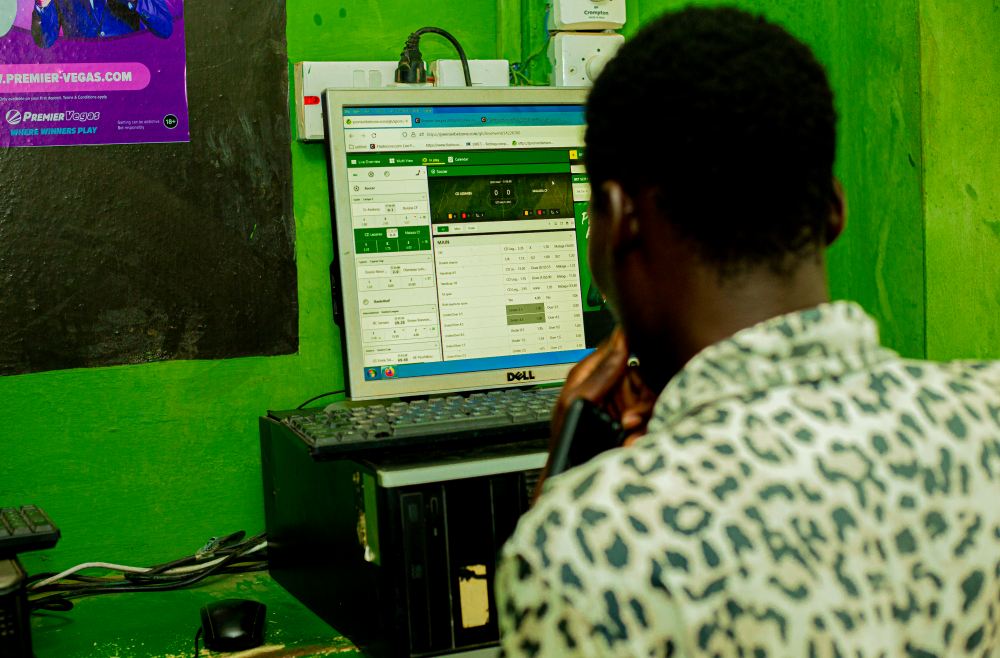
Walk through any commercial street in Accra, Kumasi, or Takoradi after 4 pm. You will see them. Small shops with flat-screen televisions mounted on walls, plastic chairs arranged in rows, young men staring at live football matches on SuperSport, and slips of paper scattered on the floor. The air smells of old receipts, cheap cologne, and quiet hope.
This is the Ghanaian betting shop. And it is one of the most misunderstood cash businesses in the country.
📢 GET DETAILED ARTICLES + JOBS
Join THSB's WhatsApp Channel and never miss a post or opportunity.
To the outsider, it looks like gambling — which it is. But to the owner, it looks like a commission-driven agency model with operating metrics that would impress any franchise operator. Low overhead. High customer frequency. Predictable margins. And a product that sells itself because the customer walks in already convinced that today is his day.
The numbers are staggering. Ghanaians stake somewhere between GHS 3.5 billion and 5 billion cedis on sports betting every year. That is more than the country spends on road construction. More than the entire cocoa marketing board’s annual budget. More than the combined revenues of Ghana’s three largest banks from fees and commissions.
After payouts to winners (which average 70–80% of stakes returned as winnings), the industry’s net revenue — the amount retained by operators and agents — is GHS 400–600 million annually. That is the pool from which betting shops, agents, and the government’s Gaming Commission all take their cut.
This profile examines the mechanics: how a betting shop actually makes money, why the agent is the most important player in the value chain, how the numbers work on a slow Tuesday versus a Champions League final, and why this industry has grown so rapidly despite social opposition and regulatory scrutiny.
The answer is not complicated. Betting shops thrive because they sell hope on credit — and hope, in Ghana’s challenging economic environment, is always in demand.
COMPANY OVERVIEW (Industry Context)
The Betting Ecosystem in Ghana
The industry operates under the Gaming Act, 2006 (Act 721) , regulated by the Gaming Commission of Ghana. The structure has three layers:
| Layer | Role | Examples |
|---|---|---|
| Operator (Bookmaker) | Holds master licence; sets odds; manages risk; processes bets and payouts centrally | SportyBet, Betway, Premier Bet, betPawa, 1xBet |
| Agent (Shop Owner) | Operates retail outlet; accepts stakes; processes bets via operator’s platform; pays winnings | Thousands of independent shop owners |
| Punter (Customer) | Places bets; hopes to win | Estimated 3–5 million active bettors |
The operator-agent relationship is franchise-like but not a formal franchise. The agent uses the operator’s brand, platform, and odds — but the agent is an independent business owner, responsible for their own premises, staff, and electricity. The operator provides the software, the betting lines, the central risk management, and often initial training.
Market Share by Operator (Estimated, 2024)
| Operator | Market Share (Stakes) | Number of Agents | Entry Year |
|---|---|---|---|
| SportyBet | 25–30% | 5,000–7,000 | 2019 (rapid growth) |
| Betway | 20–25% | 4,000–6,000 | 2016 |
| Premier Bet | 15–20% | 3,000–5,000 | 2013 (first mover) |
| betPawa | 10–15% | 2,000–4,000 | 2020 |
| 1xBet | 8–12% | 1,500–3,000 | 2018 |
| Others (Betsafe, Nairabet, etc.) | 5–10% | 1,000–2,000 | Various |
SportyBet’s rapid rise (from zero to market leader in five years) is attributed to aggressive marketing (heavy sponsorship of Ghana Premier League teams), lower minimum stakes (as low as GHS 1), and a reliable mobile app that agents use for processing.
Geographic Distribution of Betting Shops
Betting shops concentrate where young men congregate and disposable income (even small amounts) circulates:
-
High-density low-income neighbourhoods: Nima, Mamobi, Ashaiman, Madina, Konongo, Asawase. These areas have the highest shop density. Margins are lower but volume is high.
-
Transport terminals and lorry parks: Every major trotro station has multiple betting shops or kiosks. The waiting time between buses is betting time.
-
University and polytechnic surroundings: KNUST, University of Ghana, UPSA, Accra Technical University. Students with small allowances are a core demographic.
-
Roadside kiosks (mobile agents): A table, a phone, a small generator, and a handwritten sign. These informal agents operate without formal shops, often in rural areas or at night.
BUSINESS MODEL
The betting shop is a commission-based agency. The agent does not take risk on the outcome of matches. The operator does. The agent earns a percentage of every cedi staked — whether the punter wins or loses.
Revenue Stream 1: Agent Commission (The Core)
The standard agent commission in Ghana is 5–10% of total stakes accepted (gross betting revenue before payouts). Some operators offer higher rates (12–15%) to high-volume agents or in competitive areas.
Example:
| Item | Amount (GHS) |
|---|---|
| Total stakes accepted in a day | 5,000 |
| Agent commission (assume 8%) | 400 |
| Payouts to winners (assume 75% of stakes returned) | (3,750) |
| Operator net revenue (after payouts and commission) | 850 |
The agent’s GHS 400 is earned regardless of whether customers win or lose. The operator’s risk is the payout. The agent has no risk except operational costs and the possibility that the shop fails to attract customers.
How commission rates vary:
| Agent Type | Typical Commission Rate | Conditions |
|---|---|---|
| High-volume shop (GHS 50,000+ monthly stakes) | 10–15% | Negotiated individually with operator |
| Standard shop (GHS 10,000–50,000 monthly) | 7–10% | Standard contract |
| Low-volume shop (< GHS 10,000 monthly) | 5–7% | Basic contract, often with non-exclusivity |
| Mobile/street agent (no fixed shop) | 10–12% | Higher rate to compensate for lower volume and irregular operation |
Revenue Stream 2: Retail Margin on Gaming Accessories
Many betting shops also sell:
-
Pre-paid betting vouchers (for customers without mobile money) — earn 2–5% margin
-
Phone credit and data bundles — 5–10% margin
-
Soft drinks and snacks — 20–30% margin (impulse purchases during matches)
-
Betting tips and “sure games” (unofficial, sometimes ethically questionable) — 100% margin
These ancillary revenues are small per transaction but add 10–20% to a shop’s total profit.
Revenue Stream 3: Agent Recruitment Bonus (MLM-Style)
Operators incentivise agents to recruit other agents. A shop owner who convinces a friend to open another shop and register under their referral code earns a commission override — typically 0.5–2% of the referred shop’s stakes.
Example:
| Item | Amount (GHS) |
|---|---|
| Referred shop monthly stakes | 30,000 |
| Override commission (1%) | 300 |
| Override paid to referring agent | 300 per month, for 12 months |
This multi-level structure has fuelled rapid agent growth. A successful agent with 10 referrals earning GHS 300 each per month makes GHS 3,000 passive income on top of their own shop’s commission.
Revenue Stream 4: The Float Arbitrage (Informal)
A subtle but real income source: the time lag between when the agent collects cash stakes and when the agent pays winners.
How it works:
| Day | Event |
|---|---|
| Monday–Thursday | Agent collects stakes (cash). Winners are paid immediately. But stakes exceed winnings over most weeks (otherwise operators would lose money). |
| Friday–Sunday | Agent holds a cash balance (accumulated stakes minus payouts). |
| Settlement | Agent transfers net balance to operator (weekly or bi-weekly). |
During the week, the agent holds a cash float. Smart agents use this float for short-term purposes: buying stock for their shop, lending to trusted customers at interest, or simply earning float interest in a bank account. The amount can be substantial: a shop with GHS 20,000 weekly stakes might hold GHS 4,000–8,000 average float.
This is not officially a revenue stream, but it is a working capital benefit of the cash-intensive model.
UNIT ECONOMICS (THE SHOP LEVEL)
Revenue Projections (Standard Shop, High-Density Area)
Assumptions: Daily stakes GHS 1,500, 30 days/month, commission 8%.
| Item | Daily (GHS) | Monthly (GHS) |
|---|---|---|
| Total stakes | 1,500 | 45,000 |
| Agent commission (8%) | 120 | 3,600 |
| Ancillary sales (snacks, credit, vouchers) | 30 | 900 |
| Total monthly revenue | 150 | 4,500 |
Monthly Operating Costs (Standard Shop)
| Cost Item | Monthly (GHS) | Notes |
|---|---|---|
| Rent (small shop, high-density area) | 600–1,200 | Varies by location |
| Electricity (TVs, phone charging, lighting) | 300–600 | Higher on match days |
| Staff (1–2 shop attendants, owner often works as one) | 800–1,500 | GHS 10–15 per day plus small commission |
| Internet/data (for bet processing) | 150–300 | Essential |
| TV subscription (DStv/GOtv, sports package) | 200–400 | For live matches |
| Phone/tablet (operator-provided or own) | 0–100 | Operators sometimes provide devices |
| Shop accessories (chairs, betting slips, pens) | 100–200 | Consumables |
| Security (optional) | 100–300 | For late-night operations |
| Generator fuel (if power unreliable) | 100–300 | Varies by location |
| Total monthly costs | 2,350–5,000 |
Monthly Net Profit
| Scenario | Revenue (GHS) | Costs (GHS) | Net Profit (GHS) | Margin |
|---|---|---|---|---|
| Low-volume shop (1,000 daily stakes) | 3,000 | 2,350 | 650 | 22% |
| Average shop (1,500 daily stakes) | 4,500 | 3,500 | 1,000 | 22% |
| High-volume shop (3,000 daily stakes) | 9,000 | 5,000 | 4,000 | 44% |
| Very high volume (5,000+ daily stakes) | 15,000 | 7,000 | 8,000 | 53% |
The average betting shop in a good location nets GHS 1,000–3,000 monthly. That is not a fortune. But it is reliable, predictable, and cash-based — and for many shop owners, it is a second income on top of another job or business.
Why the numbers look low: The average shop is not the SportyBet-branded outlet in a prime location. Most betting shops are small, cramped, and operate on thin margins. The real money in betting is not at the shop level — it is at the operator level (the bookmaker) and the multi-agent owner level (someone with 5–20 shops).
Multi-Shop Owner Economics
A serious betting entrepreneur owns multiple shops. The economics improve significantly with scale.
| Number of Shops | Total Monthly Net Profit (GHS) | Owner Effort | Management Structure |
|---|---|---|---|
| 1 | 1,000–3,000 | Full-time (owner works as attendant) | None |
| 3–5 | 6,000–20,000 | Part-time oversight, one supervisor | Basic (supervisor checks daily takings) |
| 10–20 | 30,000–80,000 | Strategic (site selection, operator negotiations) | Full management team |
| 50+ | 200,000+ | Portfolio management | Professional operations |
A well-known betting agent in Kumasi reportedly owns 47 shops across Ashanti Region. At average net profit of GHS 3,000 per shop, his monthly income exceeds GHS 140,000. This is the hidden tier of the industry — not the shop attendants, but the aggregators.
MARKET POSITION & COMPETITION
Why Betting Shops Thrive in Ghana
1. Unemployment and Underemployment
Ghana’s youth unemployment rate (ages 15–35) exceeds 15% officially, and is much higher unofficially when discouraged workers are counted. A young man with no job and time to fill finds the betting shop a cheap form of entertainment — and a legitimate hope (however slim) of escaping poverty. The GHS 5–10 stake is less than the price of a movie ticket or a beer.
2. Low Minimum Stakes
Operators have driven minimum stakes down to GHS 1 in some cases. For the price of a single sachet of water, a punter can place a bet. This democratisation of gambling has expanded the market to include even the poorest Ghanaians.
3. The Football Factor
Ghana is football-obsessed. The English Premier League, La Liga, Serie A, and the UEFA Champions League are broadcast live. A betting shop with a large TV becomes a viewing centre — customers come to watch matches, and while watching, they bet. The shop sells the experience, not just the bet.
4. Cash Economy Compatibility
Betting is cash-intensive. Stakes are paid in cash. Winnings are paid in cash (for amounts under a threshold, typically GHS 1,000–2,000). For a population where many people do not have bank accounts or use mobile money exclusively, cash betting is accessible.
Competitive Dynamics
| Factor | Betting Shop Advantage | Online/Mobile Advantage |
|---|---|---|
| Accessibility | Physical presence in neighbourhood | Anywhere with phone and data |
| Social experience | Watch matches with others, shared excitement | Isolated, private |
| Trust | Cash paid immediately, no digital delays | Some distrust of online payments |
| Minimum stake | GHS 1–5 | GHS 1–5 (same) |
| Operating hours | Daytime only (typically 8 am–8 pm) | 24/7 |
| Overhead | High (rent, staff, TV, electricity) | Low (only digital infrastructure) |
The threat of mobile: As mobile money penetration increases (now over 90% of adults have access to MoMo), more betting moves online. However, shop-based betting has proven resilient because:
-
It serves customers without smartphones (still a significant segment)
-
It offers community and viewing experience
-
It provides immediate cash payout (mobile payouts can take hours)
-
It is a social activity, not just a transaction
Operator-Level Competition
The operators (SportyBet, Betway, etc.) compete fiercely on:
-
Odds: Better odds attract more bets (higher expected return to punters)
-
Agent commission: Higher commission attracts more agents
-
Marketing: Sponsorships (SportyBet sponsors 8+ Ghana Premier League clubs), TV ads, social media influencers
-
Technology: User-friendly apps for agents, fast payout systems
-
Bonuses: “Free bets” for new customers, deposit matches, accumulator boosts
The operator market has consolidated to 3–4 major players, with smaller operators struggling to compete on odds and marketing budget.
DIGITAL STRATEGY & INNOVATION
The Agent Management System (AMS)
Every major operator provides agents with a proprietary digital platform — typically an Android app on a provided tablet or smartphone. The agent uses this to:
-
Register new customers
-
Accept stakes (scan a betting slip or enter manually)
-
Calculate potential payouts (odds × stake)
-
Process winnings (deduct from operator balance)
-
View daily reports and commission earned
The AMS is real-time — stakes are transmitted to the operator immediately, and odds are updated live as matches progress.
Mobile Money Integration
Most agents now use mobile money for:
-
Customers who prefer digital stakes (scan QR code)
-
Paying winnings above the cash threshold (larger amounts sent to MoMo wallet)
-
Settling their net balance with the operator (weekly transfer)
However, cash remains dominant for small stakes (GHS 50 and below) because:
-
Cash is instant and anonymous
-
No transaction fees (MoMo fees eat into small stakes)
-
Many bettors distrust digital records of their gambling
Betting Slips vs. Digital Tickets
The paper betting slip is dying but not dead. Older and more traditional punters still write their selections on paper slips. The agent enters the slip into the AMS and prints a digital ticket. But increasingly, customers bet directly via the operator’s mobile app and show a QR code to the agent for cash payment. The paper slip survives only in low-tech shops with older clientele.
What Has Not Worked
Automated self-service kiosks (like betting terminals) have been tried and have failed. Ghanaians want the human interaction — the agent who can explain odds, suggest a “safe” accumulator, and commiserate when a bet loses. Betting is social, not transactional.
CHALLENGES & RISKS
1. Regulatory Risk
The Gaming Commission has become more active in recent years: inspecting shops, fining unlicensed operators, and enforcing rules on advertising (e.g., no betting ads before 8 pm, no targeting minors). A future government more hostile to gambling could:
-
Increase taxes on betting revenue (currently 20% of gross gaming revenue for operators)
-
Limit the number of betting shops per area
-
Ban advertising entirely (as some countries have done)
-
Restrict betting to online-only (eliminating physical shops)
Probability: Medium (30–40% over 5 years). Gambling tax revenue is attractive to governments, but social opposition is growing.
2. Problem Gambling and Social Harm
The social costs are real. Families report men spending rent money on bets. Young people drop out of school or work to bet full-time. Loan sharks operate near betting shops, offering high-interest loans to desperate gamblers.
The business risk: If the government or civil society successfully campaigns against betting as a public health issue, demand could fall. Some churches already preach against betting. The stigma is growing.
3. Fraud and Theft
Betting shops are cash-intensive and often located in high-crime areas. Risks include:
-
Robbery: Armed robbery of betting shops, especially after match days when cash balances are high.
-
Staff theft: Attendants who pocket stakes without entering them into the AMS (the operator does not see the bet, the customer loses if they win because no record exists).
-
Fake winning slips: Sophisticated fraudsters who print fake winning tickets.
Mitigation: Agents use CCTV, limit cash on premises, make frequent bank deposits, and reconcile AMS reports against physical cash daily.
4. Odds Arbitrage by Sharp Bettors
A small number of sophisticated bettors (“sharps”) identify discrepancies in odds between operators and place large bets to guarantee profit. Operators ban these customers when detected, but they create losses in the short term. For the shop agent, this is not a direct risk — the operator absorbs the loss — but if an operator becomes unprofitable due to sharp betting, they may reduce agent commissions or exit the market.
5. Electricity and Internet
Betting shops cannot operate without power and data. In areas with unreliable electricity, agents need generators (fuel cost) and multiple internet connections (mobile data + fibre backup). These costs reduce already thin margins.
6. Seasonality
Betting volume follows the football calendar:
| Period | Volume Relative to Average | Reason |
|---|---|---|
| Premier League season (August–May) | 120–150% | Peak demand, weekly matches |
| UEFA Champions League (knockout stages, February–May) | 130–160% | High-profile matches |
| International tournaments (World Cup, AFCON, Euros) | 150–200% | Surge demand (infrequent, every 2–4 years) |
| Off-season (June–July, no major leagues) | 50–70% | Low volume, shops may operate at loss |
Lean months (June–July) are when marginal shops close. Surviving shops use cash reserves from peak months or diversify into other gambling products (virtual football, slots, lotto) to smooth revenue.
ECONOMIC & INDUSTRY IMPACT
Employment
| Role | Estimated Workers |
|---|---|
| Shop attendants (formal shops) | 15,000–25,000 |
| Mobile/street agents (informal) | 10,000–15,000 |
| Shop owners (working proprietors) | 8,000–12,000 |
| Operator staff (marketing, tech, customer service) | 2,000–3,000 |
| Gaming Commission and regulators | 200–300 |
| Total direct employment | 35,000–55,000 |
This is a significant employer of young men with limited formal education. For many, working in a betting shop is preferable to okada riding, street hawking, or day labouring.
Government Revenue
The Gaming Commission collects:
-
Operator licence fees (GHS 100,000–500,000 annually per operator)
-
Agent registration fees (GHS 500–2,000 per agent annually)
-
Tax on gross gaming revenue (20% of operator net revenue after payouts)
Estimated total government revenue from betting: GHS 80–120 million annually (excluding income tax on agent profits, which is largely uncollected).
Social Cost (Unquantified)
No rigorous study exists on problem gambling prevalence in Ghana. But anecdotal evidence suggests significant social harm: family breakdowns, diversion of household income, debt traps, and in extreme cases, crime to fund gambling. The industry does not track these costs. Neither does the government.
FUTURE OUTLOOK
Short-to-Medium Term (1–3 years)
-
Further consolidation among operators. SportyBet and Betway will increase market share; smaller operators (Betsafe, Nairabet) may exit or be acquired.
-
More mobile betting, but shops remain. The trend is toward mobile, but physical shops will not disappear. They will evolve into “hybrid” models: customers bet via app but visit shops for payouts, viewing, and social experience.
-
Increased regulation. The Gaming Commission will enforce stricter advertising rules and may cap the number of shops per operator.
-
Expansion into rural areas. Betting shops are still concentrated in cities. Operators will push into rural towns where competition is lower, though average stakes will be smaller.
Long-Term (5–10 years)
Scenario 1: Normalisation (Probability: 50%)
Betting becomes accepted as a normal leisure activity, similar to lotto. Regulation stabilises. The industry grows with the economy. Betting shops remain ubiquitous but face competition from mobile.
Scenario 2: Crackdown (Probability: 30%)
Social opposition leads to tighter regulation: advertising ban, shop density limits, higher taxes. The industry shrinks. Many shops close. Mobile betting becomes the primary channel (harder to regulate, but also harder to tax).
Scenario 3: Technological Disruption (Probability: 20%)
Cryptocurrency betting, prediction markets, or peer-to-peer betting platforms bypass traditional operators and agents. The agent model becomes obsolete. Shop owners who fail to adapt exit.
Strategic Risks to Monitor
| Risk | Probability | Impact | Mitigation |
|---|---|---|---|
| Government tax increase on betting revenue | Medium (40%) | High (reduces agent commissions, operator marketing budgets) | Diversify into other gaming products (lotto, virtual sports) |
| Mobile money transaction fees making small bets uneconomical | Medium (50%) | Medium (shifts customers to cash, but cash is less convenient) | Accept both; no direct mitigation |
| Premier League broadcasting rights moving to expensive platform (e.g., Amazon) | Low (10%) | High (reduces football viewing in shops) | Use cheaper alternatives (local leagues, virtual football) |
| Church-led boycott campaign | Low (15%) | Medium (reduces demand among religious customers) | Target non-religious demographics |
THSB CONCLUSION
The betting shop is not a get-rich-quick business for the average owner. The numbers show modest profits — GHS 1,000–3,000 monthly for a standard shop — which is a decent living but not wealth. The real money is in aggregation (owning multiple shops) or in operating at the bookmaker level.
But the industry’s resilience is remarkable. Despite economic downturns, despite social stigma, despite the rise of mobile betting, the physical betting shop survives. Why? Because it solves a human need that the formal economy does not address: the need for hope, for excitement, for the possibility — however remote — that tomorrow will be different.
The GHS 5 stake is not a bet. It is a lottery ticket on life. And as long as young Ghanaians feel that the formal economy offers them limited chances, they will walk into betting shops with their small cedis and their large dreams.
The agent who sits behind the counter, processing bets and paying winnings, is not a predator. He is a service provider in a market that exists whether or not it is regulated. The business model is simple: take a small percentage of every transaction, keep costs low, and be there every day. It is not glamorous. But it is cash. And cash, in Ghana, is always king.
FAQ SECTION
1. How do betting shops in Ghana make money?
Betting shops earn a commission (5–15%) on every cedi staked by customers, regardless of whether the customer wins or loses. The operator (bookmaker) takes the risk on payouts. The agent earns their commission from the total stakes.
2. How much profit does a typical betting shop make?
An average shop (GHS 1,500 daily stakes) nets GHS 1,000–3,000 monthly after rent, staff, electricity, and other costs. Margin is 20–30%. High-volume shops can net GHS 5,000–15,000 monthly.
3. What is the commission rate for betting agents in Ghana?
Standard commission is 7–10% of total stakes. High-volume agents (GHS 50,000+ monthly stakes) negotiate 10–15%. Mobile/street agents often receive 10–12% to compensate for lower volume.
4. How much capital do I need to open a betting shop?
GHS 5,000–15,000 for agent registration, rent deposit, TV, furniture, and initial operating cash. Some operators provide free tablets/phones. The largest cost is working capital for paying winnings before operator settlement.
5. Do I need a license to operate a betting shop in Ghana?
Yes. All agents must register with the Gaming Commission of Ghana and be licensed by a registered operator (SportyBet, Betway, etc.). Operating without a license is illegal and risky (fines, closure).
6. Is betting legal in Ghana?
Yes. Sports betting is legal under the Gaming Act, 2006 (Act 721). The Gaming Commission regulates operators and agents. However, unlicensed betting is illegal.
7. How do operators like SportyBet and Betway make money?
Operators keep the difference between total stakes and total payouts (the “hold” or “gross gaming revenue”), minus agent commissions and taxes. Typical operator hold is 15–25% of stakes (meaning 75–85% returned as winnings).
8. Why are betting shops so common in low-income areas?
Low-income areas have high concentrations of young men with time but limited income. Betting offers cheap entertainment (GHS 5–10) and the hope of a large win. Shops also serve as social spaces for watching football matches.
9. Can I own multiple betting shops?
Yes. Many successful betting entrepreneurs own 5–50 shops. They employ managers for each shop and earn commission from all. Multi-shop ownership is where significant wealth is built in this industry.
10. How does mobile money affect betting shops?
Mobile money has shifted some betting online, but physical shops remain resilient because they offer cash payouts, social viewing, and service for customers without smartphones. Many shops now offer hybrid models (bet via app, collect cash winnings at shop).
11. What are the risks of owning a betting shop?
Major risks: robbery (cash-intensive), staff theft, regulatory changes (tax increases, advertising bans), electricity and internet unreliability, seasonality (low volume during football off-season), and social stigma.
12. Is the betting shop business ethical?
This is debated. Proponents argue it provides employment and entertainment in a difficult economy. Critics cite problem gambling, family financial harm, and exploitation of vulnerable populations. The business is legal but morally contested. Each owner must decide their position.
Source: The High Street Business
Disclaimer: Some content on The High Street Business may be aggregated, summarized, or edited from third-party sources for informational purposes. Images and media are used under fair use or royalty-free licenses. The High Street Business is a subsidiary of SamBoad Publishing under SamBoad Business Group Ltd, registered in Ghana since 2014.
For concerns or inquiries, please visit our Privacy Policy or Contact Page.

Samuel Kwame Boadu is a Ghanaian entrepreneur, writer, and digital consultant passionate about creating impactful stories and business solutions. He is the Founder & CEO of SamBoad Business Group Ltd, a dynamic company with subsidiaries in digital marketing, logistics, publishing, and risk management.