




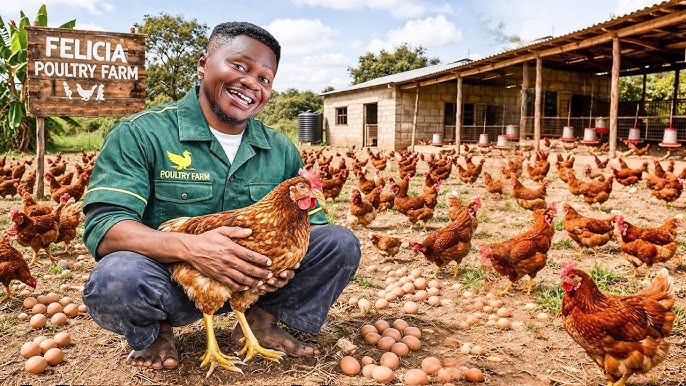
Feathers, feed, and the fragile economics of local chicken production
QUICK FACTS BOX
| Category | Details |
|---|---|
| Industry | Poultry farming (broilers and layers) |
| Typical Business Model | Production (day-old chicks to table-ready birds or eggs) + direct sales or wholesale |
| Primary Revenue Driver | Live bird weight / number of eggs × market price |
| Average Farmgate Price (Broiler, live weight) | GHS 15–25 per kg (varies significantly by season and imports) |
| Average Farmgate Price (Eggs, per crate of 30) | GHS 15–25 |
| Industry Size (Annual) | GHS 2.5–3.5 billion (including feed, veterinary, equipment) |
| National Egg Production (Annual) | 180–220 million eggs |
| National Broiler Production (Annual) | 25,000–35,000 metric tonnes |
| Self-Sufficiency Ratio | 15–20% (the rest imported, primarily frozen chicken from Brazil, US, EU) |
| Number of Commercial Poultry Farms | 3,000–5,000 |
| Number of Smallholder/Backyard Farms | 30,000–50,000 |
| Barriers to Entry | Moderate to High (capital GHS 50k–500k for commercial scale) |
EXECUTIVE INTRODUCTION
The mathematics of poultry farming in Ghana is brutal.
A broiler chick costs GHS 4–6. It will consume GHS 20–30 worth of feed over six to eight weeks. It will reach a live weight of 1.5–2.5 kg. At current farmgate prices (GHS 15–25 per kg), the farmer’s revenue per bird is GHS 22–62. Subtract the cost of the chick, the feed, the medications, the labour, the electricity for brooding, the transport to market, and the mortality (5–15% of birds die before slaughter). On paper, there is profit. In reality, most poultry farmers in Ghana lose money or barely break even.
📢 GET DETAILED ARTICLES + JOBS
Join THSB's WhatsApp Channel and never miss a post or opportunity.
And yet, some succeed. A minority — perhaps 10–15% of commercial operations — are consistently profitable. They have survived for decades. They have expanded from 5,000 birds to 50,000 birds. They have built feed mills, hatcheries, and processing facilities. They employ dozens of workers and supply major hotels, supermarkets, and fast-food chains.
This profile examines why. What separates the failing poultry farm from the successful one? The answer is not simple. It involves scale, vertical integration, cost control, disease management, market access, and — perhaps most critically — the ability to compete with imported frozen chicken, which enters Ghana at prices that often undercut local production costs.
The poultry industry in Ghana is a case study in the challenges of import competition. The country has a natural comparative advantage in poultry production? Not really. Feed ingredients (maize, soybean) are grown locally but are also exported and subject to price volatility. Climate is suitable but disease pressure is high. Labour is available but productivity varies. The result is an industry that survives on a mix of protectionism (high import tariffs on frozen chicken, though often circumvented), consumer preference for fresh chicken (which commands a premium), and sheer entrepreneurial grit.
This THSB profile goes deep into the economics: feed conversion ratios, mortality rates, egg production curves, credit access, and the seasonal price swings that can make or break a farmer. It is not a guide to poultry farming. It is an intelligence report on why the industry is the way it is — and what it would take to change it.
THE POULTRY VALUE CHAIN
Understanding failure and success requires understanding the full value chain. Poultry farming in Ghana is not a single activity. It is a sequence of specialised functions:
| Segment | Role | Key Players | Typical Margin |
|---|---|---|---|
| Hatchery | Produces day-old chicks (DOC) from breeder stock | Darko Farms, Akate Farms, Agricare, various smaller hatcheries | 10–20% |
| Feed mill | Produces starter, grower, and layer feed | Wienco, Raanan, Agricare, small local mills | 8–15% |
| Broiler farm | Raises chicks to slaughter weight (6–8 weeks) | Thousands of farms, from 500 to 100,000 birds | Highly variable (–20% to +30%) |
| Layer farm | Raises pullets to laying age, produces eggs | Similarly fragmented | –10% to +25% |
| Slaughter/processing | Kills, dresses, packages birds | Mostly on-farm; few dedicated abattoirs | 5–15% |
| Distribution | Moves birds/eggs to market | Farm direct, wholesalers, cold stores | 10–20% |
| Retail | Sells to consumers | Wet markets, supermarkets, restaurants | 15–30% |
Most poultry farmers in Ghana are not integrated. They buy day-old chicks from a hatchery. They buy feed from a mill. They raise the birds. They sell live birds (or dressed) to wholesalers or directly to consumers. They are price-takers at every stage: the hatchery sets chick prices, the feed mill sets feed prices (often with credit terms that include high interest), and the market sets bird prices based on supply, demand, and the ever-present competition from imported frozen chicken.
The successful farmers are those who integrate — backward into feed production or hatchery operations, or forward into processing and direct retail. Integration captures margins that would otherwise go to intermediaries and insulates the farmer from external price shocks.
BROILER VS. LAYERS: TWO DIFFERENT BUSINESS MODELS
Poultry farming in Ghana splits into two distinct business models: broilers (meat) and layers (eggs). The economics differ significantly.
Broiler Economics
Production cycle: Day-old chick → 6–8 weeks → slaughter.
Revenue: Per-bird revenue = live weight × price per kg.
Cost drivers: Chick cost, feed cost (the largest), mortality, medication, electricity (brooding), labour, transport.
Typical broiler performance metrics (well-managed farm):
| Metric | Value |
|---|---|
| Average live weight at 7 weeks | 1.8–2.2 kg |
| Feed conversion ratio (FCR) | 1.8–2.2 kg feed per kg live weight |
| Mortality | 5–10% |
| Feed cost per kg | GHS 3.50–5.00 |
| Total feed cost per bird (2.0 kg weight × 2.0 FCR = 4.0 kg feed × GHS 4.00) | GHS 16.00 |
| Chick cost | GHS 4.00–6.00 |
| Medications and vaccines | GHS 1.00–2.00 |
| Electricity (brooding) | GHS 0.50–1.00 |
| Labour (amortised) | GHS 1.00–2.00 |
| Transport and marketing | GHS 0.50–1.00 |
| Total cost per bird (excluding mortality) | GHS 23.00–28.00 |
| Adjust for mortality (10% loss) | Add 11% to cost = GHS 25.50–31.00 |
| Revenue per bird (2.0 kg × GHS 18/kg) | GHS 36.00 |
| Profit per bird | GHS 5.00–10.50 |
At GHS 5–10 profit per bird, a farm producing 1,000 birds per batch (5–6 batches per year) generates GHS 25,000–60,000 annual profit. This is a decent return on investment (typical investment GHS 100,000–200,000 for 1,000-bird capacity). However, these numbers assume good management, low mortality, and stable feed prices. In reality, all three are highly variable.
Layer Economics
Production cycle: Day-old pullet → 18–20 weeks to start laying → laying for 12–18 months → slaughter as spent hen.
Revenue: Egg sales (primary), spent hen meat (secondary).
Cost drivers: Pullet rearing cost (first 18 weeks), daily feed during lay, mortality, medication, labour.
Typical layer performance metrics (well-managed farm):
| Metric | Value |
|---|---|
| Pullet rearing cost (day-old to point of lay) | GHS 25–35 |
| Egg production per hen per year | 250–280 eggs |
| Feed consumption during lay | 120–130 grams per hen per day |
| Feed cost during lay (annual, 120g/day × 365 = 43.8 kg × GHS 3.50) | GHS 153 |
| Medications and vaccines (annual) | GHS 5–10 |
| Labour (amortised) | GHS 5–10 |
| Total cost per hen (excluding mortality) | GHS 188–208 |
| Revenue from eggs (260 eggs × GHS 0.60 per egg) | GHS 156 |
| Revenue from spent hen (2.0 kg × GHS 12/kg — lower than broiler) | GHS 24 |
| Total revenue per hen | GHS 180 |
Profit per hen: GHS –8 to –28. This suggests layer farming is unprofitable on paper. How do layer farms survive?
The missing factors:
-
Egg prices vary. Peak prices can reach GHS 1.00 per egg (December, Easter, before holidays). A farm that times production to peak demand can achieve higher average prices.
-
Feed costs vary. Farmers who produce their own feed or buy in bulk at wholesale prices pay GHS 2.50–3.00 per kg, not GHS 3.50.
-
Mortality is lower in well-managed layer farms (3–5% vs. 10%).
-
Spent hen meat can fetch higher prices if sold to specialised buyers (GHS 15–18/kg).
With optimisation, a layer farm can achieve GHS 5–15 profit per hen. At 2,000 hens (a modest commercial farm), annual profit is GHS 10,000–30,000 — not high, but viable.
The critical difference: Broiler farming offers faster cash flow (6–8 weeks) but higher risk (feed price volatility, disease). Layer farming offers steadier cash flow (daily egg sales) but requires longer capital commitment (pullet rearing period).
WHY POULTRY FARMING FAILS IN GHANA
The failures are more common than the successes. Based on interviews with industry participants and analysis of farm economics, the primary causes of failure are:
1. Feed Cost Volatility (The Primary Killer)
Feed accounts for 60–75% of total production costs in poultry. The two main ingredients — maize and soybean meal — are subject to wild price swings.
| Ingredient | Ghanaian Source | Price Volatility Drivers |
|---|---|---|
| Maize | Local farms (but also imported) | Seasonal production (harvest: August–December; lean: April–July); export demand to neighbouring countries; crop failures due to weather |
| Soybean meal | Locally processed or imported | Global soybean prices (Chicago Board of Trade); shipping costs; cedi/dollar exchange rate |
Example: In 2022, maize prices rose from GHS 1.50 per kg to GHS 4.00 per kg — a 167% increase. Feed prices followed. Poultry farmers who had not locked in feed prices or forward-contracted maize saw their margins disappear overnight. Many sold their flocks at a loss or slaughtered early to stop feeding costs.
Why this is worse for small farmers: Large farmers buy feed in bulk (tonnes), negotiate credit terms, and sometimes have their own feed mills. Small farmers buy bag by bag from local feed sellers, paying retail prices that include the seller’s margin.
2. Import Competition (The Structural Crutch)
Ghana imports approximately 80–85% of its poultry meat consumption, primarily as frozen chicken from Brazil, the United States, and the European Union. These imports arrive at prices that often undercut local production costs.
Price comparison (2024):
| Product | Local production cost (farmgate, GHS/kg) | Imported price (wholesale, GHS/kg) |
|---|---|---|
| Whole frozen chicken | 15–20 | 12–16 |
| Chicken thighs | 18–25 | 14–18 |
| Chicken wings | 20–30 | 10–15 |
Imported chicken is cheaper because:
-
Feed is cheaper in Brazil and the US (large-scale agriculture, subsidised)
-
Production scale is vastly larger (Brazilian farms produce millions of birds, not thousands)
-
Shipping costs are relatively low (containerised, efficient ports)
-
Some exporting countries subsidise their poultry industries
Government response: Ghana levies import duties on frozen chicken (currently 20% plus VAT and other levies, total approximately 35–40%). However, smuggling (through unapproved routes) and under-invoicing (declaring lower values than actual) are common. Effective protection is lower than statutory rates.
Consumer preference: Some consumers prefer fresh local chicken (better taste, no thawing required) and are willing to pay a premium. This premium (GHS 5–10 per kg) is the lifeline for local broiler farmers. Without it, the industry would collapse.
3. Disease and Mortality
Poultry is vulnerable to diseases: Newcastle disease, infectious bursal disease (Gumboro), fowl pox, coccidiosis, and — most feared — highly pathogenic avian influenza (HPAI, or “bird flu”).
| Disease | Mortality Rate (unvaccinated) | Vaccine Cost (GHS per bird) | Economic Impact |
|---|---|---|---|
| Newcastle | 80–100% | 0.20–0.50 | Catastrophic |
| Gumboro | 20–50% | 0.15–0.30 | Severe |
| Coccidiosis | 5–20% | 0.10–0.20 (prophylaxis) | Moderate |
A farmer who skips vaccination to save money (GHS 0.50 per bird × 1,000 birds = GHS 500) risks losing their entire flock. Yet some do — and when disease strikes, they lose everything.
Biosecurity failures: Many small farms are open to visitors, share equipment, and are located near other farms. Disease spreads rapidly.
The 2015–2016 avian influenza outbreak: HPAI H5N1 was detected in Ghana. The government culled hundreds of thousands of birds. Affected farmers received compensation (delayed, inadequate). Many never restocked.
4. Credit Constraints
Poultry farming is working capital intensive. A farmer needs cash upfront for:
-
Day-old chicks (GHS 4–6 each)
-
Feed (GHS 16–20 per bird for a broiler cycle)
-
Medications, vaccines, electricity
For a 5,000-bird broiler farm, working capital requirement is GHS 120,000–150,000 per cycle. Banks are reluctant to lend to poultry farmers because:
-
Collateral is lacking (many farmers do not own land)
-
Risk is high (disease, price volatility)
-
Industry is informal (no audited accounts)
Consequence: Farmers rely on expensive informal credit: loans from feed suppliers (who charge implicit interest of 20–40% per cycle), money lenders (10–20% per month), or personal savings.
5. Poor Management and Technical Skills
Poultry farming is not simply “putting birds in a pen and feeding them.” It requires:
-
Temperature control (brooding at 32–35°C, reducing gradually)
-
Ventilation management (ammonia buildup causes respiratory disease)
-
Feed formulation (protein, energy, vitamins, minerals)
-
Vaccination schedules and administration
-
Biosecurity protocols
-
Record keeping (feed intake, mortality, weight gain)
Many small farmers lack these skills. They learn from neighbours, not from formal training. They repeat the same mistakes cycle after cycle.
The result: Feed conversion ratios of 2.5–3.0 (instead of 1.8–2.2), mortality of 15–25% (instead of 5–10%), and birds that fail to reach target weight. The economics collapse.
6. Market Access and Price Volatility
Poultry farmers are price-takers. Wholesalers who buy live birds at the farm gate set prices based on:
-
Supply (how many birds are ready for market that week)
-
Demand (seasonal — high before Christmas, Easter; low in January, August)
-
Imported chicken prices (if imports are cheap, local prices fall)
The slaughter schedule trap: Broilers reach slaughter weight within a narrow window (6–8 weeks). If a farmer’s birds are ready during a period of low demand (e.g., mid-January), they may sell at a loss — or hold birds longer, incurring additional feed costs, risking overweight (less preferred by consumers).
Example: A farmer with 5,000 birds ready in the second week of January. Demand is low (post-Christmas). Wholesalers offer GHS 12/kg. The farmer’s break-even is GHS 14/kg. They can sell at a loss (GHS 2 per kg × 2 kg × 5,000 = GHS 20,000 loss) or hold birds for another week, feeding them at GHS 2,000 per day, hoping prices improve. Many sell at a loss.
WHY POULTRY FARMING SUCCEEDS IN GHANA
Despite the challenges, some poultry farmers thrive. Their success factors are the inverse of the failure factors.
1. Vertical Integration (The Most Important Success Factor)
Successful poultry farmers control multiple stages of the value chain:
-
Backward integration into feed: They operate their own feed mills, buying maize and soybean in bulk (often directly from farmers) and grinding their own feed. This reduces feed cost by 15–25% and insulates them from feed mill price hikes.
-
Backward integration into hatchery: They produce their own day-old chicks from parent stock, eliminating chick cost volatility and ensuring biosecurity.
-
Forward integration into processing and retail: They operate slaughterhouses, package dressed chicken, and sell directly to supermarkets, hotels, and restaurants — capturing margins that would otherwise go to intermediaries.
Example: Darko Farms (one of Ghana’s largest integrated poultry operations) owns hatcheries, feed mills, broiler farms, and a processing facility. By controlling the entire chain, they achieve feed conversion ratios below 1.8, mortality below 5%, and consistent market access.
Small farmer lesson: Full integration is capital-intensive (GHS 2–10 million). However, partial integration — e.g., forming a cooperative to buy feed ingredients in bulk, or jointly operating a small feed mill — can achieve some of the same benefits.
2. Scale
Larger farms benefit from economies of scale:
-
Feed: Bulk purchasing discounts (5–15%)
-
Veterinary: Per-bird cost of vaccinations and medications falls with volume
-
Labour: Specialisation (e.g., dedicated vaccinator, feed mixer) improves productivity
-
Market access: Large farms have negotiating power with wholesalers and supermarkets
Minimum efficient scale: Industry experts suggest a broiler farm needs at least 10,000 birds per cycle (50,000–60,000 birds annually) to achieve competitive costs. Layer farms need at least 5,000 hens.
3. Contract Farming and Outgrower Schemes
Some successful farms operate as outgrower schemes: They provide day-old chicks, feed, medications, and technical support to smallholder farmers, who raise the birds and sell them back at a guaranteed price. The smallholder assumes less risk (input costs are covered; market is guaranteed). The large farm secures production volume without owning the land or facilities.
Example: Akate Farms runs an outgrower scheme with hundreds of small farmers. Akate provides chicks and feed; the farmer provides labour, housing, and utilities; Akate buys back the mature birds at a fixed price per kg. The farmer earns a predictable income. Akate gains scale.
4. Disease Management and Biosecurity
Successful farms treat biosecurity as a priority, not an afterthought:
-
Controlled access: Visitors are restricted; those who enter wear protective clothing and disinfect boots.
-
All-in, all-out production: Entire houses are emptied, cleaned, and disinfected between batches (no mixing of age groups).
-
Vaccination compliance: Strict schedules, proper administration.
-
Mortality monitoring: Dead birds are removed immediately and examined for signs of disease.
The cost of biosecurity: GHS 1–2 per bird per cycle. The benefit: reduced mortality (5% vs. 15%), improved feed conversion, and avoidance of catastrophic outbreaks.
5. Market Differentiation
Successful farmers do not compete solely on price. They differentiate:
-
Fresh, not frozen: Local fresh chicken commands a premium (GHS 5–10/kg over frozen imports).
-
“Free-range” or “village chicken”: Some consumers pay a higher price (GHS 30–40/kg) for birds raised outdoors, fed local grains, with no antibiotics.
-
Specialised cuts: Instead of selling whole birds, successful farms sell thighs, drumsticks, breasts, and wings separately — capturing higher margins from customers willing to pay for convenience.
-
Egg grading: Large, medium, small eggs are priced differently. Large eggs (65g+) fetch premium prices.
6. Access to Credit and Formal Finance
The minority of farmers who succeed are often those who have:
-
Land ownership (collateral for bank loans)
-
Formal business registration (audited accounts, tax compliance)
-
Relationships with agricultural banks (e.g., Agricultural Development Bank, ARB Apex)
These farmers access credit at single-digit interest rates (25–30% per year in Ghana’s high-interest environment — single-digit is relative) rather than the 60–100% effective rates of informal lenders.
7. Timing and Market Intelligence
Successful farmers do not produce blindly. They:
-
Monitor seasonal demand patterns and schedule production to hit peak periods (Christmas, Easter, Eid).
-
Maintain relationships with multiple buyers (wholesalers, supermarkets, hotels, caterers) to avoid being trapped with a single buyer who sets low prices.
-
Use cold storage to hold birds for 1–2 weeks if prices are temporarily low, selling when prices recover.
The cold storage advantage: A small cold room (GHS 20,000–50,000) allows a farmer to slaughter birds, freeze them, and sell over 2–3 months. This smooths price volatility. Few small farmers have cold storage; successful ones do.
COST STRUCTURE DEEP DIVE
Feed Cost Breakdown (Per 50kg bag, Grower Feed)
| Ingredient | Percentage | Cost (GHS) at market prices (GHS 3.50/kg maize, GHS 4.00/kg soybean) |
|---|---|---|
| Maize | 60% | 105 |
| Soybean meal | 20% | 40 |
| Fish meal / other protein | 5% | 10 |
| Wheat bran / filler | 10% | 15 |
| Premix (vitamins, minerals, amino acids) | 3% | 10 |
| Oil (vegetable or palm) | 2% | 5 |
| Total cost per bag | 185 | |
| Cost per kg | 3.70 |
Feed mill margin: The farmer who buys from a commercial feed mill pays GHS 4.50–5.50 per kg — a markup of 20–50%. The farmer who mills their own feed pays GHS 3.70–4.00 per kg, saving GHS 0.50–1.50 per kg.
Impact on broiler production costs (2.0 kg bird, 2.0 FCR = 4.0 kg feed):
| Feed source | Feed cost per kg | Total feed cost per bird | Difference per bird |
|---|---|---|---|
| Commercial feed mill (retail) | 5.00 | 20.00 | — |
| Commercial feed mill (bulk, farmer direct) | 4.50 | 18.00 | (2.00) |
| Farmer-owned mill (own ingredients) | 3.80 | 15.20 | (4.80) |
A farmer with 10,000 birds per cycle saves GHS 48,000 per cycle by milling their own feed. Over 6 cycles per year, that is GHS 288,000 — the difference between loss and profit.
Other Cost Components (Broiler, 10,000 Birds)
| Cost Item | Per bird (GHS) | Total (GHS) |
|---|---|---|
| Day-old chick | 5.00 | 50,000 |
| Feed (commercial, GHS 5.00/kg, 4.0 kg) | 20.00 | 200,000 |
| Medications and vaccines | 1.50 | 15,000 |
| Electricity (brooding, lighting, ventilation) | 1.00 | 10,000 |
| Labour (4–5 workers) | 1.50 | 15,000 |
| Bedding (wood shavings, rice hulls) | 0.50 | 5,000 |
| Water | 0.20 | 2,000 |
| Transport to market | 1.00 | 10,000 |
| Miscellaneous | 1.00 | 10,000 |
| Total direct cost | 31.70 | 317,000 |
| Mortality (10% — adjust cost) | Add 3.17 | 31,700 |
| Total cost | 34.87 | 348,700 |
| Revenue (1.8 kg × GHS 20/kg) | 36.00 | 360,000 |
| Profit (pre-tax) | 1.13 | 11,300 |
This is extremely thin — a 3% margin. A small increase in feed price, a drop in market price, or a rise in mortality pushes this into loss.
The successful farmer’s numbers (integrated, own feed, lower mortality, higher weight):
| Item | Per bird (GHS) | Total (GHS) |
|---|---|---|
| Day-old chick (own hatchery) | 3.50 | 35,000 |
| Feed (own mill, GHS 3.80/kg, 3.8 kg feed for 2.0 kg bird — better FCR) | 14.44 | 144,400 |
| Medications and vaccines | 1.00 | 10,000 |
| Electricity | 0.80 | 8,000 |
| Labour (efficient) | 1.00 | 10,000 |
| Bedding | 0.40 | 4,000 |
| Water | 0.15 | 1,500 |
| Transport | 0.80 | 8,000 |
| Miscellaneous | 0.80 | 8,000 |
| Total direct cost | 22.89 | 228,900 |
| Mortality (5% — adjust cost) | Add 1.20 | 12,000 |
| Total cost | 24.09 | 240,900 |
| Revenue (2.0 kg × GHS 22/kg — premium for quality) | 44.00 | 440,000 |
| Profit | 19.91 | 199,100 |
Margin: 45%. This is a successful farm.
BREAK-EVEN ANALYSIS
Broiler Farm Break-Even Calculation
Break-even farmgate price (GHS per kg live weight) = (Total cost per bird) / (Average weight per bird)
For the average farmer (total cost GHS 34.87, weight 1.8 kg): Break-even = GHS 19.37 per kg.
For the successful farmer (total cost GHS 24.09, weight 2.0 kg): Break-even = GHS 12.05 per kg.
The successful farmer can survive market prices as low as GHS 12/kg. The average farmer loses money at anything below GHS 19/kg. Since market prices typically range from GHS 15–25/kg, the average farmer loses money in low-price periods and profits modestly in high-price periods. The successful farmer profits consistently.
INDUSTRY STRUCTURE AND KEY PLAYERS
Large Integrated Producers (The Success Stories)
| Company | Scale | Integration | Market Focus |
|---|---|---|---|
| Darko Farms | 100,000+ broilers per cycle | Hatchery, feed mill, broiler farm, processing | Supermarkets, hotels, fast food |
| Akate Farms | 50,000+ layers; 30,000+ broilers | Hatchery, feed mill, layer and broiler farms, outgrower scheme | Eggs, day-old chicks, live birds |
| Agricare | Feed mill, hatchery | Feed, chicks (not significant broiler production) | Feed and chick sales to small farmers |
| Wienco | Feed mill | Feed (imported ingredients) | Feed sales |
These large players account for an estimated 20–30% of national broiler production and 30–40% of commercial egg production. The rest is fragmented among thousands of small and medium farms.
Small and Medium Farms (The Majority)
Typical small commercial farm: 500–5,000 birds. Owner-operated. Buys chicks and feed. Sells live birds to wholesalers or at local markets. Profitability is inconsistent. Many supplement poultry with other income (crops, trading, transport).
The “backyard” farmer: 50–200 birds. Kept for home consumption and occasional sales. Not commercially significant but represents the entry point for many.
CHALLENGES SPECIFIC TO GHANA
1. Land Tenure
Poultry farming requires land for housing (permanent structures). Many farmers operate on rented land or family land without formal title. This prevents them from:
-
Using land as collateral for bank loans
-
Making long-term investments (brick houses, concrete pads, fixed equipment)
-
Expanding (landlords may refuse)
Solution: Some successful farmers have purchased land (often in peri-urban areas) and registered titles. This is expensive (GHS 50,000–200,000 per acre in Accra’s periphery) but enables long-term planning.
2. Electricity
Brooding chicks requires consistent heat (32–35°C). Power cuts are common. Farmers without backup generators (diesel or petrol) lose chicks during blackouts (hypothermia, crowding, suffocation).
Cost of backup: A 5 kVA generator costs GHS 5,000–10,000 plus fuel (GHS 100–200 per day during brooding). Many small farmers cannot afford this.
3. Water
Poultry drink large volumes of water. Water quality matters (contaminated water spreads disease). In dry season, boreholes may run dry, or water pressure falls. Farmers without storage tanks (10,000–20,000 litres) struggle.
4. Access to Day-Old Chicks
Hatchery capacity in Ghana is limited. During peak demand periods (August–September, for Christmas production), chick prices rise (GHS 6–8) and availability falls. Small farmers may be unable to secure chicks at any price.
The solution: Contract farming with a hatchery (guaranteed supply at agreed prices). But hatcheries prefer large customers.
5. Lack of Processing Infrastructure
Most broilers in Ghana are sold live. The consumer chooses a bird, the seller slaughters and dresses it on the spot. This limits market reach (live birds cannot be transported long distances) and creates food safety risks (unsanitary slaughter conditions).
The opportunity: Centralised, inspected slaughterhouses and cold chains would allow local chicken to compete with imported frozen chicken on convenience. Few exist. The investment required (GHS 2–10 million for a medium-scale abattoir) is beyond most farmers.
GOVERNMENT POLICY AND THE IMPORT QUESTION
The poultry industry has lobbied for years for greater protection from imports. Government responses have included:
-
Import tariffs (20% on frozen chicken, plus VAT and other levies)
-
Seasonal bans (temporary bans on chicken imports during peak local production periods — implemented occasionally but inconsistently)
-
Poultry development programmes (subsidised chicks, feed, or credit — mostly small-scale, poorly funded)
Why protection has not worked:
-
Smuggling: Imported chicken enters through unapproved routes (land borders from Togo, Ivory Coast) avoiding tariffs.
-
Under-invoicing: Importers declare lower values than actual, reducing duty paid.
-
Domestic production costs remain high: Even with tariffs, imported chicken is often cheaper than local because of fundamental cost differences in feed, scale, and efficiency.
The long-term solution is not protection but competitiveness — reducing local production costs through:
-
Cheaper feed (improved maize and soybean yields, reduced post-harvest losses)
-
Better genetics (improved breeds, local hatchery capacity)
-
Economies of scale (consolidation, contract farming)
-
Processing infrastructure (abattoirs, cold chains)
This requires investment, not just policy.
FUTURE OUTLOOK
Short-to-Medium Term (1–5 years)
-
Continued import dominance. Imported frozen chicken will remain 80–85% of consumption. Local production will grow slowly (3–5% annually) due to population growth and urbanisation.
-
Consolidation. Small farms will continue to exit. Medium farms (5,000–20,000 birds) will grow. Large integrated producers will increase market share.
-
Feed cost pressure persists. Maize and soybean prices will remain volatile. Farmers who do not control feed costs will struggle.
-
Disease outbreaks remain a threat. Avian influenza will recur. Prepared farms (biosecurity, vaccination) will survive; others will not.
-
Government support may increase. The poultry industry is politically significant (employment, food security). Future governments may offer subsidies or credit programmes.
Long-Term (5–15 years)
Scenario 1: Import Substitution (Probability: 30%)
Ghana achieves 40–50% self-sufficiency in poultry meat. This requires significant investment in feed production (improved maize yields, expanded soybean cultivation), processing infrastructure, and farmer training. It is possible but expensive.
Scenario 2: Status Quo (Probability: 50%)
Imports remain dominant. Local production serves a niche market (fresh chicken, premium eggs). The industry grows with population but does not achieve self-sufficiency. Small farmers continue to struggle.
Scenario 3: Decline (Probability: 20%)
If import tariffs are reduced (due to trade agreements, e.g., AfCFTA, Economic Partnership Agreement with EU), imports become even cheaper. Local production contracts. Only the most efficient, integrated farms survive.
Strategic Risks to Monitor
| Risk | Probability | Impact | Mitigation |
|---|---|---|---|
| Avian influenza outbreak | Medium (every 3–5 years) | Catastrophic (culling, trade bans) | Biosecurity, vaccination, insurance |
| Maize price spike (due to drought or export demand) | High (annual variability) | Severe (feed costs rise) | Own feed mill, bulk purchasing, forward contracts |
| Import tariff reduction (AfCFTA, EU EPA) | Medium (30–40%) | Severe (local price collapse) | Differentiation (fresh, premium), processing |
| Land use conflict (urban expansion) | High (peri-urban areas) | Medium (farms displaced) | Relocate to rural areas, lease long-term |
THSB CONCLUSION
Poultry farming in Ghana fails more often than it succeeds because the structural conditions are unfavourable: expensive feed, cheap imports, disease pressure, credit constraints, and fragmented markets. The farmer who succeeds is the one who does not accept these conditions as immutable.
The successful farmer integrates — backward into feed and chicks, forward into processing and retail. The successful farmer achieves scale — enough birds to spread fixed costs and negotiate better prices. The successful farmer manages disease rigorously — because an outbreak is not a setback but an ending. The successful farmer understands that poultry farming is not a lifestyle business but an industrial operation requiring capital, discipline, and continuous improvement.
For the aspiring farmer, the lesson is not “don’t try.” It is “try differently.” Start small but plan to scale. Invest in biosecurity before fancy equipment. Build relationships with feed mills, hatcheries, and buyers. Learn the numbers — feed conversion, mortality, break-even — before you buy the first chick. And recognise that in Ghana’s poultry industry, survival is not guaranteed. It is earned.
The chicken on the table — whether local or imported — tells a story of economics, policy, and grit. The local chicken is more expensive. But for those who can produce it profitably, it is also a livelihood.
FAQ SECTION
1. Why is poultry farming difficult in Ghana?
High feed costs (maize and soybean prices are volatile), competition from cheaper imported frozen chicken (which holds 80–85% of the market), disease pressure (Newcastle, Gumboro, avian influenza), limited access to credit, and poor infrastructure (processing, cold chain, electricity).
2. How profitable is poultry farming in Ghana?
For the average small farmer, margins are thin (0–10%) and inconsistent. Many lose money. For well-managed, integrated farms, net profit margins of 20–45% are achievable. Profit per broiler bird ranges from GHS 5–20 depending on scale and efficiency.
3. How much capital do I need to start a poultry farm in Ghana?
A small commercial farm (500 birds) requires GHS 20,000–50,000 for housing, equipment, and initial stock. A medium farm (5,000 birds) requires GHS 100,000–200,000. A large integrated farm (20,000+ birds) requires GHS 500,000–2 million or more.
4. What is the biggest cost in poultry farming?
Feed is the largest cost, typically 60–75% of total production costs. Feed cost depends on maize and soybean prices. Farmers who produce their own feed or buy in bulk at wholesale prices have a significant cost advantage.
5. How do imported chicken prices affect local farmers?
Imported frozen chicken is often cheaper than local fresh chicken due to lower feed costs, larger scale, and subsidies in exporting countries. Local farmers must charge a premium for “fresh” to survive. When imports flood the market at low prices, local demand falls, and farmers lose money.
6. What is the difference between broiler and layer farming?
Broilers are raised for meat (6–8 weeks to slaughter). Layers are raised for eggs (18 weeks to point of lay, then 12–18 months of egg production). Broilers offer faster cash flow but higher risk. Layers offer steadier income but require longer capital commitment.
7. How do successful poultry farmers beat import competition?
They differentiate (fresh, not frozen; free-range; premium quality), integrate (own feed mills, hatcheries, processing), achieve scale (10,000+ birds per cycle), manage disease rigorously (mortality below 5%), and access formal credit (lower interest rates).
8. What is feed conversion ratio (FCR)?
FCR is the amount of feed (in kg) required to produce 1 kg of live bird weight. A good FCR is 1.8–2.0. Poor FCR (2.5–3.0) significantly increases feed costs. FCR is influenced by genetics, feed quality, disease, and management.
9. Is egg farming more profitable than broiler farming in Ghana?
Neither is clearly more profitable. Egg farming offers steadier cash flow (daily egg sales) but requires larger capital upfront (pullet rearing period). Broiler farming offers faster cycles but is more exposed to feed price volatility and import competition. Both can be profitable with good management; both can fail with poor management.
10. What government support exists for poultry farmers?
Import tariffs on frozen chicken (20% plus other levies), occasional seasonal import bans, and small-scale credit programmes (Agricultural Development Bank, Ministry of Food and Agriculture). Support is inadequate relative to the scale of the challenge.
11. Can small-scale poultry farming succeed in Ghana?
Yes, but rarely. A small farmer (500–1,000 birds) can succeed if they have low costs (own land, family labour, no debt), access to cheap feed (grow their own maize, grind their own feed), and a direct market (sell live birds to neighbours, at local markets). However, most small farmers lack these advantages and struggle.
12. What is the future of poultry farming in Ghana?
Imports will likely remain dominant (80%+ market share) for the foreseeable future. Local production will grow slowly, driven by integrated large farms and contract farming schemes. Small farms will continue to exit. The industry will consolidate.
Source: The High Street Business
Disclaimer: Some content on The High Street Business may be aggregated, summarized, or edited from third-party sources for informational purposes. Images and media are used under fair use or royalty-free licenses. The High Street Business is a subsidiary of SamBoad Publishing under SamBoad Business Group Ltd, registered in Ghana since 2014.
For concerns or inquiries, please visit our Privacy Policy or Contact Page.

Samuel Kwame Boadu is a Ghanaian entrepreneur, writer, and digital consultant passionate about creating impactful stories and business solutions. He is the Founder & CEO of SamBoad Business Group Ltd, a dynamic company with subsidiaries in digital marketing, logistics, publishing, and risk management.