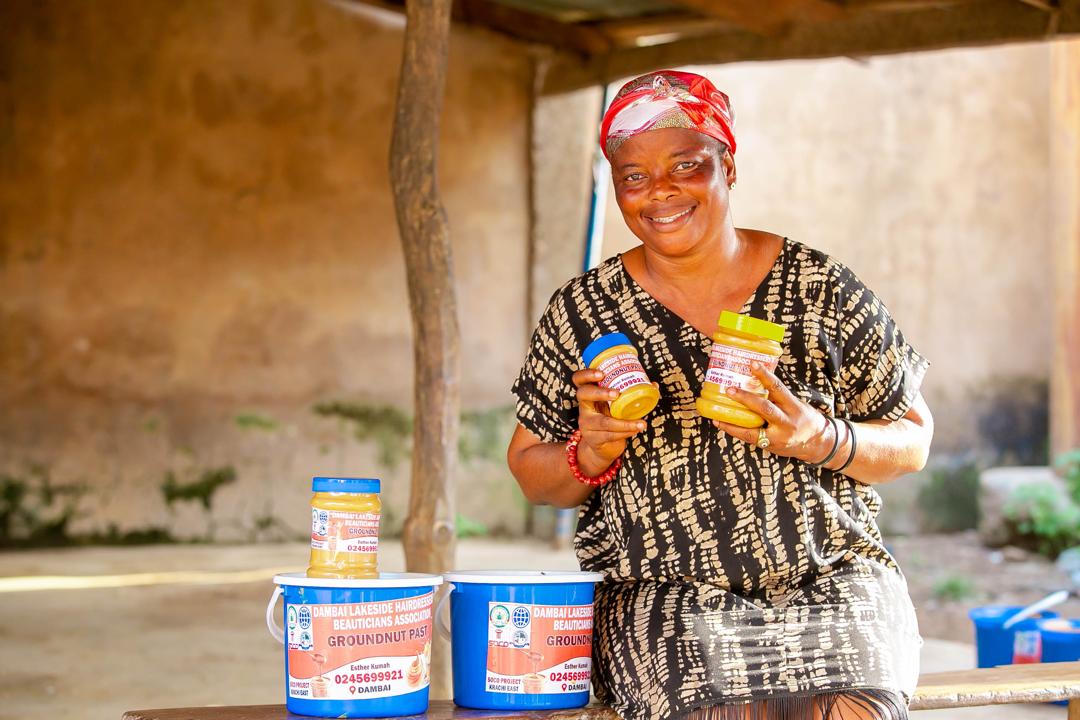












Walk into any bustling market in Accra—Makola, Kaneshie, Agbogbloshie—and ask a woman selling textiles or a trader with a wooden stall about insurance. A decade ago, you might have received a blank stare or a dismissive wave. Today, many of those same women can tell you about Activ’Lady. They can explain how they pay their premiums in installments via mobile money, how they filed a claim using WhatsApp, and how the company helped them rebuild after a fire or an accident.
That shift is not an accident. It is the result of a deliberate, strategic transformation led by Activa International Insurance Ghana, a company that has fundamentally rethought how insurance should be sold, priced, and delivered in the Ghanaian market.
Activa is not the oldest insurer in Ghana—that title belongs to Enterprise Insurance, founded in 1924. It is not the largest by market share. But what Activa has done, perhaps more effectively than any of its competitors, is crack the code on reaching the millions of Ghanaians who have never owned an insurance policy. The company has grown from a relatively small player, originally incorporated as Global Alliance Insurance in 2005, to become the 7th largest non-life insurance company in Ghana by premium income .
📢 GET DETAILED ARTICLES + JOBS
Join THSB's WhatsApp Channel and never miss a post or opportunity.
In this deep dive, The High Street Business break down exactly how Activa International Insurance makes money, the business model that drives its growth, and the innovative strategies—from flexible payments to credit insurance—that have positioned it as a serious challenger to the industry’s old guard.

The Big Picture: Who Is Activa International Insurance?
Activa International Insurance Ghana is a non-life (general) insurance provider that offers motor, property, personal accident, travel, marine, fire, and business insurance services . The company was established in 2005 under the name Global Alliance Insurance. In 2009, it was acquired by Activa Assurances, a pan-African insurance group, and is now part of Activa Finance, a Mauritius-based holding company .
Unlike some of its competitors that have been around for decades or even a century, Activa is a relative newcomer. But what it lacks in age, it makes up for in agility. The company has positioned itself as an “internet first” provider of insurance services, leveraging digital technology to reach customers that traditional insurers have struggled to access .
The company is headquartered in Accra at Activa Square and serves customers nationwide. It is a member of the Globus Network, a Pan-African alliance of insurance companies that operates across dozens of African countries, allowing multinational corporations operating in Ghana to access coordinated insurance services across multiple markets .
In October 2025, GCR Ratings affirmed Activa’s national scale financial strength rating of A+(GH) with a Stable Outlook, reflecting the company’s strong capital position and stable earnings profile .
But how does Activa actually make money? The answer lies in a business model that has four core components: underwriting profit, investment income, credit insurance fees, and international network synergies. Let us break each one down.
Revenue Stream 1: Underwriting Profit (The Core Insurance Business)
Like any insurance company, Activa’s most fundamental revenue stream is underwriting profit—the difference between the premiums it collects from policyholders and the claims it pays out, minus operating expenses.
Activa offers a wide range of non-life insurance products :
Personal Insurance Products:
-
Motor insurance (including enhanced third-party policies)
-
Travel insurance
-
Home insurance
-
Personal accident insurance (including Personal Accident Plus)
-
Lady Drive (specialised motor insurance for women drivers)
Corporate & SME Products:
-
Fire and allied perils
-
Marine and assets all risks
-
SME and corporate risk solutions (covering fire, theft, and business interruption)
-
Liability insurance
-
Credit insurance (in partnership with Coface)
Activa’s underwriting strategy differs from traditional insurers in two key ways.

Focus on Retail and SMEs Rather Than Just Corporate Clients
Historically, insurance companies in Ghana focused largely on large corporations, multinational businesses, and government institutions . This corporate segment, while lucrative, represents only a tiny fraction of the population.
Activa has deliberately expanded its focus toward retail customers, small businesses, and entrepreneurs . This is a high-volume, lower-margin strategy. Instead of selling one large policy to a multinational corporation, Activa sells thousands of smaller policies to individual drivers, market traders, and small shop owners. The underwriting profit per policy is smaller, but the volume is much larger, and the risk is more diversified.
Product Innovation to Capture Underserved Segments
Activa has introduced several innovative products under its SMART COVERS initiative, designed to address gaps in traditional offerings .
Lady Drive emerged from conversations with women drivers who felt that standard motor insurance did not meet their needs. The policy offers additional benefits like roadside assistance and features specifically designed for women drivers .
Personal Accident Plus addresses gaps in standard accident policies. While traditional policies might cover only medical expenses, Personal Accident Plus provides income replacement and funeral support, creating a more comprehensive safety net .
Enhanced Third-Party Motor Insurance offers additional protection beyond the bare-minimum third-party coverage required by law, appealing to drivers who want more security without paying for full comprehensive coverage.
These products are not just about generating premium income. They are about attracting customers who would otherwise remain uninsured—and then retaining them through positive claims experiences.
The Activ’Lady Programme
One of Activa’s most significant underwriting initiatives is the Activ’Lady Programme, developed in partnership with the International Finance Corporation (IFC) . The programme targets women running small businesses—market vendors, caterers, hairdressers—who for years had no protection for their assets or income.
“We realized that many women had no safety net,” Isaac Armar, Chief Sales and Commercial Officer at Activa, explained in an interview. “If a fire destroyed their stall or an accident took away their primary income earner, there was nothing to fall back on. So we designed a program specifically for them. It combines insurance with financial literacy training. It’s not just about selling a policy; it’s about building understanding and trust” .
The Activ’Lady programme generates premium income from a segment that was previously almost entirely untapped. But it also serves a marketing function: women who have a positive experience with Activ’Lady are likely to purchase other Activa products and recommend the company to their networks.
Revenue Stream 2: Investment Income (The Float)
Like all insurance companies, Activa invests the premiums it collects before those funds are needed to pay claims. This is often called the float in insurance terminology.
When a policyholder pays a premium, that money does not immediately get paid out as claims. Some claims will come months or even years later. In the meantime, Activa invests those premiums in financial instruments—government bonds, treasury bills, fixed-income securities, and other assets—and earns a return.
The size of Activa’s investment portfolio is not publicly disclosed in the available sources, but given its A+ financial strength rating from GCR, the company maintains a strong capital position that supports meaningful investment income .
Investment income is particularly important for Activa because its underwriting margins on retail and SME products are relatively thin. The company relies on investment returns to boost overall profitability. This is a common strategy among insurers that prioritise volume over margin.
The relationship between interest rates and investment income is direct. When the Bank of Ghana raises rates, yields on government bonds increase, and Activa earns more on its investment portfolio. When rates fall, investment income tends to decline. In Ghana’s current high-interest rate environment, this works in Activa’s favour.
Revenue Stream 3: Credit Insurance (A New Growth Frontier)
Activa is making a strategic push into credit insurance, a specialised line of business that protects businesses against the risk of non-payment by their customers .
How Credit Insurance Works
Credit insurance is sold to businesses that sell goods or services on credit terms. If a customer fails to pay an invoice, the credit insurance policy compensates the business for the loss. This protects the business’s cash flow and balance sheet.
But Activa is positioning credit insurance as more than just a protection product. It is promoting credit insurance as a financing enabler .
Here is how it works: A bank is reluctant to lend to a small exporter because the exporter’s accounts receivable (unpaid invoices) are not considered reliable collateral. If the exporter purchases credit insurance, those insured invoices become secure assets that the bank is willing to finance. The insurance reduces the bank’s risk, which makes the bank more willing to extend credit.
The Coface Partnership
In April 2026, Activa held a high-level forum in Accra in collaboration with Coface, a global credit insurer that operates in more than 200 markets worldwide and has insured exposure exceeding €4 billion across Africa . The forum brought together exporters, bankers, and industry players to explore how businesses could use credit insurance to access funding and expand into international markets.
Abubakar Salifu Godmar, Activa’s Managing Director, explained the value proposition: “Credit insurance could help convert unpaid invoices into secure assets that banks are more willing to finance. That could significantly ease the financing burden on SMEs .
Revenue Model for Credit Insurance
Credit insurance generates revenue for Activa in two ways:
-
Premiums: Businesses pay premiums for credit insurance policies, just as they would for any other insurance product.
-
Fee-for-service arrangements: In some cases, Activa may earn fees for assessing the creditworthiness of a business’s customers or for managing the claims process when non-payment occurs.
Credit insurance is a high-value line of business. Premiums are typically a percentage of the insured receivables, which for an exporter can run into millions of cedis. Even a small percentage generates substantial premium income.
The timing of this push is strategic. Ghana is seeking to expand non-traditional exports and take advantage of opportunities under the African Continental Free Trade Area (AfCFTA) . As more Ghanaian businesses look to export across Africa, the demand for credit insurance is likely to grow. Activa is positioning itself to capture that demand.
Revenue Stream 4: International Network Synergies
Activa is part of the Globus Network, a Pan-African alliance of insurance companies that operates across dozens of African countries . This network generates revenue in two ways.
Servicing Multinational Clients
Multinational corporations operating in Ghana often require coordinated insurance coverage across multiple African markets. Instead of negotiating separate policies with local insurers in each country, they prefer a single provider that can offer consistent coverage across their entire regional footprint.
Through the Globus Network, Activa can participate in these regional contracts, earning premium income from Ghanaian operations of multinational companies that might otherwise have gone to a larger, pan-African competitor.
Reinsurance and Risk Sharing
The Globus Network also allows Activa to share risk with other member insurers. When Activa writes a very large policy—for a major construction project, for example—it may retain only a portion of the risk and reinsure the remainder with other network members. This reduces Activa’s exposure to catastrophic losses while generating fee income from reinsurance arrangements.
The Activa Business Model: Key Pillars
Now that we have broken down the revenue streams, let us step back and look at the business model as a whole. Activa’s approach to making money is fundamentally different from that of traditional Ghanaian insurers. It is built on five key pillars.
1. Leaving the Boardroom for the Marketplace
The old insurance model in Ghana was passive. Insurers designed products in corporate offices and waited for customers to come through the doors. Activa has rejected this approach.
Abubakari Salifu, Activa’s Acting Managing Director, put it this way: “The old model was very much boardroom-focused. You had policies written in dense legal language, premiums that had to be paid in one lump sum, and claims processes that required physical visits to offices. It wasn’t built for the average Ghanaian. What we are seeing now—and what Activa has been actively pushing—is a complete reversal of that mindset. Insurance in Ghana has left the boardroom for the marketplace” .
This philosophy manifests in everything Activa does: products designed for real people, distribution channels that meet customers where they are, and claims processes that do not require office visits.
2. Flexible Payments (INSUREFLEX)
One of the biggest barriers to insurance adoption in Ghana has been the payment structure. Annual premiums paid upfront work for salaried employees and corporations, but not for the millions whose income arrives daily or weekly.
Activa tackled this through INSUREFLEX, a payment option that allows customers to spread premium payments over an agreed period .
“We recognized that the traditional payment structure was excluding a massive segment of the population,” Abubakari Salifu explained. If you run a small business, your income might be daily or weekly. Asking you to pay a full year’s premium in one go is unrealistic. So we introduced a flexible payment option that allows customers to spread their premiums over an agreed period” .
INSUREFLEX is not just a customer-friendly feature—it is a revenue driver. By removing the upfront payment barrier, Activa converts potential customers who would otherwise walk away into paying policyholders. The company captures premium income that would otherwise be lost.
3. Digital-First Distribution
Activa has positioned itself as an “internet first” provider of insurance services . The company has invested significantly in digital infrastructure, including:
-
An online platform where customers can purchase policies, pay premiums, and submit and track claims entirely digitally
-
WhatsApp-based claims filing and customer service
To underscore its commitment to digital security, Activa became the first general insurance company in Ghana to achieve ISO 27001:2022 certification for information security management systems .
The digital strategy reduces Activa’s cost-to-serve. Digital transactions are cheaper to process than paper-based ones. Automated claims processing is faster and less labour-intensive than manual processing. Lower operating costs mean higher underwriting margins.
4. Inclusion as a Growth Strategy
Activa’s focus on inclusion—women entrepreneurs, SMEs, informal workers—is not just a corporate social responsibility initiative. It is a deliberate growth strategy.
Isaac Armar, Chief Sales and Commercial Officer, explained the logic: “For too long, the industry designed products first and then tried to find customers to fit them. We decided to do the opposite. We asked: who is being left out? And what do they actually need?”
By serving segments that traditional insurers ignore, Activa taps into new pools of premium income. These segments are large, growing, and largely untapped. A customer acquired through Activ’Lady today may purchase motor insurance, home insurance, and credit insurance from Activa in the future. Inclusion is a customer acquisition strategy with high lifetime value.
5. Education and Trust-Building
Activa recognises that insurance penetration in Ghana remains below the global average, largely due to accessibility and trust constraints . People do not buy insurance if they do not understand it or if they do not trust that claims will be paid.
The company has invested in community outreach, training sessions in local languages, and financial literacy programmes as part of its Activ’Lady initiative . These educational efforts are not direct revenue drivers, but they are essential for customer acquisition and retention. A customer who understands how insurance works and trusts the insurer is more likely to buy a policy—and more likely to renew it.
Market Position and Competitive Landscape
Activa is currently the 7th largest non-life insurance company in Ghana by premium income . It competes with established players including Enterprise Insurance (the market leader, with approximately 30% of the non-life segment), SIC Insurance, Allianz, Hollard, Star Assurance, and Glico General .
What distinguishes Activa from these competitors is its focus on retail and SME segments and its digital-first approach. While Enterprise dominates the corporate segment, Activa is building a strong position in the mass market. While traditional insurers rely on agent networks and branch offices, Activa is reaching customers through mobile money, USSD, and online platforms.
This is not to say Activa ignores the corporate market. The company’s credit insurance push and its membership in the Globus Network are clearly aimed at corporate and multinational clients. But Activa’s distinctive competence is in serving customers that other insurers have overlooked.
Financial Performance
While Activa is a privately held company and does not publicly disclose its financial results in the same detail as a listed company like Enterprise Group, available data provides some indicators of its performance.
-
Rating: GCR affirmed Activa’s national scale financial strength rating of A+(GH) with a Stable Outlook in October 2025, indicating strong capitalisation and stable earnings .
-
Market Position: Activa is the 7th largest non-life insurer in Ghana by premium income .
-
Ownership: Activa is part of Activa Finance, a Mauritius-based holding company, which provides access to international expertise and capital .
The company’s A+ rating from GCR is significant. It indicates that Activa has the financial strength to pay claims even under adverse circumstances, which is essential for building customer trust in the insurance sector.
Risks and Challenges to the Business Model
No business model is without risks. Activa faces several challenges that could affect its ability to generate profits.
1. Low Insurance Penetration
Ghana’s insurance penetration remains stubbornly low—around one percent of GDP . This means the total addressable market is limited. While Activa is growing by taking market share from competitors and by bringing new customers into the insurance net, the low penetration rate caps the industry’s overall growth potential.
2. Claims Inflation
In an environment of high inflation, the cost of claims—particularly for motor and property insurance—tends to rise faster than premiums. This can squeeze underwriting margins unless insurers adjust their pricing accordingly.
3. Digital Exclusion
While Activa has invested in USSD options for customers without smartphones, a significant portion of the population remains digitally excluded. Reaching these customers requires traditional distribution methods—agent networks, branch offices, community outreach—which are more expensive than digital channels.
4. Credit Risk in Credit Insurance
Credit insurance is a higher-risk line of business than motor or property insurance. If Activa misprices its credit insurance policies or if a major customer defaults, the company could face significant claims. This is why Activa has partnered with Coface, which brings global expertise in credit risk assessment.
5. Competition
The Ghanaian insurance market is competitive, with several well-capitalised players. Enterprise Insurance dominates the non-life segment. SIC Insurance receives preferential treatment from state-owned enterprises. Allianz brings global brand recognition. Activa must continue to innovate to maintain its position.
6. Regulatory Risk
The insurance industry in Ghana is heavily regulated by the National Insurance Commission (NIC). Changes in capital requirements, solvency rules, or product approval processes could affect Activa’s profitability.
Conclusion: A Model for the Future of Insurance in Ghana
Activa International Insurance Ghana has built a business model that is fundamentally different from the traditional Ghanaian insurer. Instead of focusing on large corporate clients with high-value policies, Activa has gone after the mass market—the millions of individual Ghanaians, small business owners, and informal workers who have never owned an insurance policy.
The company makes money through four primary revenue streams:
-
Underwriting profit from a diverse portfolio of non-life insurance products, with a focus on retail and SME segments
-
Investment income from the float generated by collecting premiums before claims are paid
-
Credit insurance fees and premiums, in partnership with global leader Coface
-
International network synergies through the Globus Network
But Activa’s success is not just about revenue streams. It is about a philosophy that insurance should be accessible, flexible, and trustworthy. INSUREFLEX removes the upfront payment barrier. Digital platforms make purchase and claims filing convenient. Activ’Lady builds trust through education and community engagement.
“The old model was very much boardroom-focused,” Abubakari Salifu said. “Insurance in Ghana has left the boardroom for the marketplace” .
For a company that started as Global Alliance Insurance in 2005 and was acquired by Activa Assurances in 2009, the journey has been remarkable. Activa is now the 7th largest non-life insurer in Ghana, with an A+ financial strength rating and a reputation as one of the most innovative players in the market.
As Ghana’s economy grows and its population becomes more financially literate, the insurance sector has an opportunity to play a far larger role in protecting lives and livelihoods. Activa has positioned itself at the forefront of that transformation—one flexible payment, one digital claim, one newly insured woman entrepreneur at a time.
Frequently Asked Questions (FAQs)
1. How does Activa International Insurance primarily make money?
Activa makes money through four main channels: (1) underwriting profit—premiums collected minus claims paid and operating expenses; (2) investment income—returns earned on invested premiums (the “float”); (3) credit insurance fees and premiums in partnership with Coface; and (4) international network synergies through the Globus Network, which allows Activa to service multinational clients and share risk with other African insurers.
2. What is Activa’s market position in Ghana’s insurance industry?
Activa is currently the 7th largest non-life insurance company in Ghana by premium income . The company holds a national scale financial strength rating of A+(GH) with a Stable Outlook from GCR Ratings, reflecting strong capitalisation and stable earnings .
3. What is INSUREFLEX, and how does it help Activa make money?
INSUREFLEX is Activa’s flexible payment option that allows customers to spread premium payments over an agreed period rather than paying a full year’s premium upfront . This removes a major barrier to insurance adoption, converting potential customers who cannot afford lump-sum payments into paying policyholders. It generates premium income from segments that would otherwise remain uninsured.
4. What is the Activ’Lady programme?
The Activ’Lady programme is an initiative developed in partnership with the International Finance Corporation (IFC) that targets women entrepreneurs—market vendors, caterers, hairdressers—who historically lacked access to insurance . The programme combines specialised insurance products with financial literacy training. It generates premium income from a previously untapped segment while building customer loyalty and trust.
5. What is Activa’s credit insurance business, and why is it important?
Activa’s credit insurance protects businesses against the risk of non-payment by their customers. But Activa is positioning credit insurance as a financing enabler—insured invoices become secure assets that banks are willing to accept as collateral for loans . Activa has partnered with global credit insurer Coface to offer these products. Credit insurance generates premium income and fee-based revenue while positioning Activa as a key player in trade finance.
6. How does Activa use digital technology to generate revenue?
Activa is an “internet first” insurance provider with an online platform for policy purchase, premium payment, and digital claims submission and tracking . The company also offers USSD options for customers without smartphones and WhatsApp-based customer service. Digital channels reduce Activa’s cost-to-serve, improve customer experience, and enable the company to reach customers across Ghana without a large branch network. Activa is the first general insurer in Ghana to achieve ISO 27001:2022 certification for information security .
7. What are the main risks to Activa’s business model?
The main risks include: low insurance penetration in Ghana (around one percent of GDP), claims inflation in a high-inflation environment, digital exclusion of some customer segments, credit risk in the credit insurance business, intense competition from Enterprise Insurance, SIC Insurance, Allianz, and others, and regulatory changes from the National Insurance Commission
Source: The High Street Business
Disclaimer: Some content on The High Street Business may be aggregated, summarized, or edited from third-party sources for informational purposes. Images and media are used under fair use or royalty-free licenses. The High Street Business is a subsidiary of SamBoad Publishing under SamBoad Business Group Ltd, registered in Ghana since 2014.
For concerns or inquiries, please visit our Privacy Policy or Contact Page.

Samuel Kwame Boadu is a Ghanaian entrepreneur, writer, and digital consultant passionate about creating impactful stories and business solutions. He is the Founder & CEO of SamBoad Business Group Ltd, a dynamic company with subsidiaries in digital marketing, logistics, publishing, and risk management.