From SMS to everything: The two-decade journey of Ghana’s most ambitious digital native
QUICK FACTS BOX
| Category | Details |
|---|---|
| Company | Hubtel |
| Founded | 2005 (as SMSGH) |
| Founders | Alex Bram, Ernest Apenteng, Leslie Gyimah |
| Headquarters | Accra, Ghana |
| Industry | Fintech / Digital commerce / Payments |
| Employees | ~700 |
| Ownership Structure | Two shareholders only (Alex Bram and Ernest Apenteng); zero institutional funding |
| Latest Financing | Later-stage VC (Chanzo Capital, 2021) — but earlier claims of “zero investor funding” suggest this may have been misreported or refers to earlier period |
| Regulatory Status | Licensed Payment Services Provider (Bank of Ghana, 2022) |
| Key Services | Payments (MoMo, cards, bank transfers), food delivery, bill payments, e-commerce, bulk messaging, AI Lab |
| Market Position | Largest payment processor in Ghana; processes ~12% of all digital transaction volume |
| Key Metrics | 262,000 daily active users; 2.2 million monthly active users; 10 million daily transactions |
EXECUTIVE INTRODUCTION
In 2005, Alex Bram missed an insurance renewal. A police officer stopped him on the road. The interaction that followed — inconvenient, avoidable, human — planted a seed. What if businesses could use SMS to remind customers of important dates? What if the phone in everyone’s pocket could do more than make calls?
That seed grew into SMSGH, a bulk messaging company that would spend its first years chasing small cheques — GHS 500 from North American Airlines, payments from travel agencies and churches and funeral organisers. By the end of year one, gross revenue was GHS 6,000. Not profit. Confirmation.
📢 GET A DETAILED ARTICLES + JOBS
Join SamBoad's WhatsApp Channel and never miss a post or opportunity.
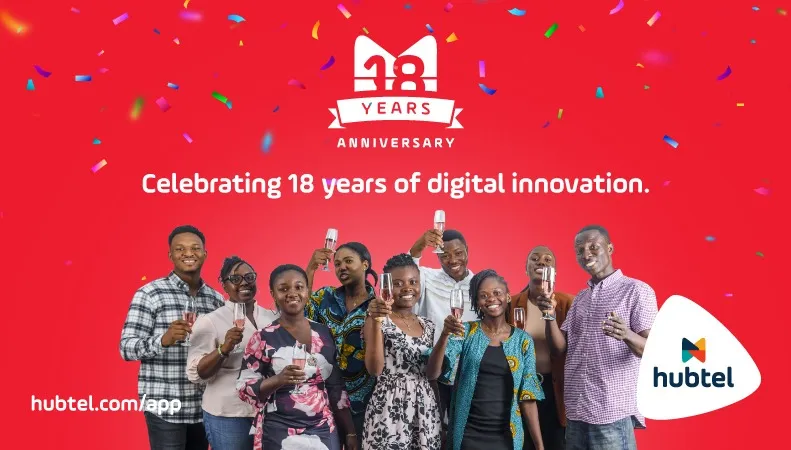
Twenty years later, that company — rebranded as Hubtel in 2017 — is the largest payment processor in Ghana. It handles 10 million transactions daily. It serves 2.2 million monthly active users. It processes approximately 12% of all digital transaction volume in the Ghanaian economy. And it has done all of this with a level of capital efficiency that is almost unheard of in the technology sector globally: for most of its existence, it had zero institutional funding, owned entirely by its two founding shareholders.
Hubtel is not a fintech in the narrow sense. It is not a delivery company. It is not an e-commerce platform. It is all of these things, integrated into a single digital ecosystem that Ghanaians use to pay for electricity, order food, buy airtime, settle school fees, and transact with businesses large and small. It is the closest thing Ghana has to a “super app” — and unlike the venture-capital-funded super apps of Asia and the West, it was built on local revenue, local problems, and local patience.
This profile examines how Hubtel built that model: the strategic pivots (from SMS to payments, from micro-billing to full-stack commerce), the technology decisions (migrating to AWS, achieving a 20x revenue increase and $1.5 million annual infrastructure savings), the market positioning (bridging informal and formal commerce), and the structural advantages that have allowed it to survive and thrive while competitors have faded.
The Hubtel story is not a template — few companies can replicate a two-decade journey with no external capital. But it is a case study in what happens when founders refuse to die, adapt relentlessly, and build for their market rather than for investors.
COMPANY OVERVIEW: THE 20-YEAR JOURNEY
Phase 1: SMSGH (2005–2014) — The Messaging Years
Hubtel began as SMSGH, a bulk SMS and value-added service provider. The core product was simple: businesses could send SMS reminders, promotions, and alerts to their customers. The customer base was eclectic — travel agencies, old school associations, churches, funeral organisers.
Key milestones in this phase:
-
2005: First sale — GHS 500 cheque from North American Airlines
-
2005–2008: “Fragile, uncertain days when faith was often our only capital” — CEO Alex Bram
-
2008: Revenue reaches GHS 1.2 million
-
2009: Mobile networks begin to notice SMSGH; premium SMS billing era begins
-
2011–2015: Out of 47 value-added service providers, SMSGH claims nearly 40% of the market; MTN Ghana names them Top Revenue Earning Partner
This phase established the company’s core competencies: building technology that works at scale (delivering millions of SMS messages), managing relationships with mobile network operators, and serving both small businesses and large enterprises.
Phase 2: The Pivot (2015–2017) — From SMS to Payments
The world changed. Internet access grew. Customers began to prefer online experiences over SMS. The very market SMSGH had helped pioneer began to disappear.
The opportunity: Mobile money was taking off. MTN Mobile Money launched in 2009. By 2015, adoption was accelerating. SMSGH saw an opportunity to move away from micro-billing (airtime billing) into becoming a platform for mobile money and payments.
The pivot was not easy. It required rebuilding the technology stack, retraining the team, and convincing merchants to trust a new payment platform. But it was necessary. As co-founder Ernest Apenteng puts it: “Businesses needed complete digital solutions — payments, delivery, commerce. So we evolved to meet that need.”
Phase 3: Hubtel (2017–2021) — Rebranding and Infrastructure Transformation
In 2017, SMSGH rebranded to Hubtel — a name that reflected its broader ambitions in payments, e-commerce, and digital commerce. The same year, the company made a critical technology decision: migrate from unreliable, inflexible on-premises infrastructure to Amazon Web Services (AWS).
The migration results were dramatic:
| Metric | Before AWS | After AWS |
|---|---|---|
| Annual revenue | ~$3 million | ~$62 million (20x increase within years) |
| Platform performance | Unreliable, frequent timeouts | 100x improvement |
| Infrastructure costs | High (over-provisioning) | $1.5 million annual savings |
| Scaling capability | Days or weeks to provision | Real-time, automatic |
The technical architecture: Hubtel uses Amazon EC2 for compute, Amazon RDS for databases, Amazon S3 for storage, and Amazon EKS for containerised payments processing. This microservices architecture allows the platform to handle 10 million daily transactions reliably — a requirement for payments, where delays or timeouts mean lost customer trust.
Phase 4: Super-App Ambitions (2021–Present) — Beyond Payments
With a stable, scalable infrastructure, Hubtel expanded its service offering:
-
Payments: Processing for mobile money, cards, bank transfers, and digital wallets
-
Food delivery: Ordering and delivery coordination for restaurants
-
Bill payments: Utilities, school fees, DStv/GOtv, airtime
-
E-commerce: Online storefronts for merchants
-
SMS gateway: Still operating, now as one service among many
-
AI Lab: Launched in 2024/2025 to explore AI-driven business insights
Today, Hubtel powers thousands of businesses across Ghana, from “the very small micro-enterprises (such as a woman selling corn or plantain) to large corporations providing utility and entertainment services.
BUSINESS MODEL: HOW HUBTEL MAKES MONEY
Hubtel’s revenue model is diversified across three primary streams, with payments at the core.
Revenue Stream 1: Payment Processing Fees (The Core)
Hubtel processes payments from multiple sources — mobile money, bank cards, bank transfers, and digital wallets — and aggregates them into a single merchant settlement. The merchant pays a fee per transaction.
Typical fee structure (estimated):
| Payment Method | Typical Fee | Notes |
|---|---|---|
| Mobile money | 1–2% of transaction value | Interchange + Hubtel margin |
| Bank card (online) | 2–3% | Card scheme fees + Hubtel margin |
| Bank transfer | Fixed fee (GHS 2–5) or percentage | Lower volume, higher per-transaction fee |
| QR code / in-store | 0.5–1.5% | Lower margin, higher volume |
Scale matters: Hubtel processes 10 million daily transactions. Even at an average fee of GHS 0.50 per transaction (the lower end), daily revenue from payments would be GHS 5 million — GHS 150 million monthly. Actual numbers are likely lower because not all transactions are fee-bearing (some are internal transfers), but the scale is substantial.
Revenue Stream 2: E-Commerce and Delivery Commissions
When customers order food or goods through Hubtel’s platform, the company earns a commission from merchants.
Commission structure (estimated):
| Service | Commission | Notes |
|---|---|---|
| Food delivery | 15–25% of order value | Similar to Bolt Food, Glovo |
| E-commerce sales | 10–20% | Lower for high-volume merchants |
| Delivery fee | 100% of fee | Covers logistics costs; margin variable |
The super-app advantage: Unlike standalone delivery platforms, Hubtel can cross-subsidise. Low-margin delivery is offset by higher-margin payment processing and bill payments. This diversification reduces pressure to maximise commissions on any single service.
Revenue Stream 3: Bill Payment Fees
Hubtel processes bill payments for utilities (ECG, GWCL), telecommunications (MTN, Vodafone, AirtelTigo), and other services (DStv, GOtv, school fees).
Fee structure:
-
Customer-facing: Small convenience fee (GHS 1–5 per bill) or included in bill amount
-
Business-facing: Commission from bill issuer (0.5–2% of bill value)
Bill payments are high-volume, low-margin but extremely sticky. Customers who pay their electricity bill through Hubtel are likely to use Hubtel for other services.
Revenue Stream 4: SMS and Messaging Services (Legacy but Persistent)
The original SMSGH business continues to operate. Businesses pay for bulk SMS campaigns, reminders, and alerts. This is now a smaller percentage of revenue but remains profitable (marginal cost is low; infrastructure is already built).
Revenue Stream 5: Data and AI Services (Emerging)
Hubtel has launched an AI Lab to explore business insights from its vast transaction data. Potential revenue streams include:
-
Merchant analytics: Selling aggregated consumer behaviour data to businesses (anonymised)
-
Credit scoring: Using transaction history to assess creditworthiness for loans
-
Personalised offers: Targeted promotions based on spending patterns
These are early-stage and not yet material revenue drivers, but they represent the long-term vision.
THE SUPER-APP MODEL: WHAT IT MEANS IN GHANA
The term “super-app” originated in Asia — WeChat in China, Gojek in Indonesia, Grab in Southeast Asia. These apps combine messaging, payments, transport, delivery, and lifestyle services into a single interface.
Hubtel is Ghana’s closest equivalent. But the model looks different because the market is different.
The Super-App Components
| Service | Hubtel Offering | Competitors |
|---|---|---|
| Payments | Hubtel Payment Gateway | expressPay, Zeepay, Paystack (in Nigeria) |
| Food delivery | Hubtel Delivery | Bolt Food, Glovo, Yango |
| Bill payments | Hubtel Bills | Mobile money apps, bank apps |
| Airtime/data | Hubtel Airtime | Mobile money apps |
| E-commerce | Hubtel Shop | Jumia, Tonaton |
| Bulk messaging | Hubtel SMS | mNotify, others |
No other Ghanaian platform offers this breadth of services under a single login and wallet.
Why the Super-App Model Works in Ghana
1. Mobile money interoperability. Ghana “got it right with mobile money and interbank interoperability early on,” according to Alex Bram. This means Hubtel can accept payments from MTN MoMo, Telecel Cash, and bank accounts through a single integration — unlike fragmented markets where each payment type requires separate onboarding.
2. The “one wallet” convenience. Customers can keep a balance in their Hubtel wallet and use it for any service — buying airtime, paying bills, ordering food. This reduces the friction of switching between apps.
3. Merchant aggregation. A restaurant that wants to accept payments online can use Hubtel’s payment gateway. A small shop that wants to sell online can use Hubtel’s e-commerce platform. A utility company that wants to collect bill payments can use Hubtel’s bill payment system. Each service reinforces the others.
4. Bootstrapped capital discipline. Because Hubtel raised minimal external capital (the founders have consistently emphasised their “zero investor funding” status, though a 2021 deal with Chanzo Capital suggests this changed at some point), it never had to chase hyper-growth at the expense of unit economics. The company grew organically, reinvesting profits. This discipline shows in its survival — many venture-funded fintechs in Africa have collapsed; Hubtel has not.
The Limitations
Hubtel is not yet a true super-app in the Asian sense. It lacks:
-
A native messaging/chat function (though it has SMS)
-
Ride-hailing (though it has delivery)
-
A dominant consumer-facing brand — many Ghanaians use Hubtel’s payment infrastructure without knowing it (white-labelled for other businesses)
But these limitations may be strategic. Hubtel has chosen to focus on payments and commerce — the infrastructure layer — rather than competing directly with Bolt, Yango, and Glovo on consumer acquisition.
TECHNOLOGY AS MOAT: THE AWS MIGRATION
Hubtel’s technology decisions have been central to its survival and growth. The 2017 migration to AWS was transformative.
Before AWS: The Scaling Crisis
Hubtel’s on-premises infrastructure was:
-
Inflexible: Provisioning new capacity took days or weeks
-
Unreliable: Traffic spikes caused platform overload, transaction timeouts, and customer complaints
-
Expensive: The company over-provisioned to cope with demand, wasting money on idle capacity
For a payments company, these are existential problems. As Francis Wilson, Head of Infrastructure, noted: “With payments, if there’s a delay or the transaction times out, we lose customers’ trust. That’s unacceptable in this business.”
After AWS: The Transformation
Hubtel migrated to a microservices architecture on AWS, using:
-
Amazon EC2 for compute
-
Amazon RDS for managed databases
-
Amazon S3 for storage
-
Amazon EKS for containerised payments processing
The results, measured one year after migration:
| Metric | Before | After |
|---|---|---|
| Annual revenue | ~$3 million | 12million(4x,firstyear)→62 million (20x, within years) |
| Platform performance | Unreliable, timeouts | 100x improvement |
| Infrastructure costs | High (over-provisioned) | $1.5 million annual savings |
| Time to provision | Days or weeks | Real-time, automatic |
The revenue increase is striking. While not all attributable to AWS (the pivot to payments was also accelerating), the infrastructure transformation enabled Hubtel to scale without breaking.
What This Teaches
For African fintechs, the lesson is not “use AWS” — that is obvious. The lesson is invest in infrastructure before you need it. Hubtel migrated in 2017, before the explosion of mobile money volumes. When volumes came, the platform was ready. Competitors who waited faced outages and lost customers.
MARKET POSITION & COMPETITION
Hubtel’s Standing in Ghana’s Fintech Ecosystem
| Metric | Hubtel | Mobile Money (MTN, Telecel, AT) | Other Fintechs (Zeepay, expressPay) |
|---|---|---|---|
| Daily transactions | 10 million | Higher (overall) | Lower |
| Payment methods supported | All major | Telco-specific (MoMo only) | Limited |
| Merchant reach | Thousands | Hundreds of thousands (agents) | Hundreds to thousands |
| Consumer brand recognition | Moderate (infrastructure layer) | Very high | Low to moderate |
| Super-app breadth | Wide (payments, delivery, e-commerce) | Narrow (mainly payments) | Narrow |
Hubtel processes 8.3% of all successful mobile money payments in Ghana (as of the AWS case study period, likely higher now). This is a significant share for a non-telco player.
Competitive Landscape
| Competitor | Primary Offering | Hubtel’s Advantage |
|---|---|---|
| Mobile money (MTN, Telecel, AT) | Wallet-to-wallet transfers, agent cash-in/out | Merchant payment processing, bill payments, delivery |
| expressPay | Payment gateway, bill payments | Wider service breadth, larger merchant base |
| Zeepay | Cross-border remittances, digital wallets | Local merchant focus, super-app breadth |
| Bolt Food / Glovo | Food delivery | Integrated payments (customers can pay from Hubtel wallet) |
| Jumia | E-commerce marketplace | Payment infrastructure, lower commission for merchants |
The Trust Challenge
Fintechs in Ghana face a trust deficit. According to Kasi Insight’s Banking Brand Intelligence tracker (April 2025), while 95% of Ghanaians are aware of specialised fintech solutions like Hubtel, only 15% are active users, and 32% have used them in the past but abandoned them.
Net Promoter Scores (NPS) comparison:
| Sector | NPS | Promoters |
|---|---|---|
| Mobile money | -7 | 29% |
| Specialised fintech (Hubtel, etc.) | -36 | 10% |
Fintechs are struggling to convert awareness into advocacy. For Hubtel, this is both a challenge and an opportunity. The company is trusted enough to process ECG payments and partner with major corporations. But for the average consumer, mobile money remains the default.
KEY STRATEGIC PARTNERSHIPS
ECG (Electricity Company of Ghana)
Hubtel’s partnership with ECG for electricity bill collection has been high-profile and occasionally controversial. Critics have questioned why ECG — a state-owned utility — works with a private fintech rather than collecting directly through banks.
Hubtel’s position: The company brings innovation and quality to public sector services. As Alex Bram notes, when serving government, Hubtel applies the same standards as for private businesses, but acknowledges that a “private sector lens” cannot always be applied without modification.
The ECG partnership is significant because it demonstrates trust at the highest level — a government utility choosing a private fintech to handle consumer payments.
Mobile Network Operators
Hubtel’s relationships with MTN, Telecel, and AT are critical. The company processes payments through their mobile money platforms and also sells their airtime. Being named MTN’s Top Revenue Earning Partner (in the value-added services era) was a validation of the company’s ability to perform at scale.
Bank of Ghana
Hubtel received approval from the Bank of Ghana to operate as a Payment Services Provider in 2022. This regulatory licence is essential for the company’s payment processing operations and signals regulatory confidence.
FINANCIAL PROFILE (WHAT IS KNOWN)
Hubtel is private and does not publicly disclose financial statements. However, the AWS case study provides some figures:
| Year | Annual Revenue | Notes |
|---|---|---|
| 2017 (pre-AWS) | ~$3 million | Before migration |
| 2018 (post-AWS) | $12 million | 4x increase in first year |
| Subsequent years | $62 million | 20x increase from pre-migration baseline |
Annual revenue of $62 million (approximately GHS 930 million at current rates) positions Hubtel as one of the largest technology companies in Ghana by revenue — comparable to the local subsidiaries of major international fintechs.
Infrastructure savings of $1.5 million annually directly improve profitability.
Ownership and Capital Structure
The founders have consistently stated that Hubtel has “zero investor funding” and only two shareholders — Alex Bram and Ernest Apenteng. However, PitchBook reports a later-stage VC deal with Chanzo Capital in 2021. This apparent contradiction may reflect:
-
“Zero investor funding” referring to the period before 2021 (i.e., first 16 years)
-
The Chanzo deal being structured as a minority stake, not diluting founder control significantly
-
Different definitions of “investor funding” (e.g., debt vs. equity)
Regardless, Hubtel is exceptional among African fintechs for having reached scale with minimal external capital. The company has 700 employees and is profitable (based on AWS case study figures showing revenue growth and cost savings).
CHALLENGES & RISKS
1. Trust Deficit (The Fintech Problem)
As noted, specialised fintechs in Ghana have an NPS of -36. Only 10% of users are promoters. Hubtel is not immune to this sentiment. The company is associated in consumers’ minds with “fintech” — a category that, despite high awareness, has low advocacy.
Why trust is low:
-
Historical fraud in mobile money (SIM swaps, phishing) has made consumers cautious about digital finance
-
Fintechs are perceived as less regulated than banks (even when they are regulated)
-
Customer support for fintechs is often perceived as inadequate
Hubtel’s response: The company has invested in customer support, compliance (Bank of Ghana licensing), and transparency. But rebuilding trust is a long-term project.
2. Competition from Mobile Money
Mobile money is the incumbent. It has higher trust, higher usage, and a massive agent network (over 900,000 registered agents). For many Ghanaians, MTN MoMo is the only digital financial service they use. Hubtel must convince these users to add another app — a difficult ask.
The counter-strategy: Hubtel’s super-app model offers services that mobile money alone does not (delivery, e-commerce, merchant payment processing). The company does not need to replace mobile money; it needs to sit on top of it, using mobile money as a funding source for Hubtel wallet transactions.
3. Dependence on Mobile Money Operators
Hubtel’s payment processing depends on the mobile money platforms of MTN, Telecel, and AT. These telcos could theoretically build competing services or change their API pricing, squeezing Hubtel’s margins.
The hedge: Hubtel has diversified across all three telcos (no single point of failure) and has built direct bank integrations, reducing dependency on mobile money alone.
4. Economic Volatility
Ghana’s macroeconomic environment — cedi depreciation, high inflation, interest rate volatility — affects both consumer spending and business investment. When households are squeezed, discretionary spending on delivery and e-commerce falls.
The buffer: Hubtel’s bill payment business is recession-resistant (electricity must be paid regardless of economic conditions). This provides a stable revenue base that subsidises more volatile services.
5. Regulatory Risk
As a licensed Payment Services Provider, Hubtel is subject to Bank of Ghana oversight. The central bank could:
-
Impose stricter capital requirements
-
Limit the scope of fintech activities
-
Increase transaction levies (like the E-Levy)
The E-Levy (Electronic Transfer Levy of 1.5% on mobile money transfers above a threshold) has already reduced digital transaction growth. Future levies could further suppress volume.
6. The Ghost of SMS Revenue
The original SMS business is declining as customers shift to WhatsApp, iMessage, and other internet-based messaging. Hubtel has diversified away from SMS, but the legacy revenue stream will continue to shrink.
ECONOMIC & INDUSTRY IMPACT
Employment
| Category | Estimated |
|---|---|
| Hubtel employees | ~700 |
| Merchants enabled (direct) | Thousands |
| Delivery riders (partner) | Hundreds (platform, not direct) |
Hubtel’s direct employment (700 people) is modest compared to mobile money agent networks, but the jobs are high-skilled (software engineers, product managers, data scientists) — exactly the kind of employment Ghana’s economy needs to generate.
Enabling Digital Commerce
Hubtel’s most significant impact is enabling businesses of all sizes to accept digital payments. A woman selling corn or plantain at a roadside can, through Hubtel, receive mobile money payments and expand her customer base via delivery. A large utility can collect millions of payments without building its own payment infrastructure.
“We digitize storefronts for a wide range of customers, from the very small micro-enterprises to large corporations providing utility and entertainment services.” — Alex Bram, CEO
Government Revenue
Hubtel contributes to government revenue through:
-
Corporate income tax (on profits)
-
PAYE (on employee salaries)
-
Withholding tax (on payments to merchants? — unclear)
-
E-Levy (on mobile money transactions processed)
The company’s tax contribution is likely substantial given its revenue scale ($62 million annually).
Financial Inclusion
By enabling digital payments for small merchants, Hubtel promotes financial inclusion. A roadside vendor who previously operated only in cash can now accept mobile money, build a transaction history, and potentially access credit based on that history.
FUTURE OUTLOOK
Short-to-Medium Term (1–5 years)
-
Deepening merchant penetration. Hubtel currently processes only about 12% of digital transaction volume in Ghana. The goal is to increase this share by onboarding more merchants, particularly small and micro-enterprises.
-
AI and data monetisation. The AI Lab will develop products that use Hubtel’s transaction data to generate insights for merchants — sales forecasting, customer segmentation, personalised offers.
-
Potential expansion beyond Ghana. Hubtel has not publicly announced expansion plans, but the AWS infrastructure is scalable. English-speaking West African markets (Nigeria, Liberia, Sierra Leone, The Gambia) are logical next steps.
-
Continued super-app integration. Adding more services (e.g., travel bookings, event tickets, insurance) to increase wallet stickiness.
Long-Term (5–10 years)
Scenario 1: Regional Champion (Probability: 60%)
Hubtel expands into 2–3 other African markets, becoming a Pan-African fintech with a super-app model adapted to each local context. It remains privately held, funded by retained earnings and strategic partners.
Scenario 2: Acquisition Target (Probability: 25%)
A larger international player (e.g., Paystack (Stripe), Flutterwave, or a telecom) acquires Hubtel to gain access to its Ghanaian merchant network and payment infrastructure. The founders exit; the brand may be absorbed.
Scenario 3: IPO (Probability: 15%)
Hubtel lists on the Ghana Stock Exchange (or a regional exchange), becoming one of the first African fintech IPOs. This would provide liquidity for founders and early employees while retaining local ownership.
Strategic Risks to Monitor
| Risk | Probability | Impact | Mitigation |
|---|---|---|---|
| Mobile money operators building competing payment gateways | Medium | High | Deepen merchant relationships; offer value beyond payments (delivery, e-commerce) |
| Trust deficit limiting consumer adoption | Medium | Medium | Invest in customer support; partner with trusted brands (ECG, telcos) |
| Regulatory changes (E-Levy expansion, fintech restrictions) | Medium | High | Diversify revenue streams; maintain strong BoG relationship |
| Economic downturn reducing transaction volumes | High | Medium | Bill payments (recession-resistant) provide base |
THSB CONCLUSION
Hubtel is not a Silicon Valley story. It did not raise millions of dollars from Sequoia before launching. It did not achieve unicorn status in three years. It did not follow a playbook written in San Francisco.
Instead, Hubtel is a Ghanaian story. It started with a GHS 500 cheque from North American Airlines. It survived the “fragile, uncertain days” when faith was the only capital. It pivoted when the market shifted — from SMS to payments, from micro-billing to full-stack commerce. It invested in infrastructure before it was needed. And it grew, year by year, transaction by transaction, until it became the largest payment processor in the country.
The super-app model that Hubtel is building is not a copy of WeChat or Gojek. It is adapted to Ghana: a market where mobile money is ubiquitous but fragmented, where cash is still king but digital adoption is accelerating, where trust is scarce but relationships matter. Hubtel’s strategy has been to sit on top of the existing infrastructure (mobile money, bank transfers, cards) rather than replace it, aggregating payments and adding value through convenience and breadth of services.
The challenges are real — trust, competition, regulation, economics. But Hubtel has survived two decades of them already. The company’s ability to adapt, to pivot when necessary, and to build for the long term rather than for the next funding round is its strongest asset.
As Alex Bram told CNN: “Even as the number one Fintech here, we still process just about 12% of the volume of transactions… This economy has over 800,000 such businesses. There is still a lot of room to grow.”
Growth will come. But it will come on Hubtel’s terms — patient, profitable, and profoundly Ghanaian.
FAQ SECTION
1. What is Hubtel and what does it do?
Hubtel is Ghana’s leading payment services provider and digital commerce platform. It offers payment processing (mobile money, cards, bank transfers), food delivery, bill payments, e-commerce, and bulk messaging services. It is the closest equivalent to a “super-app” in Ghana.
2. Who founded Hubtel?
Hubtel was founded in 2005 by Alex Bram, Ernest Apenteng, and Leslie Gyimah. The company began as SMSGH, a bulk messaging service.
3. How does Hubtel make money?
Hubtel earns revenue from: payment processing fees (1–3% per transaction), commissions from merchants on delivery and e-commerce (10–25%), bill payment fees, SMS messaging services, and emerging AI/data products.
4. How many transactions does Hubtel process?
Hubtel processes 10 million daily transactions, serving 2.2 million monthly active users and 262,000 daily active users. It processes approximately 8.3% of all successful mobile money payments in Ghana.
5. Did Hubtel raise venture capital?
The founders have stated that for most of its existence (2005–2024), Hubtel had zero investor funding and only two shareholders (Alex Bram and Ernest Apenteng). However, PitchBook reports a 2021 later-stage VC deal with Chanzo Capital. The discrepancy may reflect different definitions of “investor funding.”
6. How did Hubtel scale its technology?
In 2017, Hubtel migrated from unreliable on-premises infrastructure to AWS. Using Amazon EC2, RDS, S3, and EKS, the company achieved a 20x revenue increase, 100x performance improvement, and $1.5 million annual infrastructure savings.
7. Is Hubtel a super-app?
Hubtel is the closest equivalent Ghana has to a super-app. It integrates payments, delivery, e-commerce, bill payments, and messaging into a single platform. However, it lacks native messaging (like WeChat) and ride-hailing.
8. Who are Hubtel’s main competitors?
Hubtel competes with mobile money operators (MTN MoMo, Telecel Cash), payment gateways (expressPay, Zeepay), and delivery platforms (Bolt Food, Glovo). Mobile money has higher trust and usage; Hubtel offers greater service breadth.
9. What is the trust challenge for Hubtel?
According to Kasi Insight data, while 95% of Ghanaians are aware of fintechs like Hubtel, only 15% are active users, and 32% have abandoned them. Fintechs have a Net Promoter Score of -36 vs. -7 for mobile money.
10. Does Hubtel work with the government?
Yes. Hubtel has a high-profile partnership with ECG (Electricity Company of Ghana) for electricity bill collection. The company also works with other public service providers, applying the same innovation standards as for private businesses.
11. What is the future of Hubtel?
Hubtel aims to increase its share of digital transaction volume (currently ~12%) by onboarding more merchants. It is exploring AI-driven products through its AI Lab and may expand beyond Ghana. It could remain private, be acquired, or eventually list publicly.
12. How is Hubtel different from mobile money?
Mobile money (MTN MoMo, etc.) is primarily a wallet-to-wallet transfer and cash-in/out service. Hubtel is a payment processor that aggregates multiple payment methods (MoMo, cards, bank transfers) and offers additional services (delivery, e-commerce, bill payments). Hubtel sits on top of mobile money rather than replacing it.
Source: The High Street Business
Disclaimer: Some content on The High Street Business may be aggregated, summarized, or edited from third-party sources for informational purposes. Images and media are used under fair use or royalty-free licenses. The High Street Business is a subsidiary of SamBoad Publishing under SamBoad Business Group Ltd, registered in Ghana since 2014.
For concerns or inquiries, please visit our Privacy Policy or Contact Page.
Samuel Kwame Boadu is a Ghanaian entrepreneur, writer, and digital consultant passionate about creating impactful stories and business solutions. He is the Founder & CEO of SamBoad Business Group Ltd, a dynamic company with subsidiaries in digital marketing, logistics, publishing, and risk management.