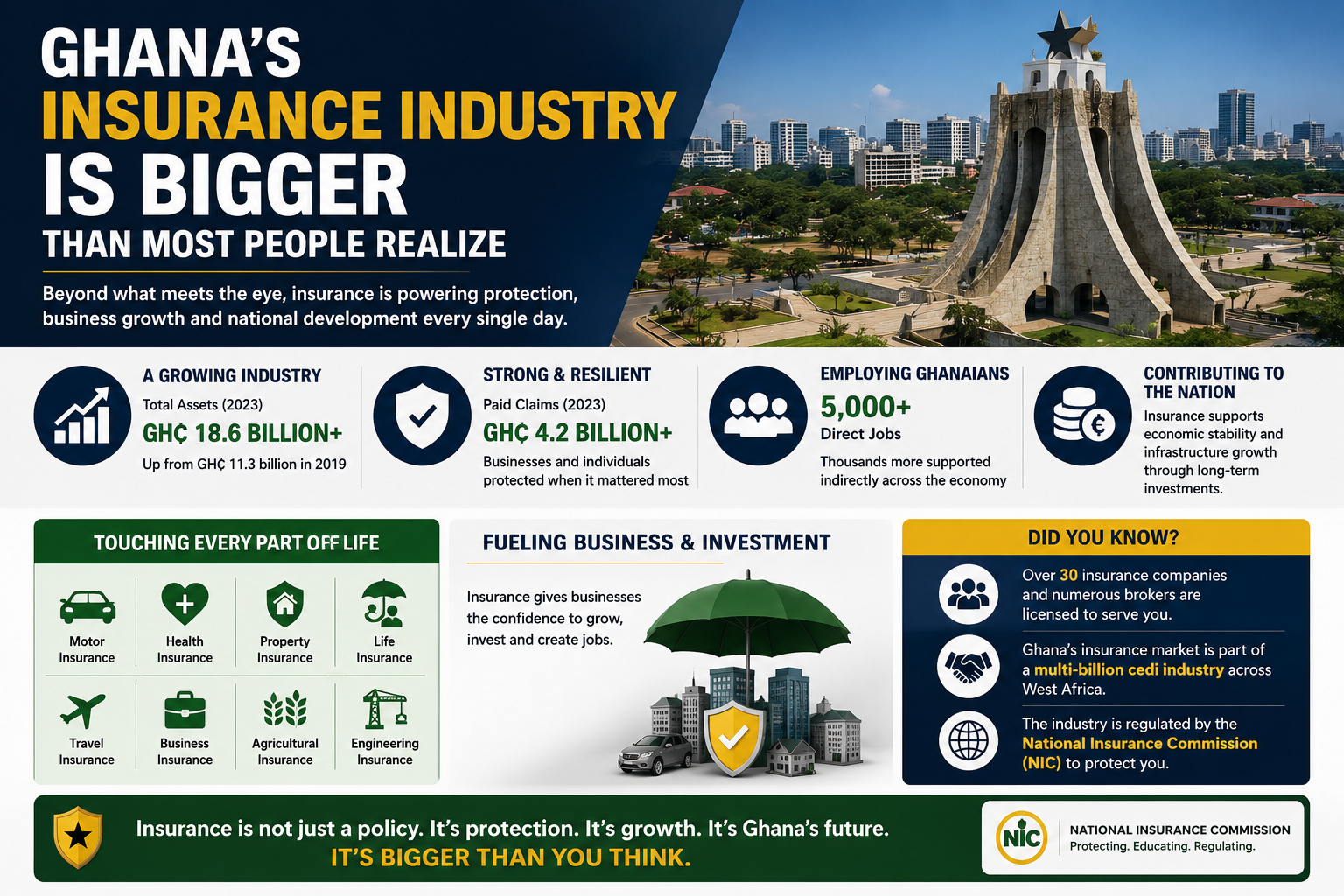










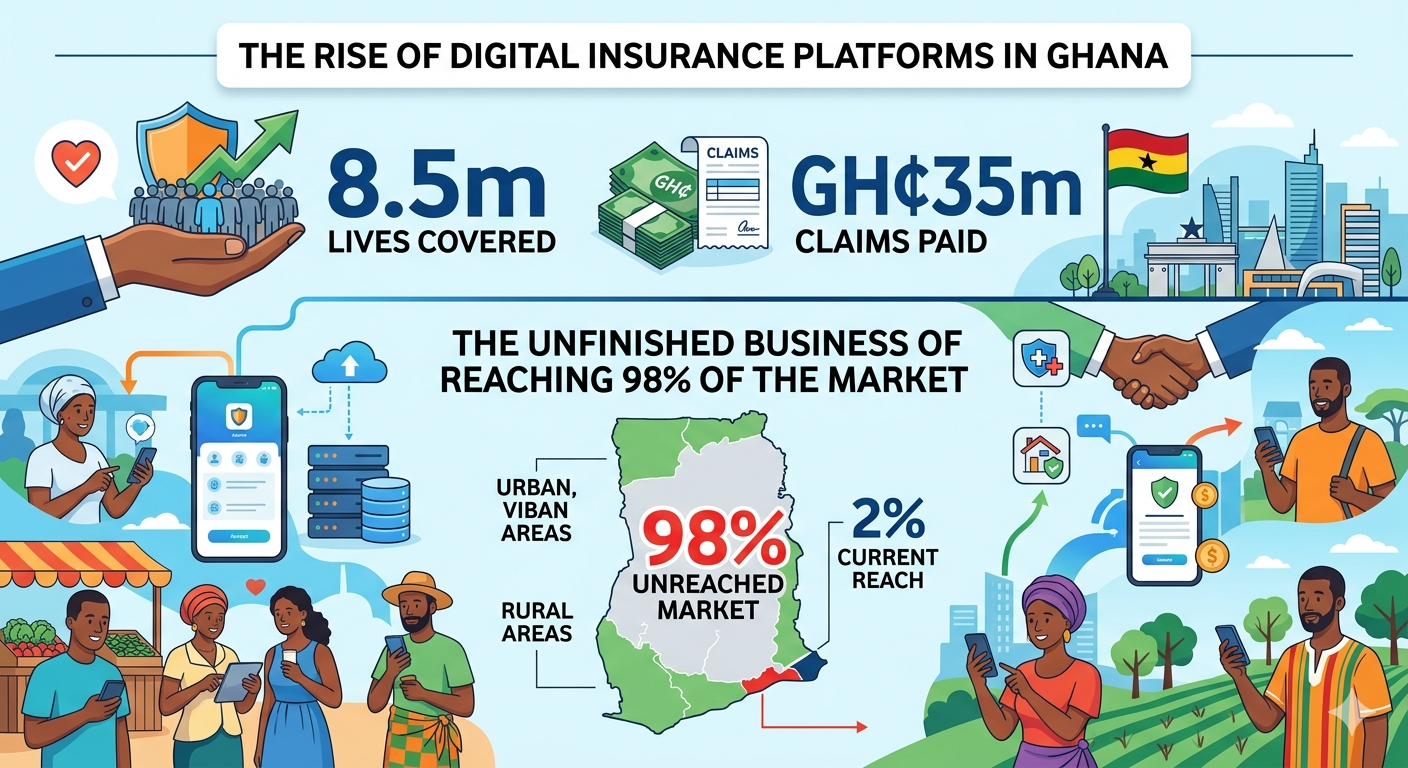

Digital insurance platforms like aYo, DOSH, ETAP and Figtech are finally reaching Ghana’s 80% informal workforce – with 8.5m lives covered and GH¢35m in claims paid. Our deep‑dive analysis reveals the business models, regulatory enablers and the unfinished work of moving beyond 1% penetration.
The Rise of Digital Insurance Platforms in Ghana – 8.5m Lives, GH¢35m Claims, and the Unfinished Business of Reaching 98% of the Market
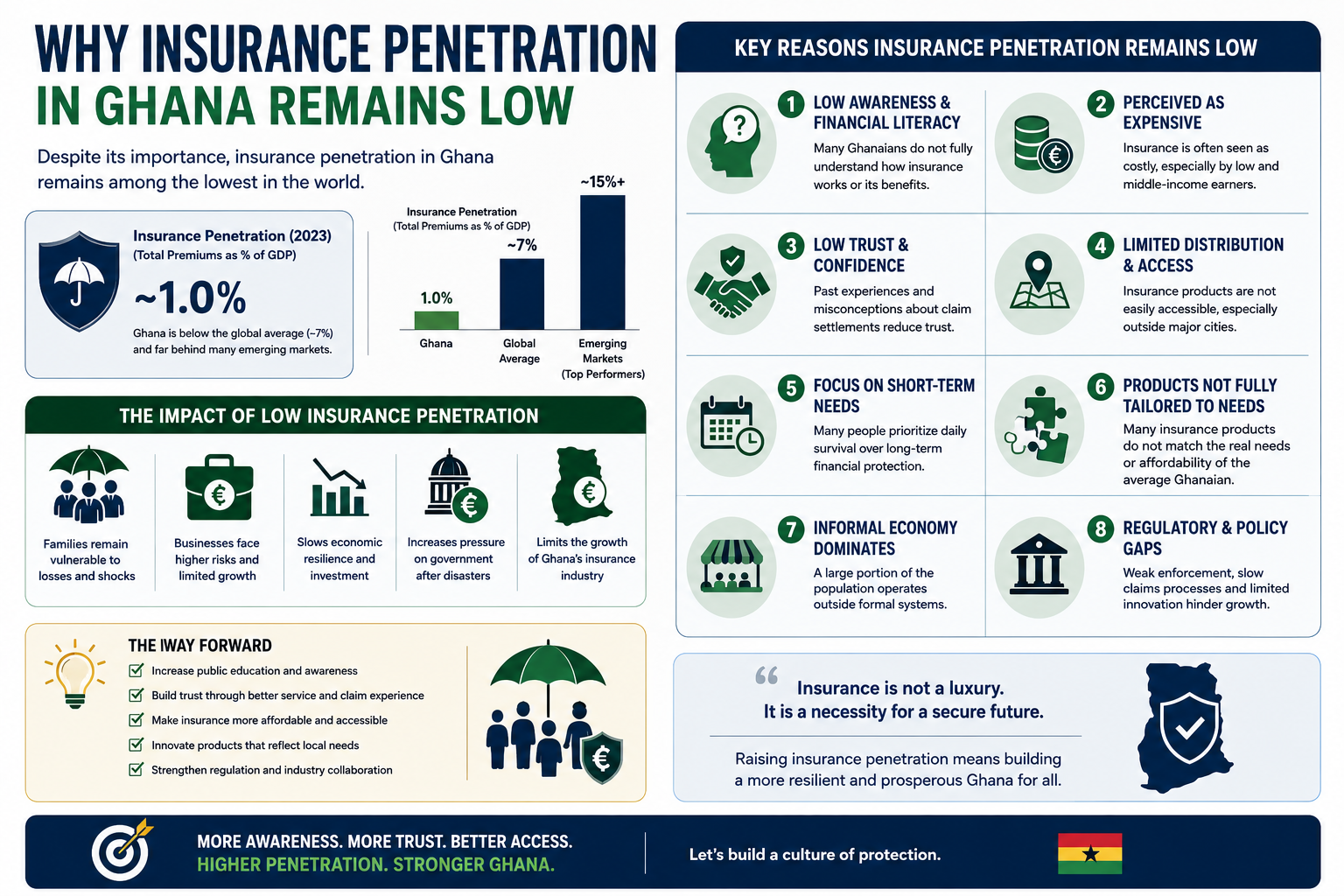
For decades, the story of insurance in Ghana has been one of persistent failure. Penetration has remained stubbornly stuck at just 1 per cent of GDP – and under the stricter IFRS 17 standard, the figure falls even further to 0.63 per cent. More than 98 per cent of Ghana’s economic activity, household assets and personal income are not protected by any form of private insurance. The reasons are well‑documented: a deep trust deficit rooted in real and perceived claim delays; premiums structured for salaried workers in a country where 80 per cent of the workforce is in the informal sector; distribution channels that never reached the remote communities where most Ghanaians live; and cultural substitutes – family, churches, susu groups – that have historically made formal insurance feel unnecessary.
But a quiet revolution is now underway. And it is being driven not by a new regulatory decree or a sudden change in consumer behaviour, but by the same technology that brought mobile money to the masses: the mobile phone.
📢 GET DETAILED ARTICLES + JOBS
Join THSB's WhatsApp Channel and never miss a post or opportunity.
The numbers are still small in absolute terms, but they are growing at a pace that has caught the attention of both local insurers and international investors. aYo Ghana, the market leader in digital microinsurance, has insured over 8.5 million lives and paid more than GH¢35 million in claims, distributing policies via USSD codes that work on any mobile phone, regardless of smartphone ownership. DOSH Health Insurance, launched in December 2025 in partnership with MTN MoMo, offers entry‑level health premiums from GH¢365 per year and promises to settle clean claims within 24 hours. ETAP, in partnership with Hollard Ghana, secured the country’s first‑ever insurtech operational licence in late 2024, allowing it to process claims, collect premiums and offer auto insurance directly to consumers. On the reinsurance side, VISAL Re’s placeIT platform – Ghana’s first end‑to‑end digital reinsurance marketplace – facilitated $3.2 billion in reinsurance capacity in its first year of operation.

This profile examines the rise of digital insurance platforms in Ghana: the business models that are finally cracking the informal sector, the partnerships that are reshaping distribution, the regulatory environment that is enabling – and constraining – growth, and the structural barriers that remain. The digital insurance revolution is real. But it is still only touching the edges of a vast, uninsured market.
The Market Context: The 1% Problem and the Digital Answer
To understand why digital insurance platforms are rising, one must first understand the scale of the failure they are trying to address.
Insurance penetration in Ghana – measured as gross premiums as a percentage of GDP – has remained flat at 1.0 per cent for several years, unchanged from 2023 to 2024. Under the more conservative IFRS 17 accounting standard, penetration drops to just 0.63 per cent – a more accurate reflection of the sector’s limited reach. The West African average is about 3 per cent; the global average is 7 per cent. By this metric, Ghana is not merely under‑insured; it is among the least‑insured countries in the region.
The NIC’s Commissioner has identified three pillars for turning this around: sanitising the insurance market; growing the market through technology; and positioning Ghana’s industry for long‑term competitiveness. Technology is not an optional add‑on. It is the primary lever.
The infrastructure for digital insurance already exists. By June 2025, Ghana had 76.4 million registered mobile money accounts, with over 24.5 million active users participating in digital transactions monthly. In early 2025 alone, mobile money transactions reached GH¢323.2 billion. The interoperability framework, the Ghana Card, and the Bank of Ghana’s push toward open banking and digital credit are all creating the scaffolding upon which digital insurance can be built.
The NIC has also taken proactive steps to nurture innovation. In October 2024, the Commission granted sandbox innovation licences to five insurtech companies as part of a broader programme that has accelerated 100 insurtechs continent‑wide, enabled 75 new projects, increased coverage by 5 million and facilitated US$35 million in capital raising. The sandbox allows new entrants to test digital insurance products in a controlled environment before full licensing – a crucial bridge between innovation and regulation.
The Leaders and Their Models
The digital insurance landscape in Ghana is not monolithic. It is a collection of distinct business models, each targeting a different segment of the market and leveraging different technologies.
aYo Ghana: The Embedded Microinsurance Pioneer
aYo Ghana, the microinsurance subsidiary of MTN Ghana, is the undisputed market leader. The company has insured over 8.5 million lives across the country and paid more than GH¢35 million in claims. Its flagship products – Recharge with Care, Family Cover, Annual Cover, MedCover, and Pay & Drive motor insurance – are embedded into the MTN ecosystem. Policy registration is as simple as dialling *296#. Premiums are paid via mobile money. Claims can be initiated via the same USSD code, and many are settled within five working days.
What makes aYo different is not just its scale – though 8.5 million lives is a significant number – but its omnichannel distribution model. Customers can interact with aYo via USSD, mobile money, a multilingual call centre, WhatsApp, or through a network of nationwide agents and MTN service centres. This model ensures that customers, regardless of location or level of digital literacy, can access the platform. In November 2025, aYo swept four awards at the National Technology and Communications Awards, including Mobile Insurance Innovation of the Year and Innovative Digital Insurance Platform of the Year.
DOSH Health Insurance: The MoMo‑Integrated Challenger
Launched in December 2025, DOSH Health Insurance represents a direct challenge to the traditional model of health insurance distribution. The company partnered with MTN MoMo – with its over 12 million active users – to allow customers to purchase, manage and pay for private health insurance directly on their mobile phones. The proposition is simple: no forms, no queues, no bank accounts required – just a mobile phone and a MoMo wallet.
The economics are aggressive. Entry‑level premiums start at GH¢365 per year for a benefit cover of GH¢9,000, targeting individuals, SMEs and the informal sector. The company promises to process and pay clean claims within 24 hours – a claim that, if sustained, would dramatically outperform the industry average. Coverage includes areas often excluded from insurance packages, such as psychiatric care, erectile dysfunction and in‑vitro fertilisation, alongside nationwide access to accredited facilities including Ghana Health Service centres. The Deputy Director of the Ministry of Health, Simpson Addo, described the model as a “significant step in democratising access to quality healthcare”.
ETAP‑Hollard: The First Operational Insurtech Licence
In a groundbreaking development for Ghana’s insurance industry, ETAP, a leading African insurtech, secured the country’s first operational licence for an insurtech company from the NIC in late 2024. The licence allows ETAP to independently process claims, collect premiums and offer innovative auto insurance products directly to consumers and businesses. The move came through a collaboration with Hollard Insurance Ghana, one of the country’s leading non‑life insurers, with the resulting ETAP‑Hollard initiative offering fast, fair and rewarding auto insurance for cars, trucks, motorcycles and tricycles.
Although insurance penetration in Ghana remains relatively low (around 2 per cent), the market is seen as ripe for growth. The ETAP‑Hollard partnership is expected to accelerate market expansion by tapping into unmet demand and offering flexible, user‑centric insurance solutions tailored to Ghanaian consumers.
Enterprise Life and Figtech: The AI‑Powered Broker
Not every digital insurance platform is a direct insurer. In February 2026, Enterprise Life Assurance partnered with Figtech Limited, a digital insurance intermediary admitted into the NIC’s Sandbox Programme, to expand digital access to life insurance across Ghana. The collaboration, implemented through Figtech’s MyFigTech platform, is designed as a one‑stop hub for comparing, purchasing and managing insurance products.
The key innovation is artificial intelligence. The Figtech mobile application allows users to compare policies from multiple providers, review premiums and coverage options side‑by‑side, and receive personalised recommendations using AI. This model – the digital broker – could be transformative for an insurance market where consumers have historically had no easy way to compare products. The platform also allows customers to complete onboarding with minimal documentation, make flexible digital payments and submit claims efficiently.
VISAL Re’s placeIT: The Invisible Infrastructure
While customer‑facing platforms get the headlines, the most significant digital transformation may be happening behind the scenes. In March 2025, a group of young insurance professionals under VISAL Reinsurance Brokers deployed placeIT, Ghana’s first end‑to‑end digital reinsurance platform.
Reinsurance – the insurance that insurers buy to protect themselves against large losses – has historically been a manual, opaque and fragmented process. placeIT has digitised and optimised the placement process. In its first year, the platform recorded over 1,000 reinsurance offers successfully placed, with participation from more than 20 licensed insurance companies and 18 reinsurers across multiple markets, delivering approximately $3.2 billion in total reinsurance capacity.
The platform has reduced placement timelines, improved deal visibility, enabled data‑driven decision‑making and provided greater transparency across all stakeholders. By making reinsurance more efficient, placeIT lowers the cost base for primary insurers – savings that can, in theory, be passed on to consumers in the form of lower premiums.
Other Notable Players: The digital insurance ecosystem also includes Impact Life Insurance, which launched the Abrabopa product – a mobile‑driven life and health solution for the informal sector – for just GH¢2.40 per month. CalBank, in partnership with MTN MoMo and BlueSPACE, launched BeINsured, a USSD auto insurance marketplace that enables vehicle owners to purchase policies, pay premiums and process claims without internet access. Bima Ghana pioneered telemedicine and mobile‑first insurance, receiving Ghana’s first telemedicine licence, and has partnered with AirtelTigo to deepen financial inclusion. M‑KOPA Ghana has taken an innovative approach, bundling health insurance directly into smartphone instalment plans through a partnership with Turaco; 67 per cent of its customers accessed health insurance for the first time through the product.
The Business Models: Embedded, Brokerage, and B2B
Three distinct business models have emerged from Ghana’s digital insurance expansion.
Embedded Insurance: This is the aYo and DOSH model. Insurance is embedded directly into a product or platform that customers already use – airtime purchases, mobile money transfers, or smartphone financing. The customer does not need to seek out an insurer; the insurance comes to them. Embedded insurance has the lowest acquisition cost and the highest potential for mass‑market scale. The challenge is that the insurer is often a secondary brand, and claims experience must be excellent to prevent reputational damage to the host platform.
Digital Brokerage: This is the Figtech model. The platform is not an insurer but a digital intermediary, helping consumers compare policies, understand coverage and purchase from multiple providers. The brokerage model has the potential to increase competition and price transparency, but it depends on consumer awareness and trust. A consumer who does not know why they need insurance will not visit a comparison site.
B2B and Infrastructure Platforms: This is the placeIT model. The platform serves not consumers but other insurance businesses. By digitising reinsurance placement, claims processing or policy administration, these platforms reduce costs and improve efficiency across the entire industry. They are invisible to the end customer, but they are essential to making digital insurance sustainable at scale.
Each model has different economics, different challenges and different growth trajectories. But they share a common foundation: the mobile phone as the primary distribution channel, and digital payments as the method of premium collection.
The Regulatory Enablers and Constraints
The rise of digital insurance platforms has been enabled by a regulatory environment that is increasingly supportive of innovation – but also increasingly demanding.
The NIC Sandbox Programme: The NIC’s decision to grant sandbox innovation licences to five insurtech companies, including Figtech, has allowed new entrants to test digital insurance products in a controlled environment before full licensing. The programme has accelerated 100 insurtechs continent‑wide, enabled 75 new projects, increased coverage by 5 million and facilitated US$35 million in capital raising. For a start‑up, the sandbox is the difference between launching and not launching.
The Insurance Act, 2021: The Act explicitly enables microinsurance and inclusive insurance, creating a legal framework for digital distribution. It also requires the Ghana Card for all insurance purchases, a provision that has improved identity verification but added an administrative step for customers.
BoG Cybersecurity Directive: In March 2026, the Bank of Ghana introduced a revised Cyber and Information Security Directive that extends regulatory coverage beyond banks to include fintechs, microfinance institutions and other financial sector players. The directive includes new governance standards for artificial intelligence and machine learning systems used in fraud detection and credit scoring, and sets stricter conditions for cloud adoption – including limiting the hosting of sensitive financial data outside Ghana. For digital insurers, this means higher compliance costs, but also a more secure operating environment.
Open Banking on the Horizon: The BoG has stated that it plans to introduce new regulatory frameworks for open banking, digital banking and digital credit by the end of 2026. Open banking would allow third‑party fintechs, with customer consent, to access bank data and offer competing financial services. For digital insurers, this could mean richer customer data for underwriting, lower distribution costs, and access to new customer segments.
Balancing Act: BoG Governor Dr Johnson Pandit Asiama has described regulation as a balancing act between protecting the financial system and enabling growth: “Regulation must remain firm… but it must also be enabling”. For digital insurers, this means tighter compliance requirements – but also a more predictable operating environment that attracts investment and builds consumer trust.
The Economics of Digital Microinsurance: Small Margins, Big Numbers
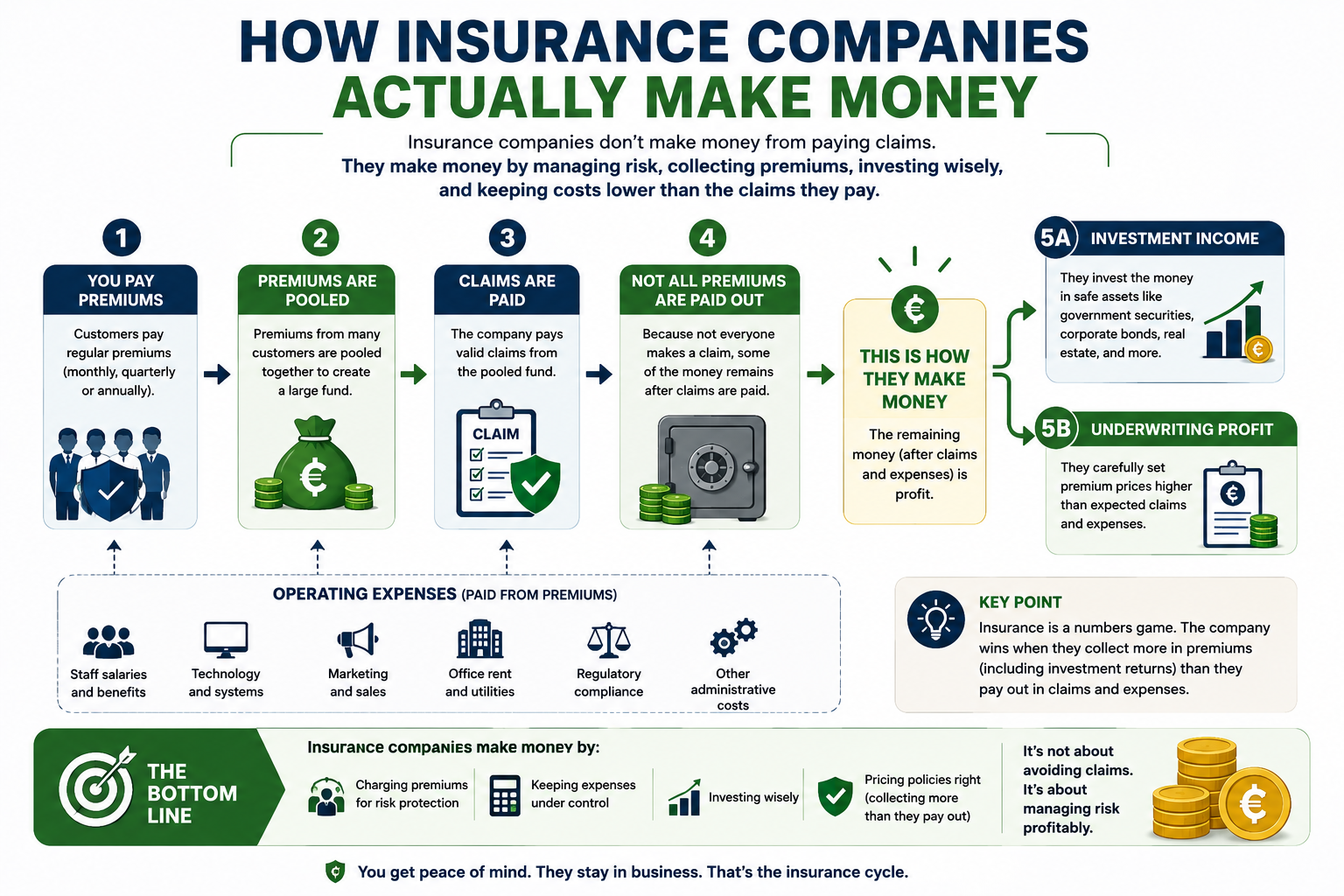
The business case for digital microinsurance is not about high margins per policy. A GH¢1‑per‑day policy generates GH¢365 annually in premium revenue. Even at a 10 per cent profit margin, that is GH¢36.50 per customer per year. The profit is in the volume and the retention.
aYo Ghana’s 8.5 million insured lives – even at low premium levels – generate substantial premium volume. The company’s claims payments of over GH¢35 million suggest a claims ratio that is sustainable but not excessive. The challenge is that microinsurance has high customer acquisition costs relative to premium value, which is why embedded models – where the acquisition cost is effectively zero because the customer is already on the platform – have a structural advantage.
The economics also depend heavily on automated claims processing. Manual claims investigation for a GH¢500 policy is not economically viable. Digital insurers have invested heavily in automated claims validation – using AI, data analytics and pre‑approved provider networks – to reduce processing costs. DOSH’s promise to settle clean claims within 24 hours is not just a customer service claim; it is an economic necessity. If claims processing is not automated, the model collapses.
For digital brokers like Figtech, the economics are different. The platform earns a commission on each policy sold. The value proposition is not lower premiums – though comparison shopping may find them – but better information. A customer who buys a policy through Figtech pays the same premium as a customer who buys directly, but the platform’s commission comes out of the insurer’s margin. For this model to be sustainable, the platform must drive incremental sales – policies that would not have been sold otherwise – rather than simply intermediating policies that would have been sold anyway.
The reinsurance platform placeIT operates on a completely different economic model: it charges a fee for successful placements. Its $3.2 billion in capacity facilitated suggests that the value it provides – faster placement, better pricing, transparent terms – is substantial enough that insurers are willing to pay for it.
The Consumer Experience: What Digital Insurance Actually Feels Like
For the majority of Ghanaians who have never bought insurance, the digital platform experience is a revelation.
A market woman in Kumasi learns about aYo’s Recharge with Care product through an SMS or a radio advertisement. She dials *296# , follows the prompts, and selects a policy that costs GH¢1 per day. The premium is deducted automatically from her mobile money wallet. When she is hospitalised, she dials the same USSD code to initiate a claim. She receives an SMS confirmation, and within five working days, the claim is settled. She never visits a branch, never fills out a paper form, never speaks to a claims adjuster. She does not need to understand the fine print – though aYo has invested in proactive customer education campaigns to ensure she does. The product simply works.
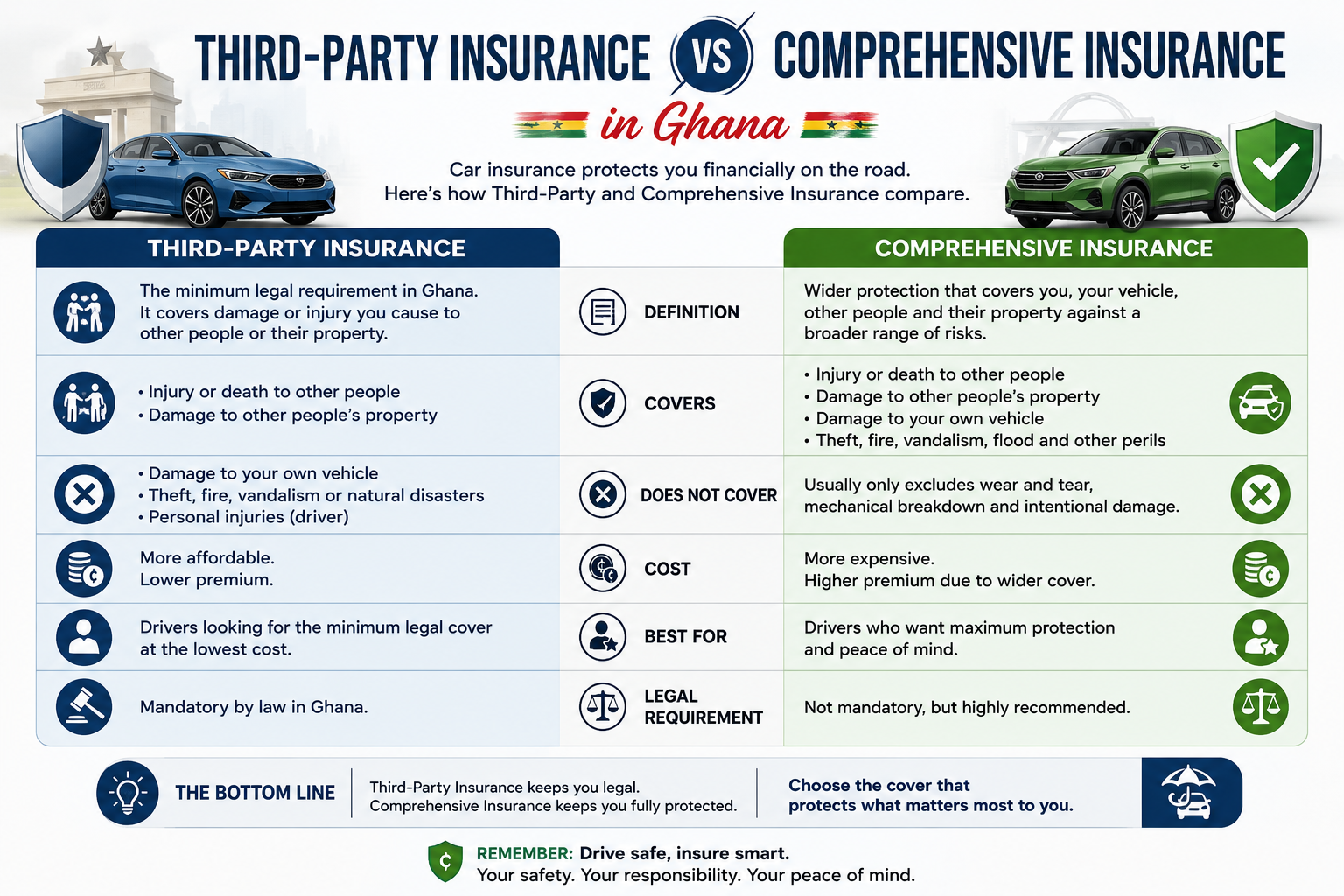
Or she is a driver who needs auto insurance. She dials the USSD code for BeINsured from CalBank, enters her vehicle registration number, and chooses a policy from a curated list of options. She pays the premium via mobile money, and the policy is registered instantly in the Motor Insurance Database. She does not need a smartphone. She does not need an internet connection. She just needs a phone that can make USSD calls.
Or she is a construction worker purchasing a smartphone on instalment from M‑KOPA. The health insurance is bundled directly into the instalment plan. She did not choose it. She did not apply for it. It is simply there, activated as soon as she makes her first payment. When she falls sick and is hospitalised, the hospital cash cover pays out, covering her bills and allowing her to have cash for daily expenses. 67 per cent of M‑KOPA’s insured customers now feel more confident handling health expenses.
This is the promise of digital insurance: coverage that is automatic, invisible, and embedded into the financial flows of daily life. The customer does not have to remember to renew. The technology does it for them. The customer does not have to wonder whether a claim will be paid. The automation ensures it is – quickly, transparently, and without dispute.
The Constraints That Remain
For all the growth, digital insurance platforms in Ghana still face severe constraints.
The 1% Penetration Ceiling: Despite the rise of digital platforms, insurance penetration has not meaningfully increased. The 8.5 million lives insured by aYo are often measured as “lives covered” rather than premium volume, and many of those policies are low‑value, high‑volume microinsurance products that generate limited premium income. Penetration may have ticked up from 0.63 per cent under IFRS 17, but it remains in the low single digits.
The Trust Problem: The NIC Commissioner has noted that “most people view their insurance providers with ambivalence” – a generous description of the widespread perception that insurers do not pay claims. Digital platforms have tried to address this through faster claims processing and transparent tracking, but the legacy of the industry’s trust deficit is not easily erased.
The Informal Sector Income Constraint: Even GH¢1 per day is a burden for many in the informal sector. Daily income volatility means that auto‑debit premium collection models – where premiums are deducted automatically from mobile money wallets – can fail if the wallet balance is insufficient on the due date. Insufficient balance is a leading cause of policy lapse.
The Digital Literacy Gap: The KPMG 2025 banking survey found that knowledge gaps – not just about how digital payments work, but about their benefits, costs and security features – disproportionately affect smaller and rural‑based consumers. Digital insurance platforms have invested in customer education, but the gap remains wide.
The Fraud Risk: Digital platforms are not immune to fraud. Fake insurance stickers have been reduced by the Motor Insurance Database, but ghost broking – the sale of fake policies by unlicensed individuals – remains a problem. The NIC has announced plans to seek the Chief Justice’s support for the establishment of special courts dedicated to the prosecution of insurance fraud【citation needed】. But fraud enforcement is still weak.
The Regulatory Friction: The Ghana Card mandate, while improving identity verification, has added an administrative step that may deter some customers. The BoG’s cybersecurity directive, while necessary, imposes compliance costs that smaller digital insurers may struggle to absorb. The shift to IFRS 17 reporting has improved transparency but increased reporting burdens. The balance between enabling innovation and ensuring stability is delicate – and the industry is still calibrating it.
Future Outlook: Three Scenarios for Digital Insurance Platforms
Three scenarios will shape the trajectory of digital insurance platforms in Ghana over the next three to five years.
Scenario One: Gradual Digital Penetration Expansion (65 per cent probability)
Embedded insurance continues to expand, driven by MTN MoMo and other telco partnerships. aYo Ghana reaches 12–15 million lives by 2028. DOSH, Figtech and ETAP establish viable niche markets in health, life and auto insurance. The NIC’s sandbox programme produces a steady stream of new entrants. Penetration rises slowly to 1.5–2 per cent of GDP. The informal sector remains largely uncovered, but the foundation of digital trust is built. This scenario requires no major external shocks and continued regulatory support.
Scenario Two: Accelerated Breakthrough (25 per cent probability)
The combination of open banking, telematics, and AI‑driven underwriting creates a step change in digital insurance adoption. The NIC implements fully digitised, end‑to‑end claims platforms integrated with MTTD and DVLA data. Telematics becomes standard for auto policies, reducing fraud and enabling pay‑how‑you‑drive pricing. Embedded health insurance becomes a standard feature of smartphone financing and mobile money accounts. Penetration rises to 2.5–3 per cent by 2028. Ghana becomes a regional leader in digital insurance.
Scenario Three: Stagnation and Trust Erosion (10 per cent probability)
A major fraud incident or high‑profile claims dispute erodes public trust in digital platforms. The NIC, facing enforcement capacity constraints, struggles to keep pace with new forms of fraud – ghost broking, fake digital policies, AI‑generated claim documents. The 1 per cent penetration ceiling holds. Digital insurance remains a niche product for the urban formal sector. This scenario would be a significant setback for the entire industry.
The most likely path is Scenario One: slow, incremental expansion, with digital insurance platforms becoming a normal part of the financial landscape for a growing minority of Ghanaians. But the gap between the 8.5 million lives aYo has reached and the 98 per cent of the market that remains uninsured is vast. Closing that gap is not just a commercial opportunity for insurers. It is an economic imperative for a country where households remain dangerously exposed to shocks that formal risk transfer could easily mitigate.
THSB Conclusion
The rise of digital insurance platforms in Ghana is not a hype story. It is a necessity story. The traditional insurance industry has had decades to reach the informal sector, and it has failed. Penetration remains at 1 per cent. Distribution costs are too high. Products are too complex. Claims processing is too slow. Trust is too low.
Digital insurance platforms are not a complete solution – but they are the most promising one. They have demonstrated that Ghanaians will buy insurance when it is affordable (GH¢1 per day), accessible (USSD on any phone), and reliable (claims settled in five days). aYo’s 8.5 million insured lives is not a rounding error – it is the largest single aggregation of insurance customers in Ghanaian history. DOSH’s 24‑hour claims promise, if sustained, would be a fundamental challenge to an industry where claims delays are the number one source of customer complaints. Figtech’s AI‑powered comparison platform is the first real attempt to bring price transparency to a market that has historically operated on opacity.
The technology is not the constraint. The infrastructure exists: 76 million mobile money accounts, nationwide agent networks, interoperability, Ghana Card verification. The constraint is the same as it has always been: trust. Trust that the premium paid will be honoured in the event of a claim. Trust that the digital platform will be there when it is needed. Trust that insurance is not a tax on the poor but a genuine protection against the unpredictable.
Digital platforms have an opportunity that traditional insurers never had: to build trust from scratch, using technology to deliver on the promise of insurance in ways that were never possible before. The industry that emerges over the next decade will look very different from the one that exists today. It will be mobile‑first, automated, and embedded into the daily financial lives of Ghanaians – whether they know it or not. That is not speculation. It is already happening.
The question is not whether digital insurance platforms will continue to rise. The question is how fast, how far, and whether the 98 per cent of Ghanaians who remain uninsured will finally be brought into the system – or left behind, once again, on the wrong side of a gap that technology was supposed to close.
Frequently Asked Questions (FAQ)
Q1: What is a digital insurance platform?
A digital insurance platform uses technology – particularly mobile phones and mobile money – to sell, manage and process insurance policies without requiring physical branches or paper documentation. Platforms typically offer microinsurance products with low premiums (starting from GH¢1 per day) and simplified claims processes via USSD or mobile apps.
Q2: How many people does aYo Ghana insure?
aYo Ghana has insured over 8.5 million lives across the country and paid more than GH¢35 million in claims, making it the market leader in digital microinsurance.
Q3: How do I buy insurance on my mobile phone?
For aYo, dial *296# and follow the prompts. For DOSH Health Insurance, purchase through the MTN MoMo app. For auto insurance, dial the USSD code for BeINsured (CalBank, MTN MoMo, BlueSPACE). Many platforms allow policy purchase, premium payment and claim initiation directly via USSD.
Q4: What does aYo’s Recharge with Care product cover?
Recharge with Care is a microinsurance product embedded into MTN airtime purchases. It offers life and hospital coverage. Customers can also purchase separate products including Family Cover, Annual Cover, MedCover and Pay & Drive motor insurance.
Q5: How much does digital health insurance cost?
DOSH Health Insurance offers entry‑level premiums from GH¢365 per year for a benefit cover of GH¢9,000. Impact Life’s Abrabopa product costs GH¢2.40 per month. aYo’s daily premiums start from GH¢1 per day.
Q6: How fast are digital insurance claims processed?
aYo Ghana settles many claims within five working days. DOSH Health Insurance promises to process and pay clean claims within 24 hours. The industry average for traditional insurers is significantly slower.
Q7: What is the NIC sandbox programme?
The National Insurance Commission’s sandbox programme allows insurtech companies to test digital insurance products in a controlled environment before receiving full operating licences. Five companies have been licensed so far, including Figtech.
Q8: What is embedded insurance?
Embedded insurance is coverage bundled directly into a product or service that customers already use – for example, life insurance attached to airtime purchases (aYo’s Recharge with Care) or health insurance bundled into smartphone instalment plans (M‑KOPA’s partnership with Turaco).
Q9: What is placeIT?
placeIT is Ghana’s first end‑to‑end digital reinsurance platform. In its first year, it placed over 1,000 offers, aggregated 18 reinsurers, and delivered approximately $3.2 billion in reinsurance capacity. Reinsurance is the insurance that insurers buy to protect themselves against large losses.
Q10: Is digital insurance regulated in Ghana?
Yes. Digital insurers must be licensed by the National Insurance Commission (NIC). The Insurance Act, 2021 explicitly enables microinsurance and inclusive insurance. The Bank of Ghana’s Cyber and Information Security Directive (CISD 2026) extends to fintechs and payment service providers, including digital insurers.
Q11: How does Figtech work?
Figtech is a digital insurance intermediary. Its MyFigTech mobile app uses AI to allow users to compare policies from multiple providers, review premiums and coverage options side‑by‑side, and receive personalised recommendations. It then enables purchase and policy management directly through the platform.
Q12: What is the future outlook for digital insurance in Ghana?
The most likely scenario is gradual expansion, with digital platforms becoming a normal part of the financial landscape for a growing minority of Ghanaians. Penetration is expected to rise slowly to 1.5–2 per cent of GDP by 2028. The informal sector – 80 per cent of the workforce – remains the great untapped market, and whether it is reached will depend on continued innovation, regulatory support and, above all, the rebuilding of trust.
Source: The High Street Business
Disclaimer: Some content on The High Street Business may be aggregated, summarized, or edited from third-party sources for informational purposes. Images and media are used under fair use or royalty-free licenses. The High Street Business is a subsidiary of SamBoad Publishing under SamBoad Business Group Ltd, registered in Ghana since 2014.
For concerns or inquiries, please visit our Privacy Policy or Contact Page.

Esther Aku-Sika is a content writer and social media strategist who helps brands and startups grow through intentional storytelling and practical marketing strategies. With a keen eye for trends and audience behavior, she shares business insights, content strategies, and real-life lessons to help entrepreneurs build visibility and turn ideas into income. Through her writing, she simplifies complex concepts and equips readers with actionable steps to grow in today’s digital space.