







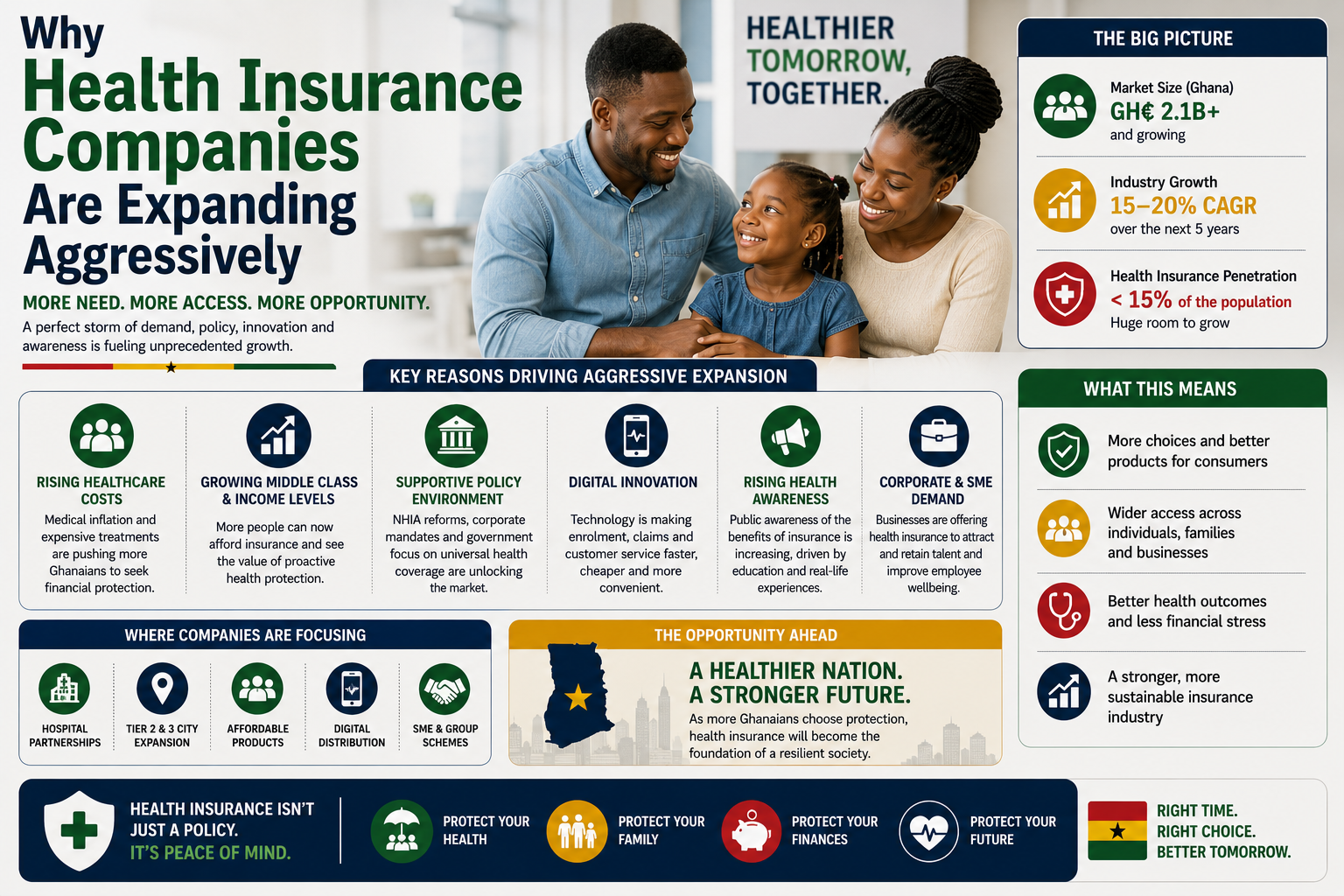

The private health insurance sector has delivered a 375% gain, with revenue reaching GH¢2bn. Our deep‑dive analysis reveals the NHIS coverage gap, the corporate gold rush, and the future of health financing in Ghana.
Why Health Insurance Companies Are Expanding Aggressively — The 370% Industry Surge, NHIS Gaps, and the Employer-Based Gold Rush
For most of its two‑decade existence, the National Health Insurance Scheme (NHIS) has been the undisputed centrepiece of Ghana’s healthcare financing architecture. It covers outpatient consultations, maternity care, and basic surgeries for about 66 per cent of the population — a substantial achievement in a region where universal coverage remains elusive. But for millions of Ghanaians, the NHIS card no longer feels like enough.
Dialysis. Cancer treatment. Advanced diagnostic imaging. Private hospital admission. These are the services that the NHIS does not cover, and they are the services that are driving an unprecedented expansion of Ghana’s private health insurance industry.
📢 GET DETAILED ARTICLES + JOBS
Join THSB's WhatsApp Channel and never miss a post or opportunity.
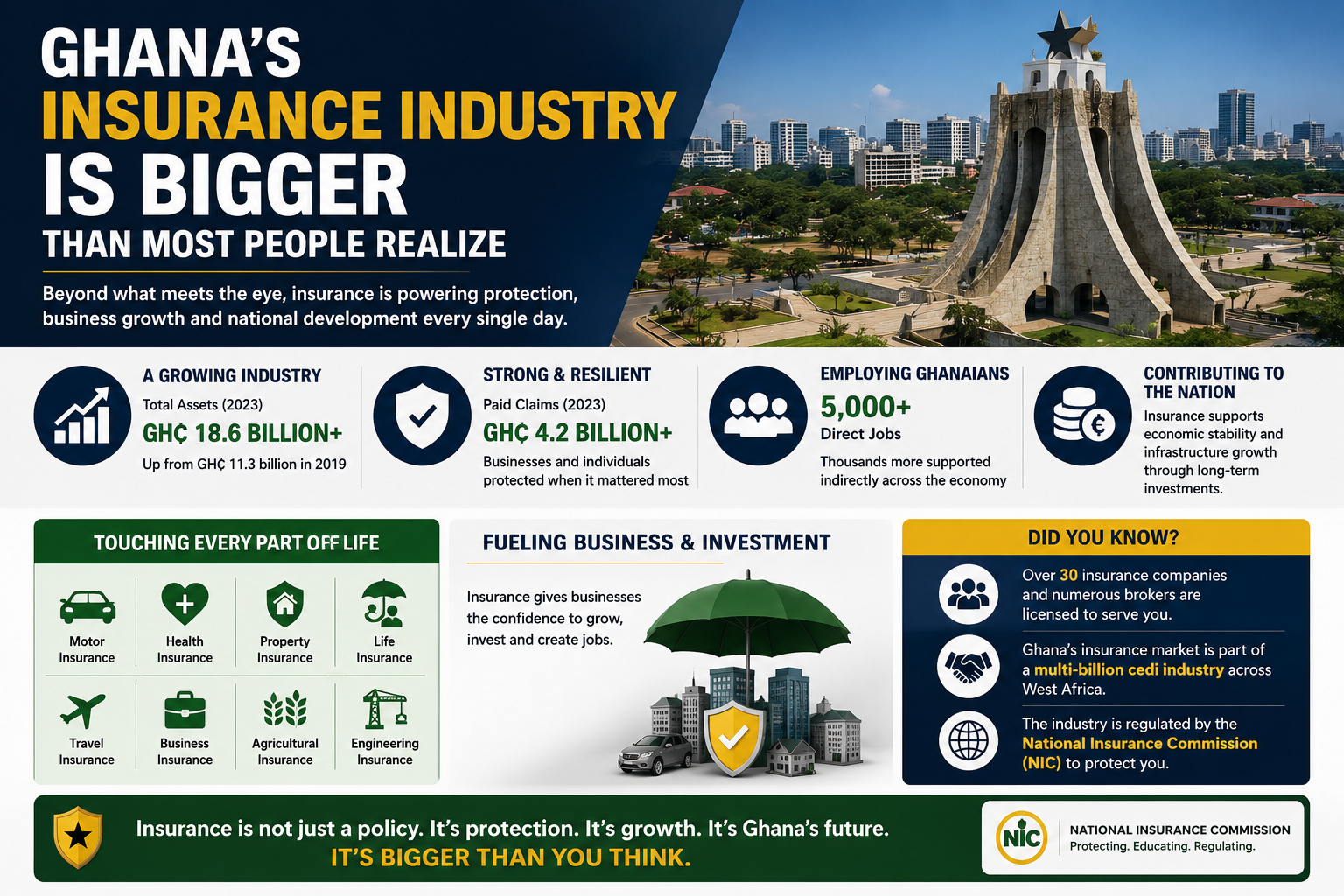
The numbers are striking. Over the past year alone, the Ghana Stock Exchange (GSE) Life and Health Insurance sector has delivered a staggering 375 per cent gain, lifting its market capitalisation from GH₵340 million in late 2024 to GH₵2.1 billion by March 2026. Revenue for the sector has climbed to GH¢2 billion, with earnings reaching GH¢215.9 million. Private health insurers, who covered perhaps 50,000 lives a decade ago, now serve more than half a million Ghanaians — and the number is rising rapidly. GHIC (GAB Health) alone has grown its balance sheet at an average of 153 per cent annually and now serves over 22,000 members.

This expansion is not accidental. It is being driven by five powerful forces: a well‑documented coverage gap in the NHIS that excludes catastrophic and specialist care; a significant improvement in the financial health of the entire insurance ecosystem following the uncapping of the NHIL; rising disposable incomes among Ghana’s urban middle class; a decisive shift by large employers toward fully‑funded private group health plans; and rapid technology adoption that has lowered distribution costs and improved claims processing.
This profile explains why health insurance companies are expanding aggressively, which players are winning, where the real opportunities lie, and what constraints — from affordability to trust — still limit the industry’s reach. For the health insurers themselves, this is a moment of rare alignment between policy tailwinds and unmet consumer demand. For the NHIS, it is a reminder that even the most successful public scheme cannot do everything. And for the ordinary Ghanaian, it is the emergence of a genuine choice: basic coverage for free, or comprehensive protection for a price.
The Market Opportunity: A GH₵2 Billion Industry That Is Still Tiny
Before examining the drivers of expansion, it is essential to understand just how small Ghana’s private health insurance market remains — and therefore how large the upside opportunity is.
The combined revenue of Ghana’s publicly listed life and health insurers reached GH₵2.0 billion in early 2026. That is a substantial sum, but it represents a fraction of total healthcare spending in Ghana. Out‑of‑pocket payments — what Ghanaians pay directly to providers when they fall ill — account for roughly one‑third of total health expenditure, estimated at GH₵34.7 billion in 2026. Every cedi of out‑of‑pocket spending is potential premium revenue waiting to be converted into insurance.
What makes the growth particularly interesting is that it is coming from a very low base. From an estimated 50,000 insured lives in its early days, the private health insurance sector now covers more than half a million Ghanaians. That remains a fraction of the NHIS’s 18.5 million active members. But it represents real growth — and the speed of that growth is accelerating.
The 375 per cent one‑year gain in the GSE life and health index captures this sentiment perfectly. Investors are pricing in a future where private health insurance becomes the standard for formal sector employees, the urban middle class, and anyone who cannot afford to rely on an overstretched public system. The price‑to‑earnings ratio of the sector has expanded from 1.5x to nearly 10x over the same period — a clear signal that the market expects sustained earnings growth. Market researchers expect the entire health insurance market to grow steadily through 2031, driven by technology adoption, rising demand for quality care, and a shift toward value‑based models that emphasise outcomes and patient satisfaction.
What NHIS Does Not Cover — And Why That Is the Insurers’ Business Plan
The NHIS is an extraordinary achievement. Active membership has climbed to 18.5 million people, representing about 56–66 per cent of the population, depending on the estimate. It covers outpatient consultations, maternal care, basic surgeries, and some chronic conditions such as hypertension and diabetes. For an annual registration fee of GH¢30–GH¢50, it provides a genuine safety net for millions of Ghanaians.
But the gaps in that safety net are precisely where private health insurers see their opportunity.
The NHIS explicitly does not cover:
- Advanced surgeries
- Cancer treatment
- Dialysis
- CT scans, MRIs, and other advanced diagnostics
- Specialist consultations (dermatology, cardiology, etc.)
- Dental and optical care
- Private hospital admissions
These exclusions are not accidental. The NHIS was designed as a basic package for a low‑income population. As Ghana’s economy has grown and as the burden of non‑communicable diseases has risen, the gap between what the NHIS covers and what middle‑class families need has widened significantly.

The result is a two‑tier system that is now deeply embedded. The NHIS provides primary and basic care, free or almost free at the point of service. Private health insurance sits on top, covering the catastrophic and specialist services that the NHIS excludes. As Ronald Adom, President of the Private Health Insurance Association of Ghana (PHIAG), told the Business & Financial Times, “The foundation [for private health insurance] has been laid. What we need now is the right policy push and professional discipline to sustain the gains”.
A typical middle‑class family earning GH¢10,000 per month now holds both an NHIS card and a private plan. The NHIS covers the children’s malaria treatment and the wife’s antenatal care. The private plan covers the husband’s dialysis, the mother’s cancer chemotherapy, and the family’s access to a private hospital when the public facility is overcrowded. This complementarity is becoming the new normal, as private health insurers openly position themselves as partners rather than competitors to the NHIS. The NIC Commissioner has repeatedly characterised private insurance as “a complement, not a replacement” for the NHIS. The MahamaCares Trust Fund, launched in 2026, is explicitly designed to complement the NHIS by covering catastrophic conditions — further validating the model that public and private provision can coexist.
The gap is not small. Approximately 34 per cent of Ghanaians — more than 12 million people — still have no health coverage at all. The government’s new Free Primary Healthcare policy, rolled out in phases from 2026, will bring those individuals into the system for basic services at CHPS compounds and health centres. But for the same cohort, private insurance will be the only pathway to hospitalisation, surgery, and advanced diagnostics.
How NHIS Reforms Unlocked the Entire Health Insurance Market
The single most consequential policy shift for Ghana’s health insurance market in the past two years has been the uncapping of the National Health Insurance Levy (NHIL).
Prior to 2025, the NHIL — a 2.5 per cent levy on specified goods and services — was subject to a statutory cap that limited how much could flow into the NHIS. In March 2025, the Mahama administration removed that cap entirely. The effect was immediate and dramatic.
NHIS revenue surged from GH¢6.52 billion in 2024 to GH¢9.76 billion in 2025, a 50 per cent increase. President Mahama announced that the reform “immediately freed up an additional GH¢3 billion, equivalent to $300 million, for healthcare investment”. The proportion of NHIS revenue allocated to claims — its core business — rose from 56.2 per cent in 2024 to 65 per cent in 2025, with a projected increase to 75 per cent by 2026.
For private insurers, a healthier NHIS is good for business. A public scheme that pays its claims on time and maintains the confidence of the population keeps the basic healthcare system functioning. It also reduces the risk that private plans will be overwhelmed by demand from uninsured patients who have no other access to care. The NHIS, according to President Mahama, “remains one of the most successful national health insurance schemes in Africa”. Its reform has strengthened the entire health financing architecture, creating a stable platform on which private insurers can build.
The knock‑on effects are already visible in the capital markets. The surge in NHIS funding has improved the fiscal environment for healthcare generally, reducing uncertainty for private providers and insurers. The Ministry of Finance’s 2026 budget allocated GH₵34.7 billion to total health financing, up from GH₵23.3 billion in core allocations just two years earlier. This is not a stressed system. It is a growing system.
As Health Minister Kwabena Mintah Akandoh put it, “What we are building is a complete system, from prevention to treatment to specialised care”. Private health insurers are positioning themselves to occupy the specialised care tier of that system.
The Corporate Market: Why Employers Are Driving Aggressive Expansion
If one segment explains the aggressive expansion of health insurers more than any other, it is the corporate group market.
Large employers — banks, multinational corporations, oil and gas companies, mining firms, and international NGOs — have long provided private health insurance as a staff benefit. But the scale of that provision has expanded dramatically. Employers have recognised that a healthy workforce is a productive workforce, and that the NHIS, even with its recent reforms, does not provide the level of care that their employees expect or require.
GHIC (GAB Health) has been the standout performer in this space. Operating as a business‑to‑business (B2B) provider, GHIC’s policyholders span banking, freight and logistics, savings and loans, microfinance, aviation, education, NGOs, and oil and gas. The company has achieved a 97 per cent claim settlement ratio — up from 94 per cent the previous year — and has built a network of more than 800 healthcare facilities nationwide.
The economics of the corporate market are fundamentally different from the retail market. Corporate policies are priced annually, with predictable premium income and lower acquisition costs. Employers are less price‑sensitive than individuals, because they treat health insurance as a non‑negotiable cost of talent retention. And once a corporate relationship is established, the switching costs for an employer — retendering, re‑enrolling hundreds or thousands of employees — are high.
This is why GHIC’s average premium growth rate of 87 per cent year‑on‑year is so instructive. The company is not acquiring new customers one by one. It is winning large contracts and then growing within those accounts as employers expand coverage to dependents and add optional riders. GHIC’s capital adequacy ratio of 218 per cent — well above the regulatory minimum — reflects the financial discipline that corporate underwriters demand.
The MD of GHIC, Joseph Abenney‑Yeboah, has been explicit about the strategy: “Our journey so far has been one of trust, innovation and measurable impact. These achievements reflect our dedication to improving access to affordable and quality healthcare for individuals, families and businesses”. The business focus is on businesses — and the results speak for themselves.
PHIAG has gone further, proposing that private health insurance be made compulsory for all corporate entities. If implemented, such a policy would mirror developed‑economy models where employer‑based insurance is a primary pillar of healthcare financing. It would immediately expand coverage to millions of working adults, transferring the financial burden from individuals to employers and deepening risk pooling across the corporate sector.
The industry is also investing in value‑added services to differentiate corporate offerings. GHIC provides medical advisory services, second opinions, treatment facilitation both locally and internationally, and a 24‑hour medical call centre. It is preparing to launch a virtual AI assistant called Ohenewaa and has introduced telemedicine and chronic care management through its HealthyKonect platform. These are not insurance products in the narrow sense. They are comprehensive health management solutions.
The Rise of Digital and Microinsurance: Lowering the Barrier for Individuals
The corporate market is where the revenue is. But the individual retail market is where the growth story is most exciting — and most challenging.
The classic barrier for individual health insurance has always been affordability. Premiums for comprehensive private health plans range from GH¢1,200 to GH¢6,000 annually, depending on the plan and provider. For a household earning GH¢5,000 per month, a GH¢2,000 premium is still a significant outlay. For the 80 per cent of the workforce in the informal sector, it is out of reach entirely.
Digital and microinsurance models are beginning to change this calculus. Insurers are exploring hybrid products that blend micro‑insurance models with digital health solutions, targeting traders, artisans, and low‑income earners. The goal is to offer daily or weekly premium products that can be purchased via mobile money, with coverage scaled to the premium paid.
The technology backbone that enabled mobile money and digital banking is now being applied to health insurance. Digital platforms, mobile payment systems, and telemedicine integrations are lowering distribution costs, making it feasible to serve customers with very small premiums. As the PHIAG president noted, “There is such a huge room for growth and exciting dimensions of coverage. The industry is gearing up for a mixed bag of options for the informal and underserved population segments”.
The industry is also investing in building the professional expertise required to serve mass markets. PHIAG has proposed technical capacity‑building in actuarial science, claims management, risk assessment, and customer service specific to the health insurance ecosystem. Without these skills, even the most innovative digital product will fail.
What has not yet happened at scale is the kind of embedded insurance seen in mobile money. No telco has yet bundled a health insurance rider with every airtime purchase or mobile money transfer. But the potential is enormous, and the BoG’s open insurance framework is expected to accelerate this trend, allowing insurtech platforms to integrate seamlessly with mobile ecosystems.
The Data Case Study: GHIC’s 97% Claim Settlement Ratio and What It Means for Trust
No discussion of health insurance expansion is complete without addressing trust. The single most common reason Ghanaians give for not buying insurance is the fear that claims will not be paid.
GHIC’s 97 per cent claim settlement ratio in 2025 directly addresses this fear. The company has paid more than GH¢170 million in total claims on behalf of members. Its Managing Director has stated plainly what many insurers avoid saying: “If clients go to the hospital and claims are not paid, you are not worth being a health insurance company”.
This is not mere marketing. GHIC’s performance is backed by numbers that demonstrate a genuine shift in operational discipline. Over five years, the company has maintained a claim settlement ratio between 90 and 95 per cent. Its balance sheet has grown at an average of 153 per cent annually, and it maintains a capital adequacy ratio of approximately 218 per cent, indicating that it has the reserves to meet its obligations.
GHIC’s success has not gone unnoticed by competitors. Across the industry, health insurers are investing in digital claims processing systems, provider networks, and customer service infrastructure designed to match GHIC’s performance. The NIC’s regulatory push for transparency — including the launch of a Customer Satisfaction Index — is reinforcing this shift. Insurers that cannot demonstrate reliable claims payment will find it increasingly difficult to win corporate contracts or individual customers.
Trust remains fragile, but it is being rebuilt — one claim payment at a time. GHIC’s experience demonstrates that when insurers pay claims promptly, customers do eventually buy. The remaining task is to extend that lesson to the half of the industry that still struggles with payment delays and disputes. The NIC’s framework for sanctioning delayed claims — including penalties for insurers failing to pay within one month — is an important lever. But regulation alone cannot manufacture trust. Only consistent performance can do that.
The Top Players: Who Is Winning the Aggressive Expansion Race
The private health insurance market in Ghana is not a monopoly. It is a competitive arena with several clear leaders, each with a distinct strategy.
GHIC (GAB Health Insurance Company) is the standout performer in the corporate B2B space. Owned by the Ghana Association of Bankers, GHIC has leveraged its banking connections to win contracts across multiple sectors. Its 97 per cent claim settlement ratio is the industry benchmark. Its 800‑provider network covers the entire country. Its digital investments — including a planned AI assistant and telemedicine platform — are best‑in‑class. For any employer seeking a reliable, well‑capitalised health partner, GHIC is currently the default choice.
Hollard Health is the motor insurance disruptor that has successfully cross‑sold into health. Hollard is consistently named among Ghana’s top private health insurers. Its strategy emphasises innovation, digital access, and flexible plan structures. Hollard’s motor insurance franchise gave it a large existing customer base and brand recognition, which it has leveraged effectively.
GLICO Healthcare is part of the GLICO financial services group, a Ghanaian powerhouse with deep roots in life insurance and pensions. GLICO’s health offerings are particularly strong in the SME and individual segments, where it competes on affordability and access. GLICO also offers expatriate packages and top‑up coverage for high‑net‑worth individuals.
Enterprise Life offers health riders attached to its life insurance policies, rather than standalone health insurance. This bundling strategy has been effective for Enterprise, which is one of Ghana’s most trusted insurance brands across all lines. Its health products are often purchased by individuals who already hold Enterprise life or pensions policies and are looking for integrated coverage.
Acacia Health Insurance, Apex Health Insurance, Premier Health Insurance and other niche players compete primarily on price and customer service, often targeting specific segments such as expatriates, small businesses, or particular geographic regions.
What is notable is that no single insurer dominates the entire market. The expansion is being led by multiple players, each winning in its chosen segment. This fragmentation is healthy for consumers — it keeps prices competitive and forces insurers to differentiate on service rather than price alone.
The Remaining Constraints: Why Most Ghanaians Still Do Not Have Private Cover
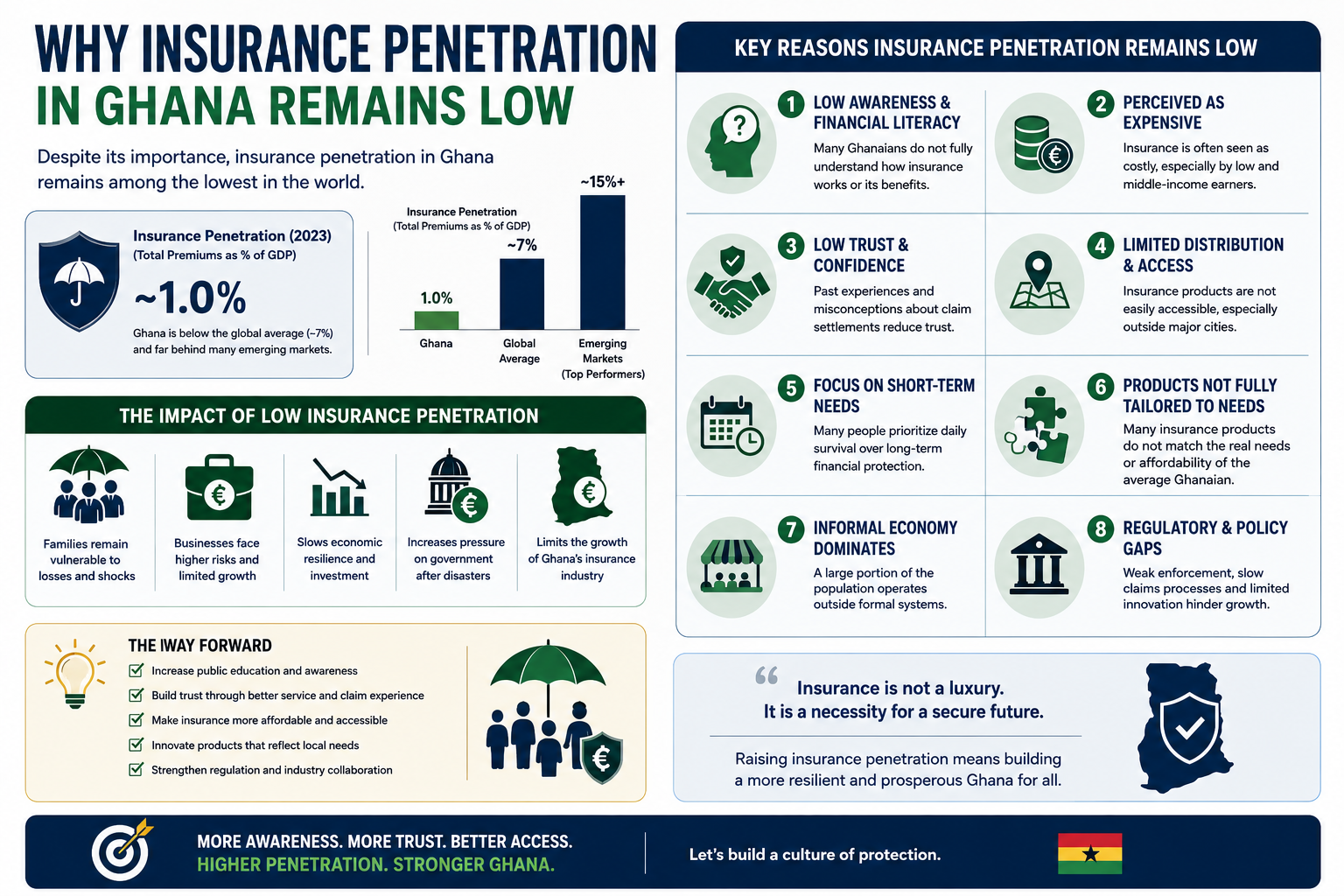
For all the aggressive expansion, the private health insurance market remains a minority pursuit. More than 25 million Ghanaians — about 75 per cent of the population — are still uninsured for private health coverage. Five constraints explain this gap.
First, affordability remains the primary barrier. Premiums of GH¢1,200–GH¢6,000 per year are simply beyond the reach of most households. Even GH¢100 per month, when split across a family of four, represents a significant outlay for a household in the lower half of the income distribution.
Second, low awareness and low insurance literacy persist, particularly in rural areas. Many Ghanaians do not understand what private insurance covers, how claims work, or why it might be worth the expense. The NIC has identified low public awareness as a binding constraint on market growth. The new Customer Satisfaction Index and targeted public education campaigns are steps in the right direction, but changing behaviour takes years.
Third, inadequate provider networks outside Greater Accra and a few regional capitals limit the value of private policies for rural residents. An insurance card is worthless if the nearest in‑network hospital is three hours away. Expanding provider networks to district level is capital‑intensive and logistically complex.
Fourth, trust remains an issue for insurers that have not yet matched GHIC’s claims performance. Stories of disputed claims, delayed payments, and administrative hurdles continue to circulate. While the industry as a whole is improving, the trust deficit is not evenly distributed. Some insurers have earned it; many have not.
Fifth, the regulatory environment, while improving, still contains friction. The NIC’s decision to make the Ghana Card mandatory for all insurance purchases — effective 1 January 2026 — has improved identity verification but also added an administrative step that may deter some customers. The shift to IFRS 17 reporting, while improving transparency, has increased compliance costs. And the unresolved question of overlapping medical coverage — where travel insurance or life insurance products inadvertently cover health events without being regulated as health insurance — creates confusion for consumers.
These are not insurmountable barriers. But they explain why the aggressive expansion is concentrated in the urban corporate segment, with retail and rural markets lagging significantly behind.
The Macro Tailwinds: Why the Timing Is Right for Health Insurance Expansion
Several macro factors beyond the control of individual insurers are aligning to support the health insurance industry’s expansion.
Rising middle‑class incomes are the most important. Ghana’s economy has stabilised after the 2022‑2024 crisis, with single‑digit inflation, a recovering cedi, and projected GDP growth of around 5 per cent in 2026. Households that were previously struggling to afford basic necessities now have some discretionary income. Some of that income is being allocated to health insurance.
Demographic shifts also favour expansion. Ghana’s population is young, urbanising, and increasingly educated. Younger Ghanaians are more comfortable with digital products and more likely to see insurance as a normal part of financial planning, rather than a luxury. As the PHIAG president observed, “the public have increasingly bought into the promise of reliable healthcare delivery through private insurance interventions”.
Increased public healthcare spending is not a substitute for private insurance, but it is a complement. The NHIS reforms have restored confidence in the public system. A functioning NHIS reduces the pressure on private plans to cover basic care, allowing them to focus on the catastrophic and specialist services where they have a clear comparative advantage.
The global health insurance market is also expanding, and Ghana is not immune to that trend. International investors view Ghana as one of the more attractive markets in West Africa — stable enough for long‑term investment, large enough to matter, and under‑penetrated enough to offer growth. The 375 per cent gain in listed health insurers is partly a domestic story, but it also reflects foreign portfolio flows into the sector.
The burden of non‑communicable diseases is rising in Ghana, as it is across Africa. Cancer, kidney disease, diabetes, and cardiovascular conditions are no longer rare. These are precisely the conditions that the NHIS does not cover and that private insurance is designed to address. The government’s creation of the Ghana Medical Trust Fund (MahamaCares) — with GH¢2.259 billion allocated in 2026 — is an admission that the NHIS alone cannot handle the NCD burden. Where public funds go, private insurers follow.
Future Outlook: Three Scenarios for Ghana’s Private Health Insurance Industry
The aggressive expansion of health insurance companies is not guaranteed to continue. Three scenarios will shape the trajectory of the market over the next three to five years.
Scenario One: Continued but Slowing Growth (65 per cent probability)
In this base case, the corporate market continues to grow at double‑digit rates, driven by employer demand for talent retention. Premiums rise at 5‑10 per cent annually. GHIC maintains its dominance in the B2B segment, while Hollard and GLICO build out their individual offerings. Digital microinsurance expands but remains a small share of total premiums. Market penetration reaches 2‑3 million lives by 2028. This scenario requires stable macroeconomic conditions and no major regulatory reversals.
Scenario Two: Accelerated Breakthrough (20 per cent probability)
If PHIAG’s proposal for compulsory employer‑based health insurance is implemented, the market would expand overnight. Formal sector workers — perhaps 2‑3 million additional lives — would be brought into the system. Premium volume would double or triple within two years. Insurers would compete aggressively for corporate contracts, driving down prices and forcing consolidation among smaller players. Digital microinsurance would scale rapidly as embedded insurance becomes standard on mobile money platforms. This optimistic scenario depends on political will and effective regulation.
Scenario Three: Stagnation and Retrenchment (15 per cent probability)
A return to high inflation, cedi depreciation, or a fiscal crisis would erode household incomes and force employers to cut benefits. Corporate health plans would be downgraded or eliminated. Premium growth would stall. Digital microinsurance would stagnate as disposable incomes shrink. Market penetration would remain below 1 million lives. This scenario is the low‑probability, high‑impact risk that keeps insurers cautious despite their aggressive expansion.
The most likely path is Scenario One: continued growth, but not a sudden explosion. The structural barriers — affordability, awareness, trust, provider networks — are too deep for a quick fix. But the direction of travel is clear. Ghana’s private health insurance industry has found its footing. The question is not whether it will grow, but how fast, and who will capture the value when it does.
THSB Conclusion
The aggressive expansion of health insurance companies in Ghana is not a speculative bubble. It is the logical market response to three durable shifts: a growing middle class that can afford comprehensive coverage, a public insurance scheme that explicitly excludes catastrophic and specialist care, and a regulatory environment that, after years of stasis, is finally creating the conditions for private sector growth.
The numbers are not hype. A 375 per cent one‑year gain in the sector’s market capitalisation reflects real revenue growth, real earnings, and real investor conviction that the story is sustainable. GHIC’s 97 per cent claim settlement ratio has demonstrated that private health insurance can work in Ghana — that customers can buy a policy, use it, and be paid without months of delay. The uncapping of the NHIL has injected billions of cedis into the broader health financing ecosystem, reducing the fiscal stress that once threatened to overwhelm the entire system.
But the expansion is not yet inclusive. More than 25 million Ghanaians still lack private health cover. Premiums remain out of reach for most households. Provider networks are concentrated in urban areas. Trust, though improving, is not universal.
The opportunity for insurers is clear: continue serving the corporate and middle‑class markets, but invest seriously in the technology, distribution, and product design that will bring affordable microinsurance to the informal sector. The opportunity for policymakers is equally clear: create the legal and regulatory framework for compulsory employer‑based insurance, strengthen the NIC’s capacity to enforce claims payment standards, and continue investing in the NHIS so that the public system remains a credible foundation.
The reality is that no single solution — public or private — will solve Ghana’s healthcare financing challenges. The NHIS cannot be everything to everyone. Private insurers cannot reach the poorest households without subsidy or innovation. The answer is a hybrid: public provision for primary and basic care, private insurance for catastrophic and specialised care, and a regulatory framework that ensures both operate transparently, efficiently, and fairly.
The aggressive expansion of health insurance companies is not a threat to the NHIS. It is a sign that Ghana’s healthcare financing architecture is maturing — from a single‑payer model that was never designed to cover everything, to a multi‑payer system that matches different financing mechanisms to different types of care. For the health insurers themselves, this is the moment to prove that they can deliver on the promise of reliable, affordable, comprehensive coverage. For Ghana, it is the moment to build a system that finally ensures that no family is one illness away from financial ruin.
Frequently Asked Questions (FAQ)
Q1: How much has Ghana’s private health insurance industry grown recently?
The Ghana Stock Exchange Life and Health Insurance sector has delivered a 375 per cent gain over the past year, with market capitalisation rising from GH¢340 million to GH¢2.1 billion. Revenue has reached GH¢2.0 billion, with earnings of GH¢215.9 million. Private health insurers now cover more than half a million Ghanaians, up from about 50,000 a decade ago.
Q2: Why are health insurance companies expanding so aggressively in Ghana?
Five main drivers: the NHIS coverage gap (excluding advanced surgeries, cancer treatment, dialysis, etc.); rising middle‑class incomes; strong demand from corporate employers for group health plans; digital and microinsurance models lowering entry barriers; and a healthier NHIS following the uncapping of the NHIL, which has strengthened the entire health financing ecosystem.
Q3: What does the NHIS cover, and what does it not cover?
The NHIS covers outpatient consultations, maternity care, basic surgeries, and some chronic conditions like hypertension and diabetes. It does not cover advanced surgeries, cancer treatment, dialysis, CT scans/MRIs, specialist consultations, dental/optical care, or private hospital admissions. These exclusions are the primary opportunity for private health insurers.
Q4: Which private health insurance companies are the market leaders?
GHIC (GAB Health) leads in the corporate B2B market with a 97% claim settlement ratio. Hollard Health, GLICO Healthcare, Enterprise Life (via health riders), Acacia Health Insurance, and Apex Health Insurance are the other major players.
Q5: What is GHIC’s claim settlement ratio, and why does it matter?
GHIC achieved a 97 per cent claim settlement ratio in 2025, up from 94 per cent the previous year. The company has paid over GH¢170 million in claims. This performance directly addresses the trust deficit that has historically limited insurance uptake, demonstrating that private health insurance can work reliably in Ghana.
Q6: How did the uncapping of the NHIL affect the health insurance market?
In March 2025, the government removed the statutory cap on the National Health Insurance Levy. NHIS revenue surged from GH¢6.52 billion in 2024 to GH¢9.76 billion in 2025, freeing an additional GH¢3 billion for healthcare investment. The proportion of revenue allocated to claims rose from 56.2% to 65%, with a projected increase to 75% by 2026. A stronger NHIS provides a stable foundation for private insurers to build upon.
Q7: How much does private health insurance cost in Ghana?
Premiums for comprehensive private health plans range from GH¢1,200 to GH¢6,000 annually, depending on the plan and provider. By comparison, NHIS registration costs GH¢30–GH¢50 per year. Digital microinsurance products with lower premiums are emerging, but comprehensive hospital coverage remains expensive for most households.
Q8: What percentage of Ghanaians have health insurance coverage?
NHIS covers about 66 per cent of the population (approximately 18.5 million active members). Private health insurance covers over 500,000 Ghanaians. Approximately 34 per cent of Ghanaians — more than 12 million people — have no health coverage at all, though the new Free Primary Healthcare policy is beginning to close this gap.
Q9: What is the role of the National Insurance Commission in health insurance expansion?
The NIC regulates all private insurers, enforces market conduct rules, and promotes inclusive insurance. It has mandated the Ghana Card for all insurance purchases, introduced sanctions for delayed claims, and is developing a Customer Satisfaction Index. The NIC has also licensed digital credit providers and is working to extend insurance to the informal sector. It positions private insurance as a complement to, not a replacement for, the NHIS.
Q10: What is the outlook for Ghana’s private health insurance market?
The most likely scenario is continued but slowing growth, with the corporate segment leading the way. Premiums are expected to grow at 5‑10 per cent annually. Digital microinsurance will expand but remain a small share of total premiums. Market penetration could reach 2‑3 million lives by 2028. Structural barriers — affordability, low awareness, and trust — will limit the speed of expansion, but the direction is clearly upward.
Source: The High Street Business
Disclaimer: Some content on The High Street Business may be aggregated, summarized, or edited from third-party sources for informational purposes. Images and media are used under fair use or royalty-free licenses. The High Street Business is a subsidiary of SamBoad Publishing under SamBoad Business Group Ltd, registered in Ghana since 2014.
For concerns or inquiries, please visit our Privacy Policy or Contact Page.

Esther Aku-Sika is a content writer and social media strategist who helps brands and startups grow through intentional storytelling and practical marketing strategies. With a keen eye for trends and audience behavior, she shares business insights, content strategies, and real-life lessons to help entrepreneurs build visibility and turn ideas into income. Through her writing, she simplifies complex concepts and equips readers with actionable steps to grow in today’s digital space.