






The gatekeeper economy: How freight forwarders, clearing agents, and importers turn cargo into cash
QUICK FACTS BOX
| Category | Details |
|---|---|
| Industry | Freight forwarding / Customs clearance / Logistics |
| Typical Business Model | Service fees (clearance + forwarding) + logistics margin + warehousing |
| Primary Revenue Driver | Per-container clearance fees + volume bonuses from shipping lines |
| Average Clearance Fee (per 20ft container) | GHS 2,500–6,000 (depending on complexity, value, and agent relationship) |
| Average Freight Forwarding Margin | 8–15% on freight costs |
| Port Throughput (Tema, 2023) | Approx. 1.8–2.0 million TEUs (20-foot equivalent units) |
| Annual Industry Value (Clearance + Forwarding) | GHS 1.2–1.8 billion |
| Key Players | 600+ registered clearing agents; 150+ freight forwarders |
| Barriers to Entry | Low to moderate (licensing, bonds, relationships) |
| Typical Profit Margin (Agent) | 15–25% net (well-run operation) |
EXECUTIVE INTRODUCTION
Tema Port is not just Ghana’s largest maritime gateway. It is a cash machine with a gate fee — and the people who know how to open the gate collect a percentage on almost everything that enters the country by sea.
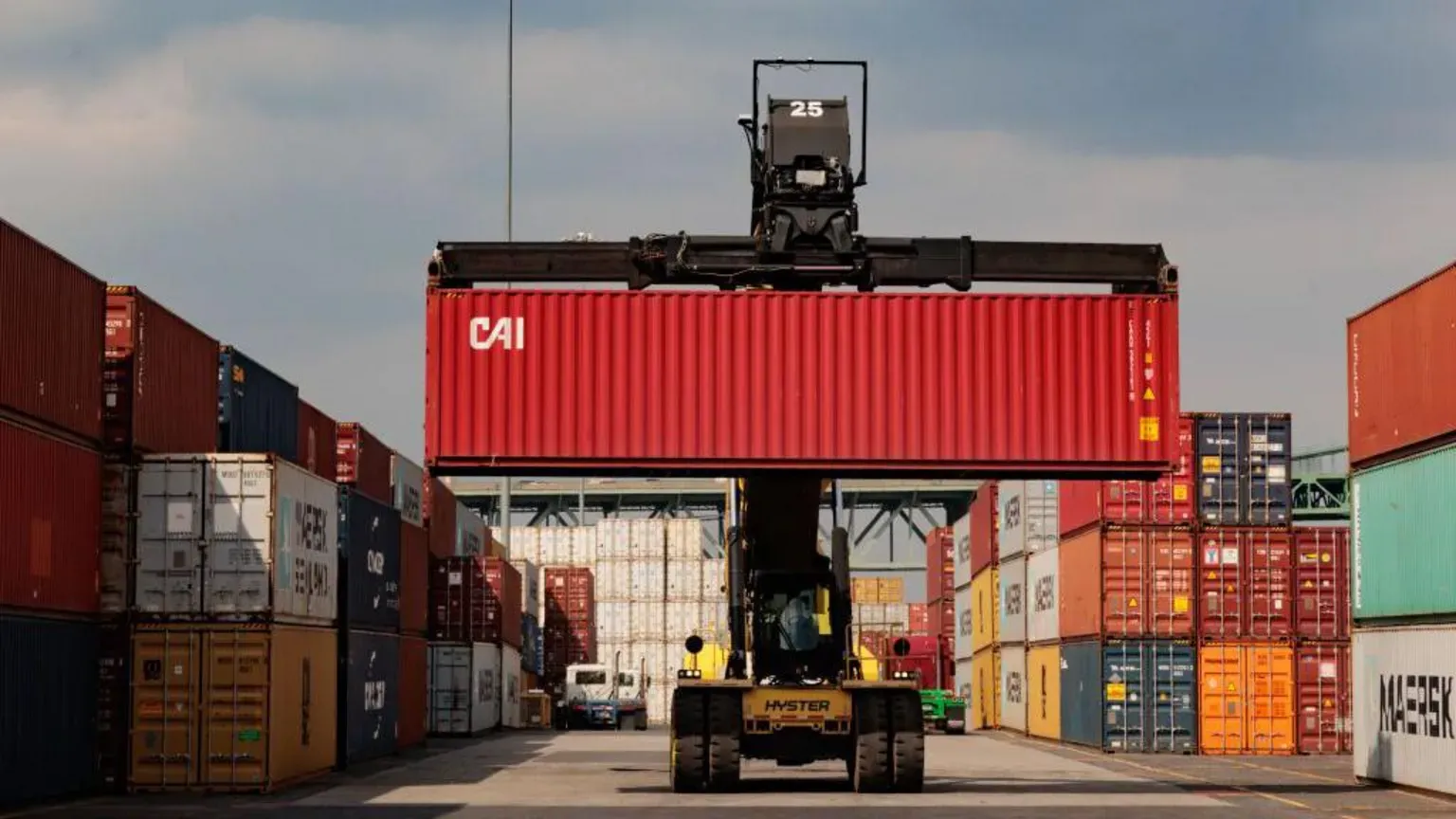
Every day, hundreds of containers land at Tema. They carry rice from Vietnam, second-hand clothing from Europe, machinery from China, vehicles from Japan, pharmaceuticals from India, and frozen chicken from Brazil. Before any of it reaches a shop in Kumasi, a market in Takoradi, or a factory in Tema itself, it must pass through the hands of a small but powerful group of intermediaries: the container importers, clearing agents, and freight forwarders who have turned the art of moving cargo into a reliable, often lucrative, business.
📢 GET A DETAILED ARTICLES + JOBS
Join SamBoad's WhatsApp Channel and never miss a post or opportunity.
The general public sees the port as a place of congestion and confusion — long queues, paperwork, occasional corruption. But beneath that surface lies a sophisticated service economy built on information asymmetry, regulatory navigation, and relationships that have been cultivated over decades. The people who understand how to calculate duties, which shipping line offers the best credit terms, and which customs officer to approach for a classification ruling hold a structural advantage that no e-commerce platform or digital disruptor has yet overcome.
This profile examines how container importers — in the broad sense of agents and freight forwarders who manage the import process for clients — actually make money at Tema Port. We strip away the reputation for chaos and look at the unit economics: fee structures, cost drivers, competitive dynamics, and the quiet ways that successful operators have built durable, multi-generational businesses around the movement of boxes.
The story is not about technology or innovation. It is about friction — and the people who get paid to reduce it.
COMPANY OVERVIEW (Industry Context)
Who Is a “Container Importer”?
The term “container importer” is used loosely in Ghana to describe several distinct roles. For clarity, we distinguish:
| Role | Function | Typical Client | Revenue Model |
|---|---|---|---|
| Direct importer (trader) | Owns the goods; imports for own retail or wholesale | Self | Profit on goods sale (after duties and costs) |
| Clearing agent (customs broker) | Handles customs documentation, duty calculation, and physical clearance | Importers, freight forwarders | Per-container fee |
| Freight forwarder | Arranges international shipping, handles documentation, often subcontracts clearance | Importers (direct) | Margin on freight (8–15%) + clearance fee |
| Ship agent | Represents shipping line at port; coordinates berthing, discharge, documentation | Shipping lines | Per-call fee + per-container charges |
| Haulier (truck owner) | Transports cleared containers from port to warehouse or buyer | Clearing agents, importers | Per-trip fee |
In everyday Ghanaian business language, “container importer” often refers to the direct importer-trader — the person who brings in a container of rice, tiles, or used clothing and sells it themselves. But the more reliable, less capital-intensive business is the clearing agent or freight forwarder, who makes money regardless of whether the goods sell, as long as the container is cleared.
This profile focuses primarily on the clearing agent and freight forwarder model — the service providers who make money from the process, not from the goods.
Port of Tema: A Quick Overview
| Metric | Value |
|---|---|
| Annual container throughput (2023 est.) | 1.8–2.0 million TEUs |
| Number of berths | 15+ (after expansion) |
| Container terminal operators | Meridian Port Services (MPS) — majority owned by Bolloré/APM Terminals; plus Ghana Ports & Harbours Authority (GPHA) |
| Average container dwell time (import) | 7–14 days (target: 4–5 days) |
| Number of registered clearing agents | 600+ |
| Number of freight forwarders | 150+ |
The 2021 expansion of Tema Port (Terminal 3, built by MPS) doubled capacity and introduced modern container handling equipment. But the human side of clearance — the agents, the paperwork, the negotiations — remains largely unchanged.
Industry Structure
The container clearance industry in Ghana is highly fragmented but polarised. At one end, thousands of small, one-person clearing agents operating informally, sharing a desk at a cybercafé near the port. At the other end, a handful of large, formal freight forwarding companies with offices, trucks, warehousing, and bank guarantees.
Estimated breakdown of market share (by value of cargo handled):
| Tier | Number of Operators | Market Share (% of cargo value) | Typical Annual Revenue (GHS) |
|---|---|---|---|
| Large forwarders (e.g., Scancom, Maersk Logistics, Bolloré, DHL, J.A. Plantpool) | 15–20 | 40–50% | 20–100 million+ |
| Medium clearing agents (formal, 5–20 staff) | 80–120 | 25–30% | 2–15 million |
| Small clearing agents (formal but lean, 1–4 staff) | 150–200 | 15–20% | 500k–2 million |
| Informal / one-person agents | 300–400 | 5–10% | 100k–500k |
The large forwarders handle most of the high-value, complex cargo: project logistics (mining equipment), pharmaceuticals, perishables (cold chain), and large manufacturing inputs. They are corporate, insured, and bankable.
The medium and small agents handle the bulk of general cargo: consumer goods, foodstuffs, building materials, second-hand goods. This is the engine room of the industry — and where most of the interesting business models operate.
BUSINESS MODEL
Container clearance and forwarding is a fee-for-service business with multiple layers. The most successful operators layer revenue streams. The marginal ones survive on a single, thin fee.
Revenue Stream 1: Customs Clearance Fee (The Base)
Every clearing agent charges a fee to prepare and submit customs documents, calculate duties, arrange physical examination (if required), and secure the release note that allows the container to leave the port.
Typical clearance fee structure (2024):
| Container Type | Fee Range (GHS) | What It Includes |
|---|---|---|
| 20ft container (standard) | 2,500–4,000 | Documentation, customs processing, liaison with shipping line |
| 40ft container | 3,500–5,500 | Same as above, slightly more complex |
| High-value or sensitive cargo (e.g., vehicles, pharmaceuticals) | 4,000–6,000 | Additional documentation, special permits (e.g., FDA, Energy Commission) |
| Overweight or oversize cargo | 5,000–10,000+ | Special permits, police escort, route planning |
The fee is fixed per container, not a percentage of cargo value. This is important: an agent clearing a container of GHS 50,000 worth of rice earns roughly the same as an agent clearing a container of GHS 500,000 worth of electronics. The work is similar; the value does not affect the effort.
What is the agent’s cost to deliver this service?
| Cost Item | Amount (GHS per container) |
|---|---|
| Customs processing fees (official) | 150–300 |
| Shipping line documentation fees (bill of lading amendments, etc.) | 100–400 |
| Terminal handling charges (often passed to client directly) | 1,200–2,000 (client pays separately) |
| Staff time (agent’s own labour or employee) | 300–800 |
| Transport to/from port (trotro, taxi for document runs) | 50–150 |
| Miscellaneous (printing, internet, bribes — where applicable) | 100–500 |
| Total direct cost | 700–2,150 |
At a fee of GHS 3,000 per container, the agent’s gross profit per container is GHS 850–2,300 — a 30–75% gross margin, depending on efficiency and how much of the official fees are passed to the client.
Net profit after rent, salaries, marketing, and other overheads is typically 15–25% of revenue for a well-run agency.
Revenue Stream 2: Freight Forwarding Margin (The Scale Play)
The freight forwarder does not just clear the container — they arrange the entire international shipment. They book space on a vessel, negotiate freight rates with shipping lines, handle export documentation at origin, and manage the transit.
How forwarders make money:
They receive a freight quote from the shipping line (e.g., Maersk, MSC, CMA CGM) of, say, 3,000fora20ftcontainerfromShanghaitoTema.Theyquotetheimporter3,300–3,600.Thedifference(300–$600 per container) is their forwarding margin.
Example:
| Item | Amount (USD) | Amount (GHS equivalent at 12 GHS/USD) |
|---|---|---|
| Shipping line freight cost | 3,000 | 36,000 |
| Forwarder’s quote to client | 3,450 | 41,400 |
| Forwarding margin (gross) | 450 | 5,400 |
| Forwarder’s cost (documentation, bank charges, communication) | 100 | 1,200 |
| Net forwarding margin | 350 | 4,200 |
A freight forwarder handling 50 containers per month at this margin earns GHS 210,000 monthly (GHS 2.5 million annually) from forwarding alone — before clearance fees.
The volume game: Forwarding margins are thin (8–15% of freight cost) but highly scalable. A forwarder with good relationships at shipping lines can secure lower freight rates, widen their margin, and win clients on price.
Revenue Stream 3: Warehousing & Deconsolidation (The Value-Add)
Large importers often bring in full containers. But smaller traders cannot fill a 20ft container. The forwarder or clearing agent solves this by deconsolidation (groupage): combining multiple small shipments into one container, then splitting them at the port.
How deconsolidation makes money:
-
Forwarder charges each small importer a “groupage fee” (GHS 500–1,500 per cubic metre or per pallet)
-
The total collected from all small importers exceeds the cost of the full container and the clearance
-
The forwarder also charges a warehousing fee (GHS 20–50 per pallet per day) for goods awaiting collection
Example deconsolidation economics:
| Item | Amount (GHS) |
|---|---|
| Full 20ft container from China (cost of goods + freight + duties) | 150,000 |
| Space divided among 20 small importers | |
| Each importer charged GHS 1,000 groupage fee | 20,000 |
| Each importer charged 5 days warehousing (GHS 150) | 3,000 |
| Total revenue from deconsolidation | 23,000 |
| Additional cost to forwarder (labour, pallets, documentation) | 3,000–5,000 |
| Net profit from deconsolidation | 18,000–20,000 |
Deconsolidation is extremely profitable because the forwarder monetises space multiple times. It is also where small importers get their start — buying half a pallet of shoes or electronics, testing the market without committing to a full container.
Revenue Stream 4: Ancillary Services
Successful clearing agents and forwarders add layers of service fees:
| Service | Typical Fee (GHS) | Margin (%) |
|---|---|---|
| Trucking/haulage (port to warehouse) | 1,500–3,500 per trip | 20–30% |
| Customs examination supervision (if container is selected for physical exam) | 500–1,500 | 80–90% (mostly labour) |
| Duty advance (agent pays duties on client’s behalf; charges interest) | 3–5% per week of duty amount | Very high (but risky) |
| Document retrieval (certificate of origin, etc.) | 200–500 | 70–85% |
| Export packing and crating (for re-exports) | 500–2,000 | 30–50% |
| Insurance brokerage (cargo insurance) | 10–15% of premium | 20–30% |
Duty advance is the most profitable — and most dangerous. An agent who pays GHS 50,000 in duties for a client charges GHS 2,500 interest for a two-week advance (5% per week). That is 5% for two weeks — an annualised rate of 130%. But if the client fails to pay, the agent is liable to Ghana Revenue Authority (GRA) and the shipping line. Many agents have gone bankrupt this way.
The “30-Day Rule” Cash Flow Trick
An underappreciated source of profit: the time lag between when the agent collects fees from the client and when the agent pays the shipping line, terminal, and GRA.
A typical timeline:
| Day | Event |
|---|---|
| Day 0 | Client pays agent full fees (clearance + duties + terminal charges) |
| Day 3 | Agent pays GRA (duties) |
| Day 7 | Agent pays terminal (handling charges) |
| Day 30 | Agent pays shipping line (freight — often on credit terms) |
The agent holds the client’s money for up to 30 days. If the agent has a high volume of transactions, this “float” can be substantial — GHS 500,000–2 million sitting in the agent’s account, interest-free, for weeks. Smart agents use this float to earn interest (treasury bills), fund other ventures, or negotiate discounts with shipping lines by paying early.
This is not a formal revenue stream, but it is a significant financial benefit of the business model.
MARKET POSITION & COMPETITION
The Clearing Agent’s Role: Rent-Seeking or Value-Add?
Critics argue that clearing agents are unnecessary middlemen, extracting fees for work that could be digitised. Importers complain about delays, opaque charges, and the persistent whisper of “dash” (bribes) to expedite clearance.
But the defence is also strong: the customs clearance process in Ghana is complex, with multiple agencies (GRA Customs Division, Ghana Standards Authority, Food and Drugs Authority, Energy Commission, Environmental Protection Agency, etc.). Each has different forms, different fees, and different inspection requirements. A good clearing agent knows:
-
Which harmonised system (HS) code to declare for an ambiguous product (the difference between 5% and 35% duty)
-
Which examiner is strict on valuation and which is flexible
-
How to resolve a discrepancy without weeks of appeals
-
When to pay and when to challenge an assessment
This knowledge capital is the agent’s competitive advantage. It is not easily digitised because the rules are inconsistently applied and relationships still matter.
Competitive Landscape by Cargo Type
| Cargo Type | Dominant Player Type | Margin Level | Barriers to Entry |
|---|---|---|---|
| General consumer goods (rice, sugar, cooking oil, cosmetics) | Medium clearing agents | Low to medium | Low |
| Used vehicles | Specialised vehicle clearing agents (often near port) | Medium to high (if agent knows valuation tricks) | Medium (requires garage facilities) |
| Machinery and industrial equipment | Large forwarders | Medium | High (requires technical knowledge of equipment classification) |
| Perishables (frozen fish, fresh produce) | Specialist cold chain forwarders | High (time-sensitive) | High (requires cold storage relationships) |
| Project cargo (mining, oil & gas, construction) | Large forwarders (often international) | Very high | Very high (requires bonds, insurance, local content partnerships) |
| Personal effects (household goods) | Small agents | Low (but high volume) | Low |
Competitive Advantages of Successful Agents
| Advantage | Explanation |
|---|---|
| Relationship with shipping lines | Direct credit terms (30–60 days to pay freight), lower rates, priority space booking |
| GRA Customs bond | Ability to clear goods without immediate duty payment (bonded status) — requires capital and clean record |
| Port pass | Physical access to restricted areas of the port (not all agents have this) |
| Network of examiners | Knowing which customs officer to approach for a classification or valuation ruling — reduces delays |
| Warehousing | On-site or near-port warehousing allows clients to store goods while arranging onward transport |
| Digital systems | Integration with GRA’s ICUMS (Integrated Customs Management System) — reduces manual errors and delays |
The most successful agents combine capital (to offer duty advance and credit to clients), relationships (with shipping lines and customs), and systems (efficient documentation, tracking, and client communication).
COST STRUCTURE & UNIT ECONOMICS
Startup Costs (Medium Clearing Agency)
| Item | Estimated Cost (GHS) |
|---|---|
| GRA registration and licence | 2,000–5,000 |
| Customs bond (bank guarantee or insurance) | 20,000–100,000 (deposit, not expense) |
| Office rent (near port — Tema Community 1, 2, or 5) | 12,000–30,000 annually |
| Computers, printer, scanner, internet | 8,000–15,000 |
| Software (ICUMS integration, accounting) | 3,000–10,000 annually |
| Staff (initial: 2–3 staff — senior agent, junior, admin) | 36,000–72,000 annually |
| Vehicle (for port runs and client visits) | 30,000–80,000 |
| Working capital (for duty advances) | 50,000–200,000 |
| Total initial capital (excluding bond deposit) | GHS 150,000–400,000 |
A small, one-person agent can start with much less: GHS 30,000–50,000 for basic registration, a laptop, and a shared desk at a port-side cybercafé. But they cannot offer credit, cannot handle large volumes, and are vulnerable to every shock.
Monthly Operating Costs (Medium Agency, 10–15 containers/week)
| Cost Item | Monthly Amount (GHS) | % of Revenue (typical) |
|---|---|---|
| Staff salaries (3–5 people) | 12,000–25,000 | 20–30% |
| Office rent and utilities | 3,000–6,000 | 5–8% |
| Transport (fuel, maintenance) | 2,000–5,000 | 3–6% |
| Communication (phone, internet) | 1,000–2,000 | 2–3% |
| GRA and port fees (passed to client, but covered by agency in float) | 10,000–30,000 | N/A (pass-through) |
| Marketing and client entertainment | 1,000–3,000 | 2–4% |
| Professional fees (accountant, lawyer) | 1,000–2,000 | 2–3% |
| Miscellaneous | 1,000–2,000 | 2–3% |
| Total overhead (excluding pass-through costs) | GHS 21,000–45,000 | 36–57% of revenue |
Monthly Revenue and Profit (Medium Agency)
Assumptions: 50 containers/month at an average fee of GHS 3,000 per container, plus 50% of clients using duty advance (earning GHS 1,000 extra per container in interest/fees).
| Revenue Stream | Monthly (GHS) |
|---|---|
| Clearance fees (50 × 3,000) | 150,000 |
| Duty advance interest (25 × 1,000) | 25,000 |
| Ancillary (trucking, warehousing, etc.) | 15,000 |
| Total revenue | 190,000 |
| Direct costs (GRA fees, terminal charges paid to client — passed through, no margin) | (80,000) |
| Gross profit | 110,000 |
| Overhead (staff, rent, transport, etc.) | (35,000) |
| Net profit (before tax) | 75,000 |
| Net profit margin | 39% of gross profit; 68% of revenue after pass-through |
A medium clearing agency netting GHS 75,000 monthly (GHS 900,000 annually) is a very solid Ghanaian business — better than most retail, better than many manufacturing operations, with lower capital intensity.
DIGITAL STRATEGY & INNOVATION
The ICUMS Revolution (Or Not)
In 2020, Ghana implemented the Integrated Customs Management System (ICUMS), replacing the old GCNet and West Blue platforms. ICUMS was supposed to digitise and streamline customs clearance: electronic manifests, online duty payment, reduced human interaction.
The reality:
| Promise | Outcome |
|---|---|
| Faster clearance | Clearance times improved for simple transactions (2–3 days vs. 5–7), but complex transactions still take weeks |
| Reduced corruption | Reduced, but not eliminated. “Expediting fees” still exist for physical examinations, valuation disputes, and release overrides |
| Transparency in duty calculation | Improved. Agents and importers can now calculate duties online before declaration |
| Elimination of middlemen | No. Agents adapted. The new system requires training and access; agents became “ICUMS consultants” |
What digitisation actually did: It raised the barrier to entry. Small, informal agents who could not afford computers or training lost market share to medium agencies that invested in systems. The industry consolidated slightly.
Current Digital Tools in Use
| Tool | Adoption Rate (Agents) | Purpose |
|---|---|---|
| ICUMS portal | 100% (mandatory) | Declarations, duty payment, release |
| WhatsApp Business | 80–90% | Client communication, document sharing, tracking updates |
| Accounting software (QuickBooks, Odoo, etc.) | 30–40% | Invoicing, expense tracking, duty advance management |
| Container tracking apps (shipping line portals) | 50–60% | Tracking vessel schedules and container status |
| Customer portal (self-service for importers) | 5–10% (larger forwarders only) | Clients can see duty calculations, status, and invoices online |
What Has Not Been Disrupted
No successful digital-only clearing platform has emerged in Ghana. Attempts to build “Uber for clearing” — where importers submit documents online and agents bid for the work — have failed. Why?
-
Trust and relationships matter. Importers use agents they know, often from the same ethnic or business network.
-
Complex cargo requires judgment. No algorithm can decide whether a “spare part” is actually a new machine (different duty rate) without physical inspection and negotiation.
-
Payment terms are sticky. Importers often pay agents weeks after clearance, not upfront. Digital platforms struggle with credit.
The clearing agent’s job has changed — more screen time, less paper — but the core business model has survived digitisation intact.
CHALLENGES & RISKS
1. Port Congestion and Dwell Time
Containers that sit at the port for weeks incur demurrage charges (penalty fees from shipping lines for delayed return of the container). These charges can exceed GHS 5,000–15,000 per container. The importer blames the agent. The agent blames customs. Someone pays.
How agents mitigate: They estimate demurrage risk into their fees for clients with incomplete documentation. They also maintain relationships with shipping line managers to negotiate demurrage reductions.
2. Regulatory Changes Without Notice
GRA Customs Division occasionally changes duty rates, valuation methods, or documentation requirements without advance notice. An agent who declares goods under HS code X on Monday may be told on Tuesday that the same goods now require HS code Y — with a duty rate 10% higher.
The result: Disputes, delays, and strained client relationships.
3. Currency Risk (For Forwarders)
The forwarder quotes freight in dollars but collects fees in cedis. If the cedi depreciates between quotation and payment, the forwarder’s margin in cedi terms shrinks or disappears.
Example:
-
Forwarder quotes $3,500 freight (at 11 GHS/USD = 38,500 GHS)
-
Forwarder pays shipping line $3,500 (at 13 GHS/USD = 45,500 GHS)
-
Forwarder’s loss: 7,000 GHS on that container
Mitigation: Hold dollar accounts. Require clients to pay freight in dollars (but many importers do not have dollars). Or adjust quotes daily with a “currency fluctuation clause.
4. Bad Debts and Duty Advance Defaults
The most common cause of agent bankruptcy. An agent advances GHS 100,000 for duties for a “trusted” client. The client delays payment, then disappears. The agent is now liable to GRA and the shipping line.
Prudent agents:
-
Limit duty advance to 50% of the client’s security deposit
-
Insist on post-dated cheques or direct bank debits
-
Build the cost of occasional defaults into their pricing (essentially, an insurance premium)
5. The “Informal Agent” Underbelly
Unregistered agents working from phone booths and cybercafés undercut formal agents by GHS 500–1,000 per container. They pay no taxes, no SSNIT, no rent. They also offer no receipt, no insurance, and no recourse if something goes wrong.
Formal agents’ response: They cannot compete on price, so they compete on reliability and documentation. An importer who uses an informal agent and gets a container seized (due to incorrect declaration) has no claim. Formal agents offer contracts, insurance, and peace of mind.
6. Corruption
Corruption at Tema Port has reduced significantly since ICUMS, but it has not disappeared. Agents still report occasional demands for “facilitation fees” (GHS 200–1,000) to expedite physical examinations or override system blocks.
The dilemma: Refuse to pay, and your container sits for days or weeks. Pay, and you perpetuate the system. Most agents pay, pass the cost to the importer, and do not discuss it publicly.
ECONOMIC & INDUSTRY IMPACT
Employment
| Role | Estimated Workers (Tema and Accra) |
|---|---|
| Registered clearing agents (owners and staff) | 5,000–8,000 |
| Freight forwarders (owners and staff) | 1,500–3,000 |
| Truckers and drivers (port-related) | 10,000–15,000 |
| Warehousing and logistics staff | 3,000–5,000 |
| Customs officers and GRA staff | 2,000–3,000 |
| Informal port workers (loaders, “goro boys,” etc.) | 5,000–10,000 |
| Total | 26,500–44,000 |
The clearing and forwarding industry is one of the largest formal-private employers in Tema. It also supports a complex informal ecosystem of runners, document couriers, and expeditors.
Contribution to Government Revenue
Every container that clears pays:
-
Import duty (0–35% of CIF value, depending on HS code)
-
Import VAT (12.5% of CIF + duty + other charges)
-
National Health Insurance Levy (2.5% of CIF)
-
Export Development & Investment Fund Levy (0.5% of CIF)
-
Processing fees (GRA, Ghana Shippers’ Authority, etc.)
A single 20ft container of general goods (CIF value $20,000) pays approximately GHS 60,000–80,000 in taxes and fees. Multiply by 1.8 million TEUs annually, and the port contributes billions of cedis to government revenue — a substantial portion of total GRA collections.
Clearing agents are the collection mechanism for this revenue. Without them, GRA would need a vastly larger workforce to process declarations and collect payments.
Enabling Trade
The clearing and forwarding industry is the circulatory system of Ghanaian import trade. Most small and medium importers cannot navigate customs alone. They rely on agents. The agent’s fee (GHS 3,000–5,000 per container) is a small percentage of the total landed cost — often 1–3% — but enables the entire import transaction.
Without this intermediary layer, many smaller importers would be locked out of international trade, and Ghana’s retail sector would be dominated by a handful of large, vertically integrated importers.
FUTURE OUTLOOK
Short-to-Medium Term (1–4 years)
-
Continued consolidation. The number of registered agents may fall from 600+ to 400–500 as small, informal operators exit. Medium agents will grow by absorbing their clients.
-
Digitisation deepens. GRA will continue to reduce physical examination and human intervention. Agents who resist digital tools will struggle.
-
Fintech integration. Mobile money and digital payments will reduce cash handling. Some agents will offer clients the ability to pay duties via MoMo (though limits apply).
-
Single window expansion. The government’s push for a single customs window (one submission, one payment, one inspection) will reduce but not eliminate the agent’s role.
-
Increased competition from logistics giants. International forwarders (DHL, FedEx, UPS) are expanding their freight forwarding arms in Ghana. They will capture market share in small parcel and express freight, but full-container imports remain their weakness.
Long-Term (5–10 years)
Scenario 1: The Agent Disintermediated (Probability: 20%)
GRA fully automates clearance: AI-based HS code classification, automated valuation, paperless release, and direct payment by importers via a simple portal. The clearing agent becomes obsolete for routine cargo.
Why this is unlikely: Complex cargo, valuation disputes, and the need for human judgment will persist. Customs administrations worldwide still use brokers. Ghana is not ahead of the curve.
Scenario 2: The Agent Transformed (Probability: 60%)
The clearing agent evolves into a supply chain consultant, offering not just clearance but end-to-end logistics: warehousing, inventory management, distribution, and trade finance. The fee structure shifts from per-container to retainer + performance-based.
Scenario 3: The Agent as Financier (Probability: 20%)
Duty advance becomes the primary profit driver. Agents evolve into trade finance intermediaries, using their float and relationships with banks to offer longer-term credit to importers. The clearance fee becomes secondary — almost a loss leader — to win the financing business.
Strategic Risks to Monitor
| Risk | Probability | Impact | Mitigation |
|---|---|---|---|
| Full automation of clearance | Low (10–20%) | Severe (model collapse) | Diversify into logistics and warehousing; build client relationships beyond clearance |
| Cedi collapse making duty advances unaffordable | Medium (similar to 2022) | High (clients cannot repay advances) | Reduce duty advance exposure; require security deposits |
| Major port expansion reducing dwell time | High (ongoing) | Low to medium (reduces demurrage income but not core fees) | Accept lower demurrage as efficiency gain; adjust pricing |
| Political interference (e.g., import bans, sudden tariff changes) | Medium | High | Maintain cash buffer; diversify cargo types to avoid single-sector shocks |
THSB CONCLUSION
The container importer — specifically the clearing agent and freight forwarder — operates in the shadow of formality. The work is essential, the margins are respectable, and the barriers to entry are low enough to attract thousands of participants, but high enough to reward those who persist.
This is not a glamorous business. It is not tech-enabled. It does not attract venture capital. But it is structurally resilient. As long as Ghana imports more than it exports — and that will be the case for the foreseeable future — someone must move those containers from ship to shore, from port to pavement.
The successful agents understand that their real product is not paperwork. It is certainty. In a system defined by complexity, delay, and ambiguity, the importer pays for predictability. The agent who delivers that — on time, on budget, without surprises — builds a business that outlasts political cycles, currency shocks, and even digital disruption.
The container is the unit. The fee is the revenue. But the relationship is the asset.
FAQ SECTION
1. How do clearing agents at Tema Port make money?
Clearing agents charge a fee per container (GHS 2,500–6,000) for customs documentation and processing. They also earn from duty advance (charging interest to pay duties on behalf of clients), freight forwarding margins (8–15% on shipping costs), and ancillary services like trucking and warehousing.
2. How much does a clearing agent earn per container?
Gross fee ranges from GHS 2,500–6,000 depending on container size and cargo complexity. After direct costs (GHS 700–2,150), gross profit per container is GHS 850–2,300. Net profit (after overhead) is typically 15–25% of revenue.
3. Is clearing and forwarding profitable in Ghana?
Yes. A medium agency clearing 50 containers monthly can net GHS 75,000–100,000 per month (GHS 900,000–1.2 million annually). Margins are 15–25% net, with low capital intensity compared to trading or manufacturing.
4. How much capital do I need to start a clearing agency in Ghana?
A small one-person agency can start with GHS 30,000–50,000. A medium agency (5–10 staff) needs GHS 150,000–400,000 including working capital for duty advances. A large forwarder requires GHS 500,000–2 million.
5. Do clearing agents need a license in Ghana?
Yes. Registration with GRA Customs Division is mandatory. Agents must also pass a competency exam and provide a customs bond (bank guarantee or insurance policy). Many small agents operate without full registration, but this is illegal and risky.
6. What is duty advance and how does it make money?
Duty advance means the agent pays import duties on the client’s behalf, then charges interest (typically 3–5% per week) until the client repays. This is highly profitable (annualised rates over 100%) but risky if the client defaults.
7. How does the cedi exchange rate affect clearing agents?
Agents who quote in cedis but pay shipping lines in dollars are exposed to currency risk. A cedi depreciation between quotation and payment can erase margins. Smart agents hold dollar accounts or add currency clauses to quotes.
8. Is there still corruption at Tema Port?
Reduced since ICUMS digitisation but not eliminated. “Expediting fees” (GHS 200–1,000) are still sometimes demanded for physical examinations, valuation disputes, or system overrides. Most agents pay and pass the cost to importers.
9. Can I clear my own container without an agent?
In theory, yes. GRA allows self-clearance. In practice, it is difficult for non-specialists: the ICUMS system requires training, physical inspections require presence during unpredictable windows, and valuation disputes require negotiation. Most importers use agents.
10. What is the future of clearing agents in Ghana?
Partial automation will reduce routine work, but complex cargo, valuation disputes, and human relationships will keep agents relevant. Successful agents will evolve into supply chain consultants and trade financiers, not just document processors.
11. How do freight forwarders differ from clearing agents?
A clearing agent handles only customs clearance at the destination port. A freight forwarder arranges the entire international shipment: booking vessel space, negotiating freight rates, export documentation, and often subcontracts clearance. Many Ghanaian companies do both.
12. What is demurrage and who pays for it?
Demurrage is a penalty fee charged by shipping lines when a container is not returned to the port within the free period (typically 7–14 days). Fees can reach GHS 5,000–15,000 per container. Who pays depends on whose delay caused it — agent, importer, or customs.
Source: The High Street Business
Disclaimer: Some content on The High Street Business may be aggregated, summarized, or edited from third-party sources for informational purposes. Images and media are used under fair use or royalty-free licenses. The High Street Business is a subsidiary of SamBoad Publishing under SamBoad Business Group Ltd, registered in Ghana since 2014.
For concerns or inquiries, please visit our Privacy Policy or Contact Page.

Samuel Kwame Boadu is a Ghanaian entrepreneur, writer, and digital consultant passionate about creating impactful stories and business solutions. He is the Founder & CEO of SamBoad Business Group Ltd, a dynamic company with subsidiaries in digital marketing, logistics, publishing, and risk management.