








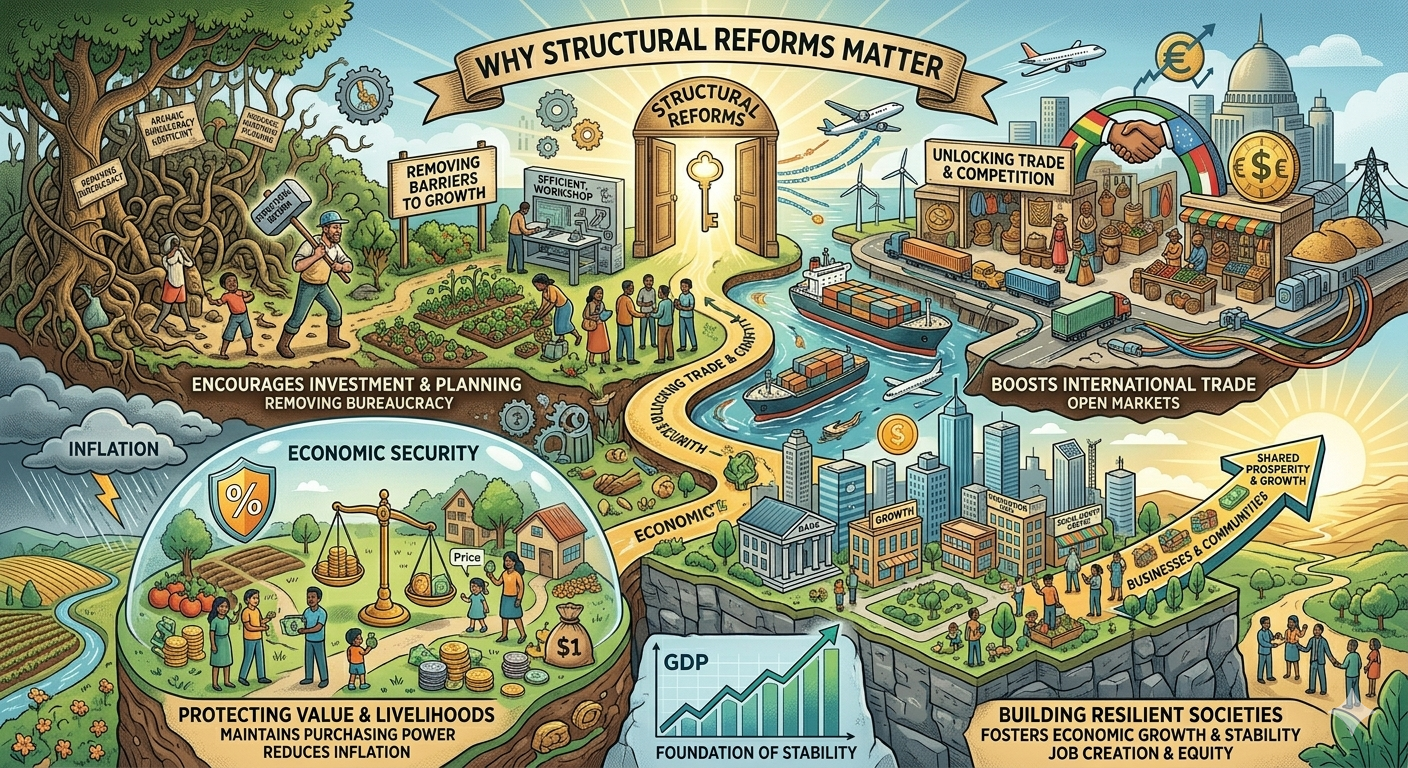
Why Structural Reforms Matter – Structural reforms help improve economic stability, productivity, investment, and long-term growth. Here’s why structural reforms are important to Ghana’s economy.
Why Structural Reforms Matter
Economic growth is not driven only by spending or short-term policies. In many cases, countries also need deeper changes that improve how the economy functions over time. These long-term changes are often referred to as structural reforms.
In Ghana, structural reforms are frequently discussed in relation to economic recovery, fiscal discipline, investment, and national development. Although such reforms may take time to produce visible results, they are often considered necessary for building a stronger and more sustainable economy.
📢 GET DETAILED ARTICLES + JOBS
Join THSB's WhatsApp Channel and never miss a post or opportunity.
What Are Structural Reforms?
Structural reforms are major policy and institutional changes designed to improve how an economy operates. These reforms usually focus on increasing efficiency, strengthening institutions, and creating better conditions for growth.
They can involve changes in areas such as:
- Tax systems
- Public spending
- Financial regulation
- Energy and utilities
- Trade and investment policies
- State-owned enterprises
Unlike short-term economic measures, structural reforms are aimed at long-term transformation.
Improving Economic Stability
One of the main reasons structural reforms matter is because they help strengthen economic stability. Countries facing:
often introduce reforms to improve financial management and restore confidence.
In Ghana, reforms aimed at improving fiscal discipline and revenue mobilisation are often linked to efforts to stabilise the broader economy.
Encouraging Investment and Business Growth
Investors usually prefer economies with stable and predictable systems. Structural reforms can improve:
- Business regulations
- Transparency
- Financial systems
- Infrastructure efficiency
When businesses operate in a more predictable environment, they are more likely to expand operations, hire workers, and invest for the future.
Foreign investors also pay close attention to reform programmes because they signal a country’s commitment to long-term economic improvement.
Strengthening Public Finances
Structural reforms often focus heavily on government finances. This may involve:
- Improving tax collection
- Reducing wasteful spending
- Strengthening public institutions
- Managing debt more effectively
Better financial management allows governments to invest more sustainably in development projects and public services.
For Ghana, strengthening public finances remains an important part of broader economic reform efforts.
Supporting Long-Term Growth
Short-term economic policies may provide temporary relief during crises, but structural reforms aim to create lasting improvements.
Reforms can help:
- Increase productivity
- Improve competitiveness
- Expand industrial activity
- Strengthen local industries
- Support job creation
Over time, these improvements can contribute to stronger and more sustainable economic growth.
The Importance of Energy and Infrastructure Reforms
Reliable infrastructure and energy systems are essential for business growth and national productivity. Structural reforms in these sectors may focus on:
- Improving electricity supply
- Expanding transportation networks
- Strengthening digital infrastructure
- Reducing inefficiencies in public utilities
Better infrastructure lowers operating costs for businesses and improves economic efficiency.
Why Reforms Can Be Difficult
Although structural reforms are often necessary, they can also be challenging. Some reforms may involve:
- Spending cuts
- Tax adjustments
- Changes to subsidies
- Public sector restructuring
These measures can sometimes create short-term discomfort for households and businesses before long-term benefits are felt. Because of this, reforms often require careful planning, communication, and public support.
Structural Reforms and Employment
Reforms can influence employment in different ways. In the short term, some sectors may face adjustments or restructuring. However, over the long term, stronger economic systems can support:
- Business expansion
- Entrepreneurship
- Industrial development
- New job opportunities
A healthier economy generally creates better conditions for sustainable employment growth.
Global Confidence and International Support
International organisations and investors often monitor structural reform programmes closely. Successful reforms can:
- Improve investor confidence
- Increase access to international financing
- Strengthen economic credibility
- Support partnerships with development institutions
This is one reason reforms are often linked to broader economic support programmes and recovery strategies.
THSB’s Conclusion
Structural reforms matter because they help improve the long-term strength and stability of an economy. By addressing inefficiencies, strengthening institutions, and improving financial management, reforms can create a better environment for businesses, investment, and sustainable growth.
In Ghana, structural reforms remain an important part of efforts to build economic resilience, restore confidence, and create stronger foundations for future development.
Source: The High Street Business
Disclaimer: Some content on The High Street Business may be aggregated, summarized, or edited from third-party sources for informational purposes. Images and media are used under fair use or royalty-free licenses. The High Street Business is a subsidiary of SamBoad Publishing under SamBoad Business Group Ltd, registered in Ghana since 2014.
For concerns or inquiries, please visit our Privacy Policy or Contact Page.

Esther Aku-Sika is a content writer and social media strategist who helps brands and startups grow through intentional storytelling and practical marketing strategies. With a keen eye for trends and audience behavior, she shares business insights, content strategies, and real-life lessons to help entrepreneurs build visibility and turn ideas into income. Through her writing, she simplifies complex concepts and equips readers with actionable steps to grow in today’s digital space.