










Africa’s pharmaceutical market has grown from US$215 billion to US$750 billion, yet Ghana and other African countries continue to import about 70% of the medicines they consume. The launch of Ghana’s National Pharmaceutical Manufacturing Policy aims to close that gap.
Africa’s pharmaceutical market has grown from US$215 billion to US$750 billion, yet Ghana and other African countries continue to import about 70% of the medicines they consume, highlighting a gap between the continent’s expanding market and its domestic manufacturing capacity.
Dr Lucia Addae, an Executive Member of the Pharmaceutical Manufacturers Association of Ghana (PMAG), said the situation presented an opportunity for Ghana to strengthen local pharmaceutical production and capture a greater share of the continent’s growing medicine market.
📢 GET DETAILED ARTICLES + JOBS
Join THSB's WhatsApp Channel and never miss a post or opportunity.
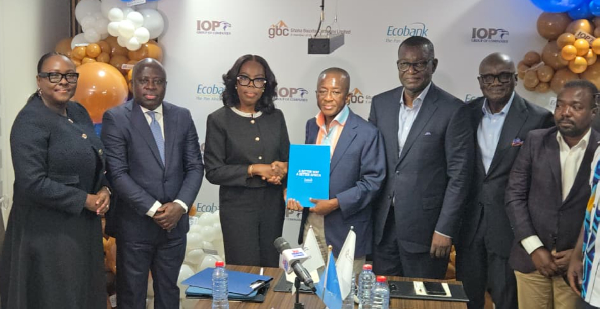
Speaking at the launch of the National Pharmaceutical Manufacturing Policy in Accra, she said the policy provided clear direction for the industry and marked a shift from dependence on imported medicines towards local production.

We must use this policy to reverse that and prepare to produce 70% of what we consume,” she said.
Her remarks draw attention to the economic cost of Africa’s reliance on imported medicines, including the opportunity to retain more pharmaceutical spending within domestic economies, develop local industries and create jobs across the manufacturing value chain.
A Milestone After 27 Years of Advocacy
Dr Addae described the policy as a significant milestone after more than 27 years of advocacy by PMAG for quality standards and an enabling business environment to support local pharmaceutical manufacturers.
She said some Ghanaian pharmaceutical companies already produced tablets, capsules, syrups and suspensions, while the industry was expanding into more complex formulations.
However, she identified access to affordable financing as a major constraint to expanding production and called for long-term loans at single-digit interest rates to support local manufacturers.
“Beyond the document, what matters is implementation – financing incentives and a supportive business environment. Our prayer is to expand production and develop the full value chain, not just finished products but also active ingredients and raw materials,” she said.
US$100 Million Needed for Vaccine Manufacturing
Meanwhile, Chief Executive Officer of the National Vaccine Institute, Dr Sodzi Sodzi-Tettey, said Ghana required US$100 million in investment to develop local vaccine manufacturing capacity.
He said the funding would support infrastructure development and the equipping of facilities on lands earmarked for vaccine production.
Dr Sodzi-Tettey described the investment requirement as an opportunity for local and foreign investors to support Ghana’s vaccine manufacturing ambitions.
He said the policy provided a strategic framework to attract investment and strengthen partnerships among the Government, industry, research institutions and academia to develop the human resource capacity required for vaccine production.

It also outlined measures to support access to essential raw materials and research and development, with the long-term objective of positioning Ghana as a pharmaceutical manufacturing hub in Africa.
Investor Confidence Concerns
He said global financial institutions engaged by the Institute on financing local vaccine production had raised concerns about government support for the sector.
He expressed confidence that the policy would address those concerns, improve investor confidence and help mobilise the capital needed to establish a competitive vaccine manufacturing industry serving domestic and regional markets.
Dr Sodzi-Tettey added that the policy would support sustainable pricing and guarantee a ready market for locally manufactured products through public procurement and patronage under the National Health Insurance Scheme (NHIS).
The 60% Target
Ghana’s policy targets 60% domestic medicine production within five years, an ambition that would require sustained investment, affordable financing and improved access to essential production inputs.
Key Figures at a Glance
| Metric | Figure |
|---|---|
| Africa’s Pharmaceutical Market (growth) | US$215bn → US$750bn |
| Africa’s Medicine Import Dependence | ~70% |
| PMAG Advocacy Period | 27+ years |
| Vaccine Manufacturing Investment Needed | US$100 million |
| Domestic Production Target (5 years) | 60% |
| Financing Constraint | Long-term loans at single-digit rates |
Source: The High Street Business
Disclaimer: Some content on The High Street Business may be aggregated, summarized, or edited from third-party sources for informational purposes. Images and media are used under fair use or royalty-free licenses. The High Street Business is a subsidiary of SamBoad Publishing under SamBoad Business Group Ltd, registered in Ghana since 2014.
For concerns or inquiries, please visit our Privacy Policy or Contact Page.

Samuel Kwame Boadu is a Ghanaian entrepreneur, writer, and digital consultant passionate about creating impactful stories and business solutions. He is the Founder & CEO of SamBoad Business Group Ltd, a dynamic company with subsidiaries in digital marketing, logistics, publishing, and risk management.