









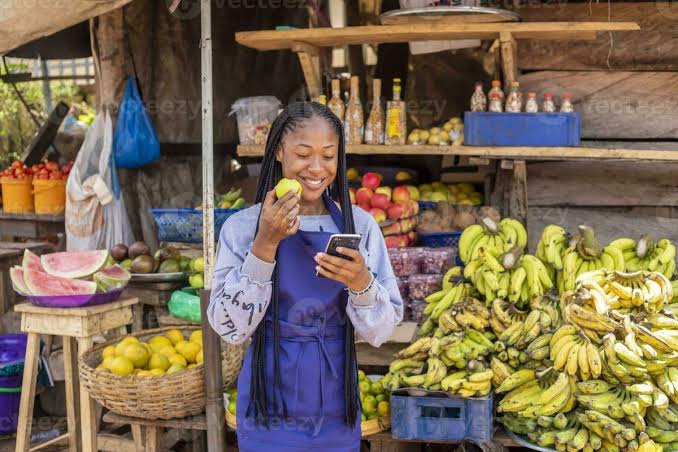

Nearly nine in 10 Ghanaians use mobile money, but only 7.3% feel very secure online, according to the Ghana Digital Economy Outlook 2026, which identifies a widening trust deficit as a major constraint on the country’s digital finance sector.
Nearly nine in 10 Ghanaians use mobile money, but few feel completely safe doing so, according to new findings from the Ghana Digital Economy Outlook 2026.
The report — commissioned by the Ministry of Communication, Digital Technology and Innovations and the German Agency for International Cooperation (GIZ Ghana), and technically implemented by MGA Consulting Ghana Ltd. — identifies a widening trust deficit as a major constraint on the country’s digital finance sector, calling for stronger enforcement, fraud prevention and consumer redress.
📢 GET DETAILED ARTICLES + JOBS
Join THSB's WhatsApp Channel and never miss a post or opportunity.
The Trust Deficit by the Numbers
The survey of 1,112 respondents across all 16 regions found that 88.9% use mobile money. The report notes that 82.9% of users have experienced fraud, while only 7.3% feel very secure online.

The findings also show that 33% of respondents worry about fraud and cybersecurity, a concern the authors say is grounded in reality, with the Cyber Security Authority reporting a rise in digital financial crimes.
Mobile money has achieved near-universal adoption, but widespread fraud and low confidence are undermining the trust on which the entire digital finance ecosystem depends. With 82.9% of users reporting fraud exposure and only 7.3% saying they feel very secure online, the report says the sector is operating under “a ceiling of eroded trust.”
It places this weakness ahead of access and awareness as a constraint on further growth.
The Coastal Zone: Fraud as the Primary Growth Ceiling
The problem is most visible along the coast. The Coastal Zone, described in the report as the country’s most digitally active, records cybersecurity as its largest unmet need at 19.4%, ahead of fintech at 18.5% and e-commerce at 15.4%.
The zonal analysis concludes that “fraud is the primary growth ceiling, not access or awareness,” suggesting that as digital adoption deepens, users become increasingly concerned about protecting their money and other assets.
Trust Shapes Behaviour in Online Trade
Trust is also shaping behaviour in online trade. The report notes that cash-on-delivery remains common in e-commerce, attributing this to caution shaped by earlier experiences of fraud, product misrepresentation and weak refund processes.
Women and young people face the highest exposure, prompting the report to prioritise national digital safety campaigns targeting those groups.
Three-Part Recommended Response
The recommended response has three parts:
Stronger cybersecurity enforcement
More effective consumer redress mechanisms
Artificial intelligence-driven fraud detection designed for the Ghanaian context
Stakeholders also propose a shared fraud-prevention and secure application programming interface platform run by a fintech consortium, with the Bank of Ghana, the Cyber Security Authority and telecommunications operators identified as key actors.
Protecting Confidence
The report argues that the national identity system and mobile payments have created a layer of trust that has supported the growth of e-commerce and gig work. It warns: “Protecting this confidence is vital because any decline in trust could hinder long-term participation in the digital ecosystem.”

Key Figures at a Glance
| Metric | Figure |
|---|---|
| Mobile Money Usage | 88.9% |
| Users Who Have Experienced Fraud | 82.9% |
| Users Who Feel Very Secure Online | 7.3% |
| Respondents Worried About Fraud/Cybersecurity | 33% |
| Survey Sample Size | 1,112 respondents |
| Coastal Zone Cybersecurity Unmet Need | 19.4% |
| Coastal Zone Fintech Unmet Need | 18.5% |
| Coastal Zone E-commerce Unmet Need | 15.4% |
Source: The High Street Business
Disclaimer: Some content on The High Street Business may be aggregated, summarized, or edited from third-party sources for informational purposes. Images and media are used under fair use or royalty-free licenses. The High Street Business is a subsidiary of SamBoad Publishing under SamBoad Business Group Ltd, registered in Ghana since 2014.
For concerns or inquiries, please visit our Privacy Policy or Contact Page.

Samuel Kwame Boadu is a Ghanaian entrepreneur, writer, and digital consultant passionate about creating impactful stories and business solutions. He is the Founder & CEO of SamBoad Business Group Ltd, a dynamic company with subsidiaries in digital marketing, logistics, publishing, and risk management.