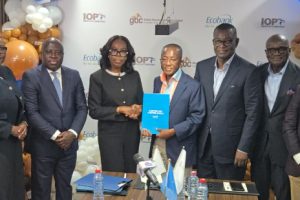





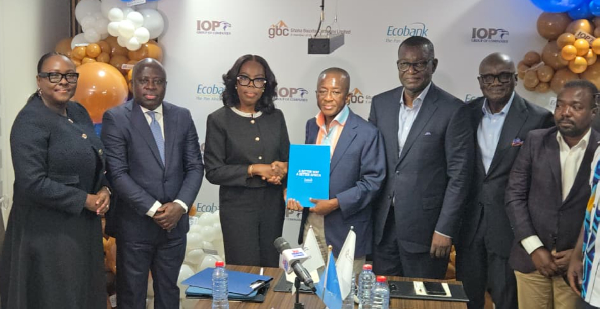

The Ghana Bauxite Company Limited (GBC) has secured a US$250 million financing arrangement mandate from Ecobank Ghana PLC to expand production at its Awaso mine, as the company prepares to supply a proposed alumina refinery under Ghana’s Integrated Aluminium Industry strategy.
The Ghana Bauxite Company Limited (GBC) has secured a US$250 million financing arrangement mandate from Ecobank Ghana PLC to expand production at its Awaso mine, as the company prepares to supply a proposed alumina refinery under Ghana’s Integrated Aluminium Industry strategy.
The financing is expected to support capital expenditure and working capital requirements, enabling the company to strengthen mining operations and establish the production capacity needed to supply the planned refinery.
📢 GET DETAILED ARTICLES + JOBS
Join THSB's WhatsApp Channel and never miss a post or opportunity.
Structure of the Facility
The arrangement appoints Ecobank Ghana as the exclusive mandated arranger, on a best-efforts basis, for facilities of up to US$250 million, comprising a term loan for capital expenditure and a revolving credit facility for working capital.

Ecobank will structure the facilities, engage prospective financial institutions and manage the syndication process through its pan-African network.
Expanding Mine Production Before the Refinery
GBC Director Mr Robert Danso Boakye said expanding mine production was necessary to ensure a reliable supply of raw materials before the refinery was constructed.
The investment marks an important step in Ghana’s ambition to move beyond exporting raw bauxite towards domestic alumina production and the manufacture of higher-value aluminium products.
Data from the company indicate that bauxite exports increased from 773,213 metric tonnes in 2022 to approximately 2.07 million tonnes in 2025, reflecting improvements in mining capacity and operational investment.
The Bauxite-to-Aluminium Arithmetic
According to Mr Danso Boakye, producing 1.5 million tonnes of alumina would require about 4.5 million tonnes of bauxite, while the resulting alumina could yield approximately 750,000 tonnes of aluminium.
The refinery is planned to begin with an initial capacity of 500,000 tonnes annually before scaling up to 1.5 million tonnes.
Potential Economic Benefits
For Ghana, the proposed industrial expansion could create opportunities to retain more value from its mineral resources, develop domestic manufacturing and reduce reliance on exporting unprocessed commodities.
A functioning refinery could also support downstream industries producing roofing sheets, cooking utensils and other aluminium products, potentially creating opportunities for local suppliers, manufacturers and service providers.
However, the scale of these economic benefits will depend on the refinery’s financing, construction, energy requirements, commercial viability and ability to secure a consistent supply of competitively priced bauxite.
Best-Efforts Basis
The financing mandate itself does not mean the full US$250 million has already been disbursed. The facilities are to be arranged on a best-efforts basis, with Ecobank expected to engage other financial institutions in the syndication process.

Managing Director of Ecobank Ghana, Madam Abena Osei-Poku, said transformative industrial projects required not only capital but also financial expertise and the ability to bring institutions and investors together.
Employment Implications
The company’s expansion also carries employment implications. GBC said its operations had expanded under the ownership of Ofori-Poku Company Limited, a member of the IOP Group, with about 3,000 additional staff employed.
Mr Danso Boakye said the proposed refinery could create between 600 and 700 direct jobs, including positions for engineers, scientists and other technical professionals, alongside additional indirect employment through supporting businesses.
The Integrated Aluminium Strategy
The wider industrial strategy seeks to establish an integrated aluminium value chain, linking bauxite mining to alumina refining, aluminium production and downstream manufacturing.
For the economy, the key test will be whether the investment translates into operational capacity, commercially sustainable processing and stronger participation by Ghanaian businesses in the supply chains surrounding the industry.
If successfully implemented, the project could help deepen domestic mineral processing, expand industrial employment and increase the economic value retained from Ghana’s bauxite resources.
Key Figures at a Glance
| Metric | Figure |
|---|---|
| Financing Mandate | US$250 million |
| Arranger | Ecobank Ghana PLC |
| Bauxite Exports (2022) | 773,213 tonnes |
| Bauxite Exports (2025) | ~2.07 million tonnes |
| Refinery Initial Capacity | 500,000 tonnes annually |
| Refinery Target Capacity | 1.5 million tonnes annually |
| Bauxite Needed for 1.5m Tonnes Alumina | ~4.5 million tonnes |
| Aluminium Yield | ~750,000 tonnes |
| Direct Refinery Jobs | 600–700 |
| Additional Staff Under IOP Group | ~3,000 |
Source: The High Street Business
Disclaimer: Some content on The High Street Business may be aggregated, summarized, or edited from third-party sources for informational purposes. Images and media are used under fair use or royalty-free licenses. The High Street Business is a subsidiary of SamBoad Publishing under SamBoad Business Group Ltd, registered in Ghana since 2014.
For concerns or inquiries, please visit our Privacy Policy or Contact Page.

Samuel Kwame Boadu is a Ghanaian entrepreneur, writer, and digital consultant passionate about creating impactful stories and business solutions. He is the Founder & CEO of SamBoad Business Group Ltd, a dynamic company with subsidiaries in digital marketing, logistics, publishing, and risk management.