



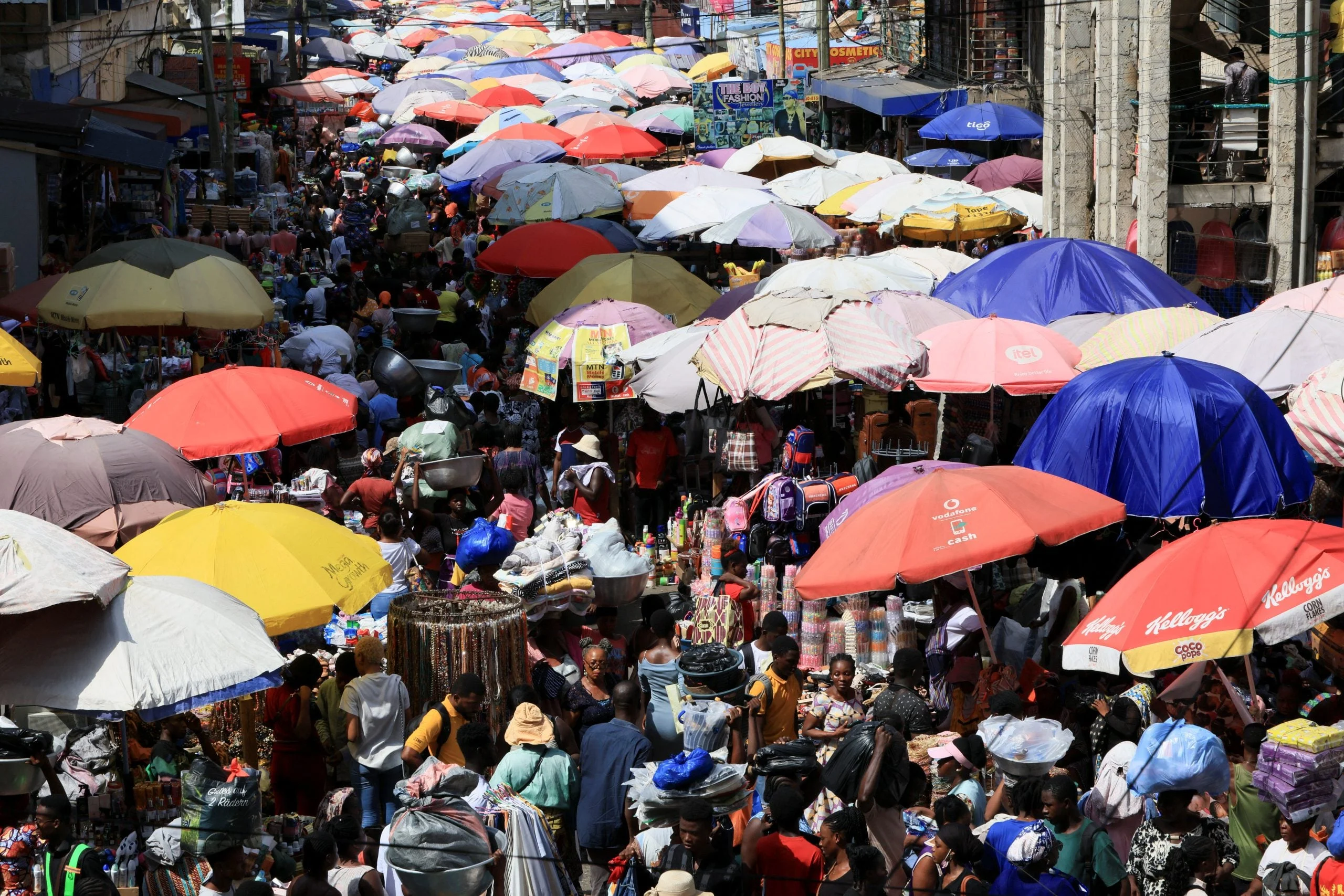

A surge in CEO confidence is colliding with fast-evolving risks in Ghana. As technology disruption rises and tariff impacts loom, leaders face a narrow window to convert macro stability into firm-level performance. The volatility that defined the 2022 crisis has not disappeared—it has simply changed shape. For Ghanaian businesses, understanding this new landscape is no longer optional; it is survival.
The State of Play: From Crisis to Cautious Recovery
Between 2022 and 2026, Ghana experienced one of the most dramatic economic recoveries in recent memory. Inflation peaked at 54% in 2022 before declining to below 5% by March 2026, while lending rates for prime borrowers dropped from approximately 31% to 16% over the same period . The policy rate was lowered from 28% (March 2025) to 14%, signalling a more accommodative environment for business borrowing .
This macro reset has restored a degree of corporate confidence. Seventy-three percent of Ghana’s CEOs are now very or extremely confident about their company’s revenue prospects over the next 12 months—more than double the global benchmark . Four in five CEOs expect global economic conditions to improve, up from under half last year .
📢 GET DETAILED ARTICLES + JOBS
Join THSB's WhatsApp Channel and never miss a post or opportunity.
Yet beneath this optimism lies a sobering reality: the structural vulnerabilities that triggered the 2022 crisis have not been resolved. They have merely been contained. The cedi, which briefly strengthened from about GH¢14 to GH¢10 against the US dollar in early 2025, has since reversed course, becoming West Africa’s worst-performing currency in 2026 with a 10.28% depreciation as of early May . By late June, the cedi was trading at approximately 11.61 to the dollar

Currency Volatility: The Persistent Threat
The Importers’ Challenge
For businesses that rely on imported inputs—whether raw materials, machinery, or finished goods—currency depreciation is a direct and immediate cost driver. When the cedi weakens, the cost of landing goods rises, forcing businesses to make difficult choices: absorb the margin squeeze or pass costs to consumers.
The Ghana Union of Traders Association (GUTA) has been vocal about the consequences. Despite the decline in the policy rate, commercial banks continue to charge lending rates between 22% and 24%, exacerbating the pressure on businesses already grappling with currency-driven cost increases . “We are not asking for handouts, but we need a level playing field,” said GUTA President Clement Boateng .
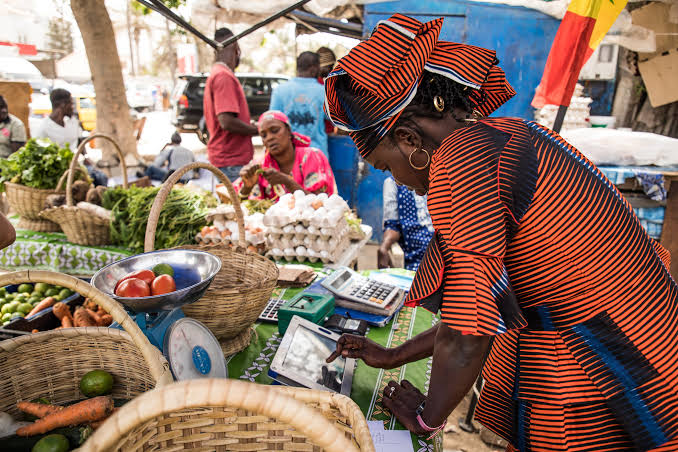
The scale of the challenge is evident in the data. Research involving 589 SMEs in Accra and Tema found that exchange-rate fluctuations exert a “negative and statistically significant drag” on SME import-export performance, emphasising the vulnerability of trade outcomes to currency instability . SMEs—the backbone of Ghana’s private sector—are particularly exposed because they typically lack the financial buffers or sophisticated hedging instruments available to larger corporations.
The Exporters’ Dilemma
Conventional economic theory suggests that a weaker currency benefits exporters by making their goods more competitive abroad. But in Ghana’s context, this relationship is far from straightforward.
Mike Oquaye Jnr, former NPP parliamentary candidate for Dome-Kwabenya and an export sector specialist, has argued that currency appreciation—not depreciation—has become the more immediate concern for exporters. When the cedi strengthened from 14 to 10 against the dollar, it significantly affected export prices, placing pressure on businesses that rely on foreign markets .
“One of the areas I know I have competency in is production for export. And I’m telling you, it has affected our export prices significantly. This is part of the production problem because now importation has a big advantage, while production for export has a disadvantage. This is what happens when your cedi appreciates,” Oquaye Jnr stated .
The fundamental problem, as articulated by NDPC Chairman Dr Nii Moi Thompson, is that Ghana’s position in global trade limits the benefits of either currency movement. Ghana is a price-taker in commodity markets, exporting primarily primary products whose prices are determined internationally . Manufactured exports account for only about 5% of total merchandise exports, compared with an average of about 60% for lower middle-income countries . This structural weakness means that currency depreciation alone cannot drive industrial growth.
“Ghana has been following this prescription since the early 1980s. If a weak currency alone could make a country competitive, we should by now be leading global exports.” — Dr Nii Moi Thompson, Chairman, National Development Planning Commission
Commodity Price Volatility: The Geopolitical Link
Ghana’s fuel market has become a barometer of how geopolitical instability in the Middle East transmits directly to the balance sheets of Ghanaian businesses. The renewed confrontation between the United States and Iran after the collapse of peace efforts has kept global energy markets on edge, with profound implications for a country that imports refined petroleum products .
The Fuel Sector’s Unique Exposure
Dr Riverson Oppong, CEO of the Chamber of Oil Marketing Companies (COMAC), has highlighted the sector’s acute vulnerability. “We’ve lived within this uncertainty for the past months, and only Trump knows when he’s going to ceasefire, or probably only Iran knows when they’re actually going to ceasefire,” he stated .
The volatility affects the entire downstream supply chain, from Bulk Distribution Companies (BDCs) to Oil Marketing Companies (OMCs). While rising prices are generally easier to manage because they can be passed on to consumers, falling prices create more severe financial pressure .

“Imagine buying at a higher price within a window, and you wake up, and the next window price has gone down. You’ve knocked your price.” — Dr Riverson Oppong, CEO, COMAC
The COMAC CEO noted that while hedging is often presented as a solution for managing price risk, it is not always practical for Ghana’s retail fuel business due to the structure of the local petroleum market .
Broader Economic Consequences
The Middle East conflict has already impacted Ghana’s economy. While domestic fuel prices have increased 8.8% since the start of the US-Iran conflict and diesel prices are up 19.7% in USD terms, the government has absorbed part of the cost, keeping increases below market levels . Yet this subsidy—while containing inflation—comes at a fiscal cost that cannot be sustained indefinitely.
Fitch Solutions projects that inflation will average 12.8% in 2027, up from a projected 6.0% in 2026, warning that the rise will weigh on household purchasing power and private consumption . The same report cautions that a tighter-than-expected US Federal Reserve policy could pressure global gold prices and Ghana’s export earnings, putting further pressure on the cedi .
Technology Disruption: A New Risk Dimension
The risk map for Ghanaian businesses is being redrawn around technology. For the third year running, macroeconomic volatility ranks among CEOs’ top short-term threats, but this year technology disruption has risen rapidly on the risk register, overtaking inflation and cyber as a near-term concern .
Thirty-three percent of Ghana’s CEOs say they feel highly or extremely exposed to tech disruption in the next 12 months. Many worry they are not transforming fast enough to keep pace, with 48% anxious about safeguarding their company’s medium-to-long-term viability .
This concern is not abstract. The blurring of industry lines is now a durable feature of the landscape, and the “Great Reconfiguration” of value pools is real. As George Arhin, Partner at PwC Ghana, observed: “This cautious optimism also underscores CEOs’ admission—perhaps, not overtly—that they need to do more at company levels to ensure they position their companies to convert the opportunities that a good macro-economic environment might spawn” .
Tariff Uncertainty: The Indirect Threat
Tariffs present a revealing contradiction in CEO perceptions. Only 13% of Ghana’s CEOs feel highly exposed to tariff-related risks—less than in Africa or globally. Yet 46% expect tariffs to reduce net profit margins in the next 12 months, compared with 31% in Africa and 29% globally .
The message is clear: tariffs matter, but their impact is indirect and cumulative—via higher input costs, squeezed competitiveness, and weaker trade flows. Leaders may not feel the sting daily, but they expect a dent in earnings.
The Ghanaian government has implemented an AI-based port duty assessment system, known as the Publican Trade Solution, but the Minority in Parliament has raised concerns that it has resulted in inflated and inconsistent duty calculations due to the absence of independent validation and an effective appeals process .
Utility Cost Pressures: The Silent Squeeze
Beyond currency and commodity volatility, Ghanaian businesses are contending with rising utility costs. Electricity tariffs for industrial users have increased by about 23% since 2024, while water tariffs have risen by approximately 19% over the same period .
These increases may appear modest in isolation, but for manufacturers operating on thin margins—particularly in sectors like textiles, plastics, and food processing—they represent a significant cost burden. The Minority in Parliament has identified rising energy costs as a key factor forcing manufacturers to operate below capacity .
The Equity Market Dimension
Ghana’s equity market does not operate in isolation; it is exposed to global financial conditions, commodity-price movements, and shifts in international investor sentiment. Research examining daily data from January 2011 to December 2025 found that Ghanaian equity returns are positively exposed to the global equity factor, with stronger exposure in the financial sector .
Commodity-price exposures differ across market segments. Gold and crude oil exposures are concentrated in the financial sector, while cocoa exposure is evident across both the broader equity market and the financial sector index . The Domestic Debt Exchange Programme (DDEP) period is associated with significant equity market repricing, particularly in the financial sector, as sovereign stress was transmitted to banks through sovereign-debt holdings .
For investors, this underscores the importance of understanding how global and domestic volatility drivers interact in Ghana’s relatively small and less liquid equity market.
Strategic Implications for Businesses
Hedging as Strategic Capability
The research on Ghanaian SMEs demonstrates that hedging instruments—including forwards, options, swaps, and netting—can enhance trade performance directly while moderating the exchange-rate effect . At high hedging intensity, adverse impacts of volatility can be neutralised or reversed, enabling well-hedged firms to convert currency swings into competitive advantage .
The study’s authors argue that hedging is not merely a financial safeguard but a strategic capability, consistent with the Resource-Based View and Contingency Theory, which explain why some SMEs thrive under turbulence while others falter .
Pricing Ethics and Reputation
Trade Minister Elizabeth Ofosu-Adjare has called on businesses to balance profitability with fairness by reducing prices when the economic conditions that led to increases improve . Speaking at the 10th CEO Summit 2026, she stressed that businesses that maintain crisis-era prices despite reductions in operating costs risk losing public confidence and damaging the reputation of the private sector .
“If you raised prices because of a genuine emergency, the ethical obligation and reputational imperative is to bring them back down when that emergency passes,” she stated .
This is not merely a moral argument; it is a commercial one. Public confidence is essential if the private sector is to play its role in Ghana’s economic development, and that confidence can only be sustained when businesses exercise their pricing power responsibly .
Structural Reform Imperative
Dr Nii Moi Thompson has warned that Ghana’s economic recovery will remain fragile unless leaders shift focus from short-term policy fixes to long-term structural reforms that strengthen governance, productivity, and service delivery .
“Stabilisation is not development. After stabilisation, you must grow, expand productive capacity and structurally transform the economy. That is where the real work is.” — Dr Nii Moi Thompson
The Minority in Parliament has echoed this sentiment, warning that political patronage is weakening Ghana’s private sector and urging a shift towards a more neutral and structured framework for supporting indigenous businesses .
Key Risks to Monitor
| Risk Category | Current Status | Implication for Businesses |
|---|---|---|
| Currency Volatility | Cedi has lost 10.28% value in 2026; West Africa’s worst-performing currency | Import costs rising; exporters squeezed by appreciation effects |
| Fuel Price Volatility | Middle East tensions create persistent uncertainty in global oil markets | Difficulty in pricing and planning; margin pressure on OMCs and BDCs |
| Utility Costs | Industrial electricity tariffs up 23%; water tariffs up 19% since 2024 | Manufacturing cost pressures; reduced operational capacity |
| Technology Disruption | 33% of CEOs feel highly exposed; 48% worried about long-term viability | Need for rapid transformation; risk of obsolescence |
| Tariff Pressures | 46% of CEOs expect tariffs to reduce net profit margins | Indirect cost pressures through input costs and trade flows |
| Inflation Rebound | Projected to average 12.8% in 2027 | Weaker household purchasing power; consumer demand pressures |
Source: Compiled from multiple sources
Future Outlook: The Challenge Ahead
Short-Term (2026-2027)
Fitch Solutions projects economic growth will moderate to 4.7% in 2027 from 5.7% in 2026 due to less favourable base effects and weaker agricultural output . Stagnant oil and cocoa production will constrain export growth, while fiscal pressures will intensify as principal repayments under the DDEP fall due .
Inflation is projected to rise, weighing on household purchasing power. Risks to the 2026-2027 growth outlook are tilted to the downside, with a tighter US Federal Reserve stance identified as a key downside risk .
Medium to Long-Term
The fundamental challenge remains structural transformation. As the NDPC Chairman has argued, Ghana’s development challenge goes beyond fiscal targets and exchange rate management and must focus on building strong institutions, improving productivity, and restructuring the economy .
The government’s value addition agenda—targeting processing of at least 50 percent of cocoa domestically, promoting domestic gold refining, and developing digital services exports—represents a recognition of this imperative. Success will require addressing logistics bottlenecks, improving the business environment, and ensuring that trade growth translates into tangible benefits for Ghanaian workers and businesses.
THSB Conclusion
Market volatility is not an external shock to be weathered; it is a structural feature of Ghana’s economic landscape. For businesses, the question is no longer whether volatility will come, but how prepared they are when it does.
The evidence is clear: well-hedged firms can neutralise or even reverse the adverse impacts of currency volatility . But hedging requires sophistication, access to financial instruments, and a mindset that treats risk management as a strategic capability rather than a compliance exercise.
For the broader economy, the path forward lies in structural transformation—shifting from exporting raw commodities to producing value-added goods, from relying on volatile primary sectors to diversifying the export base, and from treating stabilisation as an end in itself to recognising it as merely the first step in a longer journey of development .
Ghana’s businesses have demonstrated remarkable resilience. Inflation has declined from 54% to below 5%; lending rates have halved; and CEO confidence has surged . But as Michael Kottoh, Managing Partner of Konfidants, observed: “2025-2026 I think has been what most analysts agree on as the turnaround year” . The challenge now is to ensure that turnaround becomes transformation.
Quick Facts: Ghana’s Volatility Exposure
| Metric | Value | Context |
|---|---|---|
| Cedi Depreciation (2026) | 10.28% | Worst performer in West Africa |
| CEO Revenue Confidence | 73% | More than double global benchmark |
| Tech Disruption Exposure | 33% | Fastest-growing risk concern |
| Tariff Margin Impact | 46% expect margin squeeze | Higher than Africa (31%) and global (29%) |
| Industrial Electricity Increase (2024-2026) | 23% | Significant cost pressure on manufacturers |
| Water Tariff Increase (2024-2026) | 19% | Adds to operating costs |
| Projected Inflation (2027) | 12.8% | Up from 6.0% projected in 2026 |
| Projected GDP Growth (2027) | 4.7% | Moderating from 5.7% in 2026 |
Source: The High Street Business
Disclaimer: Some content on The High Street Business may be aggregated, summarized, or edited from third-party sources for informational purposes. Images and media are used under fair use or royalty-free licenses. The High Street Business is a subsidiary of SamBoad Publishing under SamBoad Business Group Ltd, registered in Ghana since 2014.
For concerns or inquiries, please visit our Privacy Policy or Contact Page.

Samuel Kwame Boadu is a Ghanaian entrepreneur, writer, and digital consultant passionate about creating impactful stories and business solutions. He is the Founder & CEO of SamBoad Business Group Ltd, a dynamic company with subsidiaries in digital marketing, logistics, publishing, and risk management.