








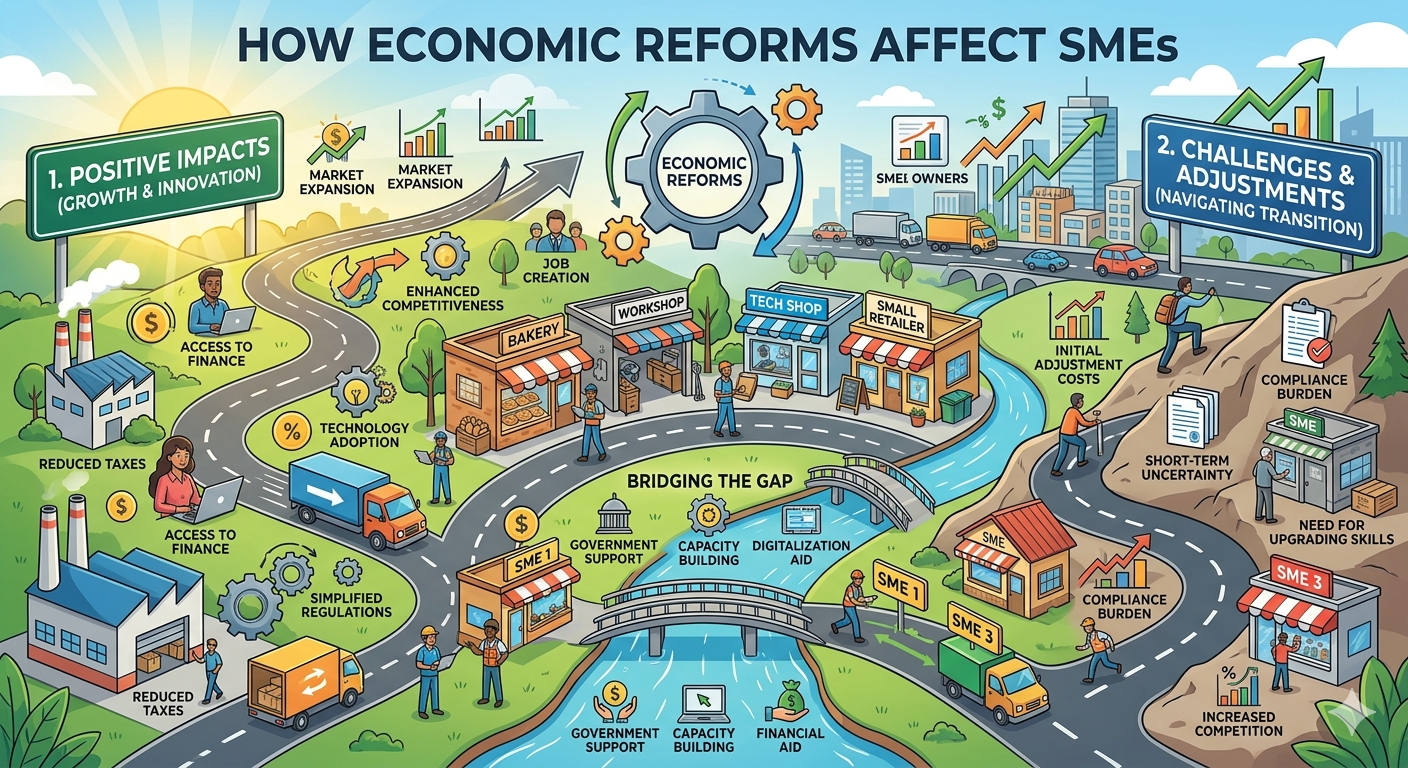
How Economic Reforms Affect SMEs – Economic reforms can reshape the business environment for small and medium-sized enterprises in Ghana. Learn how reforms affect access to finance, taxes, costs, and growth opportunities for SMEs.
How Economic Reforms Affect SMEs
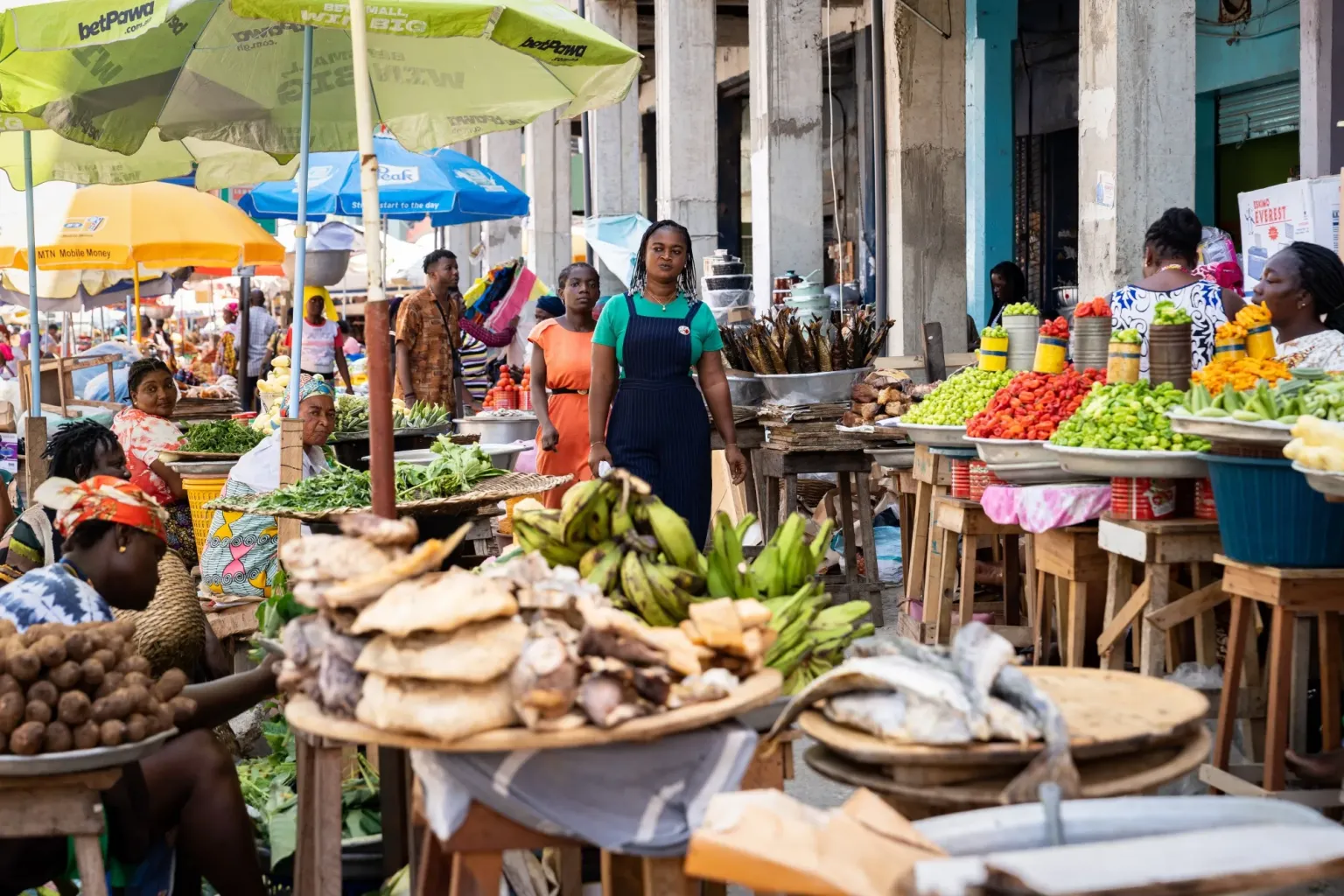
Small and medium-sized enterprises (SMEs) are the backbone of Ghana’s economy. From neighbourhood shops and agro-processors to technology startups and manufacturing firms, SMEs create jobs, generate income, and support local communities.
Yet these businesses are often the most sensitive to changes in government policy. Economic reforms—such as tax adjustments, interest rate changes, currency stabilisation measures, and regulatory improvements—can have a significant impact on how SMEs operate.
📢 GET DETAILED ARTICLES + JOBS
Join THSB's WhatsApp Channel and never miss a post or opportunity.
Some reforms create short-term challenges, including higher compliance costs or tighter credit conditions. Over time, however, well-designed reforms can strengthen the business environment and open new opportunities for growth.
What Are Economic Reforms?
Economic reforms are policy changes aimed at improving the performance and stability of an economy. These reforms may include:
- Reducing budget deficits
- Improving tax collection
- Managing public debt
- Stabilising inflation
- Reforming state-owned enterprises
- Simplifying business regulations
In Ghana, many reforms are designed to restore macroeconomic stability, attract investment, and support sustainable growth.
Why SMEs Are Closely Affected
SMEs typically operate with limited cash reserves and narrower profit margins than large corporations. As a result, changes in taxes, interest rates, utility costs, and exchange rates can quickly affect their operations. While larger firms may have easier access to financing and specialist advice, SMEs often feel the effects of reforms more directly.
This makes the policy environment especially important for small business success.
Impact on Access to Finance
One of the most significant ways reforms affect SMEs is through borrowing costs. When inflation is high, the Bank of Ghana may maintain elevated interest rates to restore price stability. This can make loans more expensive for entrepreneurs.
As reforms take hold and inflation moderates, interest rates may gradually decline, improving access to credit and enabling SMEs to:
- Purchase equipment
- Expand inventory
- Open new branches
- Hire additional staff
Lower borrowing costs can be a major boost for business growth.
Effects of Exchange Rate Stability
The stability of the Ghanaian cedi is particularly important for SMEs that import goods, machinery, or raw materials. A volatile currency can increase costs unexpectedly and complicate pricing decisions. Reforms that strengthen the cedi reduce uncertainty and help businesses plan more effectively.
For exporters, exchange rate stability also improves confidence when negotiating contracts and managing revenues.
Tax and Compliance Changes
Fiscal reforms may alter tax rates, filing requirements, and reporting standards. In the short term, these changes can increase administrative work. Over time, clearer and more predictable tax systems can benefit SMEs by reducing uncertainty and improving fairness.
When tax revenues are collected more efficiently, governments may also have greater capacity to invest in infrastructure and support programmes that benefit businesses.
Lower Inflation and Improved Planning
High inflation makes it difficult for SMEs to budget and price products accurately. When reforms succeed in reducing inflation:
- Input costs become more predictable
- Consumers regain purchasing power
- Financial planning improves
- Profit margins become easier to manage
A stable pricing environment supports better decision-making and long-term investment.
Better Infrastructure and Public Services
Economic reforms that strengthen public finances can increase resources available for roads, electricity, water, and digital infrastructure.
Improved infrastructure reduces operating costs and expands market access for SMEs. Reliable electricity, for example, lowers downtime and improves productivity. These investments can be especially valuable for businesses outside major urban centres.
Increased Investor Confidence
Successful reforms often attract local and international investment. As confidence improves, SMEs may benefit from:
- New partnerships
- Expanded supply chain opportunities
- Greater demand for goods and services
- Access to technical support
Growing investor interest can create fresh opportunities for entrepreneurs across many sectors.
Short-Term Challenges for Small Businesses
Reforms do not always deliver immediate benefits. In the early stages, SMEs may face:
- Higher taxes or stricter enforcement
- Reduced government spending
- Elevated interest rates
- Slower consumer demand
These adjustments can be difficult, particularly for businesses with limited financial buffers.
Long-Term Benefits of Successful Reforms
When reforms are sustained, SMEs can operate in a more stable and predictable environment. Long-term advantages may include:
- Lower inflation
- Reduced borrowing costs
- Stronger consumer confidence
- Improved infrastructure
- Better access to investment
These conditions help small businesses expand and create jobs.
What This Means for Ghanaian Entrepreneurs
For SME owners, understanding economic reforms is essential. Policy changes can affect financing, demand, taxation, and operating costs. Entrepreneurs who adapt by improving record-keeping, managing cash flow, and planning strategically are often better positioned to benefit as conditions improve.
The THSB Bottom Line
Economic reforms can be challenging in the short term, but they are designed to create a stronger foundation for growth.
For Ghana’s SMEs, successful reforms can lead to lower inflation, more stable exchange rates, better access to credit, and improved infrastructure. Over time, these changes can help small businesses become more competitive, resilient, and capable of driving the country’s economic transformation.
Source: The High Street Business
Disclaimer: Some content on The High Street Business may be aggregated, summarized, or edited from third-party sources for informational purposes. Images and media are used under fair use or royalty-free licenses. The High Street Business is a subsidiary of SamBoad Publishing under SamBoad Business Group Ltd, registered in Ghana since 2014.
For concerns or inquiries, please visit our Privacy Policy or Contact Page.

Esther Aku-Sika is a content writer and social media strategist who helps brands and startups grow through intentional storytelling and practical marketing strategies. With a keen eye for trends and audience behavior, she shares business insights, content strategies, and real-life lessons to help entrepreneurs build visibility and turn ideas into income. Through her writing, she simplifies complex concepts and equips readers with actionable steps to grow in today’s digital space.