





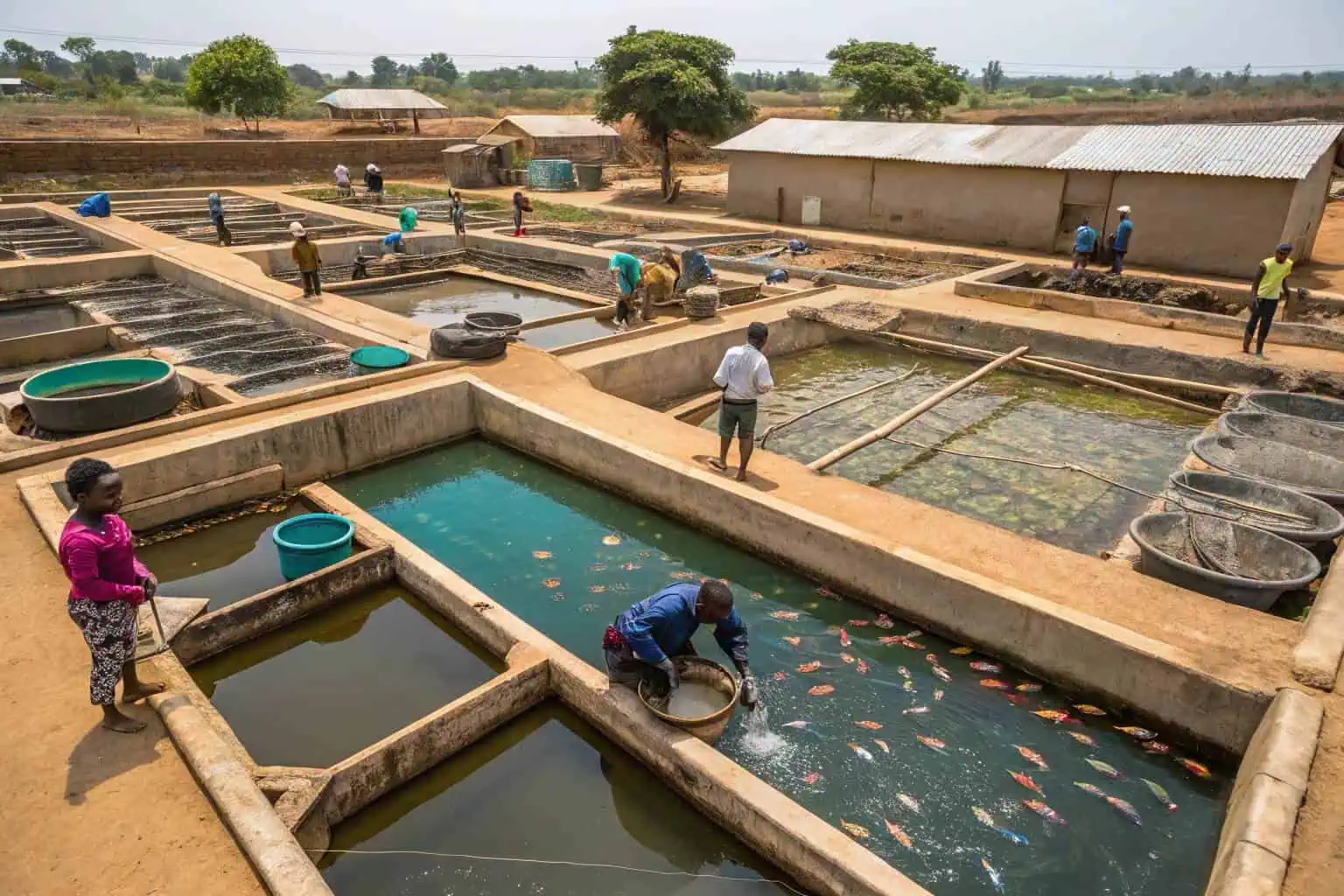
Fish farming, also known as aquaculture, has become one of the fastest-growing agribusiness sectors in Ghana. With declining marine fish stocks, rising population growth, and increasing demand for affordable protein, aquaculture offers a sustainable solution to Ghana’s fish supply gap.
Tilapia and catfish dominate local consumption, and fish farming has proven to be a reliable income source for smallholders, youth entrepreneurs, and commercial investors alike. This ultimate guide by The High Street Business explains how to start, manage, and scale a profitable fish farming business in Ghana.
Understanding Aquaculture in Ghana
Aquaculture involves the controlled cultivation of aquatic organisms such as fish, shrimp, and crustaceans. In Ghana, fish farming mainly focuses on freshwater species and operates through ponds, tanks, cages, or recirculating systems.
📢 GET DETAILED ARTICLES + JOBS
Join THSB's WhatsApp Channel and never miss a post or opportunity.
Fish farming is attractive because:
-
Fish has a short production cycle
-
Demand exists nationwide
-
The business can scale from small to commercial levels
-
Fish prices remain relatively stable
Government support, training programmes, and private-sector investment continue to expand the aquaculture value chain.
Step 1: Choose the Right Fish Species
Selecting the right species is critical to success.
Tilapia
Tilapia is the most farmed fish in Ghana due to strong consumer preference.
-
Fast-growing
-
High local demand
-
Thrives in warm freshwater
Catfish
Catfish is popular for smoked fish markets and restaurants.
-
Highly resilient
-
Can tolerate poor water conditions
-
Strong export and local demand
Beginners are often advised to start with tilapia due to easier management and predictable markets.
Step 2: Select the Best Fish Farming System
Fish farming systems vary based on capital, land availability, and expertise.
Earthen Ponds
-
Common in rural and peri-urban areas
-
Uses natural soil and water
Concrete Ponds
-
Durable and easy to manage
-
Suitable for small spaces
-
Higher initial investment
Tank Systems
-
Ideal for urban farming
-
Better water control
-
Requires regular monitoring
Cage Culture
-
Operated in lakes and reservoirs
-
High yield potential
-
Requires regulatory approval
Your choice should balance cost, management skill, and long-term scalability.
Step 3: Land, Water, and Site Selection
A suitable site determines fish survival and growth rates.
Key considerations include:
-
Reliable water supply
-
Good drainage
-
Accessibility to markets
-
Protection from flooding
Water quality must be tested for pH, oxygen levels, and contaminants before stocking fish.
Step 4: Stocking Quality Fingerlings
Healthy fingerlings are the foundation of a profitable fish farm.
-
Purchase from certified hatcheries
-
Avoid mixed-size fingerlings
-
Acclimatise fish before stocking
Overstocking leads to stress, slow growth, and disease outbreaks.
Step 5: Feeding and Nutrition Management
Feed accounts for the largest portion of fish farming costs.
Best practices include:
-
Using high-quality commercial feed
-
Feeding according to fish size and age
-
Avoiding overfeeding
Some commercial farmers reduce costs by producing their own feed, though this requires technical expertise.
Step 6: Water Quality and Farm Management
Maintaining water quality ensures healthy fish and high survival rates.
Key management activities:
-
Regular water exchange
-
Monitoring oxygen levels
-
Removing waste and debris
-
Controlling algae growth
Poor water management is a major cause of fish mortality in Ghana.
Step 7: Disease Prevention and Control
Fish diseases can cause significant losses if not managed early.
Preventive measures include:
-
Stocking disease-free fingerlings
-
Maintaining clean ponds
-
Quarantining new stock
-
Consulting fisheries officers or veterinarians
Early detection reduces treatment costs and prevents farm-wide outbreaks.
Step 8: Harvesting and Processing
Harvesting should be planned to meet market demand.
-
Partial harvesting allows continuous income
-
Full harvesting suits bulk buyers
Proper handling during harvesting prevents damage and weight loss.
Some farmers increase profits by processing fish through smoking, freezing, or filleting.
Step 9: Marketing and Sales Strategy
Fish farming success depends on reliable market access.
Common buyers include:
-
Fishmongers and wholesalers
-
Restaurants and hotels
-
Cold stores
-
Households
Direct sales often yield higher margins, while bulk buyers offer quick turnover.
Step 10: Costs and Profitability of Fish Farming in Ghana
Startup costs vary based on scale and system type.
Typical costs include:
-
Pond or tank construction
-
Fingerlings
-
Feed
-
Labour
-
Water and maintenance
A well-managed fish farm can become profitable within the first production cycle, especially with proper feeding and market planning.
Challenges Facing Fish Farmers in Ghana
Despite strong potential, fish farmers face challenges such as:
-
High feed prices
-
Poor water management
-
Disease outbreaks
Farmers who invest in training, record keeping, and quality inputs perform better over time.
The Future of Aquaculture in Ghana
Aquaculture is expected to play a central role in Ghana’s food security strategy. Innovations in feed production, breeding, and cold chain logistics are opening new opportunities for entrepreneurs.
Fish farmers who adopt modern practices, sustainability measures, and value addition strategies are best positioned for long-term success.
Frequently Asked Questions (FAQs)
Is fish farming profitable in Ghana?
Yes. Fish farming can be highly profitable with proper management, quality feed, and reliable market access.
Which fish species is best for beginners?
Tilapia is generally recommended for beginners due to strong demand and easier management.
How long does it take to harvest fish?
Tilapia typically reaches market size within 5–7 months under good conditions.
Do I need a licence to start fish farming in Ghana?
Small-scale farms usually do not require licences, but cage culture and large commercial farms may need regulatory approval.
What is the biggest cost in fish farming?
Feed is the highest recurring cost and must be managed efficiently to ensure profitability.
Source: The High Street Business
Disclaimer: Some content on The High Street Business may be aggregated, summarized, or edited from third-party sources for informational purposes. Images and media are used under fair use or royalty-free licenses. The High Street Business is a subsidiary of SamBoad Publishing under SamBoad Business Group Ltd, registered in Ghana since 2014.
For concerns or inquiries, please visit our Privacy Policy or Contact Page.

Samuel Kwame Boadu is a Ghanaian entrepreneur, writer, and digital consultant passionate about creating impactful stories and business solutions. He is the Founder & CEO of SamBoad Business Group Ltd, a dynamic company with subsidiaries in digital marketing, logistics, publishing, and risk management.