








In a landmark move set to redefine Africa’s digital trajectory, Smart Africa, the pan-continental coalition representing 40 countries and over a billion people, has officially launched the Africa Artificial Intelligence (AI) Council. The initiative aims to propel Africa to the forefront of the global AI economy, fostering innovation, economic growth, and digital transformation across the continent.
The Council brings together a cross-section of stakeholders from government, private sector, civil society, and academia to formulate strategies for AI adoption, regulation, and talent development. By coordinating efforts at national and continental levels, the Council seeks to ensure that Africa capitalizes on the enormous productivity gains offered by artificial intelligence.
A Strategic Opportunity
📢 GET DETAILED ARTICLES + JOBS
Join THSB's WhatsApp Channel and never miss a post or opportunity.
Africa’s youthful population and rapidly expanding workforce make the continent uniquely poised to leverage AI for economic and social advancement. According to projections, AI could contribute up to US$30 billion to Sub-Saharan Africa’s economy by 2030. Analysts emphasize that equipping young Africans with AI skills could drive local innovation, expand employment opportunities, and create a talent pool ready to compete in global markets.
“The continent has a unique opportunity to design the workforce of the future, driven by AI-enabled industries, thereby accelerating digital transformation and enhancing economic competitiveness,” Smart Africa noted in a statement.
Council Objectives and Structure
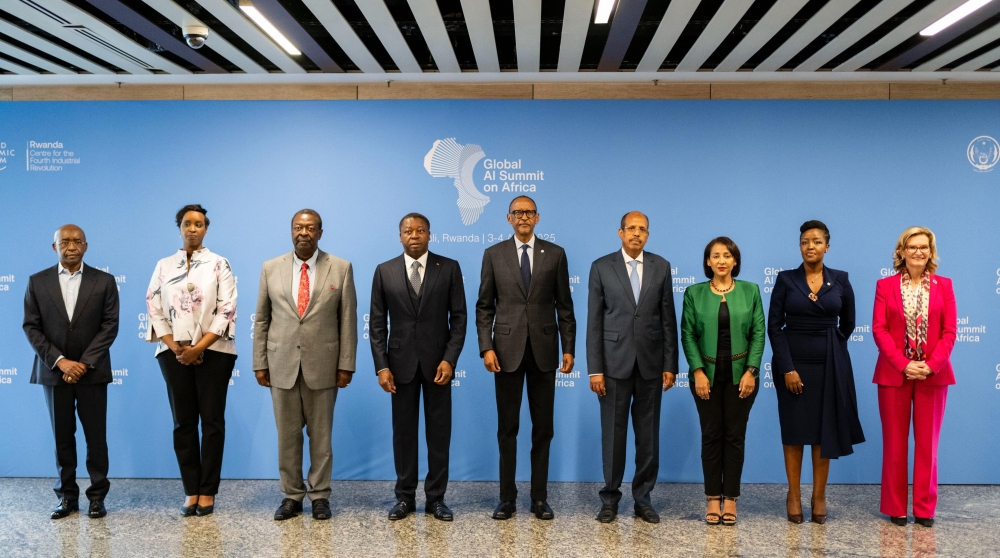
The newly formed Africa AI Council is composed of 15 inaugural members, who will be officially introduced at the upcoming Global AI Summit on Africa, hosted by Rwanda’s Centre for the Fourth Industrial Revolution (C4IR) and the Ministry of ICT and Innovation, in partnership with the World Economic Forum.
The Council’s mandate will include:
-
Developing AI policy frameworks that are ethical, inclusive, and responsive to African contexts.
-
Coordinating national and regional AI initiatives to prevent duplication and maximize impact.
-
Building AI talent pipelines through training, education, and upskilling programs.
-
Fostering research and innovation through the creation of Pan-African AI research hubs.
Smart Africa CEO Lacina Koné hailed the launch as a pivotal moment in Africa’s technological journey. “AI is not just technology to us,” Koné said. “It’s an African arrow that, when thrown with the right ethical frameworks and inclusive policies, can pierce the way to African digital prosperity and resilience for the benefit of every citizen.”
Operational Framework and Partnerships
To ensure effective implementation, Smart Africa is collaborating with C4IR and Qhala, a social impact assessment firm funded in part by the Gates Foundation. Qhala is tasked with developing essential resources for the Council, including:
-
AI governance toolkits
-
AI talent readiness indices
-
Frameworks for Pan-African AI research and innovation centers
These initiatives aim to create a structured approach to AI adoption across Africa, providing governments, corporations, and civil society with guidelines to implement AI responsibly and inclusively.
The Broader Context
Africa has traditionally lagged behind global tech leaders in AI research and adoption. However, recent investments in digital infrastructure, tech hubs, and educational programs have set the stage for accelerated growth. By establishing a continent-wide AI council, Africa is signaling its intent to compete globally, attract investment, and leverage AI for socioeconomic development.
The Council also aligns with Africa’s broader digital strategies, including efforts under Smart Africa’s Digital Transformation Agenda, the African Union’s Digital Economy Framework, and the African Continental Free Trade Area (AfCFTA), which seek to harmonize policies, enhance cross-border digital trade, and increase technology-driven competitiveness.
Unlocking Economic and Social Potential
Experts argue that AI adoption could transform sectors from agriculture and healthcare to education and finance. For example:
-
AI-driven agriculture can improve yields through predictive analytics and precision farming.
-
Healthcare AI can enhance diagnostics, reduce costs, and expand access to remote communities.
-
Education and skills training powered by AI can help bridge skill gaps across industries.
-
Finance and fintech solutions can expand inclusion for unbanked populations using AI-enabled credit scoring and risk management.
With AI projected to be a major driver of economic competitiveness in the next decade, the Council’s work will be critical in ensuring Africa does not merely adopt the technology but leads in shaping AI solutions that reflect local needs and ethics.
Looking Ahead
The Africa AI Council represents a strategic pivot for the continent. Beyond technology, it embodies a vision where AI catalyzes inclusive economic growth, talent development, and digital sovereignty. As Africa moves to harness AI responsibly and strategically, the Council will play a key role in aligning national priorities with continental ambitions, building a future where the continent is not just a consumer of technology but a creator and exporter of AI solutions.
Source: The High Street Business
Disclaimer: Some content on The High Street Business may be aggregated, summarized, or edited from third-party sources for informational purposes. Images and media are used under fair use or royalty-free licenses. The High Street Business is a subsidiary of SamBoad Publishing under SamBoad Business Group Ltd, registered in Ghana since 2014.
For concerns or inquiries, please visit our Privacy Policy or Contact Page.

Samuel Kwame Boadu is a Ghanaian entrepreneur, writer, and digital consultant passionate about creating impactful stories and business solutions. He is the Founder & CEO of SamBoad Business Group Ltd, a dynamic company with subsidiaries in digital marketing, logistics, publishing, and risk management.