







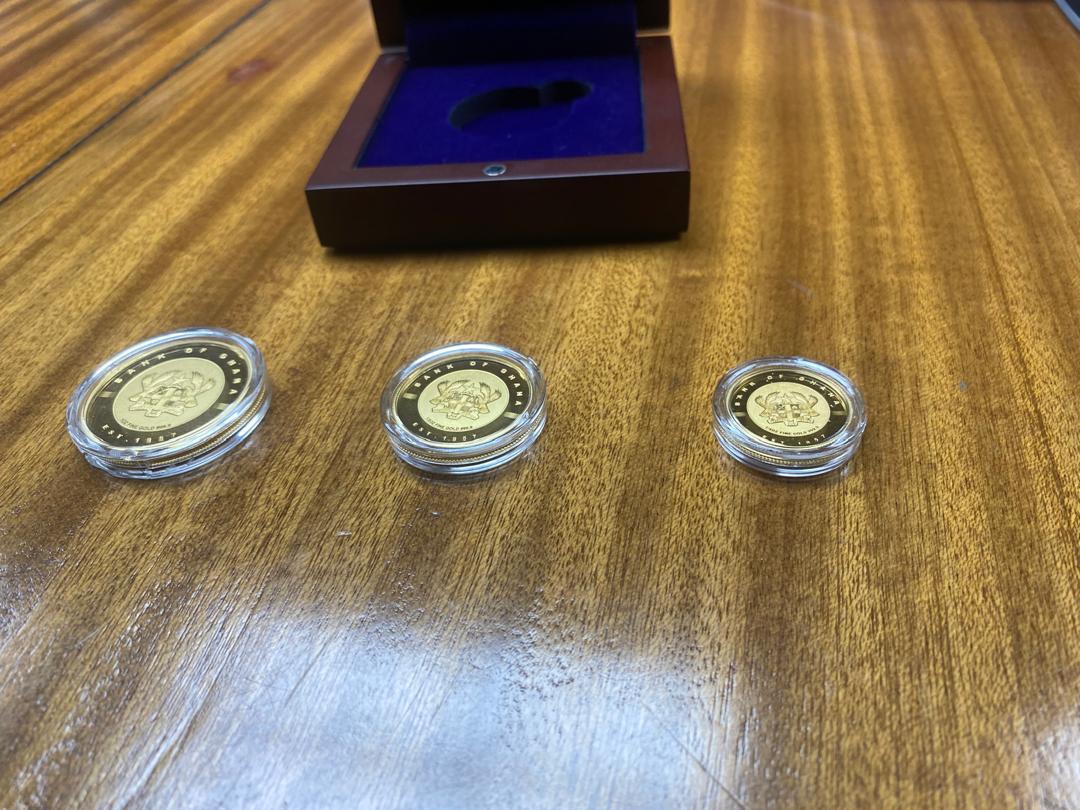
The Bank of Ghana (BoG) has once again adjusted the prices of its gold coins in response to rising international gold prices, reinforcing the growing significance of gold as a safe-haven asset amid global economic uncertainties. The new pricing reflects Ghana’s participation in global market dynamics while strengthening the central bank’s broader strategy of stabilizing the cedi and managing liquidity.
As of January 2025, the BoG announced updated prices for its 0.25oz, 0.50oz, and 1oz gold coins. The coins, previously priced at GH₵11,216, GH₵21,563, and GH₵42,316, have now increased marginally to GH₵11,248, GH₵21,623, and GH₵42,435. These adjustments follow a surge in global gold prices, with the London Bullion Market Association (LBMA) recording gold at US$2,715 per ounce on January 20, 2025 — one of the highest levels in years.
This upward shift underscores how global economic events influence domestic monetary decisions. It also highlights the importance of the Ghana Gold Coin initiative, part of the Bank of Ghana’s broader domestic gold programme designed to deepen public investment options, strengthen currency stability, and manage inflation.
📢 GET DETAILED ARTICLES + JOBS
Join THSB's WhatsApp Channel and never miss a post or opportunity.
Why Gold Prices Are Rising Globally
Gold remains one of the world’s most reliable stores of value, particularly during periods of economic instability. In 2024 and early 2025, several global factors fueled the metal’s uptrend:
1. Rising Global Economic Uncertainties
Geopolitical tensions, recession fears in major economies, and tightening financial conditions have pushed investors toward safer assets. Gold, historically a refuge during turmoil, has seen increased demand.
2. Inflation Concerns
Persistent inflation in the U.S., Europe, and Asia has reduced confidence in fiat currencies, motivating investors to hedge with gold.
3. Weakening Global Currencies
Many major currencies lost ground against the dollar, making gold an appealing alternative asset.
4. Central Bank Purchases
A number of central banks, particularly in emerging markets, have increased gold reserves as part of their diversification strategy. This demand has kept prices elevated.
These global trends explain the surge observed on the LBMA, where gold reached US$2,715 per ounce — a major driver of the BoG’s price adjustments.
Understanding the Bank of Ghana’s Gold Coin Pricing Adjustment
Unlike speculative market products, the BoG’s gold coins are structured as investment-grade assets, with pricing aligned to international benchmarks. The recent marginal increases represent the following:
-
0.25oz coin: GH₵11,248 (↑ from GH₵11,216)
-
0.50oz coin: GH₵21,623 (↑ from GH₵21,563)
-
1oz coin: GH₵42,435 (↑ from GH₵42,316)
These adjustments may appear modest, but they reflect broader global movements. Pricing is directly influenced by:
-
International spot gold prices
-
Exchange rate fluctuations
-
Refining and minting costs
-
Market liquidity
For investors in Ghana, the new prices highlight both the opportunity and importance of gold as a hedge against currency volatility, inflation, and global economic challenges.
The Ghana Gold Coin Initiative: A Strategic Policy Tool
Launched as part of the Bank of Ghana’s domestic gold programme, the Ghana Gold Coin (GGC) initiative serves multiple purposes:
1. Offering an Alternative Investment Avenue
Ghanaians now have access to a globally recognized, stable investment asset without needing foreign brokerage accounts. This democratizes participation in precious metals.
2. Supporting Cedi Stability
By encouraging citizens to invest in gold, the BoG reduces excess demand for foreign currency — a key driver of cedi depreciation. Gold acts as a “value anchor” within the economy.
3. Absorbing Excess Liquidity
Excess liquidity in the market contributes to inflation pressures. Selling gold coins helps the central bank withdraw some of this liquidity, aiding price stability and minimizing currency risks.
4. Strengthening Financial Stability
Gold-backed instruments provide an additional buffer during economic shocks. They diversify the asset base available to investors and contribute to a more resilient financial ecosystem.
Gold as a Safe-Haven Asset for Ghanaians
For decades, gold has served as a preferred store of value globally — a trend that is becoming increasingly relevant in Ghana, given inflation dynamics and exchange rate volatility. Here’s why:
1. Protection Against Inflation
Unlike cash savings, gold tends to appreciate when inflation rises, making it a powerful hedge for households and investors.
2. Currency Hedge
When the cedi weakens, gold prices in local currency rise, helping investors preserve wealth.
3. Stable Long-Term Growth
Gold demonstrates steady appreciation over long periods, unlike more volatile assets.
4. High Liquidity
Gold coins can be liquidated relatively easily, offering flexibility for investors.
With Ghana currently navigating economic reforms and fiscal consolidation, gold has become even more attractive.
Implications of the Price Adjustment for Investors
The latest adjustment sends a clear message: gold demand and prices are rising, and early investors may reap long-term benefits.
1. Investors May Expect Continued Price Growth
If global uncertainties persist, gold prices are likely to remain elevated, which means the value of BoG gold coins could continue appreciating.
2. Opportunity for Diversification
Gold offers a stable complement to stocks, treasury bills, and real estate — common investment choices in Ghana.
3. Safe Storage of Wealth
With rising cost of living, gold provides a shield against the erosion of savings.
4. Increased Entry Cost
The marginal increases mean new buyers may need to adjust budgets slightly, but long-term prospects remain strong.
How the Initiative Supports Ghana’s Monetary Policy
The gold coin programme is an extension of Ghana’s ambitious gold-for-reserves and gold-for-oil strategies. By boosting local gold availability and integrating it into the financial sector, the BoG aims to:
-
Reduce dependence on foreign exchange
-
Support energy sector reforms
-
Improve reserves management
-
Strengthen monetary policy transmission
-
Deepen domestic gold markets
The initiative blends macroeconomic policy with public participation, creating a shared mechanism for supporting the cedi and combating inflation.
Looking Ahead: What to Expect for the Rest of 2025
If global uncertainty remains high, Ghana is likely to witness additional price adjustments. Several factors will shape the outlook:
-
U.S. Federal Reserve interest rate decisions
-
Global inflation trends
-
Ongoing geopolitical conflicts
-
Demand from emerging economies
-
Domestic currency performance
Given current indicators, analysts predict sustained gold demand throughout 2025.
FAQs
1. Why did the Bank of Ghana increase gold coin prices?
The increase reflects higher global gold prices on the LBMA, driven by rising economic uncertainties and strong investor demand for gold.
2. Are the gold coins a good investment?
Yes. Gold is a proven hedge against inflation and currency depreciation, offering long-term value appreciation.
3. How does the programme help stabilize the cedi?
By absorbing liquidity and reducing demand for foreign exchange, the initiative helps manage inflation and supports currency stability.
4. Will prices continue rising in 2025?
If global uncertainties persist, gold prices could remain elevated, leading to further price adjustments in Ghana.
5. Who can buy the BoG gold coins?
The coins are available to the general public through the Bank of Ghana’s authorized channels.
Source: Accra Street Journal
Disclaimer: Some content on The High Street Business may be aggregated, summarized, or edited from third-party sources for informational purposes. Images and media are used under fair use or royalty-free licenses. The High Street Business is a subsidiary of SamBoad Publishing under SamBoad Business Group Ltd, registered in Ghana since 2014.
For concerns or inquiries, please visit our Privacy Policy or Contact Page.

Samuel Kwame Boadu is a Ghanaian entrepreneur, writer, and digital consultant passionate about creating impactful stories and business solutions. He is the Founder & CEO of SamBoad Business Group Ltd, a dynamic company with subsidiaries in digital marketing, logistics, publishing, and risk management.