







Ghana’s Cost of Living Explained – Ghana’s cost of living affects households, workers, and businesses alike. Here’s a simple explanation of what drives living costs in Ghana and why it matters to the economy.
Ghanas Cost of Living Explained
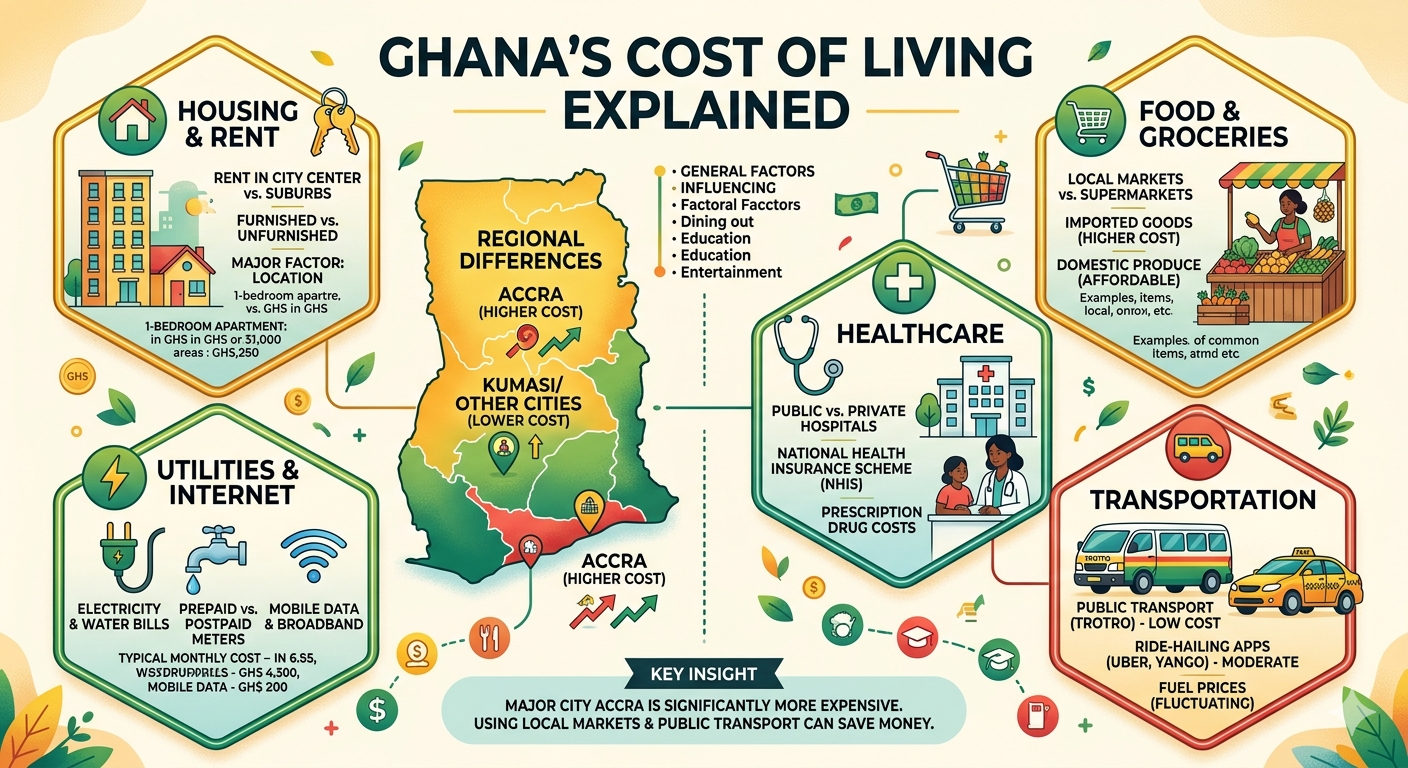
The cost of living in Ghana has become one of the most discussed economic issues in recent years. From food and transportation to rent and utility bills, many households are paying more for everyday essentials than they did a few years ago.
For workers, rising living costs can make it harder to save money or maintain a comfortable lifestyle. For businesses, higher costs can reduce consumer spending and slow growth. Understanding what drives the cost of living helps explain many of the economic conversations happening across the country today.
📢 GET DETAILED ARTICLES + JOBS
Join THSB's WhatsApp Channel and never miss a post or opportunity.
What Does Cost of Living Mean?
The cost of living refers to the amount of money needed to cover basic expenses such as:
- Food
- Housing and rent
- Transportation
- Electricity and water
- Healthcare
- Education
- Clothing and other necessities
When the prices of these essentials rise faster than incomes, people feel financial pressure.
Why the Cost of Living Has Increased in Ghana
Several factors contribute to rising living costs in Ghana.
Inflation
Inflation is one of the biggest reasons prices increase. When inflation rises, the prices of goods and services go up across the economy. In Ghana, food inflation has especially affected households because many families spend a large portion of their income on food.
The Value of the Cedi
The strength of the Ghana cedi also affects living costs. Ghana imports many products, including fuel, machinery, medicine, and some food items. When the cedi weakens against major foreign currencies:
- Imported goods become more expensive
- Fuel prices often rise
- Transport and production costs increase
Businesses usually pass these higher costs on to consumers.
Fuel and Transportation Costs
Fuel prices play a major role in the cost of living. Transport affects almost every sector of the economy. When fuel prices rise:
- Public transport fares may increase
- Food transportation becomes more expensive
- Businesses face higher operating costs
This creates a ripple effect throughout the economy.
Housing and Rent Pressures
Housing remains one of the biggest expenses for many people, especially in urban areas like Accra and Kumasi. Rent prices have risen due to:
- Population growth
- Urban migration
- Limited affordable housing
- Rising construction costs
Many households now spend a significant share of their income on accommodation alone.
How It Affects Everyday Ghanaians
Rising living costs affect people differently depending on income levels. For low-income households:
- It becomes harder to afford nutritious food
- Savings may disappear
- Families may reduce spending on healthcare or education
Middle-income earners may also struggle with:
- Increased utility bills
- Higher school fees
- Rising transportation costs
Even businesses feel the pressure because consumers may cut back on spending.
The Impact on Businesses and the Economy
High living costs can slow economic activity. When people spend most of their income on essentials, they often reduce spending on:
- Entertainment
- Fashion and retail
- Travel
- Non-essential services
This affects business revenues and can slow job creation.
At the same time, companies also face higher operating costs, including:
- Electricity bills
- Fuel expenses
- Import costs
- Employee wage demands
Government Efforts to Manage Living Costs
Governments and economic policymakers often try to reduce living pressures through:
- Inflation control measures
- Currency stabilisation policies
- Agricultural support programmes
- Energy sector reforms
The goal is to create economic stability and improve purchasing power over time.
Why Cost of Living Matters to the Economy
The cost of living is closely connected to economic confidence. When living costs rise sharply:
- Consumer confidence can weaken
- Poverty levels may increase
- Businesses may slow expansion plans
But when prices become more stable, households and businesses can plan better for the future.
Conclusion From THSB
Ghana’s cost of living reflects the broader condition of the economy. Inflation, fuel prices, exchange rates, and housing costs all shape how much people spend on daily life.
For many households, managing expenses has become increasingly challenging. Yet understanding the factors behind rising costs also helps explain why economic stability, inflation control, and local production remain important national priorities.
Source: The High Street Business
Disclaimer: Some content on The High Street Business may be aggregated, summarized, or edited from third-party sources for informational purposes. Images and media are used under fair use or royalty-free licenses. The High Street Business is a subsidiary of SamBoad Publishing under SamBoad Business Group Ltd, registered in Ghana since 2014.
For concerns or inquiries, please visit our Privacy Policy or Contact Page.

Esther Aku-Sika is a content writer and social media strategist who helps brands and startups grow through intentional storytelling and practical marketing strategies. With a keen eye for trends and audience behavior, she shares business insights, content strategies, and real-life lessons to help entrepreneurs build visibility and turn ideas into income. Through her writing, she simplifies complex concepts and equips readers with actionable steps to grow in today’s digital space.