







Ghana’s economy is often discussed through statistics—growth rates, inflation figures, exchange rates, and fiscal balances. Yet beyond the headlines and numbers, the economy is constantly sending deeper signals about structural strengths, vulnerabilities, and future direction.
In 2026, Ghana’s economic environment reflects both pressure and possibility. For businesses, investors, and policymakers, the key question is not simply how the economy is performing, but what it is truly revealing about consumption, production, confidence, and resilience.
Understanding these signals is essential for making informed decisions in an increasingly complex economic landscape.
📢 GET DETAILED ARTICLES + JOBS
Join THSB's WhatsApp Channel and never miss a post or opportunity.
Slower Growth, But Deeper Structural Messages
Economic growth in Ghana has moderated compared to earlier high-growth periods. While this slowdown raises concern, it also reveals important structural realities.
Slower growth highlights the limits of consumption-led expansion and the risks of overreliance on a narrow production base. It signals the need for productivity-driven growth, value addition, and innovation-led expansion.
For businesses, the message is clear: growth opportunities now depend less on volume expansion and more on efficiency, differentiation, and strategic positioning.
Inflation as a Signal of Cost Pressures
Inflation remains one of the most visible signals from Ghana’s economy. Rising prices reflect supply constraints, currency pressures, energy costs, and imported inflation.
For households, inflation erodes purchasing power. For businesses, it raises input costs, complicates pricing decisions, and compresses margins.
However, inflation also reveals deeper inefficiencies in supply chains, logistics, and production systems. Businesses that address these inefficiencies through innovation, sourcing strategies, and operational discipline are better positioned to remain competitive.
Exchange Rate Movements and Economic Confidence
The exchange rate is a powerful indicator of economic confidence. Currency volatility reflects external pressures, fiscal imbalances, and investor sentiment.
For import-dependent businesses, exchange rate movements increase costs and uncertainty. Export-oriented firms, however, may find opportunities if competitiveness improves.
Beyond immediate impacts, currency behavior signals the importance of export diversification, domestic production, and foreign exchange earnings. The economy is telling businesses to look outward, add value locally, and reduce exposure to external shocks.
Consumption Patterns and Changing Demand
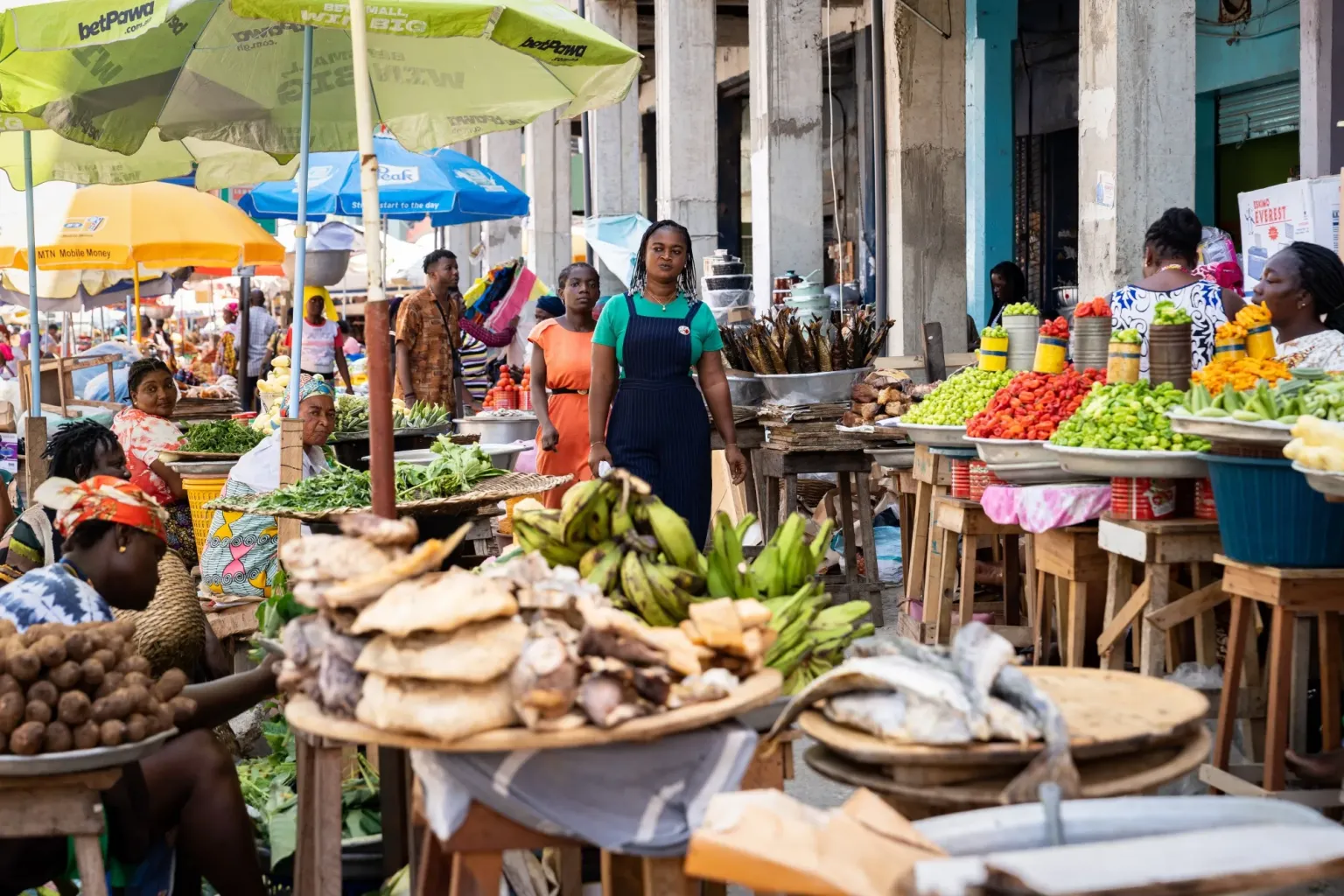
Consumer behavior offers critical insight into economic conditions. In Ghana, consumption patterns are shifting as households become more price-sensitive and selective.
Demand is increasingly driven by value, convenience, and necessity rather than discretionary spending. This trend signals rising cost consciousness and cautious optimism.
Businesses that adapt offerings to affordability, quality, and relevance are more likely to sustain demand. The economy is signaling a shift from impulse consumption to deliberate spending.
Credit Conditions and Business Expansion
Access to credit is another key economic signal. High interest rates and tight credit conditions reflect macroeconomic stabilization efforts and risk management by financial institutions.
For businesses, this environment rewards discipline, efficiency, and alternative financing strategies. Expansion is increasingly funded through retained earnings, partnerships, and operational optimization rather than easy borrowing.
The economy is signaling the importance of financial resilience and prudent capital management.
Government Policy Signals and Private Sector Response
Fiscal consolidation, tax reforms, and regulatory adjustments signal a government effort to stabilize and rebuild confidence.
For businesses, these policies affect costs, compliance, and planning. However, they also signal a longer-term commitment to sustainability and institutional strengthening.
The key lesson is adaptability. Businesses that understand policy direction rather than react to individual measures are better positioned to align strategy with economic reality.
Employment Trends and Productivity Signals
Employment patterns reveal important truths about the economy. Job creation is increasingly concentrated in services, digital businesses, and informal enterprise.
This shift signals both opportunity and risk. While entrepreneurship is rising, productivity gaps remain. Informal employment limits income stability and tax capacity.
The economy is telling businesses and policymakers that productivity growth—not just job creation—must be prioritized for sustainable development.
Investment Patterns and Risk Appetite
Investment flows reflect confidence levels. Cautious investment behavior signals uncertainty, while targeted investments indicate belief in specific sectors.
In Ghana, investment is increasingly selective, favoring technology, agribusiness value chains, logistics, and essential services. This pattern signals where long-term opportunities lie.
Businesses that align with these trends are better positioned to attract capital and partnerships.
The Role of Innovation in Economic Signals
Innovation acts as both a response to and a signal from the economy. Businesses adopting technology, new processes, and data-driven strategies are responding to cost pressures, competition, and changing demand.
The economy is signaling that innovation is no longer optional—it is necessary for survival and growth.
Innovation improves efficiency, resilience, and adaptability, enabling firms to operate effectively in uncertain conditions.
Informality and Structural Constraints
The persistence of informality reveals deeper structural challenges. Many businesses remain informal due to compliance costs, regulatory complexity, and limited incentives.
This signals the need for reforms that encourage formalization through support rather than enforcement alone.
For the economy to grow sustainably, informal enterprise must be integrated into formal value chains and financial systems.
What Ghana’s Economy Is Ultimately Saying
Taken together, Ghana’s economic signals tell a consistent story:
-
Growth must be productivity-driven
-
Consumption is cautious and value-focused
-
Innovation is essential, not optional
-
Financial discipline matters more than expansion
-
Diversification is critical for resilience
The economy is demanding smarter businesses, more efficient systems, and long-term thinking.
Implications for Business Strategy
Businesses that listen to economic signals gain strategic advantage. Pricing strategies, product development, investment decisions, and market positioning must align with economic realities.
The message is not pessimism—it is adaptation. Those who adjust early benefit most.
Looking Ahead With THSB
In 2026 and beyond, Ghana’s economy will continue to evolve under pressure and opportunity. The signals are clear for those willing to interpret them.
The economy is not merely reporting challenges—it is pointing toward solutions rooted in innovation, productivity, resilience, and strategic clarity.
Understanding what Ghana’s economy is really telling us is the first step toward building sustainable, competitive, and future-ready businesses.
FAQs
What does Ghana’s economic slowdown indicate?
The need for productivity-driven and diversified growth.
Why is inflation a key economic signal?
It reveals cost pressures and structural inefficiencies.
How should businesses respond to tight credit conditions?
By focusing on efficiency, cash flow management, and alternative financing.
What role does innovation play?
Innovation enables businesses to adapt, reduce costs, and remain competitive.
Is Ghana’s economy signaling opportunity or risk?
Both—risk for unprepared firms and opportunity for adaptive, innovative businesses.
Source: The High Street Business
Disclaimer: Some content on The High Street Business may be aggregated, summarized, or edited from third-party sources for informational purposes. Images and media are used under fair use or royalty-free licenses. The High Street Business is a subsidiary of SamBoad Publishing under SamBoad Business Group Ltd, registered in Ghana since 2014.
For concerns or inquiries, please visit our Privacy Policy or Contact Page.

Samuel Kwame Boadu is a Ghanaian entrepreneur, writer, and digital consultant passionate about creating impactful stories and business solutions. He is the Founder & CEO of SamBoad Business Group Ltd, a dynamic company with subsidiaries in digital marketing, logistics, publishing, and risk management.