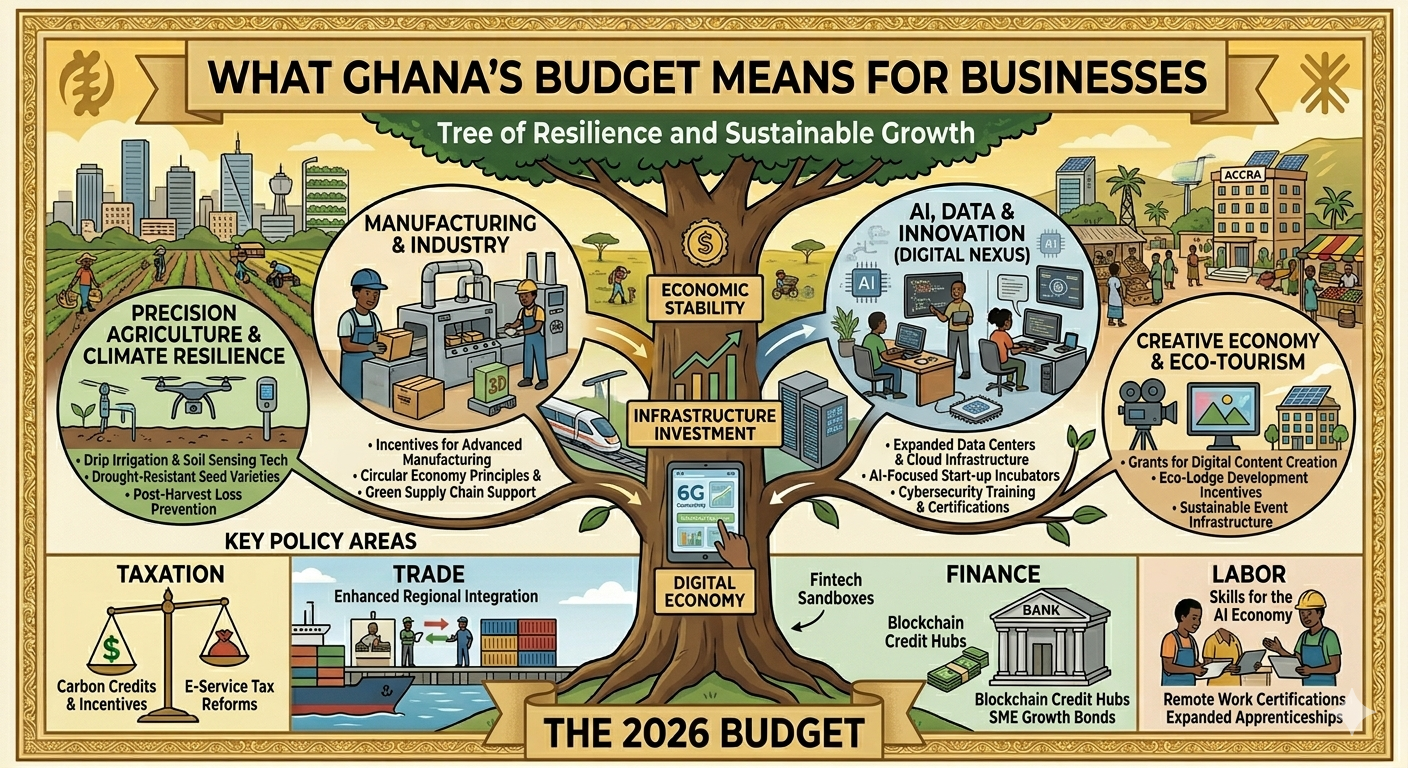








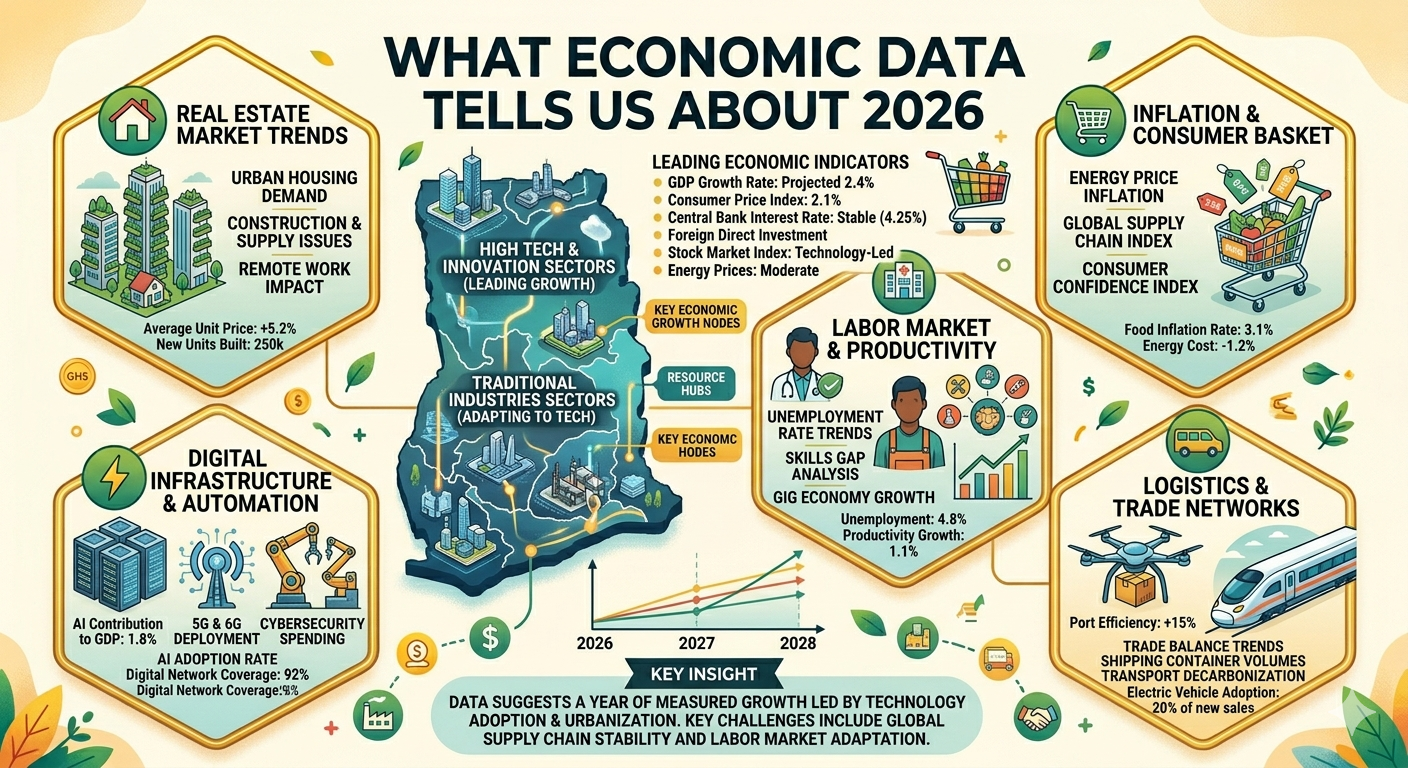
What Economic Data Tells Us About 2026 – Economic data for 2026 is offering insights into inflation, growth, business confidence, and consumer spending. Here’s what the numbers may be saying about Ghana’s economy.
What Economic Data Tells Us About 2026
Economic data often looks like a collection of complicated numbers and reports, but behind every statistic is a story about people, businesses, jobs, and daily life. In 2026, analysts, investors, and policymakers are paying close attention to Ghana’s economic indicators to understand where the country may be heading.
From inflation and exchange rates to business activity and employment trends, economic data helps explain how the economy is performing and what challenges or opportunities may lie ahead.
📢 GET DETAILED ARTICLES + JOBS
Join THSB's WhatsApp Channel and never miss a post or opportunity.
Why Economic Data Matters
Economic data helps governments and businesses make decisions. It provides a clearer picture of:
- How fast the economy is growing
- Whether prices are rising or stabilising
- How consumers are spending
- The health of businesses and industries
Without reliable data, it becomes difficult to plan for investments, policies, or future growth.
Inflation Remains a Key Indicator
One of the most closely watched indicators in 2026 is inflation. Inflation affects nearly every household because it influences the prices of food, transport, rent, and utilities.
Recent economic discussions in Ghana continue to focus on:
- Whether inflation is slowing
- How quickly prices are stabilising
- The impact on household purchasing power
Lower inflation can improve confidence because consumers and businesses may feel more financially secure.
The Performance of the Cedi
The Ghana cedi remains another major area of focus. Currency stability affects:
- Import prices
- Fuel costs
- Business operations
- Foreign investment confidence
A stronger or more stable cedi can help reduce imported inflation and improve market confidence. On the other hand, currency volatility can create uncertainty for businesses and consumers alike.
Economic Growth and Business Activity
Growth figures help measure how much economic activity is taking place across sectors such as:
- Agriculture
- Manufacturing
- Banking
- Technology
- Trade and services
If growth remains steady in 2026, it may signal improving investor confidence and stronger business performance.
Businesses often look at growth data before deciding whether to:
- Expand operations
- Hire more workers
- Increase investments
Employment and Household Conditions
Employment data provides insight into how ordinary people are experiencing the economy. Strong job creation usually means:
- More income opportunities
- Higher consumer spending
- Better economic confidence
However, if unemployment or underemployment remains high, households may continue facing financial pressure despite broader economic improvements.
Consumer Spending Trends
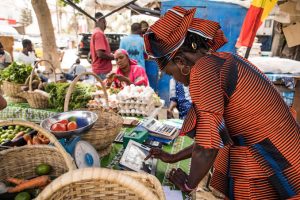
Consumer spending is one of the clearest signs of economic confidence. When people feel financially stable, they are more likely to:
- Shop more frequently
- Invest in businesses
- Spend on housing, education, and services
But when living costs remain high, consumers often reduce spending to focus on essentials. In 2026, spending patterns may continue to reflect the balance between economic recovery and cost-of-living pressures.
Investor Confidence and International Attention
Economic data also shapes how international investors view Ghana. Investors monitor indicators such as:
- Inflation levels
- Debt management
- Interest rates
- Currency stability
- GDP growth
Positive data can attract foreign investment and improve confidence in the economy. Negative trends may lead investors to become more cautious.
The Role of Government Policy
Government policies play a major role in shaping economic outcomes. In 2026, attention remains on measures aimed at:
- Stabilising inflation
- Supporting businesses
- Improving revenue collection
- Encouraging local production
Economic data helps policymakers assess whether these strategies are working effectively.
What the Data May Suggest About the Future
While no economic forecast is guaranteed, current data can offer clues about future trends. If inflation continues easing and economic growth strengthens, Ghana may experience:
- Improved business confidence
- Better investment conditions
- Increased consumer activity
However, challenges such as global economic uncertainty, fuel prices, and external debt pressures may still influence the pace of recovery.
THSB Conclusion
Economic data in 2026 is providing important signals about Ghana’s direction. Inflation trends, currency performance, business activity, and consumer spending are all helping shape expectations for the future.
Although challenges remain, the numbers also reveal areas of resilience and recovery. For businesses, households, and policymakers, understanding economic data is becoming increasingly important in navigating an evolving economy.
Source: The High Street Business
Disclaimer: Some content on The High Street Business may be aggregated, summarized, or edited from third-party sources for informational purposes. Images and media are used under fair use or royalty-free licenses. The High Street Business is a subsidiary of SamBoad Publishing under SamBoad Business Group Ltd, registered in Ghana since 2014.
For concerns or inquiries, please visit our Privacy Policy or Contact Page.

Esther Aku-Sika is a content writer and social media strategist who helps brands and startups grow through intentional storytelling and practical marketing strategies. With a keen eye for trends and audience behavior, she shares business insights, content strategies, and real-life lessons to help entrepreneurs build visibility and turn ideas into income. Through her writing, she simplifies complex concepts and equips readers with actionable steps to grow in today’s digital space.