









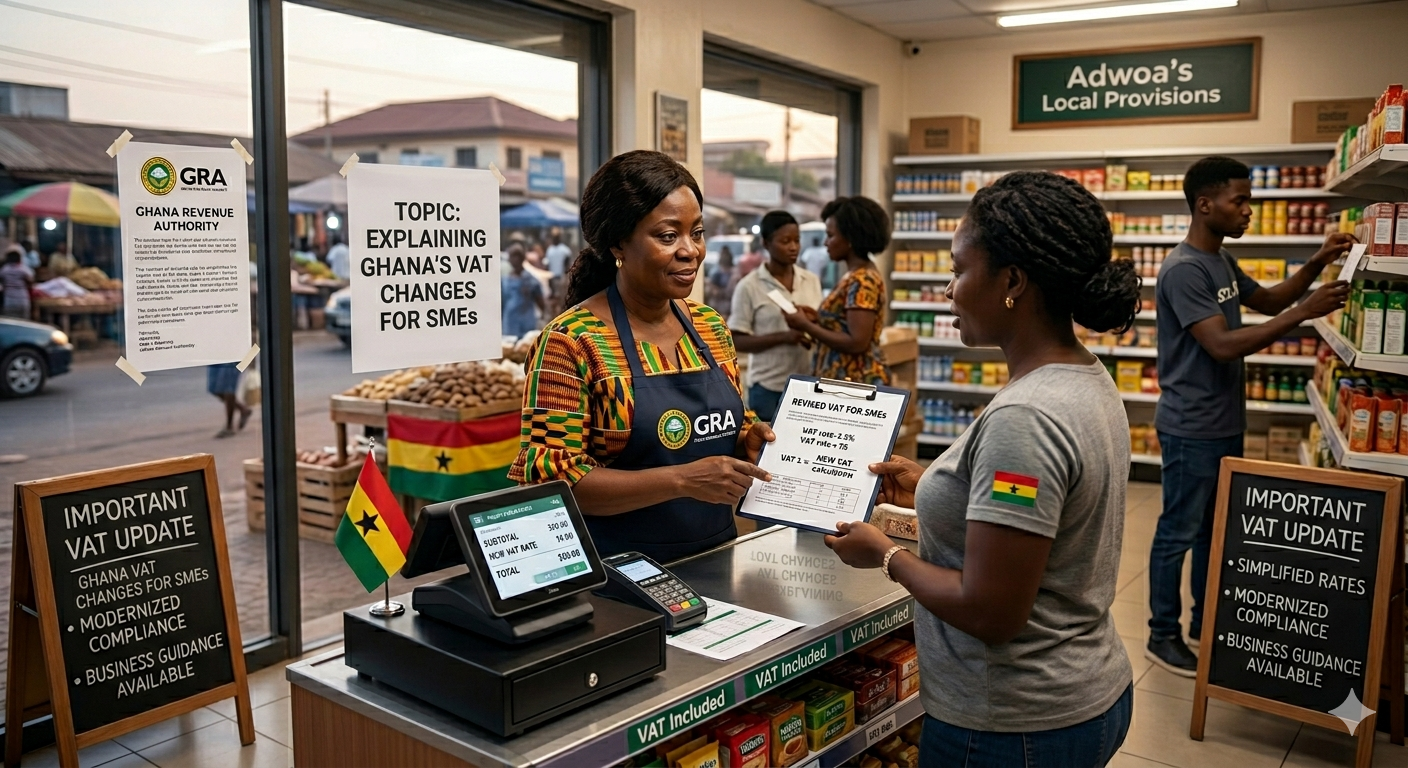
What VAT Changes Mean for Businesses – Changes in Value Added Tax (VAT) can affect business costs, pricing, consumer spending, and profitability. Here’s what VAT changes mean for businesses in Ghana.
What VAT Changes Mean for Businesses
Value Added Tax (VAT) is one of the most important taxes in Ghana’s economy. Businesses collect it on behalf of the government, while consumers pay it through the goods and services they purchase.
Whenever VAT rates or policies change, the effects are often felt immediately across the business environment. From small retailers and restaurants to manufacturers and importers, VAT adjustments can influence pricing, sales, operating costs, and customer behaviour.
📢 GET DETAILED ARTICLES + JOBS
Join THSB's WhatsApp Channel and never miss a post or opportunity.
Understanding how VAT changes affect businesses helps explain why tax policy is closely watched by both companies and consumers.
What Is VAT?
Value Added Tax is a consumption tax added to the price of many goods and services. Businesses charge VAT when customers purchase products or services, then remit part of that tax to the government through the tax system.
VAT applies to many sectors, including:
- Retail businesses
- Restaurants and hospitality
- Manufacturing
- Professional services
- Import and export activities
Because it affects daily transactions, VAT plays a major role in both business operations and government revenue generation.
How VAT Changes Affect Pricing
One of the most immediate effects of VAT changes is on prices. When VAT increases:
- Businesses may raise prices to cover the higher tax burden
- Consumers may spend less because products become more expensive
- Profit margins may come under pressure if businesses absorb part of the cost
When VAT is reduced, some businesses may lower prices, which can encourage customer spending and improve sales activity.
Impact on Consumer Spending
Consumer behaviour is closely linked to pricing. Higher VAT can reduce household purchasing power because people end up paying more for goods and services.
This may lead consumers to:
- Cut back on non-essential spending
- Look for cheaper alternatives
- Reduce overall consumption
For businesses, weaker consumer demand can affect revenue growth and profitability.
Challenges for Small Businesses
Small and medium-sized enterprises (SMEs) are often more sensitive to VAT changes. Many smaller businesses already face:
- Rising operational costs
- Limited cash flow
- High utility expenses
- Transportation and import pressures
An increase in VAT can create additional financial strain, especially if customers become more cautious with spending. At the same time, businesses must also manage VAT compliance requirements, record keeping, and reporting obligations.

VAT and Business Cash Flow
VAT affects cash flow because businesses collect taxes before remitting them to the government. Changes in VAT policies can influence:
- Working capital management
- Accounting systems
- Financial planning
- Pricing strategies
Businesses must carefully monitor their finances to ensure they remain compliant while maintaining operational stability.
Effects on Different Industries
Not all sectors experience VAT changes in the same way.
Retail and Hospitality
Retail shops, restaurants, and hotels often feel immediate effects because consumer demand can quickly respond to price changes.
Manufacturing
Manufacturers may face higher production costs if VAT increases affect raw materials and imported inputs.
Import Businesses
Importers can also be affected because VAT may apply to imported goods, influencing final market prices.
Government Revenue and Public Spending
Governments often adjust VAT policies to increase revenue for public spending. VAT revenue helps finance:
- Infrastructure projects
- Healthcare services
- Education
- Public sector operations
However, policymakers also try to balance revenue generation with economic growth and affordability for businesses and consumers.
Why Businesses Monitor Tax Policy Closely
Businesses pay close attention to VAT changes because taxation directly affects:
- Profitability
- Customer demand
- Competitive pricing
- Investment decisions
Stable and predictable tax policies generally help businesses plan more effectively for the future. Frequent or unexpected changes, however, can create uncertainty within the business environment.
The Role of Digital Tax Administration
Technology is increasingly improving VAT administration in Ghana. Digital systems help businesses with:
- Electronic invoicing
- Tax filing
- Payment processing
- Compliance tracking
These systems aim to improve efficiency and reduce errors in tax reporting.
THSB’s Conclusion
VAT changes can have significant effects on businesses across Ghana’s economy. They influence pricing, consumer behaviour, profitability, and operational planning.
While VAT remains an important source of government revenue, policymakers must also consider how tax adjustments affect businesses and households. For companies, understanding VAT policies is essential for financial planning and long-term sustainability in an evolving economic environment.
Source: The High Street Business
Disclaimer: Some content on The High Street Business may be aggregated, summarized, or edited from third-party sources for informational purposes. Images and media are used under fair use or royalty-free licenses. The High Street Business is a subsidiary of SamBoad Publishing under SamBoad Business Group Ltd, registered in Ghana since 2014.
For concerns or inquiries, please visit our Privacy Policy or Contact Page.

Esther Aku-Sika is a content writer and social media strategist who helps brands and startups grow through intentional storytelling and practical marketing strategies. With a keen eye for trends and audience behavior, she shares business insights, content strategies, and real-life lessons to help entrepreneurs build visibility and turn ideas into income. Through her writing, she simplifies complex concepts and equips readers with actionable steps to grow in today’s digital space.