






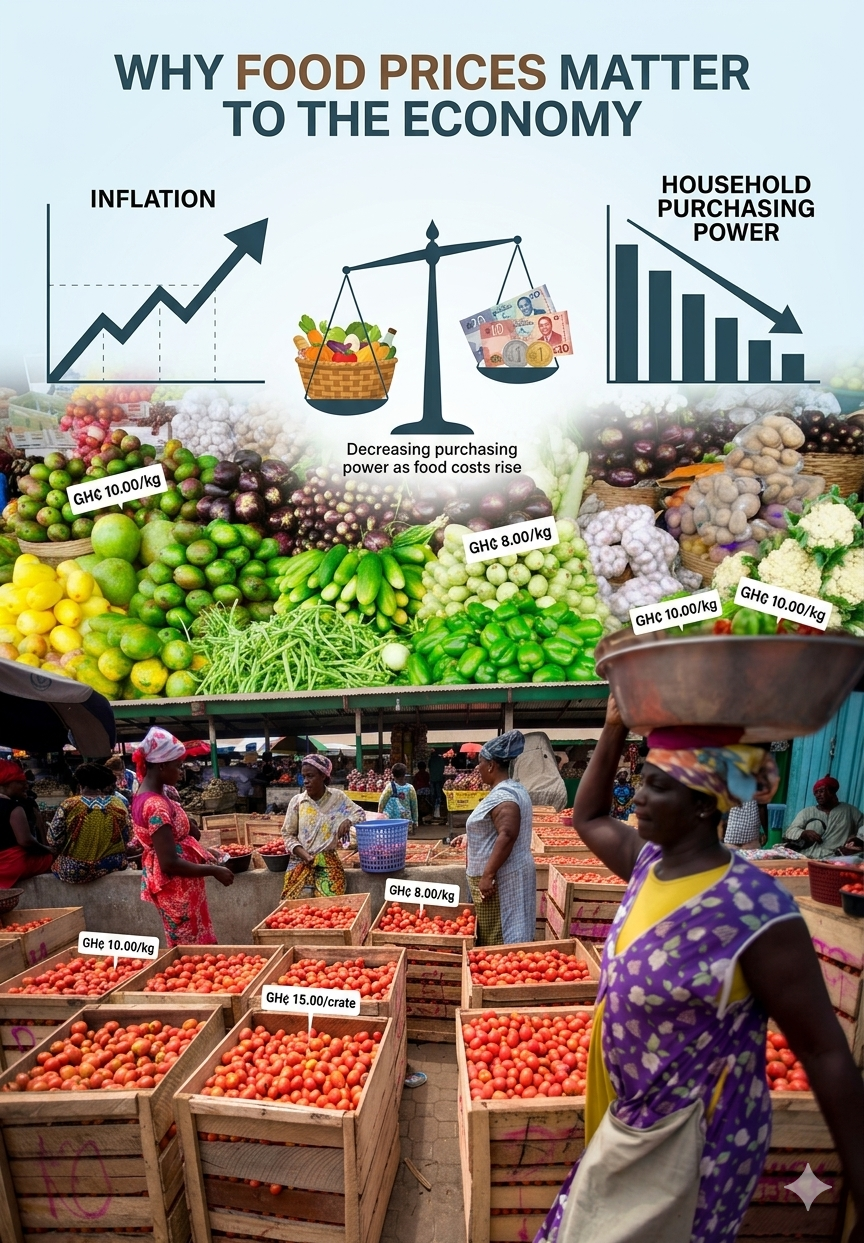
Why Food Prices Matter to the Economy – Rising or falling food prices have a direct impact on inflation, household spending, and economic stability. Here’s why food costs are crucial to Ghana’s economy.
Why Food Prices Matter to the Economy
Food prices are more than just numbers in the market: they are a powerful signal of how an economy is performing. In Ghana, where a significant portion of household income goes into food, even small changes in prices can ripple across businesses, livelihoods, and national economic stability.
The Central Role of Food in Ghana’s Economy
Food is not just a necessity: it is a major economic driver. Agriculture employs a large share of Ghana’s workforce, from farmers and transporters to traders and food vendors. When food prices change, the effects are felt across the entire value chain.
📢 GET A DETAILED ARTICLES + JOBS
Join SamBoad's WhatsApp Channel and never miss a post or opportunity.
Higher food prices can increase incomes for farmers in the short term. But when costs rise too quickly or unpredictably, it creates uncertainty for businesses and consumers alike.
Food Prices and Inflation
Food is one of the biggest components of inflation in Ghana. When food prices rise, overall inflation tends to increase because households spend a large portion of their income on food.
This means:
- A rise in food prices quickly translates into higher living costs
- Inflation erodes purchasing power
- The cost of doing business also increases
For policymakers, controlling food inflation is often key to stabilising the entire economy.
Impact on Household Spending
For many Ghanaian families, food takes up a significant share of monthly expenses. When prices rise:
- Households are forced to cut spending on other essentials like education, healthcare, and transport
- Savings decline, reducing financial security
- Living standards can fall, especially among low-income earners
In contrast, stable or falling food prices can ease financial pressure and improve overall well-being.
Effects on Businesses and Growth
Food prices influence more than just households, they shape business decisions too. Restaurants, food vendors, and retailers face higher operating costs when food prices increase. This often leads to:
- Higher menu prices
- Reduced profit margins
- Lower customer demand
At a broader level, rising food costs can slow economic growth because consumers have less money to spend on non-food goods and services.
Food Prices and Poverty Levels
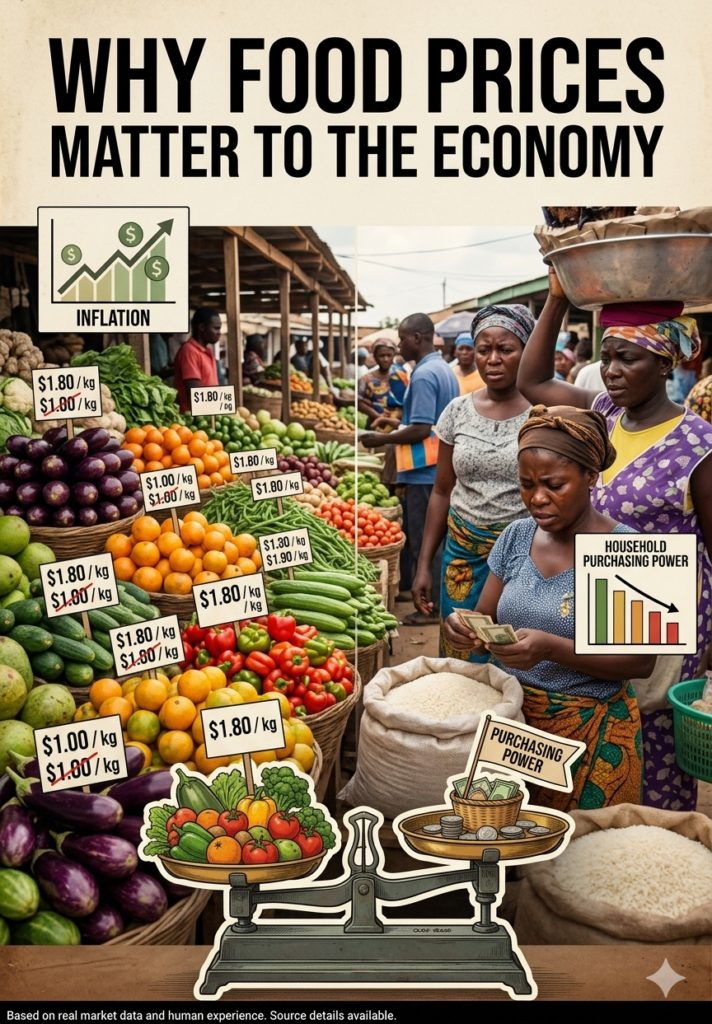
Food price increases are closely linked to poverty. When staple foods like maize, rice, or cassava become more expensive, low-income households are hit the hardest.
This can lead to:
- Increased food insecurity
- Poor nutrition outcomes
- Widening inequality
On the other hand, stable food prices can support poverty reduction efforts and improve quality of life.
The Link to Agriculture and Supply Chains
Food prices are often influenced by factors such as:
- Weather conditions and climate change
- Transportation and fuel costs
- Import dependency
- Storage and distribution systems
In Ghana, improving agricultural productivity and supply chains can help stabilise prices and reduce volatility.
Why It Matters for Policy and Planning
Governments closely monitor food prices because they are a key indicator of economic health. Policies such as: subsidies for farmers, investment in irrigation and storage, and support for local food production are often designed to keep food prices stable and predictable.
A stable food pricing environment helps create confidence for both consumers and investors.
The Bigger Economic Picture
Food prices sit at the intersection of agriculture, trade, inflation, and social welfare. When they rise sharply, they can trigger broader economic challenges. When they are stable, they support growth and stability.
In simple terms, food prices are not just about what people eat: they are about how the entire economy functions.
Conclusion From THSB
In Ghana, food prices are one of the most important indicators of economic well-being. They influence inflation, shape household decisions, affect business performance, and determine levels of poverty.
Keeping food prices stable is not just an agricultural issue: it is a national economic priority.
Source : The High Street Business
Disclaimer: Some content on The High Street Business may be aggregated, summarized, or edited from third-party sources for informational purposes. Images and media are used under fair use or royalty-free licenses. The High Street Business is a subsidiary of SamBoad Publishing under SamBoad Business Group Ltd, registered in Ghana since 2014.
For concerns or inquiries, please visit our Privacy Policy or Contact Page.

Esther Aku-Sika is a content writer and social media strategist who helps brands and startups grow through intentional storytelling and practical marketing strategies. With a keen eye for trends and audience behavior, she shares business insights, content strategies, and real-life lessons to help entrepreneurs build visibility and turn ideas into income. Through her writing, she simplifies complex concepts and equips readers with actionable steps to grow in today’s digital space.