








Understand what interest rate changes mean for Ghana’s economy, businesses, and everyday consumers, and how they influence borrowing, inflation, and economic growth.
What Interest Rate Changes Mean
Interest rates may sound like something reserved for economists and bankers, but in reality, they affect almost every part of daily life. From the cost of borrowing money to the price of goods in the market, interest rate decisions quietly shape how economies function.
In Ghana, changes in interest rates, often announced by the Bank of Ghana, carry significant weight. They influence how businesses grow, how households spend, and how stable the broader economy becomes.
📢 GET DETAILED ARTICLES + JOBS
Join THSB's WhatsApp Channel and never miss a post or opportunity.
Understanding what these changes mean can help make sense of the bigger economic picture—and even guide personal financial decisions.
RELATED: How Ghana’s Banking System Work.
What Are Interest Rates, Really?
At their core, interest rates represent the cost of borrowing money. When you take a loan from a bank, the interest rate determines how much extra you will pay back over time.
But beyond individual loans, interest rates also serve as a tool used by central banks to manage the economy. By raising or lowering rates, policymakers can influence spending, investment, and inflation.
In simple terms, interest rates act like a dial: turned up to slow things down, or turned down to encourage activity.
Why Interest Rates Go Up
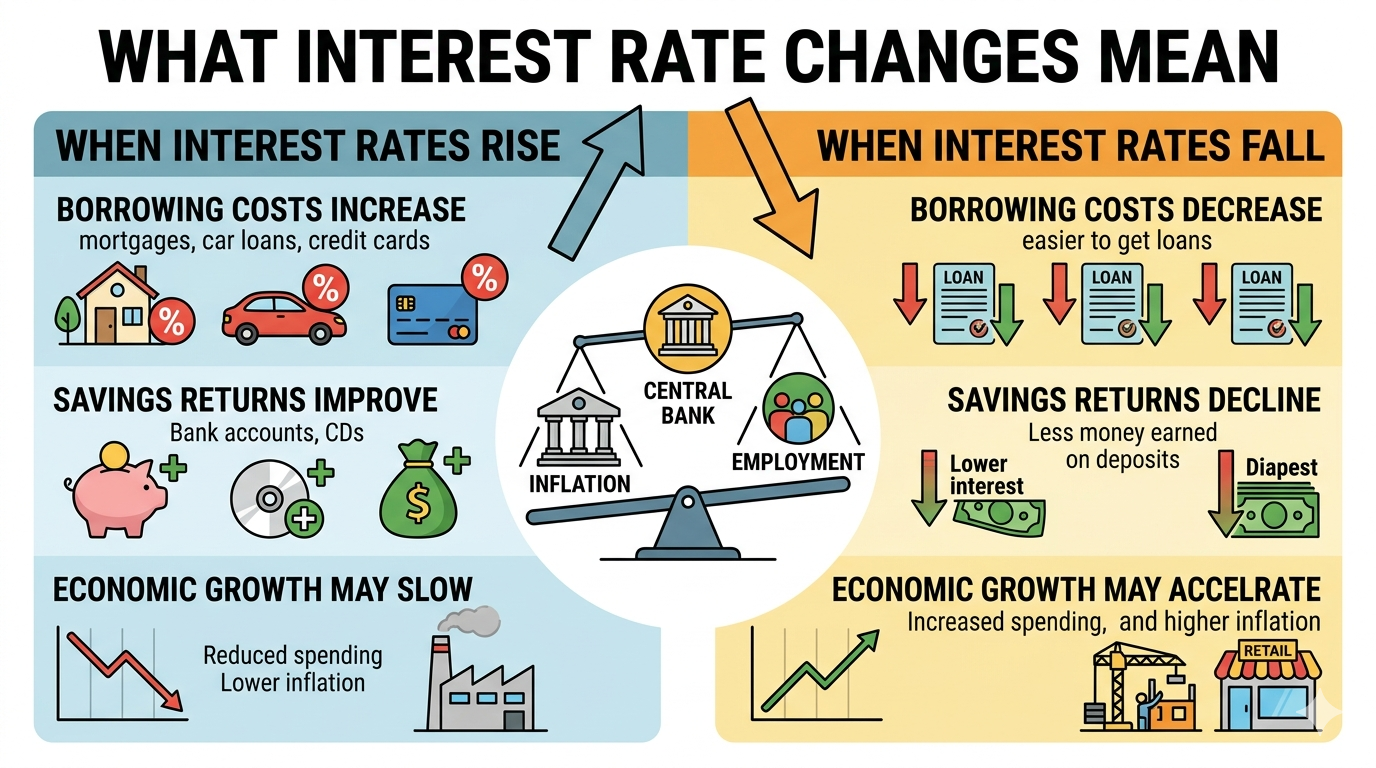
When interest rates rise, it is often a response to inflation. In periods where prices are increasing too quickly, central banks step in to cool things down. Higher interest rates make borrowing more expensive. Businesses may delay expansion, and consumers may cut back on spending. Over time, this reduces demand and helps stabilise prices.
In Ghana, recent rate hikes have been part of broader efforts to control inflation and restore economic stability. While effective, these decisions often come with short-term challenges.
What It Means for Businesses
For businesses, especially small and medium-sized enterprises, rising interest rates can be a double-edged sword. On one hand, they help stabilise the economy, which is good for long-term planning. On the other hand, they make loans more expensive, limiting access to capital.
A business that might have planned to expand, hire more workers, or invest in new equipment may pause those plans due to higher borrowing costs. This is why interest rate decisions are closely watched in the business community, they directly affect growth and job creation.
Impact on Households and Consumers
For ordinary Ghanaians, interest rate changes often show up in subtle but important ways.
Higher interest rates can mean:
- Increased loan repayments (for mortgages, car loans, or personal loans)
- Reduced access to credit
- Slower growth in wages and employment
At the same time, savings may become more attractive, as banks offer better returns on deposits. The overall effect is a shift in behaviour: less spending, more saving. While this helps control inflation, it can also make life feel tighter for many households.
When Interest Rates Go Down
Lowering interest rates has the opposite effect. It encourages borrowing and spending, making it easier for businesses to invest and expand.
When borrowing becomes cheaper:
- Businesses are more likely to grow
- Consumers are more willing to spend
- Job creation can increase
This is often done during periods of slow economic growth to stimulate activity. However, lowering rates too quickly or too much can lead to rising inflation, which brings its own set of challenges.
RECOMMENDED: How Small Businesses Drive Employment.
The Balance Between Growth and Stability
Interest rate decisions are rarely straightforward. Policymakers must constantly balance two key goals: controlling inflation and supporting economic growth. Raise rates too high, and the economy may slow down too much. Lower them too quickly, and inflation could spiral out of control.
This delicate balancing act is at the heart of monetary policy, not just in Ghana, but around the world.
The Role of Global Influences
Ghana’s interest rate decisions are also influenced by global economic conditions. Changes in international markets, currency movements, and global inflation trends all play a role.
For instance, when major economies raise their interest rates, it can affect capital flows and exchange rates in countries like Ghana. This may put pressure on the cedi, prompting local policy responses.
Institutions such as the International Monetary Fund also provide guidance and frameworks that influence how countries manage these decisions.
Why It Matters More Than You Think
It is easy to overlook interest rate announcements as technical or distant. But their impact is deeply personal.
They determine:
- Whether a business can afford to expand
- Whether a family can take a loan
- Whether prices in the market stabilise or rise
In many ways, interest rates shape the rhythm of the economy, affecting both opportunities and challenges.
Looking Ahead: Reading the Signals
As Ghana continues its path toward economic recovery, interest rate decisions will remain a key indicator of where the economy is headed. A gradual reduction in rates could signal improving stability and growing confidence. On the other hand, sustained high rates may indicate that inflation is still a concern.
For businesses and individuals alike, paying attention to these signals can provide valuable insight into what lies ahead.
A Tool That Shapes Everyday Life
Interest rates may be set in boardrooms and policy meetings, but their effects are felt everywhere, from markets and offices to homes and small businesses. They influence how money flows, how decisions are made, and how economies evolve.
In Ghana’s case, understanding what interest rate changes mean is not just about economics: it is about understanding the forces shaping everyday life and the future of the country’s growth.
Disclaimer: Some content on The High Street Business may be aggregated, summarized, or edited from third-party sources for informational purposes. Images and media are used under fair use or royalty-free licenses. The High Street Business is a subsidiary of SamBoad Publishing under SamBoad Business Group Ltd, registered in Ghana since 2014.
For concerns or inquiries, please visit our Privacy Policy or Contact Page.

Esther Aku-Sika is a content writer and social media strategist who helps brands and startups grow through intentional storytelling and practical marketing strategies. With a keen eye for trends and audience behavior, she shares business insights, content strategies, and real-life lessons to help entrepreneurs build visibility and turn ideas into income. Through her writing, she simplifies complex concepts and equips readers with actionable steps to grow in today’s digital space.